Bridging Code and Community: MIT’s Code.Tulsa Program Redefines Technology Through a Humanist Lens

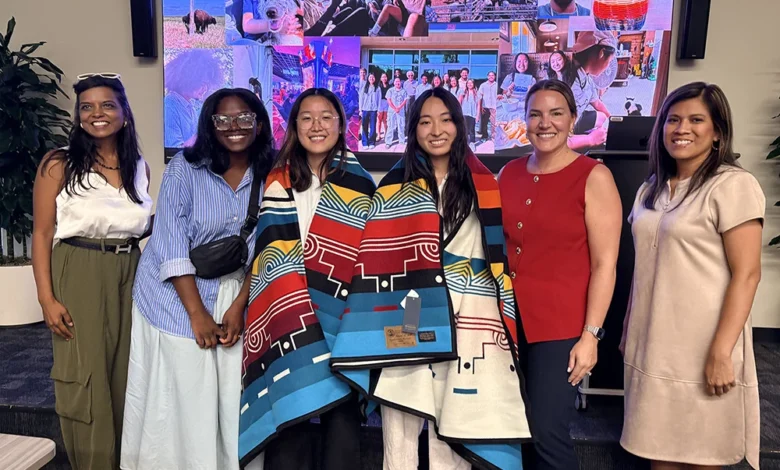
When Daphne Wang boarded a flight from Boston to Tulsa, Oklahoma, last summer, she brought with her the rigorous, algorithmic mindset typical of an undergraduate mechanical engineering student at the Massachusetts Institute of Technology (MIT). Accustomed to coding sprints, stress-tested optimization models, and rapid prototype development, Wang anticipated a standard tech sector internship. Instead, her placement at the Muscogee Creek Nation Department of Health plunged her into an educational paradigm far removed from the lab benches of Cambridge: she found herself deep in the archives of tribal history, examining the nuanced, human implications of technical innovation on sovereign nations.
"I learned so much that I think should be required curriculum for every single person in this country," Wang reflected, pointing to the profound realization that modern technology cannot exist in a socio-political vacuum. "I think tech for good is genuinely getting out into communities and learning about people who aren’t you, creating worldly perspectives that you ultimately can take into everything else that you do."
Wang was far from alone in this transformative experience. She was one of 10 elite MIT undergraduates selected for the 2026 cohort of Code.Tulsa, an immersive experiential learning program anchored by the PKG Center for Social Impact at MIT. Now in its second year of operation and made possible through the generous philanthropic backing of the Patrick J. McGovern Foundation and the George Kaiser Family Foundation, Code.Tulsa represents a growing educational movement: engineering education that actively refuses to divorce the creation of code from the cultural, historical, and civic realities of the communities it impacts.
A Paradigm Shift in Engineering Education
For decades, elite engineering institutions have trained students to solve complex, highly technical puzzles. However, critics and educational reformers have noted a historical blind spot in these programs: a failure to adequately weigh the cultural dimensions, governance structures, and historical context of the populations affected by technological interventions. Code.Tulsa was built explicitly to mend this divide.
Participants in the program live on the campus of the University of Tulsa throughout the summer months, splitting their professional and intellectual energies between placements with the Muscogee (Creek) Nation, the Cherokee Nation, and prominent local innovation hubs such as Black Tech Street and the Urban Coders Guild. There, students engage in cutting-edge projects spanning artificial intelligence, database architecture, and software development. But the technical work is matched, step-for-step, with intensive contextual education.
Vippy Yee, the assistant dean for community-based programs at the PKG Center, curates a curriculum designed to expose students to the complex historical and cultural landscape of the Tulsa region. Through direct engagement with tribal leaders, elders, and community organizers, students are taught to re-evaluate their relationship to technology.
Alison Badgett, director of the PKG Center, notes that this dual approach is foundational to the program’s charter. "As with all PKG Center programming, our aim is to help students integrate an engineer’s approach to problem-solving with a humanist lens on the nature of social challenges, and by extension interventions," Badgett explains.
This philosophy struck a profound chord with Chenise Harper, an electrical engineering and computing major who completed her summer internship with the Urban Coders Guild. Reflecting on her transformation over the course of the program, Harper admitted, "I hated history, but I learned a lot about why it is useful for making social change and how to go about researching it. I now feel a lot more confident that I can make an impact." She added that speaking directly with individuals who have lived experience with structural inequities fundamentally reshaped her worldview.
Inside the Muscogee Nation Health Initiative
Wang’s specific assignment, alongside fellow intern Lucy Sun—an artificial intelligence and decision-making major—demonstrated the immediate practical value of blending technical prowess with cultural literacy. The duo was tasked with supporting the development of the Muscogee Nation’s very first Pregnancy Risk Assessment Monitoring System (PRAMS) survey.
The initiative aimed to capture critical maternal health data tailored specifically to Muscogee women, a demographic historically underserved by generalized, federal public health datasets. Achieving this goal required far more than writing scripts or designing databases. Wang and Sun had to perform exhaustive literature reviews, parse complex health datasets, and draft survey instruments while navigating intricate questions of data sovereignty, tribal governance structures, and historical distrust of external institutions.
"It was this change of pace — 180 degrees from MIT, completely," Wang says. While MIT professors excel at prepping students for monumental technical hurdles, Wang points out that academic coursework rarely provides space to "work with communities, [learn] how to think about the cultural and historical dimensions of the work, or how to consider the people who will be affected."
The impact of their work was felt immediately by their hosts. Breanna McNaughton-Long, an epidemiologist with the Muscogee Creek Nation Department of Health and Wang’s direct supervisor, offered glowing praise for the interns’ contributions. "They were instrumental. They did so much work that I don’t think we would have been able to do as quickly," McNaughton-Long stated. "And they brought this sense that we were doing something that mattered."
The Genesis of Code.Tulsa: A Student’s Vision
The existence of the Code.Tulsa program itself is testament to student agency and visionary leadership. The initiative was conceptualized by Jack Carson, an MIT sophomore majoring in electrical engineering and computer science (EECS). An incoming first-year student from Tulsa and an enrolled citizen of the Cherokee Nation, Carson recognized an acute disparity in his own backyard: rural Native American students, who stood to benefit immensely from advanced STEM education, rarely had equitable access to it.
Upon arriving at MIT, Carson brought a fully formulated proposal to the PKG Center: a dedicated, intensive STEM camp held at the University of Tulsa for high school students belonging to federally recognized tribes, taught collaboratively by Carson and fellow Code.Tulsa interns.
Recognizing the potential of the proposal, the PKG Center supported Carson in launching a highly competitive nomination and application framework. Out of 160 applications representing 25 distinct Native nations, Carson and his team selected a cohort of 25 promising high school students from 10 different tribes.
To architect the academic rigor of the camp, Carson enlisted Allie Zong, a Harvard University student whom he met during Campus Preview Weekend. Together, they established the Tulsa Advanced Sciences Camp (TASC). The program provides hands-on, highly engaging track time across rigorous academic disciplines, including artificial intelligence engineering, DNA technology, physics, and a chemistry-and-energy track.
Crucially, TASC pairs its technical curriculum with philosophical and strategic workshops designed to encourage students to think expansively about their academic and professional futures. "We teach them not knowledge, but curiosity, and the skills to teach themselves," Zong explains.
Igniting Ambition and Cultivating Future Leaders
The ripple effects of TASC have proven transformative for its young participants. Alyssa Theofanidis, a rising high school senior from Houston and a citizen of the Cherokee Nation, attended the inaugural year of the camp. The experience left an indelible mark on her trajectory.
"It kind of propelled me to self-study calculus," Theofanidis says, noting that the confidence gained at TASC brought her back the following summer to serve as a teaching assistant. Like many of her peers, Theofanidis plans to channel her eventual STEM expertise directly back into serving her Native community.
Another camper noted that the experience "got us to think 1,000 times more ambitiously about the impact we could have." This expansive worldview was fostered in part by exposure to high-caliber guest speakers, such as physicist Alexandra LeViness of Commonwealth Fusion Systems—an MIT spinout pioneering commercial clean energy—who helped design the camp’s chemistry and energy curriculum. Furthermore, seeing undergraduate interns from MIT who shared their cultural backgrounds demystified elite higher education. "I thought, maybe this is what MIT looks like," one camper remarked, with several participants expressing a newfound intention to apply to the university.
The program’s regional significance was underscored by Cherokee Nation Principal Chief Chuck Hoskin Jr., who addressed the TASC students directly. He challenged the next generation of youth to view technology as a tool for ethical stewardship rather than mere commercial advancement.
"Technology can be used for good, or it can be used for harm. Your generation has the opportunity to bend that arc toward something good," Chief Hoskin told the assembly. Highlighting the deep partnership between the Cherokee Nation and MIT, he added, "It’s a very special relationship that the Cherokee Nation has with MIT. As we reach out a hand in friendship, we have a hand reaching back. We are thankful for Cherokee citizen Jack Carson, a former secretary for the Cherokee Nation tribal youth council, for his leadership role in organizing this effort."
Redefining the Ultimate Purpose of Engineering
As the summer programs concluded, the psychological and professional transformation among the MIT interns was palpable. While the vast majority of engineering undergraduates eventually transition into mainstream technical roles far removed from traditional non-profit or public sector spaces, initiatives like Code.Tulsa fundamentally reshape how these students view their agency within corporate or academic environments.
Elvis Chipiro, a junior in computer science and engineering who completed his internship with the Cherokee Nation, encapsulated this philosophical shift. "Social impact is not separate from mainstream technology; rather, it is embedded in the choices engineers make every day," Chipiro observed. "Ultimately, meaningful social change is not driven by technology alone, but by people willing to design systems with empathy, responsibility, and inclusion at the center."
For Chenise Harper, the internship served as a vital corrective to the tunnel vision often induced by elite academic pressures. Reconnecting with the foundational ethos that inspired her to pursue higher education in the first place proved to be the most enduring takeaway of her summer in Oklahoma.
"Remembering that […] I could use my MIT education to help others was a big reason I applied to MIT in the first place," Harper reflects. "But I forgot my own mission in the stress of school. Code.Tulsa really re-opened my eyes to why I am here."