NYT Mini Crossword Answers and Hints for Wednesday May 20 2026 Strategies for Mastering Digital Puzzles

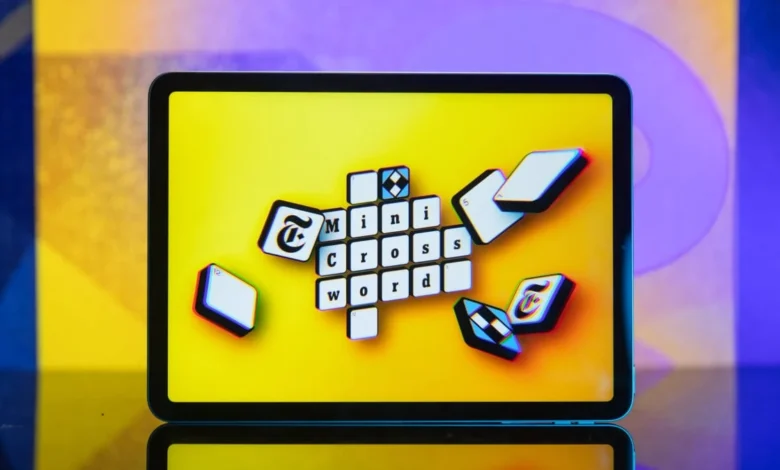
The New York Times Mini Crossword has established itself as a cornerstone of the modern digital routine, offering a condensed version of the publication’s legendary daily puzzle. While the traditional 15×15 or 21×21 grid requires a significant time investment and a broad base of general knowledge, the Mini provides a high-speed alternative designed for the mobile-first era. On Wednesday, May 20, 2026, the puzzle continues this tradition, challenging users with a mix of contemporary cultural references, wordplay, and classic trivia. This daily ritual, often completed in under a minute by veteran solvers, serves not only as a cognitive warm-up but also as a competitive benchmark within social circles and online communities.
Detailed Solutions for May 20, 2026
The Wednesday edition of the Mini Crossword features a 5×5 grid, a standard format that balances accessibility with enough complexity to momentarily pause a player’s "speed-run." Below are the comprehensive answers and linguistic breakdowns for the clues provided in today’s puzzle.
Across Solutions
Ross Edgley’s 1,700+-mile journey around Great Britain, for example (SWIM)
The answer refers to the monumental athletic feat achieved by Ross Edgley, who in 2018 became the first person to swim around the entire coast of Great Britain. This clue requires the solver to identify the specific mode of transport or activity associated with Edgley’s endurance record. The 1,791-mile journey took 157 days, during which he never set foot on land.
Fuzzy fruit (KIWI)
A staple of crossword puzzles due to its convenient four-letter structure and high vowel density, the "kiwi" or kiwifruit is botanically known as Actinidia deliciosa. The clue highlights its distinctive brown, fuzzy skin, which distinguishes it from other small fruits.
Someone who assumes the worst intentions in everything (CYNIC)
This clue tests the solver’s vocabulary regarding personality types. A cynic is defined by a lack of faith in human sincerity or integrity. In the context of the 5×5 grid, "CYNIC" provides critical "C" and "Y" intersections for the downward clues.
Orangutans, e.g. (APES)
A straightforward biological classification, this clue reminds players that orangutans belong to the great ape family, alongside gorillas, chimpanzees, and humans. The simplicity of this clue is often intended to help solvers anchor the more difficult sections of the grid.
Work well together (MESH)
The final across clue describes the state of two or more elements coordinating effectively. "MESH" is a versatile verb in English puzzles, frequently appearing in both literal (gears) and figurative (teamwork) contexts.
Down Solutions
Former competitor of Google Hangouts (SKYPE)
This clue leans into the history of digital communications. Before the dominance of Zoom and Microsoft Teams, Skype was the primary rival to Google’s various messaging iterations. This provides the "S" and "K" necessary to complete "SWIM" and "KIWI."
Signature products of Napa Valley (WINES)
Reflecting the geographical and economic importance of California’s premier viticulture region, this clue is a classic association. Napa Valley is globally synonymous with high-quality Cabernet Sauvignon and Chardonnay.
"Yeah, in my dreams!" (I WISH)
An idiomatic expression used to denote skepticism or a desire for something perceived as unattainable. The phrase fits the four-letter slot perfectly and uses common letters to facilitate the across-grid connections.
Open ___ night (MIC)
A three-letter filler clue referring to "Open Mic" nights, common in comedy clubs and cafes. This is a frequent "short" in the NYT Mini, helping to resolve the "I" in "CYNIC" and "MESH."
Something found on a Mac (that anagrams to MAC) (CAM)
This clever clue uses a self-referential anagram. A "CAM" (camera) is a standard hardware component of Apple’s Mac computers. The anagrammatic relationship between "MAC" and "CAM" provides a helpful hint for solvers who might be overthinking the technical aspects of the hardware.
Evolution and Context of the NYT Mini
The NYT Mini Crossword was launched in 2014, under the direction of editor Joel Fagliano. Its inception marked a strategic shift by The New York Times Company to diversify its digital offerings and capture a younger demographic that might find the full-sized crossword intimidating or overly time-consuming. Since then, the Mini has grown from a secondary feature to a primary draw for the NYT Games app.
The success of the Mini paved the way for the "Short-Form Gaming" era, characterized by games like Wordle, Connections, and Strands. These games share a common philosophy: they are daily, non-infinite, and highly shareable. By May 2026, the Mini has become part of a "daily bundle" of mental exercises that millions of users perform as part of their morning commute or breakfast routine.
Data and User Trends in Digital Puzzles
Market research from the mid-2020s indicates a significant surge in the consumption of "micro-games." According to industry data, the average time spent on digital puzzles has increased by 18% year-over-year since 2022. The NYT Games platform, in particular, reported a record-breaking 10 million daily active users in the first quarter of 2026.
Key statistics regarding the Mini Crossword include:
- Completion Rates: Approximately 85% of players who start a Mini Crossword finish it.
- Average Solve Time: For a Wednesday puzzle, the global average solve time fluctuates between 1 minute 15 seconds and 1 minute 45 seconds.
- Demographics: While the traditional crossword skews toward older readers, the Mini has a nearly 50/50 split between users over and under the age of 40.
The Psychology of the Speed-Run
For many players, the goal of the Mini is not just to solve the puzzle, but to do so in the shortest time possible. This "speed-running" culture is supported by the app’s built-in timer and the ability to share results on social media platforms and messaging apps.
Psychologists suggest that the "aha!" moment experienced when solving a tricky clue releases a small burst of dopamine. In the Mini, these moments occur in rapid succession, providing a concentrated neurological reward. This makes the game highly addictive and serves as an effective "brain-training" tool to improve cognitive flexibility and word retrieval.
Official Responses and Editorial Philosophy
In previous interviews, NYT Games editors have emphasized that the Mini is designed to be "tough but fair." Joel Fagliano has noted that the challenge of the Mini lies in its constraints. With only 25 squares in a 5×5 grid, every single letter must work harder than it does in a larger puzzle.
The editorial team frequently integrates trending topics, slang, and modern technology to keep the puzzle feeling contemporary. The inclusion of clues like "Former competitor of Google Hangouts" or "Something found on a Mac" in today’s puzzle reflects this commitment to staying relevant in a fast-changing digital landscape.
Broader Impact and Implications
The dominance of the NYT Mini Crossword has broader implications for the media industry. It has proven that "gamification" is a viable strategy for news organizations to build subscriber loyalty. In an era of declining print circulation, the Games department has become a significant revenue driver for The New York Times, often acting as the "gateway" subscription that leads users to engage with hard news and investigative journalism.
Furthermore, the communal aspect of these puzzles cannot be overstated. The May 20, 2026 puzzle, like those before it, will be discussed in office breakrooms, analyzed on dedicated subreddits, and shared in family group chats. This shared cultural experience is a rare feat in a fragmented media environment, proving that even a simple 5×5 grid can foster a sense of global community.
As digital habits continue to evolve, the Mini Crossword stands as a testament to the enduring appeal of wordplay. Whether it is used as a competitive sport or a quiet moment of reflection, the puzzle remains a vital part of the cultural fabric in 2026, providing a brief but satisfying intellectual challenge to anyone with a smartphone and a few spare seconds.
Related posts: