The Great Sand Heist: When Thieves Targeted High-Tech Cargo Only to Find Themselves Empty-Handed

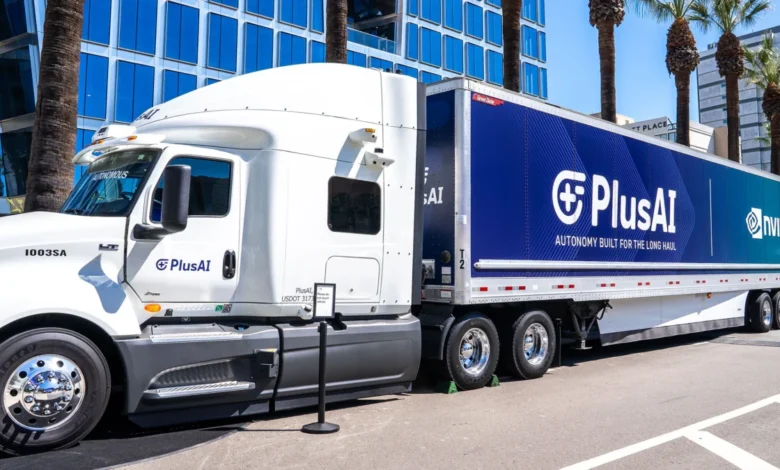
On a routine Thursday morning in Newark, California, a senior executive at PlusAI, a pioneering developer of autonomous trucking technology, received a notification that initially seemed like a mundane, albeit pleasant, professional milestone. An acquaintance, spotting a pair of heavy-duty trailers emblazoned with the logos of both PlusAI and Nvidia, sent a congratulatory text message: “I have been proud of you for your adventure and success at Plus. Just saw two of your trucks near my work place!”
However, the sentiment quickly curdled into concern. According to the company’s internal logistics records, those specific trailers were not meant to be in transit; they were supposed to be docked securely outside a warehouse facility roughly half a mile away. The realization that the company’s assets had been moved without authorization triggered an immediate response. Within hours, the Fremont Police Department was on the scene, dispatched to investigate the unauthorized movement of two trailers that serve as a testament to the high-stakes collaboration between PlusAI and Nvidia, the latter of which currently stands as the most valuable company in the world due to its dominance in the artificial intelligence hardware market.
A Heist Gone Wrong: The Discovery of the Sand
The investigation into the disappearance of the trailers, which were clearly branded with the logos of two major technology players, took a bizarre turn once law enforcement arrived at the scene where the vehicles had been abandoned. The thieves, presumably operating under the assumption that these trailers contained high-value cargo—likely advanced AI computing chips, GPU clusters, or proprietary autonomous driving hardware—had forcefully broken the hand locks securing the cargo doors.
Upon breaching the trailers, the perpetrators discovered that their efforts had yielded nothing of monetary value. Instead of high-end electronics or cutting-edge AI processors, the trailers were filled with 40,000 pounds of sand.
Lauren Kwan, a spokesperson for PlusAI, later clarified the purpose of the unusual cargo. “PlusAI uses simulated loads in its trailers to assist with research and development testing,” she explained. The company confirmed that the trailers were recovered with the entirety of their 40,000-pound sand ballast intact. The tech-enabled cabs—the sophisticated, sensor-laden power units capable of autonomous operation—remained parked safely inside the company’s warehouse, untouched by the thieves.
Chronology of the Incident
The timeline of the event highlights the opportunistic nature of modern cargo theft. While the exact time of the breach remains under investigation, the trailers were reported missing on Thursday morning. The unauthorized movement of the assets occurred under the cover of darkness or in the early hours of the day, as the acquaintance who spotted the trailers near a Newark office building had done so by mid-morning.
Following the report to the Fremont Police Department, law enforcement officials secured the perimeter. By Thursday afternoon, the trailers had been successfully retrieved and returned to the company’s custody. Amy Gee, a spokesperson for the Fremont Police Department, confirmed that the case remains an active investigation, though no suspects have been apprehended as of the latest update.
The Escalating Crisis of Cargo Theft
While the PlusAI incident ended with a humorous outcome—the theft of two trailers filled with construction-grade sand—the event occurs against a backdrop of increasing hostility and sophistication in the logistics sector. Thieves are no longer merely targeting consumer goods; they are increasingly focused on the critical infrastructure of the AI revolution.
Data center equipment, particularly the high-performance GPUs produced by companies like Nvidia, has become the "gold" of the modern tech age. In August, reports surfaced detailing a series of violent incidents in California where thieves targeted security escorts tasked with protecting high-value tech shipments. In these instances, the perpetrators deliberately struck the security vehicles to force the cargo trucks to stop, subsequently hijacking the vehicles and their contents. Millions of dollars in data center equipment vanished in these coordinated attacks, much of which remains unrecovered.
Industry analysts suggest that the scarcity and high resale value of AI-specific hardware have created a black market equivalent to the illicit trade of precious metals or pharmaceuticals. According to Verisk CargoNet, a leading analytics firm specializing in supply chain risk, the United States has seen a sharp uptick in the theft of enterprise-grade networking equipment and raw metals, both of which are essential to the growth of cloud computing and AI training facilities.
Beyond the Chips: A Broader Trend
The theft of the PlusAI trailers is part of a larger, systemic challenge facing the automotive and tech sectors. Earlier this year, reports emerged of entire truckloads of Tesla batteries being stolen directly from transit routes before they even cleared the factory gates. Similarly, specialized hardware for bitcoin mining has frequently appeared on the radar of organized theft rings.
The modus operandi in these cases often involves "straight-bill-of-lading" fraud, identity theft of logistics companies, or direct, forceful hijacking. The complexity of the supply chain, which often involves multiple third-party carriers and transit points, creates "blind spots" that sophisticated criminal organizations are increasingly adept at exploiting.
Implications for Autonomous Logistics
The incident at PlusAI raises significant questions about the security protocols of companies developing autonomous vehicle technology. As these companies transition from the testing phase to full-scale deployment, the physical security of their assets—both hardware and data—will become a paramount concern.
For firms like PlusAI, the reliance on simulated loads like sand is a standard safety and testing procedure. It allows engineers to stress-test autonomous systems under realistic weight distributions without risking the destruction of expensive cargo. However, the external branding on these trailers, which serves as both marketing and corporate identity, may inadvertently make them targets for criminals who do not distinguish between a "test" trailer and a "production" trailer.
From a strategic perspective, the incident suggests that companies must now weigh the benefits of corporate branding on their logistics fleets against the risk of attracting unwanted attention. Furthermore, the incident underscores the need for real-time, GPS-enabled security monitoring that goes beyond the vehicle itself, potentially extending to the trailer units, which are often left vulnerable when detached from the main cab.
Future Outlook
While the Fremont Police Department continues its investigation, the incident has served as a wake-up call for the local tech corridor. As the demand for AI-ready infrastructure continues to outpace supply, the value of the components required to build that infrastructure will likely continue to climb.
For now, the "Sand Heist" remains a cautionary tale of the unintended consequences of high-tech visibility. While the company emerged unscathed, the incident highlights the reality that in the race to automate the future of transportation, the most advanced software in the world is still subject to the age-old, low-tech threat of cargo theft. As the industry moves forward, security will undoubtedly become as integral to the autonomous logistics business model as the algorithms that steer the trucks themselves. For PlusAI, the immediate priority remains the continued development of their autonomous systems, now with the added vigilance of a company that knows, firsthand, how easily a target can be misidentified in the shadows of the Silicon Valley logistics network.
Related posts: