S&P Global Ratings Considers Downgrading Nvidia Amid Governance and Succession Concerns Following CEO Leadership Turmoil

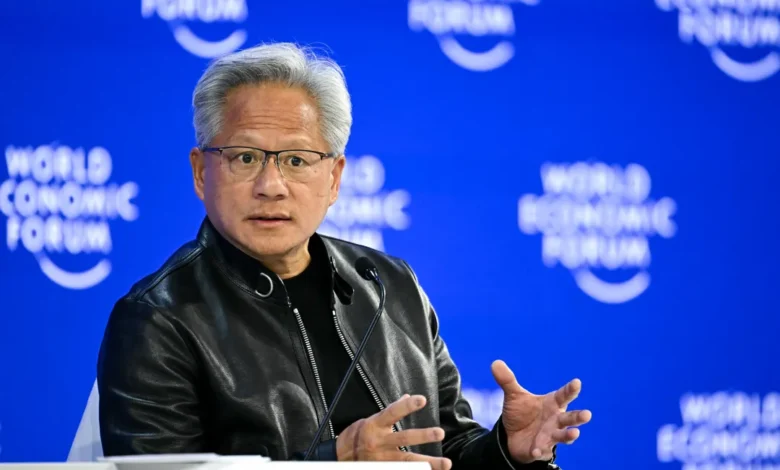
S&P Global Ratings, one of the world’s preeminent credit rating institutions, has announced that it is actively considering a downgrade of Nvidia’s corporate credit rating. This unexpected development stems not from any financial weakness or lagging market demand, but rather from growing concerns regarding the company’s internal governance practices, executive oversight, and succession planning. Specifically, the ratings agency pointed to the recent, dramatic ouster and subsequent reinstatement of long-time Chief Executive Officer Jensen Huang as a critical vulnerability that exposes the multi-trillion-dollar semiconductor giant to severe "key man risk."
While Nvidia continues to post staggering financial figures driven by the global artificial intelligence boom, credit analysts are increasingly focused on the intangible pillars of corporate stability. The sudden leadership turbulence at the top of the firm has forced ratings agencies to reevaluate how well-insulated the business is against sudden executive disruptions. S&P Global Ratings has indicated that its formal review process will conclude within a 90-day window, at the end of which Nvidia’s credit rating could potentially be trimmed from AA down to AA-, representing the fourth-highest tier on the agency’s long-term scale.
Although an AA- rating remains securely within investment-grade territory—meaning lenders will still view Nvidia as an exceptionally safe entity with a very low risk of default—the potential downgrade carries significant financial and strategic implications. Beyond Nvidia’s own balance sheet, the company serves as a vital financial backstop for the burgeoning artificial intelligence infrastructure ecosystem. A lower credit rating could directly impact the borrowing costs of various neoclouds and infrastructure development firms that rely heavily on Nvidia’s creditworthiness to secure their own funding, potentially creating ripple effects throughout the broader tech and financial sectors.
Anatomy of a Governance Crisis: The Leadership Upheaval
The root cause of S&P Global Ratings’ sudden scrutiny lies in the fragile nature of corporate governance at companies experiencing hyper-growth driven by visionary founders. Jensen Huang has been at the helm of Nvidia since its founding in 1993, transforming a niche graphics card manufacturer into the indispensable engine of the global artificial intelligence revolution. However, the extreme concentration of power and strategic vision in a single individual has long troubled conservative risk analysts.
The vulnerability of this dependency was laid bare during the recent executive crisis. While details surrounding the brief ouster and subsequent reinstatement of Huang were closely guarded by the board and corporate PR teams, the boardroom friction immediately triggered alarms across Wall Street and credit rating agencies. In its official explanatory statement, S&P explicitly highlighted "weak executive oversight and lack of succession planning" as primary factors driving the negative outlook. Furthermore, the agency emphasized "key man risk," underscoring the reality that Nvidia’s future trajectory remains perilously intertwined with Huang’s continued day-to-day leadership.
In the corporate world, robust succession planning is a cornerstone of top-tier credit ratings. When a company approaches a multi-trillion-dollar market capitalization while remaining entirely dependent on a single charismatic figure—and worse, when that figure experiences unexpected removal and reinstatement cycles—credit agencies view it as an elevated operational risk. The boardroom maneuverings demonstrated that Nvidia’s governance structures may lack the institutional checks, balances, and orderly transition protocols expected of entities holding top-tier credit standings.
Financial Ecosystem and the $500 Billion AI Infrastructure Backstop
To fully understand why a minor one-notch credit downgrade matters for Nvidia, one must examine the company’s extensive entanglements in modern AI financing. In August, Nvidia made major waves across global financial markets by announcing an ambitious $500 billion financing initiative designed to fund the rapid construction of next-generation AI infrastructure.
To bring this colossal undertaking to life, Nvidia partnered with six major financial institutions and alternative asset managers, including Wall Street heavyweights Goldman Sachs, Apollo Global Management, and Blackstone. Under the original architecture of these financing agreements, Nvidia agreed to act as a financial guarantor, backing roughly 25% of the massive loans extended to data center operators and specialized neocloud providers.

However, even before the boardroom drama surrounding Jensen Huang erupted in late autumn, cracks were beginning to show in how lenders viewed these guarantees. Financial institutions, acutely aware of the capital-intensive and speculative nature of the AI hardware buildout, had been privately pressuring Nvidia to increase its financial backstops. Lenders demanded that Nvidia shoulder a larger percentage of the risk, arguing that the underlying neocloud startups and infrastructure developers lacked the balance sheets necessary to weather potential market corrections on their own.
Bloomberg reported as early as November that Nvidia was facing mounting lender pressure to boost its AI financial backstops. Now, with S&P Global Ratings actively threatening a downgrade, those negotiations are bound to become significantly more contentious.
Broader Economic Implications of a Potential Rating Cut
If S&P proceeds with cutting Nvidia’s rating from AA to AA-, the immediate consequence for the corporation itself will be incremental. Because Nvidia sits on mountains of cash and boasts profit margins that are the envy of the corporate world, the direct increase in its own cost of capital will be negligible. Nvidia does not frequently need to issue large tranches of public debt to fund its daily operations.
The true danger of the downgrade lies in the secondary and tertiary effects rippling through the artificial intelligence supply chain. Nvidia has effectively become the central bank of the AI boom. Smaller cloud providers, specialized data center operators, and GPU-rental startups rely heavily on vendor financing and structured credit agreements where Nvidia’s stellar credit rating serves as the foundational guarantee.
If Nvidia’s credit rating drops, the cost of borrowing for these dependent infrastructure companies will inevitably rise. Lenders evaluating the creditworthiness of a neocloud project backed by an AA- rated Nvidia—rather than an AA rated Nvidia—will demand higher yields to compensate for the adjusted risk profile. Alternatively, financial institutions may tighten their collateral requirements, forcing these capital-starved infrastructure firms to post significantly more cash or liquid assets upfront to secure hardware loans.
In a market where the pace of AI data center construction is already testing the limits of global power grids and supply chains, any friction in financing could slow down expansion. Industry observers note that a credit downgrade could disproportionately punish smaller players in the AI ecosystem who cannot secure funding without robust corporate guarantees from chipmakers.
The 90-Day Review Window and Next Steps
S&P Global Ratings has established a strict 90-day timeline to complete its comprehensive review of Nvidia’s governance structures, risk management frameworks, and leadership stability. During this window, institutional investors, Wall Street analysts, and Nvidia’s own board of directors will be watching closely to see what remedial actions, if any, the company takes to appease the ratings agency.
To convince S&P to maintain its current AA rating, Nvidia’s board will likely need to demonstrate tangible progress in formalizing executive succession plans and strengthening independent board oversight. Institutional investors have increasingly demanded transparency regarding how the company plans to institutionalize Huang’s visionary leadership framework so that the enterprise is not left vulnerable to sudden executive departures.
As the tech sector awaits the conclusion of the 90-day review period, the episode serves as a sobering reminder of the unique challenges facing hyper-growth technology monopolies. Even a company with the financial might, market dominance, and profitability of Nvidia is not immune to the traditional metrics of corporate governance. How Nvidia navigates this governance hurdle over the coming months will likely set a precedent for how credit agencies evaluate the intersection of founder-led innovation and institutional risk management in the modern era of artificial intelligence.