Coordinating the Fight: Strengthening Infrastructure Security through Cross-Industry Collaboration


The global internet infrastructure landscape is currently undergoing a pivotal transformation, characterized by a shift from fragmented, siloed defense mechanisms toward a unified, collaborative model of threat intelligence sharing. At the heart of this evolution is the Internet Infrastructure Forum (IIF), a project facilitated by the Paris-based Internet and Jurisdiction Foundation. The initiative aims to create a standardized, real-time framework for hosting providers, registrars, and DNS operators to exchange actionable data regarding abuse, effectively outpacing the rapid adaptation cycles of modern cyber adversaries.
The Genesis of a Collaborative Framework
The hosting industry, which serves as the bedrock of the modern web, has historically struggled with a lack of coordination. As the digital economy expanded over the past two decades, the infrastructure stack became increasingly complex. While individual hosting companies developed sophisticated internal security protocols, these efforts were often isolated. When one provider mitigated a specific threat, other providers across the globe remained vulnerable to the same attack, forcing them to expend identical resources to resolve the same issues.
David Snead, a veteran of the hosting industry who began his legal career in 1999, has been a key architect in shifting this paradigm. Having served as in-house counsel for industry giants like cPanel and WebPros, and as a co-founder of the i2Coalition, Snead has witnessed the transition from a collegial, early-internet environment to a hyper-consolidated, high-stakes commercial landscape. The Secure Hosting Alliance, led by Snead, represents the most recent iteration of this push for professionalization. By fostering a culture of information sharing, the alliance aims to reduce the "bandwidth tax" on smaller providers who often lack the massive security budgets of market leaders.
Addressing the Threat of Fake Shops and Credential Harvesting
The IIF is currently utilizing "fake shops"—malicious websites designed to harvest financial credentials—as its primary test case for information exchange. These entities pose a significant threat to the ecosystem, impacting everything from payment processing reliability to server resource consumption.
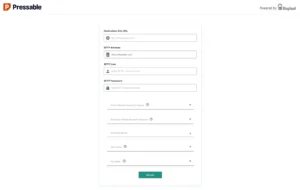
In the current prototype phase of the IIF project, participating entities submit specific, non-proprietary abuse data to a central secretariat. This data includes timestamps, domain names, and IP addresses associated with reported abuse. The secretariat then enriches this information with broader context before disseminating it to relevant stakeholders. This process allows a registrar that identifies a phishing domain to alert the specific hosting provider housing that site, significantly shortening the time required for intervention.
Historical Context and Industry Dynamics
To understand the necessity of this project, one must look at the trajectory of the hosting sector. In the early 2000s, the community was significantly smaller, allowing for informal, personal networks to facilitate communication. As consolidation accelerated through the 2010s, these networks were largely subsumed by corporate structures, leading to the creation of information silos.
The i2Coalition, formed in response to proposed legislative threats in the United States that risked crippling internet infrastructure, proved that providers could act in concert to influence policy. The current push for the IIF and the Secure Hosting Alliance is a natural extension of that advocacy. By moving from policy-based collaboration to operational, technical intelligence sharing, the industry is attempting to institutionalize the "rough consensus" that has historically allowed the internet to function as a distributed, reliable network.
Challenges of Jurisdiction and Legal Compliance
One of the most significant hurdles to global information sharing is the complex web of international legal frameworks. Data privacy regulations, such as the General Data Protection Regulation (GDPR) in the European Union, impose strict limitations on the sharing of personal information. The IIF acknowledges these challenges, and a dedicated working group is currently tasked with navigating the legal nuances of cross-border data exchange.
The strategy adopted by the initiative is to focus exclusively on non-proprietary, actionable intelligence. By abstracting data into the xarf (eXtended Abuse Reporting Format) standard, the forum ensures that participants can share critical indicators of compromise without violating data privacy laws or exposing sensitive, company-specific trade secrets. This legal rigor is essential to securing buy-in from large-scale providers like GoDaddy and Newfold, which operate under intense regulatory scrutiny.
The Role of Trust Seals and Professionalization
Parallel to the technical work of the IIF, the Secure Hosting Alliance has introduced a Trust Seal Certification program. This initiative is designed to provide a tangible metric for agency owners and business customers who struggle to differentiate between thousands of hosting providers.
The certification requires members to meet specific standards, such as the transparent presentation of service contracts before a user commits to a purchase. This is a direct response to common industry pitfalls where customers are often subjected to "hidden" terms of service buried behind hyperlinks. By standardizing these practices, the Alliance hopes to improve the baseline of professional ethics across the sector.
Industry analysts suggest that such credentialing systems serve a dual purpose: they protect consumers from predatory practices while simultaneously providing a marketing advantage for compliant hosts. As regulatory interest in internet infrastructure grows—often referred to as a "moral panic" regarding the content hosted on various platforms—these proactive, industry-led standards serve as a vital defense against heavy-handed external regulation.
Implications for the Future of Web Infrastructure
The success of this collaboration will largely depend on achieving a "critical mass" of participation. While the inclusion of major market players provides the necessary technical infrastructure and credibility, the inclusion of smaller, "scrappier" providers is equally important. Smaller hosts often bear a disproportionate burden when targeted by large-scale abuse, as they lack the automated, high-budget security teams found at larger firms.
The business case for this collaboration is arguably its most persuasive element. Participation is not merely an altruistic endeavor; it is an efficiency play. By delegating the initial intelligence gathering and verification to a shared framework, individual providers can optimize their internal security resources.
Furthermore, the platform-agnostic nature of the initiative is a critical design choice. While the project is currently being socialized at events like WordCamp to reach the massive WordPress ecosystem, the IIF is built to serve the entire internet stack. Whether a provider is hosting Drupal, Magento, or custom PHP applications, the underlying threat landscape remains consistent.
A Roadmap to 2027 and Beyond
The Secure Hosting Alliance has set an ambitious agenda for the coming years. With 25 hosting members and 17 Trust Seal Certified organizations currently in the fold, the organization is looking toward the next phase of expansion. By 2027, the Alliance plans to introduce a new trust seal specifically for security vendors who provide services to the hosting industry, effectively creating a comprehensive ecosystem of verified, secure infrastructure partners.
As the project moves from its current prototype phase into a more robust, API-driven model, the industry will be watching to see if the "rough consensus" model holds under the weight of increased participation. If the IIF succeeds in standardizing abuse response across borders, it could serve as the definitive blueprint for infrastructure security in the next decade. For now, the focus remains on building trust—both in the sense of the technical, secure architecture of the web, and in the collaborative, professional relationships between the companies that keep the internet online.