The road to the final has been a study in contrasting styles and fortunes. Argentina, seeking to become the first team since Brazil in 1962 to successfully defend a World Cup title, entered the tournament as favorites but found the path through North America unexpectedly treacherous. Throughout the group stages and the early knockout rounds, the Albiceleste appeared to struggle with the physical demands of the expanded format, often relying on individual brilliance and late-game heroics to secure passage. Their progression has been characterized by grit rather than the fluid dominance seen in Qatar four years prior, yet their ability to find a result under pressure remains their defining characteristic.
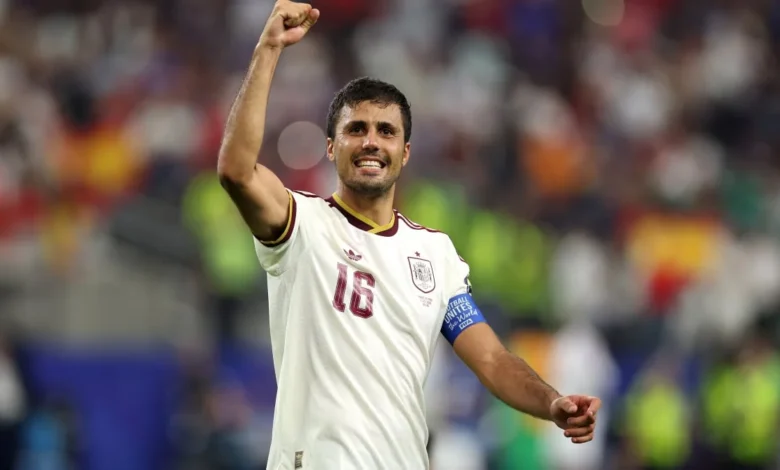
Spain, conversely, arrived at the tournament under a cloud of cautious expectation. After a relatively quiet group stage where they struggled to convert possession into goals, the Spanish side found their rhythm in the knockout phases. Their semi-final victory over France is widely regarded as the most complete performance of the tournament thus far, blending their traditional high-possession philosophy with a newfound verticality and defensive solidity. The "La Roja" of 2026 has matured into a squad that balances veteran experience with the explosive energy of its younger wingers, making them a formidable opponent for an Argentine defense that has occasionally looked vulnerable to pace.
Tournament Chronology and Path to the Final
The 2026 FIFA World Cup began on June 11, 2026, at the iconic Estadio Azteca in Mexico City. Over the subsequent five weeks, the tournament moved through 104 matches, the highest number in the competition’s history. The expanded format introduced a Round of 32, adding an extra layer of peril for the traditional powerhouses.
Argentina’s journey began in Group A, where they faced stiff competition from emerging CONCACAF and AFC sides. While they topped their group, it was not without drama; a 90th-minute winner was required in their second match to ensure early qualification. In the knockout rounds, the defending champions navigated a grueling quarter-final that went to a penalty shootout, once again proving the mettle of their veteran core.
Spain’s trajectory was more of a slow burn. Finishing second in their group after a surprise draw against a highly disciplined African side, Spain entered the knockout bracket on the more difficult side of the draw. They systematically dismantled their opponents in the Round of 16 and the quarter-finals before meeting France in a semi-final that many considered the "real" final. Their 2-0 victory over the French was a statement of intent, showcasing a midfield dominance that stifled the reigning European runners-up.
Venue Spotlight: New York New Jersey Stadium
The selection of the New York New Jersey Stadium (MetLife Stadium) in East Rutherford for the final underscores the commercial and cultural heart of the 2026 tournament. With a capacity exceeding 82,000, the venue has been outfitted with a natural grass surface specifically for the World Cup, meeting FIFA’s stringent requirements.
Logistically, the New York metropolitan area has become the epicenter of the football world in the lead-up to July 19. Local authorities have implemented unprecedented security and transport measures to accommodate the influx of over one million international visitors expected for the final week. Economic analysts predict that the final alone will generate over $600 million in local economic activity, highlighting the massive scale of this sporting event.
How to Access the Live Broadcast Globally
For fans unable to attend the match in person, the 2026 FIFA World Cup final will be one of the most-watched broadcasts in human history, with projected viewership exceeding 5 billion people. In the United Kingdom, the match will be available for free through a dual-broadcasting agreement between the BBC and ITV. This ensures that every household in the UK can access the game via traditional television or digital streaming platforms.
The digital streams will be hosted on BBC iPlayer and ITVX. These platforms provide high-definition coverage, expert punditry, and multi-angle camera options. However, these services are legally mandated to be geo-restricted to residents within the United Kingdom. For international travelers, expatriates, or those in regions without a free-to-air carrier, accessing these UK-based streams requires the use of a Virtual Private Network (VPN).
A VPN serves as a digital bridge, allowing users to route their internet connection through a server located in another country. By selecting a UK server, users can acquire a UK IP address, which enables access to BBC iPlayer and ITVX from anywhere in the world. ExpressVPN, an Official Supporter of the FIFA World Cup 2026, is frequently cited by technical analysts as the most reliable tool for this purpose due to its high-speed server network and ability to bypass sophisticated geo-blocks.
The Role of Digital Privacy Tools in Sports Streaming
The use of VPNs has become increasingly common in the sports broadcasting landscape. As media rights become more fragmented and expensive, fans often find themselves unable to access coverage of their home teams while traveling abroad. Tools like ExpressVPN or Proton VPN offer a solution that prioritizes both access and security.
ExpressVPN’s partnership with FIFA for the 2026 tournament highlights a growing recognition of the need for secure, global access to major sporting events. While the service typically operates on a subscription model—currently offering a one-month plan for approximately $12.99—it provides the low-latency connection required for live sports, where even a few seconds of lag can result in spoilers from social media or neighborhood cheers.
Tactical Analysis: Spain’s Precision vs. Argentina’s Resilience
On the pitch, the final is expected to be a clash of ideologies. Spain’s manager has successfully integrated a "control-first" approach with rapid transitions. The key to Spain’s success lies in their central midfield, which has maintained a pass completion rate of over 90% throughout the tournament. Their ability to starve opponents of the ball while simultaneously stretching the play with wide attackers will be the primary challenge for Argentina.
Argentina, under the continued tactical guidance of their coaching staff, has evolved into a "chameleon" team. They are comfortable defending deep and absorbing pressure, relying on the clinical finishing of their forward line on the counter-attack. The psychological advantage of being the defending champions cannot be overstated; this is a squad that knows how to manage the unique pressure of a World Cup final.
Key player matchups to watch include:
- The Midfield Battle: Spain’s creative engine vs. Argentina’s defensive anchors. If Spain can dictate the tempo, Argentina may find themselves fatigued by the 70th minute.
- The Wing Play: Spain’s young wingers will test the recovery speed of Argentina’s aging but experienced full-backs.
- Set Pieces: Argentina has been lethal from dead-ball situations throughout the 2026 campaign, a potential weakness for a Spanish side that prefers the ball on the ground.
Official Responses and Global Impact
FIFA President Gianni Infantino has described the 2026 final as "the biggest game in the history of the beautiful game." In a recent press briefing, FIFA officials emphasized the success of the 48-team expansion, noting that the inclusion of more nations has increased global engagement without diminishing the quality of the knockout stages.
The Argentine Football Association (AFA) issued a statement expressing confidence in the squad’s ability to achieve "eternal glory" once again, while the Royal Spanish Football Federation (RFEF) highlighted the "generational transition" that has brought Spain back to the pinnacle of world football for the first time since their 2010 victory.
Beyond the pitch, the 2026 World Cup Final serves as a diplomatic and cultural milestone. It is the first time the final has been held in the United States since 1994, marking a significant moment in the growth of football (soccer) within the North American market. The legacy of this match is expected to fuel the growth of professional leagues in the US, Canada, and Mexico for decades to come.
As the clock ticks toward 3 p.m. ET on July 19, the world prepares for a spectacle that transcends sport. Whether viewed from the stands of the New York New Jersey Stadium or via a free live stream on BBC iPlayer or ITVX, the 2026 FIFA World Cup final between Spain and Argentina is set to be an era-defining event.