Migrating to Blocks with Artisanal Care and Industrial Scale: Modernizing Enterprise WordPress Content

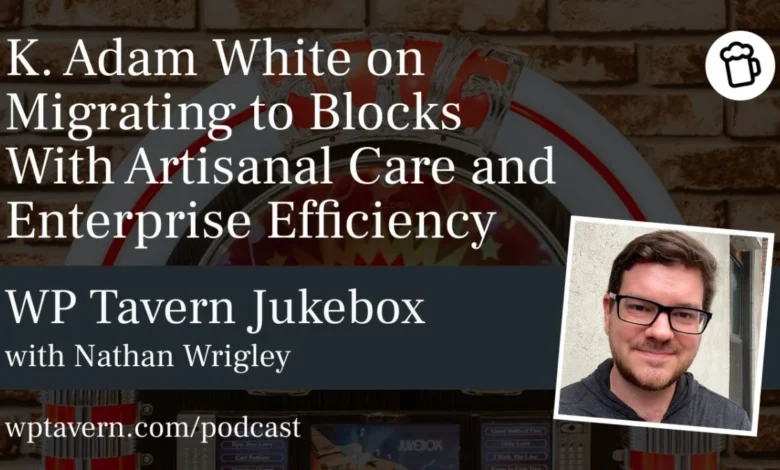
The landscape of enterprise content management is undergoing a significant paradigm shift as global organizations move away from legacy systems like Sitecore and proprietary page builders toward the native WordPress block editor. At the recent WordCamp US, K. Adam White, Principal Engineer at the enterprise WordPress consultancy Human Made, presented a technical framework for managing high-stakes content migrations. The core challenge facing modern developers is not merely moving text and images from one database to another, but doing so while preserving the design fidelity, structural integrity, and editorial usability of tens, or even hundreds, of thousands of individual posts.
The Evolution of Enterprise Migration
Historically, migrating to WordPress from an enterprise-grade CMS presented a binary choice: either import raw HTML that lacked the flexibility of modern design patterns or engage in a prohibitively expensive manual reconstruction of every post. The advent of Gutenberg—the WordPress block editor—has fundamentally changed this equation. Since the plugin’s initial release in 2017, the ecosystem has matured to the point where blocks and full-site editing (FSE) are now the industry standard for enterprise deployments.
The technical requirement for these migrations is to transition from static, legacy content structures to dynamic, pattern-based layouts. As White noted during his session, the "convert to blocks" feature native to the WordPress editor is sufficient for individual posts but lacks the automation capabilities required for mass-scale operations. When an organization manages hundreds of thousands of pages, the goal is to map legacy data into the block editor’s standardized HTML structure without losing visual fidelity.
Technical Methodology: The Rehydrator Approach
To solve the friction between artisanal design and industrial-scale execution, Human Made has pioneered a methodology centered on pattern-driven development. The firm utilizes a specialized tool—referred to as "rehydrator"—to bridge the gap between legacy source data and the WordPress block editor.
The process involves:
- Auditing Legacy Data: Using Node.js scripts to query and categorize content nodes from legacy systems.
- Template Mapping: Building reusable patterns that align with the site’s design system (theme.json).
- Automated Injection: Using scripts to populate these patterns with source data, ensuring that headings, images, and layout containers are correctly mapped to their corresponding blocks.
- Validation: Conducting automated spot checks to identify discrepancies in complex elements like accordions, carousels, or embedded media.
This approach relies heavily on the "leaf-to-trunk" system, where patterns are created at varying levels of granularity. This allows developers to build complex page layouts by composing smaller, pre-configured units, which significantly reduces the time required for manual styling adjustments post-migration.
The Role of Artificial Intelligence in Migration
The integration of AI-powered agents has accelerated the migration timeline significantly over the past year. Where developers previously spent weeks manually mapping database schemas, they now utilize large language models (LLMs) to analyze export files, identify edge cases, and even write the migration scripts necessary to transform source data.
According to White, AI tools have proven effective at "speaking" the language of Gutenberg. By feeding export data and design documentation into an LLM, engineering teams can now identify unique content patterns across large databases that would have been invisible to manual auditing. This enables a more proactive approach to edge-case management, ensuring that anomalous content structures—such as rare media embeds or specific FAQ layouts—are identified and accounted for before the full-scale migration begins.
Addressing the Enterprise "Control" Gap
A persistent critique of WordPress in the enterprise sector has been its lack of granular content permissions compared to traditional systems like Sitecore or Adobe Experience Manager (AEM). In these legacy environments, permissions can often be applied at the individual node level—down to a single string or button label.
In contrast, WordPress typically handles permissions at the post or capability level. While "block locking" and "content-only" editing features have been introduced to mitigate the risk of editorial error, they remain blunt instruments compared to the highly granular control offered by proprietary enterprise platforms.
Industry analysts observe that this creates a "middle-ground" compromise for many organizations. Rather than requiring native, granular permissions, many enterprises are opting to build custom editorial workflows. These workflows involve:
- Publication Checklists: Enforcing metadata requirements (e.g., categories, tags) before a post can be moved to a live state.
- Editorial Review Tiers: Implementing approval gates that require sign-off from designated stakeholders.
- Training and Governance: Moving away from "draconian" technical restrictions in favor of process-based editorial guidelines.
The Future of WordPress in the Enterprise
The data suggests that the demand for WordPress at the enterprise level remains robust. Despite the perception that WordPress is a tool for small-to-medium businesses, it currently powers a significant portion of the top one million websites globally. The shift toward patterns has made the platform more "future-proof," as it decouples the content from the specific styling of a theme, allowing for easier redesigns and structural changes in the future.
However, the industry faces two significant hurdles before it can fully dominate the top tier of enterprise software:
- Standardization of Workflow: While powerful tools exist, there is no standardized "enterprise workflow" in WordPress core. Most organizations rely on bespoke plugin solutions to manage the editorial review process.
- Internationalization and Multi-site Complexity: As global organizations require complex, multi-lingual, and multi-region deployments, the core WordPress infrastructure must continue to evolve to handle these demands with the same ease as its content editing tools.
Implications for the Developer Community
The move toward pattern-first development has profound implications for the WordPress developer community. The days of building custom blocks for every unique design requirement are rapidly coming to an end. Instead, developers are being encouraged to leverage the "Lego kit" of core WordPress blocks, using custom PHP files to control the structure and theme.json for style governance.
This shift lowers the barrier to entry for maintenance and long-term site management. When a site is built using core blocks and standard patterns, it becomes significantly easier for internal teams to maintain without needing constant support from external agencies. It also creates a more predictable environment for the automated tools that will inevitably handle future content migrations.
Conclusion: A New Standard for Migrations
The transition to a block-based architecture is no longer an experimental move; it is a strategic necessity for any organization looking to modernize its digital infrastructure. By combining the flexibility of the block editor with the rigor of automated, pattern-driven migration scripts, agencies like Human Made are demonstrating that enterprise complexity and the agility of open-source software are not mutually exclusive.
As these methodologies become more widely adopted, the "artisanal" care required for design and the "industrial" scale required for data migration will become the baseline for success in the enterprise space. The path forward for WordPress, as suggested by industry leaders, lies in continuing to refine these editorial tools and providing more opinionated, out-of-the-box workflows that satisfy the security and governance requirements of the world’s largest brands.