Meet Kirki: WordPress’s First Visual Builder With An Infinite Canvas — Smashing Magazine

The Evolution of the WordPress Page Building Landscape
To understand the significance of Kirki’s arrival, one must examine the historical trajectory of WordPress design tools. In the early 2010s, the introduction of shortcode-based builders revolutionized the platform, allowing users to move beyond the standard text editor. This was followed by the "Drag-and-Drop" era, led by industry giants such as Elementor, Divi, and Beaver Builder. However, as web design trends shifted toward more fluid, overlapping, and interactive layouts, these traditional builders began to show their age.
The primary limitation of traditional builders is their "div-heavy" architecture. To create a complex layout, these tools often wrap content in multiple layers of HTML containers, which increases the Document Object Model (DOM) size. A large DOM size negatively impacts browser rendering speed and Core Web Vitals—metrics that Google now uses as a ranking factor for Search Engine Optimization (SEO). Kirki addresses this by utilizing an infinite canvas approach, which allows elements to be placed with absolute or relative precision without requiring the "Russian Doll" nesting of containers typical of its predecessors.
Technical Architecture and Performance Benchmarks
Performance is no longer a luxury in the modern web; it is a fundamental requirement for user retention and conversion. In comparative testing conducted under standardized conditions—utilizing a clean WordPress installation and the default Twenty Twenty-Five theme—Kirki demonstrated a measurable advantage over established competitors.

In a Lighthouse performance audit, Kirki-built pages consistently achieved higher scores in the "Performance" and "Best Practices" categories compared to identical layouts built with Elementor. The data reveals that Kirki generates a significantly leaner code output. Where traditional builders might use five or six nested <div> tags to render a simple hero section, Kirki utilizes semantic HTML and efficient CSS positioning.
The impact of this clean code is twofold:

- Faster Time to Interactive (TTI): Because the browser has less HTML to parse and fewer scripts to execute, the page becomes usable much faster for the end-user.
- Improved SEO: Search engine crawlers can index content more effectively when it is not buried under layers of unnecessary code.
Furthermore, Kirki’s "zero plugin dependency" model further enhances performance. By integrating features such as a pop-up builder, form manager, and dynamic content handling directly into the core platform, Kirki eliminates the need for five or six separate plugins, each of which would typically load its own CSS and JavaScript files.
The Infinite Canvas and Design Workflow Integration
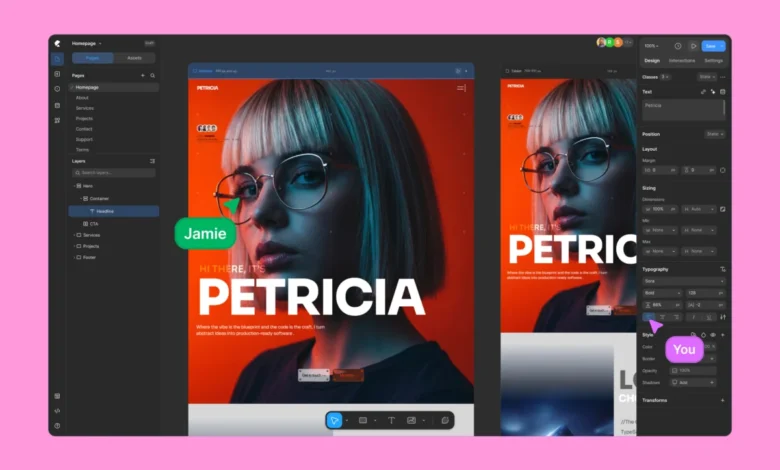
The centerpiece of the Kirki experience is its freeform infinite canvas. This interface mimics the environment of professional design tools like Figma or Adobe XD, allowing designers to pan, zoom, and place elements anywhere on the screen. This departure from the "box model" allows for the creation of complex, overlapping designs that were previously difficult or impossible to achieve in WordPress without custom CSS.

One of the most significant hurdles in modern web development is the "handoff" between design and development. Kirki mitigates this through its seamless Figma-to-WordPress workflow. Designers can import layouts directly from Figma, and Kirki converts these designs into functional, responsive WordPress pages. This reduces the development cycle by eliminating the need to manually rebuild designs from scratch, ensuring that the final live site remains pixel-perfect to the original vision.
Concurrent Responsive Editing
A major pain point in responsive web design is the need to toggle between desktop, tablet, and mobile views. Kirki introduces a "Concurrent Editing" system where all responsive breakpoints are visible side-by-side on the infinite canvas. When a change is made to the desktop view, the designer can immediately see how it affects the mobile layout without switching modes.

This system uses a cascading logic:
- Global Styles: Changes made at the largest breakpoint flow down to smaller screens.
- Local Overrides: Designers can fine-tune specific elements for mobile without affecting the desktop version.
- Custom Breakpoints: Users can define an unlimited number of breakpoints to ensure the site looks perfect on everything from ultra-wide monitors to the smallest smartphones.
Native Dynamic Content and CMS Capabilities
While many visual builders focus solely on the "front-end" aesthetics, Kirki includes a robust Dynamic Content Manager. In traditional WordPress setups, managing custom post types and metadata usually requires third-party plugins like Advanced Custom Fields (ACF) or Meta Box. Kirki integrates these capabilities natively.

This integration allows users to:
- Create and manage custom post types (e.g., Portfolios, Testimonials, Team Members).
- Define custom fields for specific data points.
- Visually map this dynamic data to elements on the canvas.
For developers, this means the ability to build data-driven websites—such as real estate listings or e-commerce directories—entirely within a single interface. This consolidated approach reduces the risk of plugin conflicts and simplifies the long-term maintenance of the website.

Advanced Interaction and Animation Engine
As user expectations for interactivity rise, Kirki has introduced a visual interaction builder that rivals dedicated animation platforms. Unlike the basic "entrance animations" found in most builders, Kirki provides a timeline-based editor. This allows for the creation of:
- Scroll-Triggered Animations: Elements that move, fade, or scale based on the user’s scroll position.
- Hover and Click Interactions: Complex state changes that respond to user input.
- Text-Path Animations: The ability to animate text along custom curves or shapes.
- Micro-interactions: Subtle movements that provide feedback to the user, enhancing the overall User Experience (UX).
The interaction engine is designed to be "no-code," meaning these complex sequences are built using visual triggers and timelines rather than manual JavaScript coding.

Real-Time Collaboration and Agency Workflows
In an era of remote work and distributed teams, collaboration tools are essential. Kirki is the first WordPress builder to offer a true multi-user co-editing experience. Similar to Google Docs or Figma, multiple team members can work on the same page simultaneously. Each user is represented by a color-coded cursor, and changes are synced in real-time across all sessions.
To support this workflow, Kirki includes:

- Live Commenting: Stakeholders can pin comments directly to specific elements on the canvas for feedback.
- Role-Based Permissions: Administrators can control which team members have access to specific design or content features.
- Page Audit Tools: A built-in quality control system that scans for broken links, missing alt text, and SEO optimizations before a page is published.
Market Positioning and Pricing Strategy
Kirki has positioned itself as a high-value alternative to both traditional WordPress builders and SaaS-based platforms like Webflow. Its pricing model is designed to be transparent and inclusive:
- Free Version: Available on the WordPress.org repository, the free version provides a feature-packed experience suitable for many professional projects.
- Starter Plan ($59/year): Aimed at individual site owners, this plan unlocks all premium features, including the full template library and advanced interactions.
- Lifetime Plan ($499): A one-time payment option that provides unlimited site licenses and updates, appealing to agencies looking for long-term cost predictability.
Unlike competitors that often hide essential features—such as form builders or dynamic content—behind higher-tier paywalls, Kirki includes its entire suite of tools in every paid plan.

Broader Implications for the WordPress Ecosystem
The launch and growth of Kirki represent a broader trend toward "decoupled" design in the WordPress space. By moving the design logic into a highly optimized visual layer while keeping the content management in WordPress, Kirki offers the best of both worlds: the power and community of the world’s most popular CMS combined with the design flexibility of a modern SaaS tool.
Industry analysts suggest that the "infinite canvas" model will likely become the new standard for professional web design. As performance metrics like Google’s Interaction to Next Paint (INP) become more critical, the demand for builders that produce clean, lightweight code will only increase. Kirki’s proactive approach to performance and its focus on the designer-developer handoff position it as a leader in this new generation of WordPress tools.

Final Verdict and Future Outlook
Kirki succeeds by addressing the three primary complaints leveled against traditional WordPress builders: performance bloat, design rigidity, and plugin over-reliance. By providing a clean-slate approach to web construction, it allows for a more creative and technically sound development process.
For agencies, the real-time collaboration and Figma integration offer significant efficiency gains. For small business owners, the integrated nature of the tool reduces the technical complexity of managing a WordPress site. As Kirki continues to expand its template library and refine its co-editing features, it stands as a formidable challenger to the established status quo, signaling a future where WordPress sites are as fast and flexible as they are beautiful.