LinkedIn Research Reveals Relational Trust and Peer Validation Drive B2B Buying Decisions

In the complex ecosystem of business-to-business (B2B) commerce, conventional marketing wisdom has long dictated that prospective clients make purchasing decisions based primarily on product superiority, technical specifications, and competitive pricing. However, groundbreaking new research published by LinkedIn, in strategic partnership with WARC and Lions Advisory, challenges this foundational assumption. The comprehensive study reveals that once baseline technical and financial requirements are met, B2B buyers are overwhelmingly influenced by relational factors, most notably peer validation, customer testimonials, and demonstrable industry leadership.
The findings, released via the LinkedIn B2B Institute, offer a profound shift in how enterprise marketers should conceptualize and execute their go-to-market strategies. By analyzing hundreds of successful commercial campaigns, the research provides actionable insights into what drives true "buyability"—the invisible tipping point that transforms a hesitant prospect into a committed, long-term client.
Background Context and Research Methodology
To uncover the underlying mechanics of modern corporate purchasing decisions, LinkedIn’s B2B Institute, alongside global marketing authority WARC and creative consultancy Lions Advisory, embarked on a massive empirical investigation. The research team meticulously analyzed a curated database of 700 B2B case studies. These campaigns spanned various industries, geographic regions, and market scales, offering a panoramic view of contemporary commercial interactions.
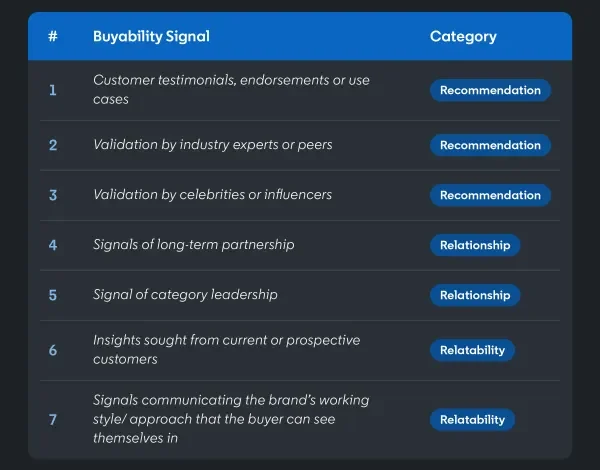
The primary objective of the study was to decode why certain B2B marketing initiatives achieve extraordinary commercial success while others languish despite promoting technically superior products. The researchers evaluated each of the 700 campaigns against a rigorous matrix of buying signals. These signals measured the presence of customer-centric insights, third-party endorsements, relatable case studies, brand authority indicators, and strategic risk-mitigation framing.
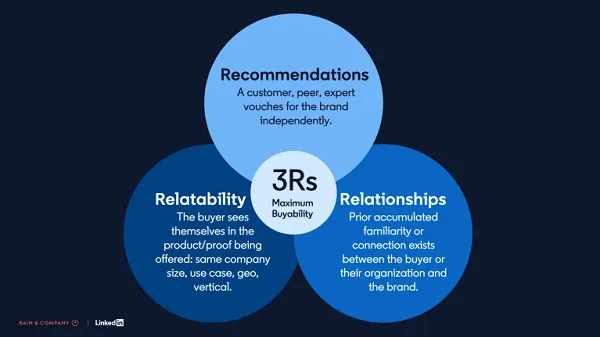
Based on the density of these signals, the researchers segmented the campaigns into two distinct categories: "high buyability" initiatives, which incorporated three or more of the identified buying signals, and "low buyability" initiatives, which featured zero, one, or two signals. The subsequent comparative analysis yielded stark contrasts in commercial performance, redefining the metrics of B2B marketing effectiveness.
The Psychology of B2B Risk Mitigation
At the core of the study’s findings is a psychological reality unique to the corporate buying environment: professional risk aversion. Unlike consumer purchases, where the buyer assumes personal responsibility for a financial transaction, B2B purchasers operate within complex organizational hierarchies where a poor decision can jeopardize careers, reputations, and corporate capital.
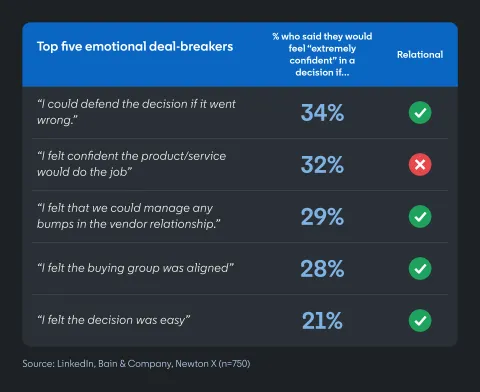
Mimi Turner, Global Head of Thought Leadership Strategy at LinkedIn’s B2B Institute, contextualized this dynamic during the release of the findings. "Confidence in product capability is still very important," Turner explained. "But once baseline requirements are met, the top priority is no longer marginal product superiority or price. It becomes whether the decision can be successfully defended even if outcomes go wrong."
This psychological nuance explains why relational factors hold disproportionate sway. When a B2B buyer champions a product backed by robust peer validation, visible industry leadership, and authentic customer testimonials, they are essentially acquiring an insurance policy for their own professional reputation. If the procurement succeeds, the buyer shares in the glory; if it fails, they can credibly argue that they chose a market-tested, universally respected solution endorsed by trusted industry peers. Consequently, marketing messages that reduce perceived risk by emphasizing social proof dramatically outperform those that merely recite technical feature lists.
Quantitative Findings and Commercial Impact
The empirical data gathered by LinkedIn, WARC, and Lions Advisory leaves little doubt about the commercial efficacy of high-buyability strategies. Campaigns that successfully integrated relational validation metrics consistently outpaced their competitors across multiple brand and commercial Key Performance Indicators (KPIs).

Among the most striking data points is the prevalence of customer-centric insights within successful frameworks. The study found that customer-centric insights were present in an overwhelming 83 percent of high-buyability campaigns. Furthermore, these high-performing initiatives were four times more likely to feature authentic customer testimonials than their low-buyability counterparts.
When evaluated against the prestigious WARC B2B Effectiveness Ladder—a globally recognized benchmark for marketing impact—the divergence became even more pronounced. High-buyability campaigns were found to be 1.7 times more likely to be classified as "Strategic Assets." This designation represents the pinnacle of the effectiveness ladder, reserved exclusively for marketing initiatives that drive sustained, long-term commercial growth rather than short-term sales spikes.
The research demonstrates that when brands pivot their messaging from insular product bragging to relational reassurance, they fundamentally alter their market positioning. By embedding social proof and relatable buying scenarios into their core narratives, organizations transform their marketing collateral from simple promotional brochures into powerful risk-mitigation tools for prospective buyers.
Practical Application: The ServiceNow Case Study
To validate these theoretical insights in a real-world environment, LinkedIn collaborated on a targeted campaign for ServiceNow, a leading digital workflow company. The campaign was intentionally designed around the core principles of buyability, placing heavy emphasis on peer validation, relatable customer use cases, and external industry validation rather than relying solely on the technical specifications of ServiceNow’s software offerings.
The results of this applied methodology were transformative. According to data shared by LinkedIn, the ServiceNow campaign yielded extraordinary commercial dividends over a three-year observation period:
- A 10-fold increase in brand consideration among target accounts.
- A staggering 13-fold increase in unaided brand awareness.
- A direct 23 percent increase in subscription revenue over the same timeframe.
This real-world test served as concrete proof that the theoretical markers of buyability translate directly into bottom-line growth. By structuring marketing campaigns to alleviate the psychological anxiety of the corporate buyer, ServiceNow was able to capture significant market share and accelerate its sales pipeline.
Broader Industry Implications for B2B Marketers
The publication of this research arrives at a pivotal moment for the B2B marketing sector. For years, digital transformation has pushed marketing departments toward hyper-quantifiable, performance-driven metrics—often resulting in sterile, feature-obsessed campaigns designed to appeal exclusively to the rational, economic-man model of decision-making.
LinkedIn’s findings serve as a corrective to this over-rationalization. Modern B2B buyers do not make purchasing decisions in a vacuum; they are emotional, social actors navigating institutional risk. Therefore, marketing strategies must evolve to reflect this human reality.
Industry analysts suggest several actionable takeaways for marketing leaders seeking to operationalize these insights:
- Elevate Social Proof: Move customer testimonials and peer success stories from the footnotes of the website to the forefront of top-of-funnel marketing campaigns. Prospects need to see credible peers succeeding with the product.
- Reframe Risk: Design content that explicitly provides the buyer with the rational arguments and validation needed to defend the purchasing decision to internal stakeholders, boards, and procurement committees.
- Prioritize Relational Messaging: Balance technical product data with narratives that highlight shared industry values, collaborative partnerships, and relatable deployment scenarios.
- Align with Sales Teams: Ensure that sales enablement materials are saturated with the same peer validation signals used in marketing campaigns, creating a seamless narrative from first touch to final contract execution.
As competition intensifies across all sectors of the enterprise economy, the ability to build a "buyable" brand will increasingly separate market leaders from industry laggards. By recognizing that relationships, reassurance, and reputation outweigh marginal product advantages, B2B marketers can craft campaigns that not only resonate on an emotional level but also deliver enduring commercial success.