Inside the First-Ever Three.js Conference: A Historic Gathering of Web Graphics Pioneers in Paris


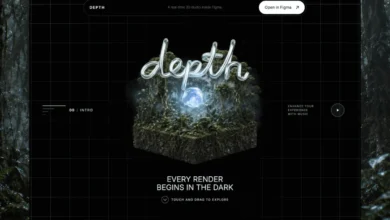
The global creative coding community converged in the French capital for a landmark milestone: the inaugural Three.js Conference, hosted at the prestigious Maison de la Chimie in Paris. Bringing together developers, designers, artists, and technical innovators from around the world, this two-day event marked the first time the distributed ecosystem behind one of the web’s most powerful 3D libraries gathered under a single roof. While thousands followed online through real-time media coverage provided by outlets like Codrops, attendees on the ground experienced an intensive program featuring deep-dive technical talks, panel discussions, lightning rounds, and a retrospective look at the library’s profound impact on modern digital experiences.

A Milestone for WebGL and WebGPU Ecosystems

Since its inception, Three.js—created by Ricardo Cabello, widely known as Mr.doob—has democratized 3D graphics in the browser, lowering the barrier to entry for developers looking to build immersive web applications without relying on proprietary plugins. Over the years, the library has grown from a humble utility wrapper around WebGL into a cornerstone of contemporary web design, powering millions of commercial websites, interactive art installations, product configurators, and web-based games.

The decision to host a dedicated conference reflects the maturation of the spatial web. As hardware acceleration has improved and browser capabilities have expanded to include cutting-edge APIs like WebGPU, the community has scaled exponentially. Organizers from Hervé Studio spent seven months crafting the physical and digital scenography of the conference, ensuring that the venue itself mirrored the playful, boundary-pushing ethos of the Three.js community.

Chronology of Day One: From Nostalgia to the Future of Rendering

The conference kicked off with high energy, setting a diverse tone for the schedule. Vicente Lucendo opened the technical sessions by pulling back the curtain on "Messenger," detailing the acoustic, visual, and performance optimizations required to craft a seamless web experience. Following him, Robin Payot bridged generations by demonstrating how a classic childhood video game franchise like Zelda could be reconstructed in the browser using Three.js, successfully migrating performance-heavy logic from WebGL to WebGPU while managing complex levels of detail (LODs) and custom shaders.

Mid-morning sessions shifted focus toward the macro-trends shaping software engineering and digital design. A panel featuring Mr.doob, Renaud Rohlinger, Nicolas Barrateau, and Florian Zumbrunn tackled the elephant in the room: the integration of artificial intelligence into creative coding workflows. The consensus among the panel was nuanced; while AI tools have radically accelerated prototyping—allowing novices and experts alike to visualize concepts in a fraction of the time—the foundational problem-solving skills forged through years of manual debugging remain essential. As panelists noted, AI may make it possible to build anything instantly, but the true challenge shifts to editorial restraint: knowing when a project is finished.

The morning continued with presentations from Cassie Evans of GreenSock (GSAP), who offered an exclusive preview of GSAP 4. Highlighted by improved spring-based animation controls and native Three.js integration, the upcoming release promises to optimize performance across the estimated 13 million websites currently utilizing the library. Daria Nevezhyna and Kim Boutin followed with explorations into spatial storytelling, UI experimentation, and the rejection of flat, homogenized web design in favor of tactile, immersive digital spaces.

Afternoon Sessions: Technical Innovation and Industry Standards

The momentum carried into the afternoon with technical showcases that pushed the boundaries of browser capabilities. Célia Lopez shared an inspiring trajectory from self-taught WebGL developer to industry collaborator, emphasizing a philosophy of iterative learning and open sharing.

In one of the more technically intriguing sessions of the day, Natalia Markoborodova and Thomas Nattestad demonstrated experimental methods for rendering HTML directly inside Canvas elements using Three.js features like THREE.HTMLTexture. This development signals a potential convergence between traditional DOM interfaces and hardware-accelerated 3D environments, opening new horizons for hybrid user interfaces. Simultaneously, Lovis Odin addressed the operational realities of generative media, showcasing how procedural generation, Gaussian splats, and custom LoRAs are transitioning from speculative research into reliable production pipelines.

One of the most anticipated and entertaining events of the conference was the "Roast My Folio" session, where prominent digital creators Bruno Simon, Cassie Evans, and Nicolas Barrateau critiqued audience portfolios in real time. The panel established clear guidelines for modern web design: bloated loading times, excessive and distracting fluid simulations, and walls of dense explanatory text remain primary design pitfalls. The overarching advice emphasized clarity, intentional decision-making, and letting the work speak for itself.

The Rapid-Fire Pace of Lightning Talks

Following the portfolio reviews, ten speakers took the stage for a high-intensity lightning round, with each presenter allotted precisely two minutes. The rapid sequence showcased an array of experimental projects and commercial tools:

- Unbound demonstrated their unified AI and Three.js platform, Unbound Loop.
- Sketchfab co-founder Cédric Pinson demoed browser-based lighting and model-tweaking workflows.
- Julian Garnier offered a glimpse into upcoming features for Anime.js.
- Dario Sanchez delivered a memorable concluding thought on visual perception, arguing that rendering bottlenecks are often psychological rather than technical: "Rendering isn’t always the bottleneck. Perception is. And technical accuracy alone doesn’t make something beautiful. Taste does."
The Vision of Mr.doob and the Closing of Day One

Day One culminated in a keynote address by Mr.doob, who reflected on the evolution of creative coding and the philosophical shifts introduced by modern AI agents. Drawing parallels to the introduction of anti-aliasing algorithms in the 1990s, he described AI-assisted coding as a natural progression toward a higher level of abstraction. When software and AI handle repetitive mechanical burdens, creators are liberated to focus entirely on conceptual problem-solving. Observing an eight-year-old construct a functional 3D game using AI reinforced his belief that the threshold for creative expression is lowering globally.

Implications for the Future of the Web

The inaugural Three.js Conference serves as a bellwether for the broader web development industry. As technologies like WebGPU mature, artificial intelligence redefines productivity, and designers demand richer, more spatial interactions, the boundary between desktop applications and browser experiences continues to dissolve. Events like the Paris gathering do more than celebrate a software library; they foster a collective culture of experimentation and shared knowledge, ensuring that the open web remains a vibrant canvas for the next generation of digital creators. With Day Two promising further deep dives into spatial computing and tool development, the conference has firmly established itself as a premier fixture on the tech calendar.