The Definitive Guide to Building Topical Authority in the Age of AI Search

In today’s dynamic digital landscape, even brands with a strong identity, compelling products, and a history of high-quality content can struggle to achieve genuine topical authority. The challenge lies in a fundamental shift in how information is processed and disseminated by leading search engines and advanced Large Language Models (LLMs). This evolving environment demands more than just visibility; it requires a consistent, verifiable association between a brand and its core topics.

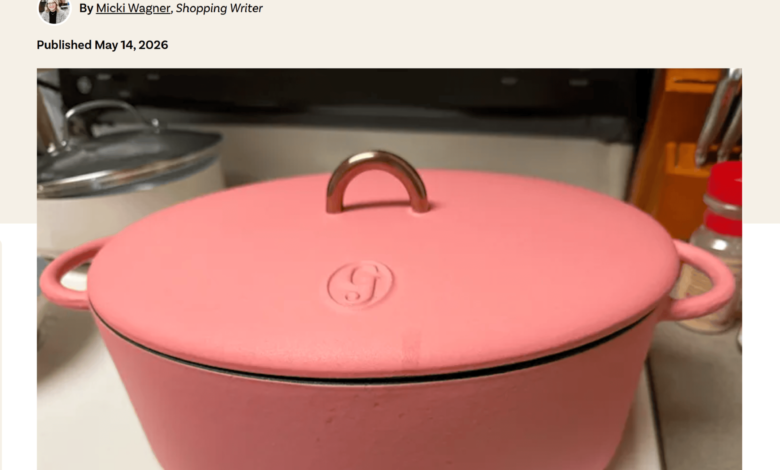
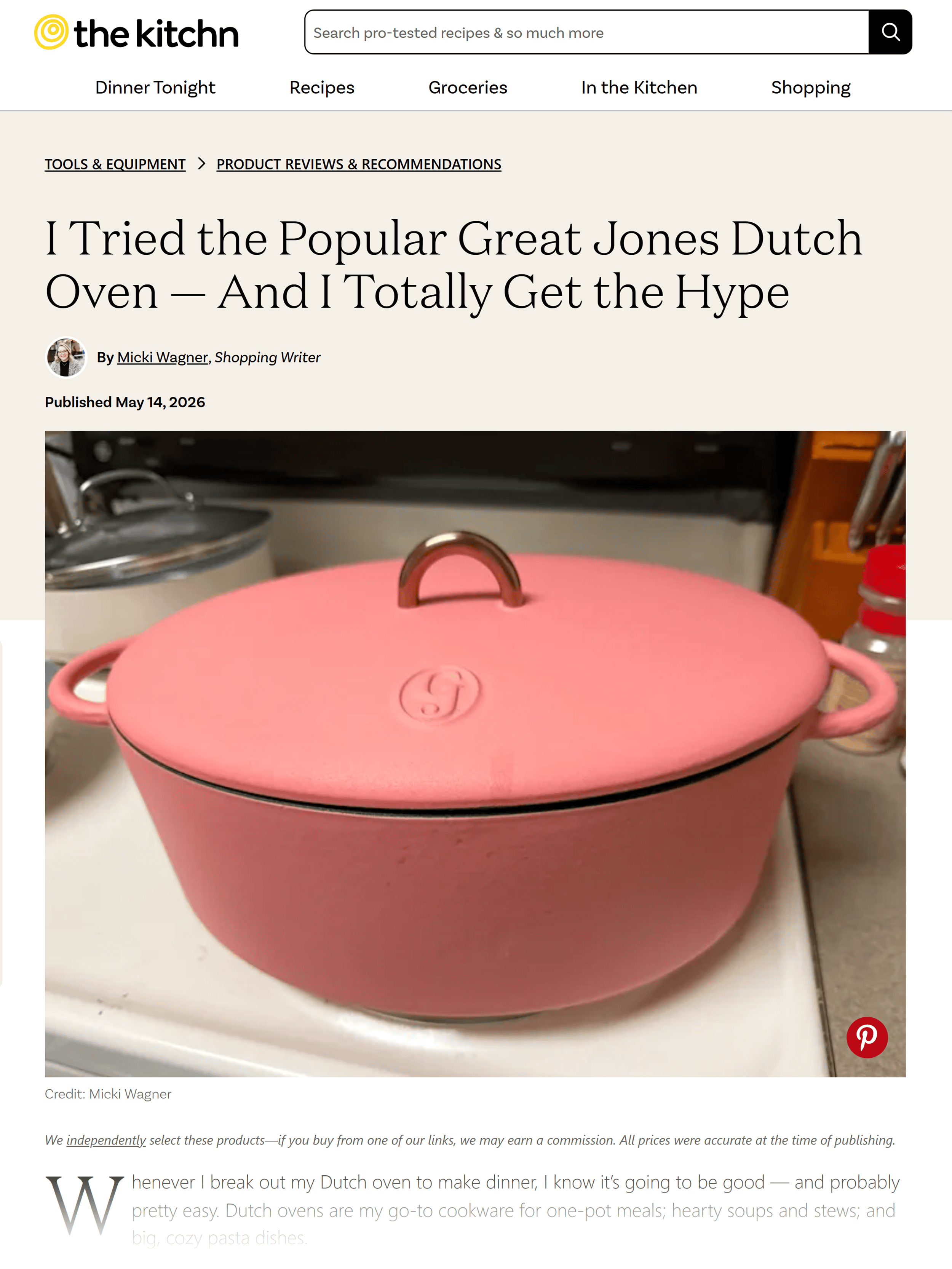
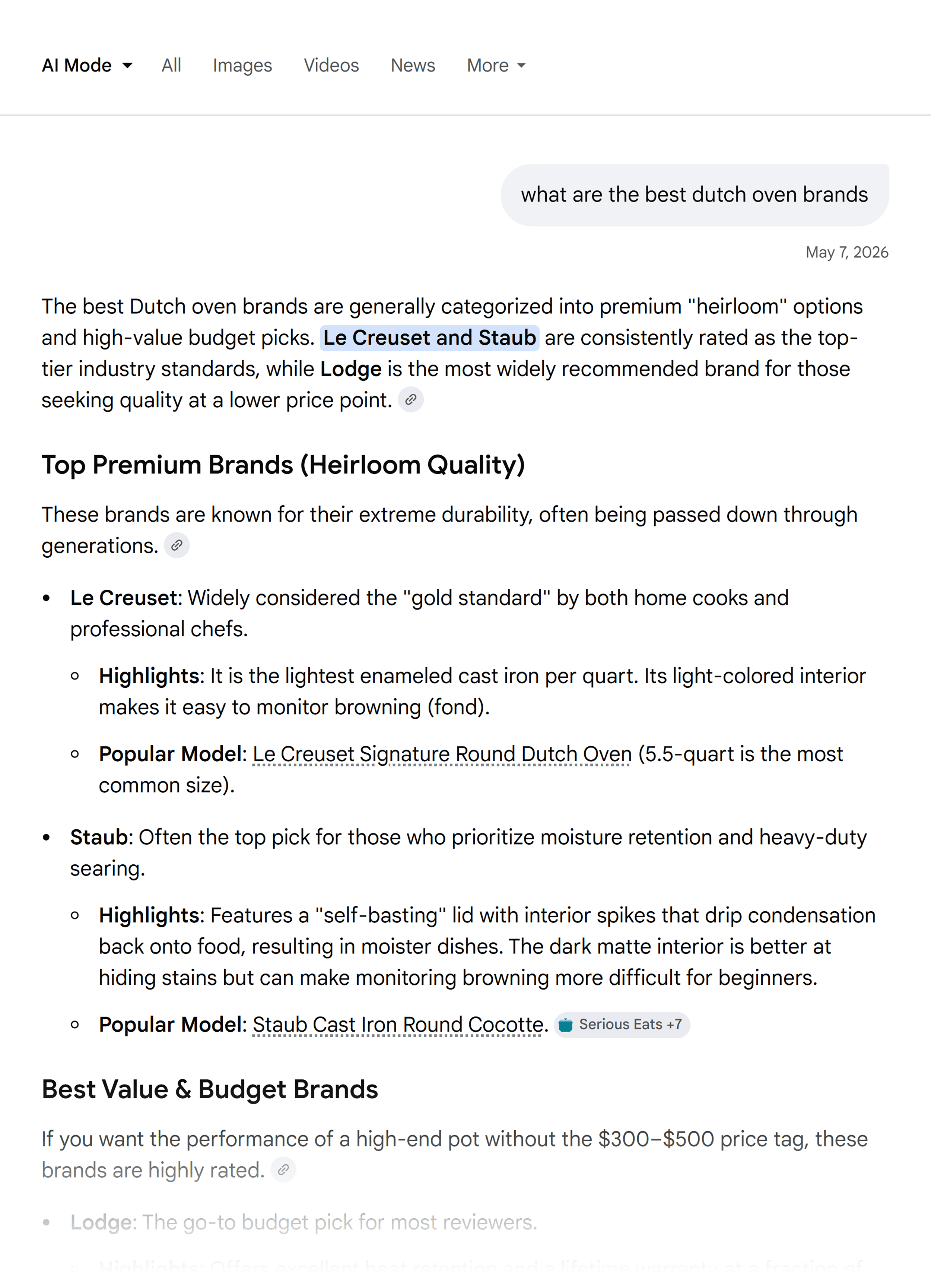
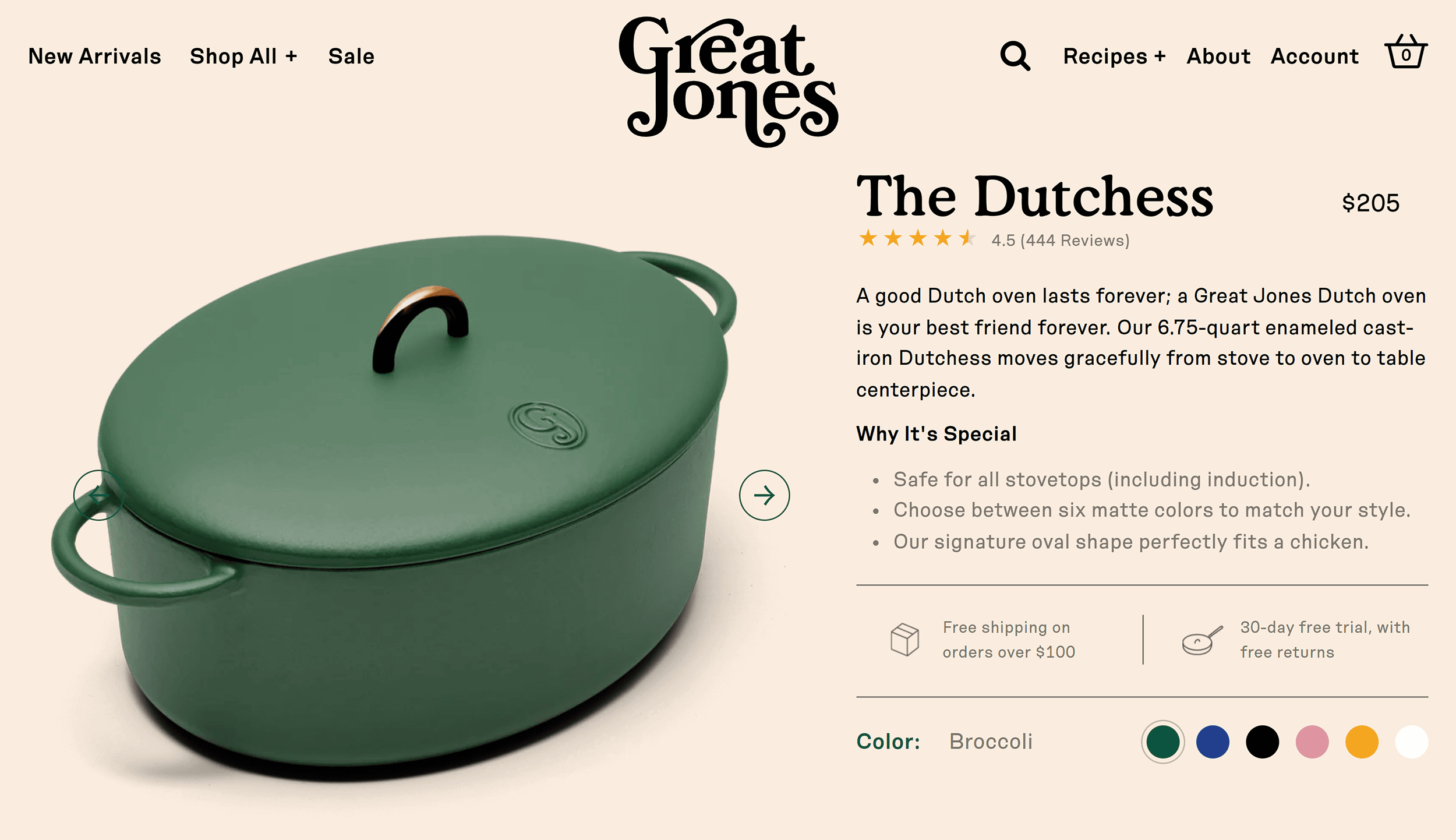
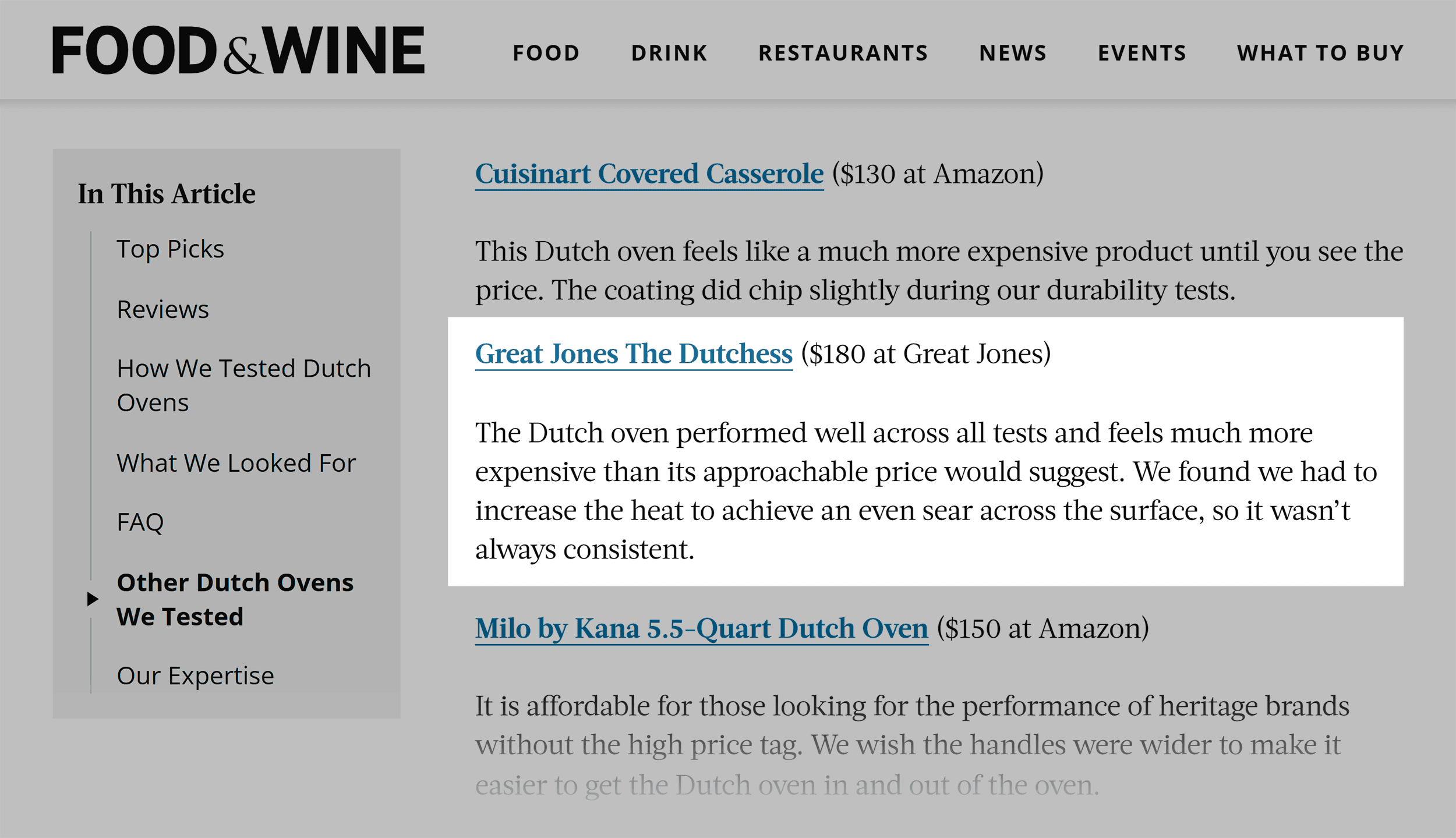
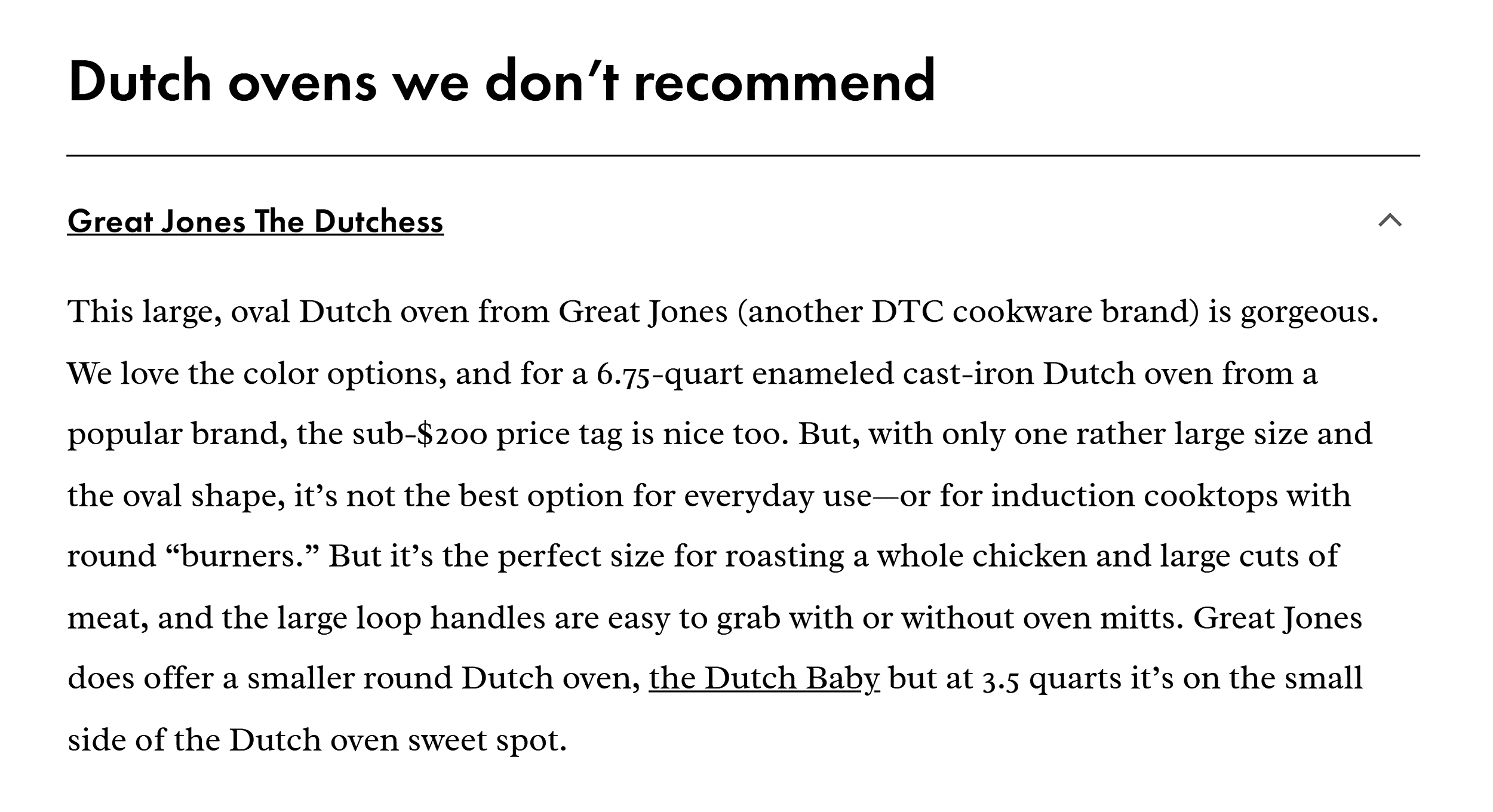
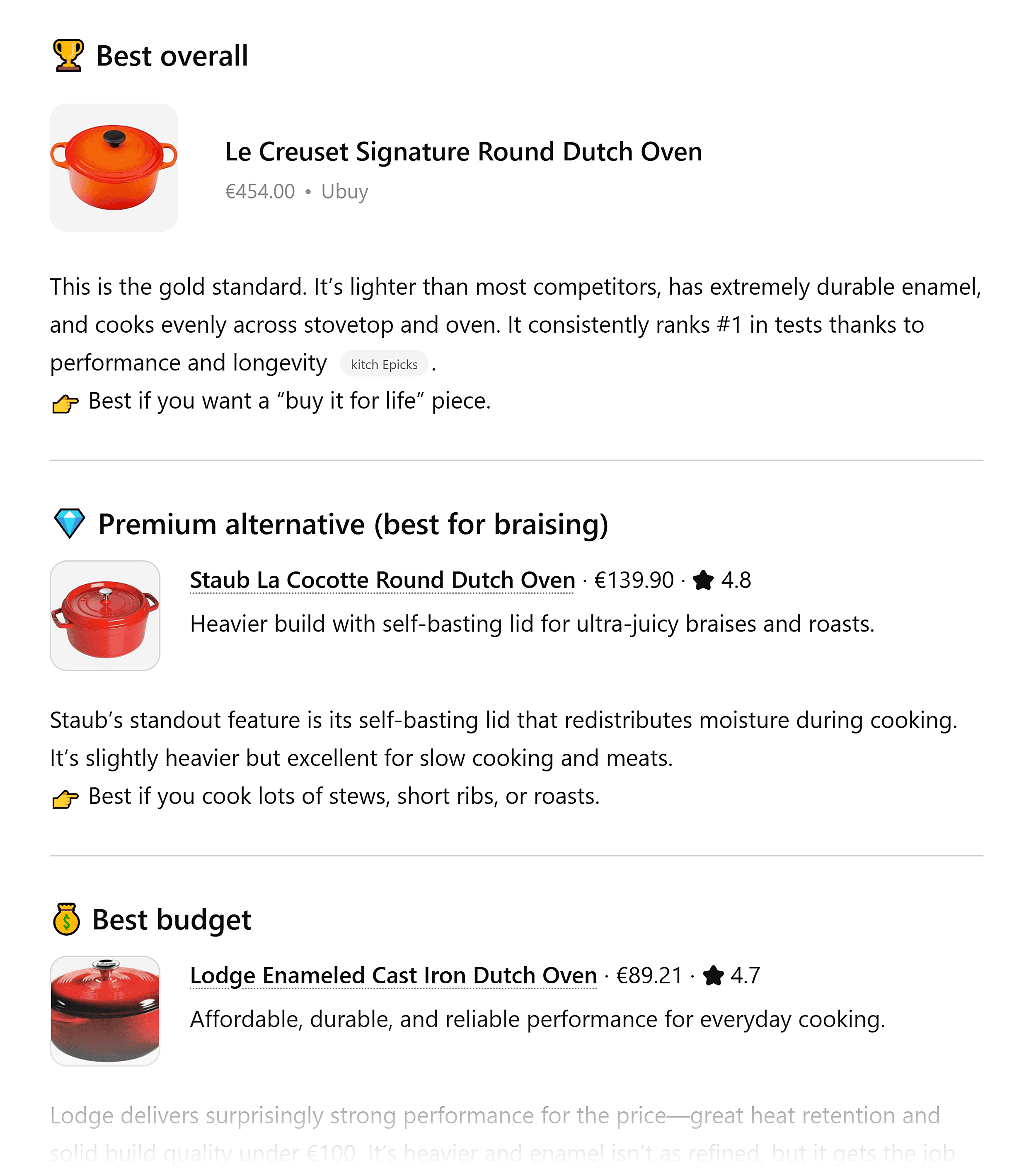
Consider the case of Great Jones, a popular kitchenware company celebrated for its aesthetically pleasing and functional products. Their Dutch oven, affectionately named "The Dutchess," garners widespread acclaim, boasting positive reviews and prominent features in esteemed publications such as Vogue, The New York Times, Bon Appétit, and The Kitchn. Yet, despite this impressive traditional media presence and product quality, a simple search for "best Dutch ovens" on Google or an inquiry to an LLM for recommendations rarely yields Great Jones among the top results. This disparity underscores a critical gap: the absence of pervasive topical authority.
The Evolving Landscape of Digital Credibility
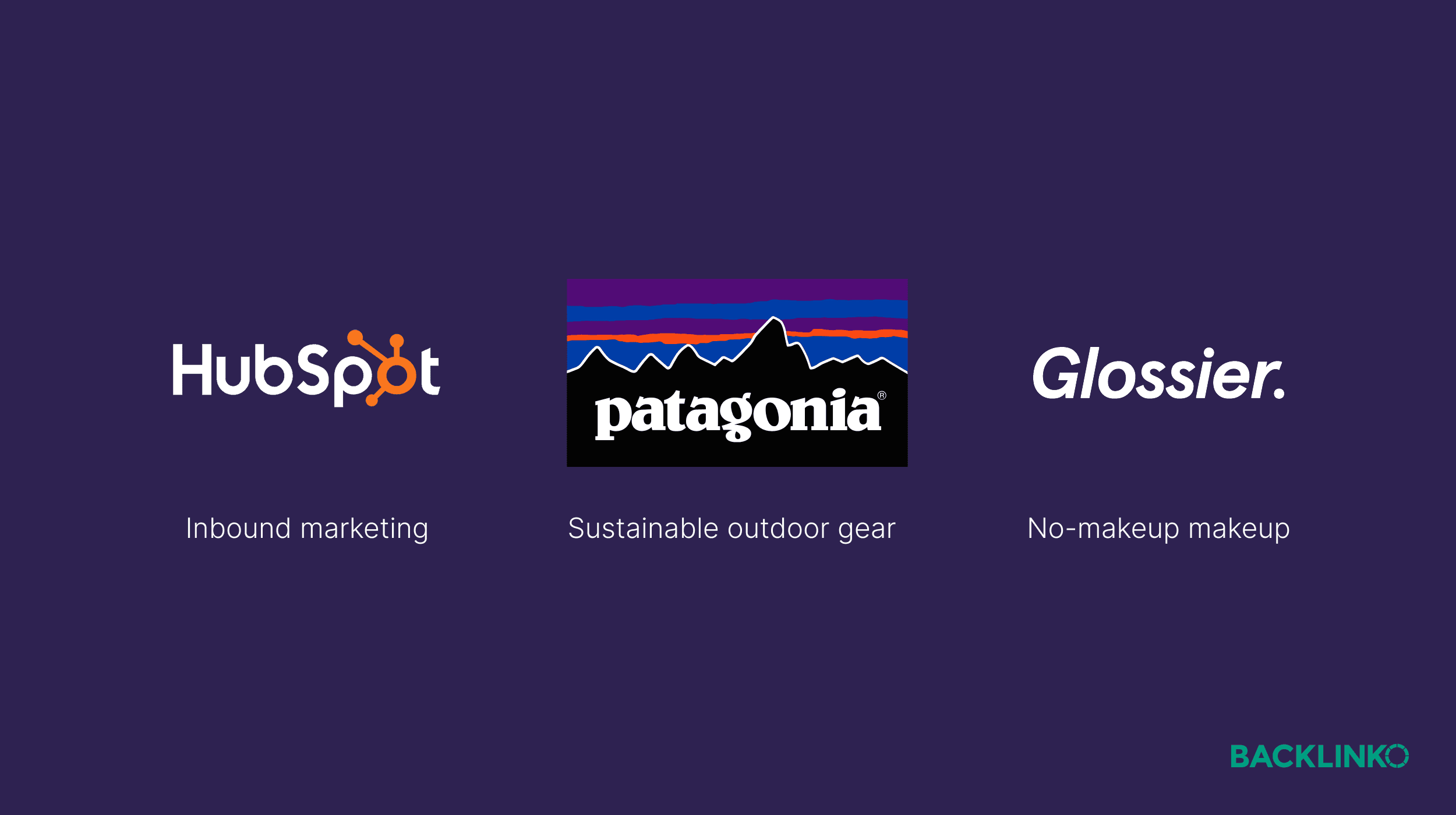
Topical authority transcends mere brand recognition or content volume. It signifies a website’s earned reputation for expertise on a specific subject, forged when a brand and its chosen topic consistently appear together across sources trusted by consumers, search engines, and LLMs. This differs significantly from older SEO paradigms that prioritized keyword density or sheer content output. Today, search algorithms, especially those powering AI-driven search experiences, evaluate a brand’s holistic presence to ascertain its credibility and relevance within a topic.
For instance, brands like Mailchimp are synonymous with email marketing, Canva with graphic design, and Nordstrom with high-end fashion. These associations aren’t accidental; they are the cumulative result of consistent messaging and verifiable expertise. As industry expert Amanda Milligan, Content and Growth Manager at Semrush, notes, "Today, search engines and LLMs look for more than coverage. They look for a clear position on the topic and external evidence that supports it." Without this coherent pattern, brands risk being overlooked, regardless of their intrinsic value or media mentions.
Introducing the Topical Authority Pyramid Framework
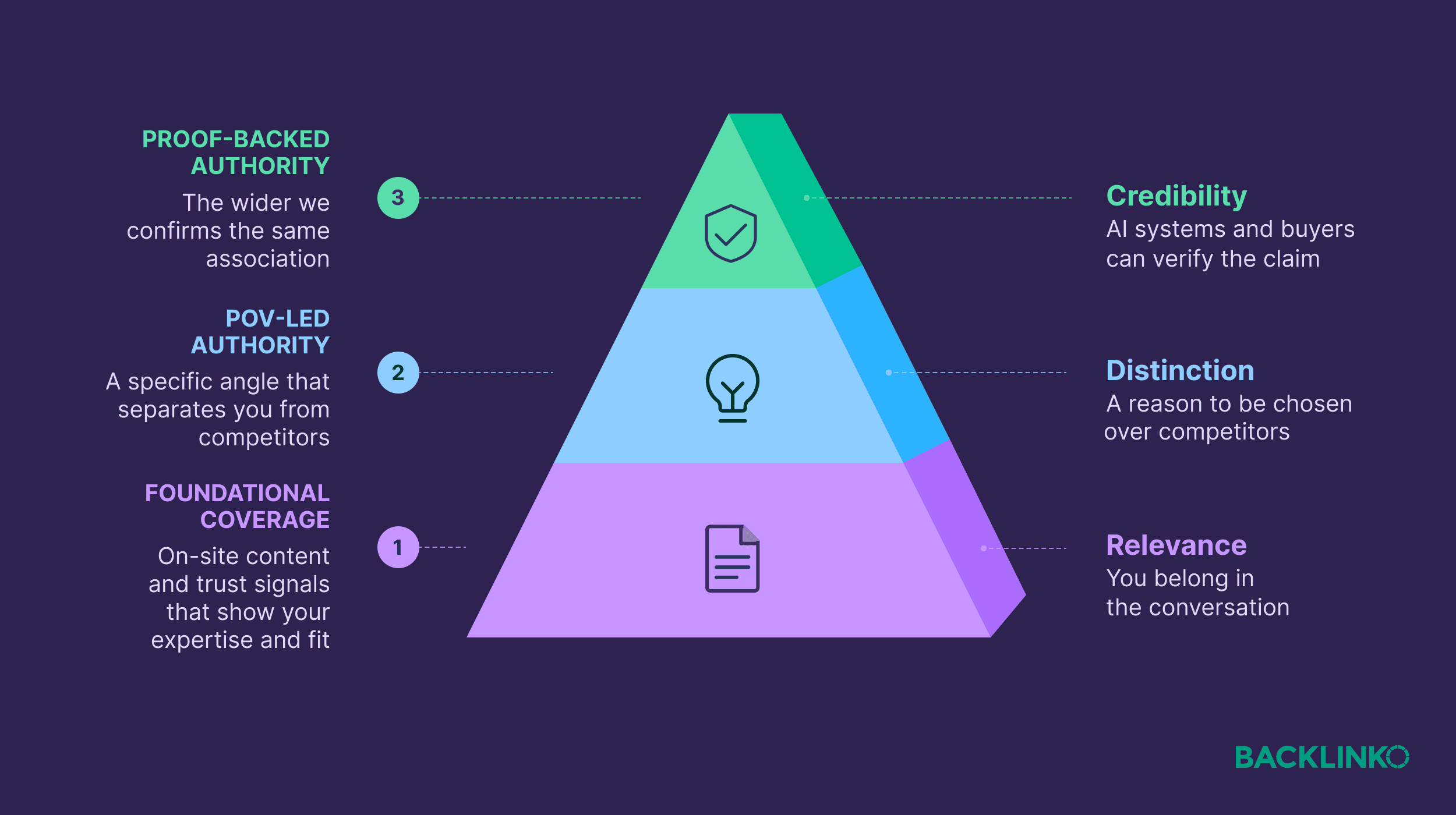
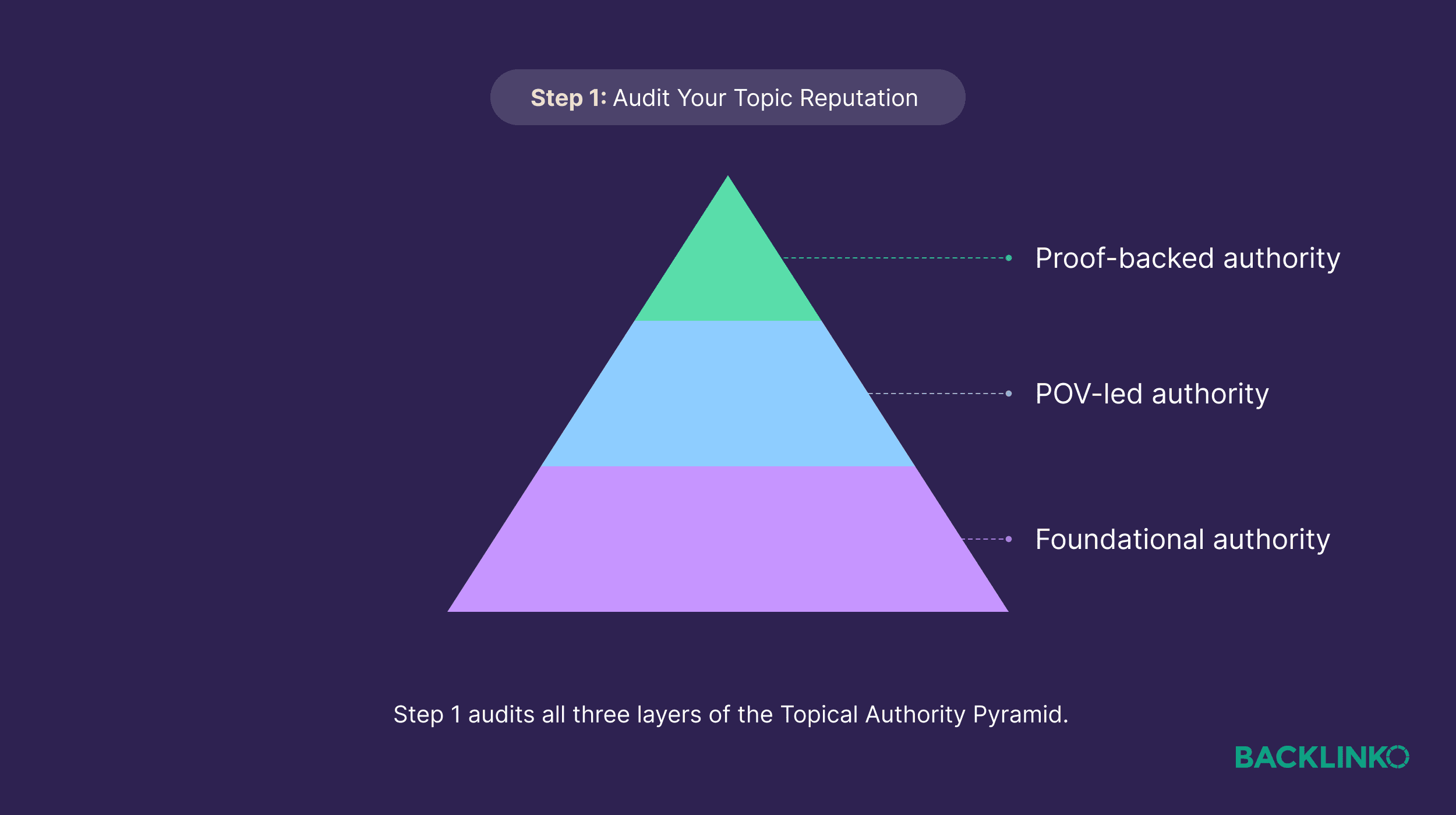
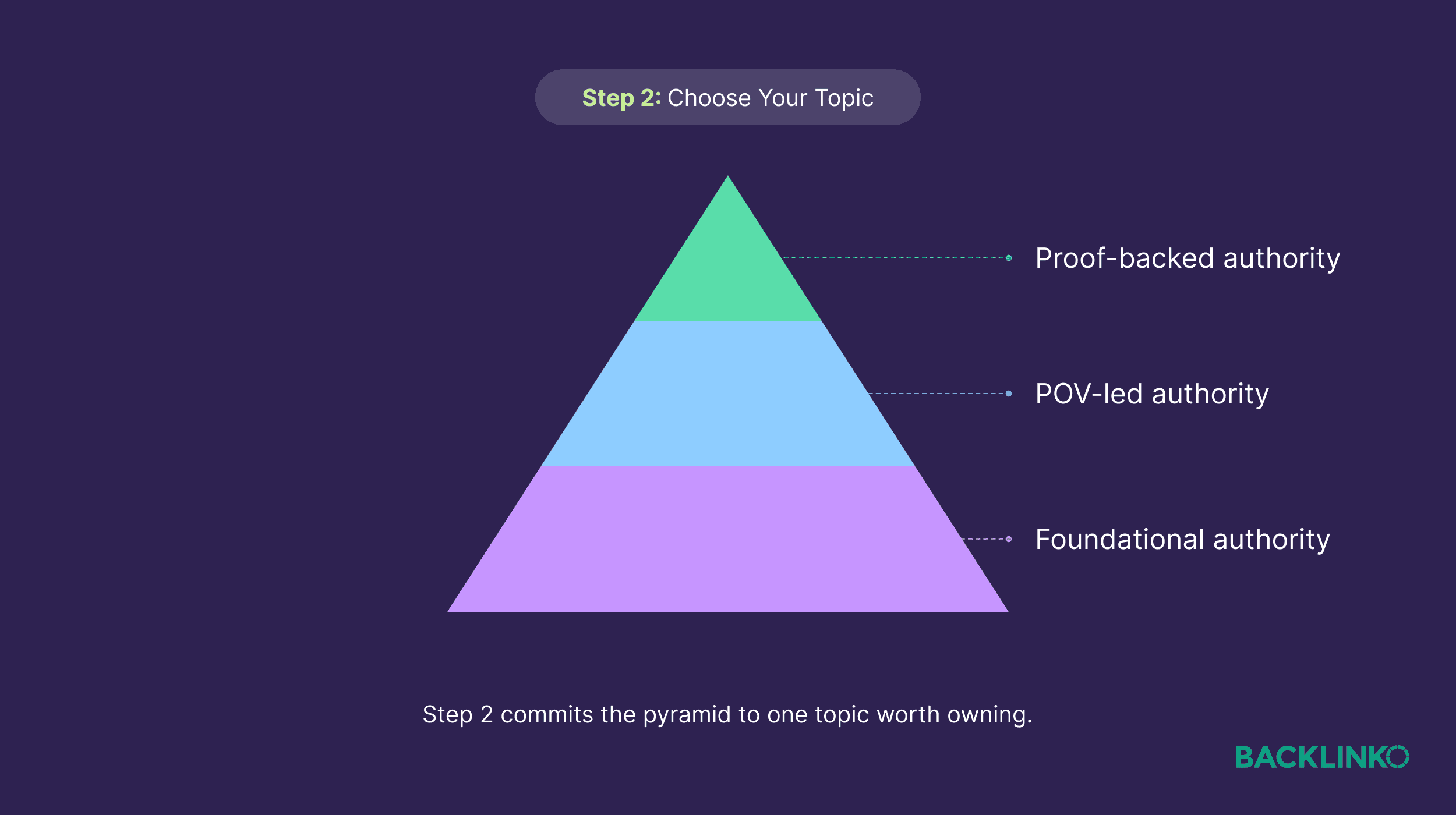
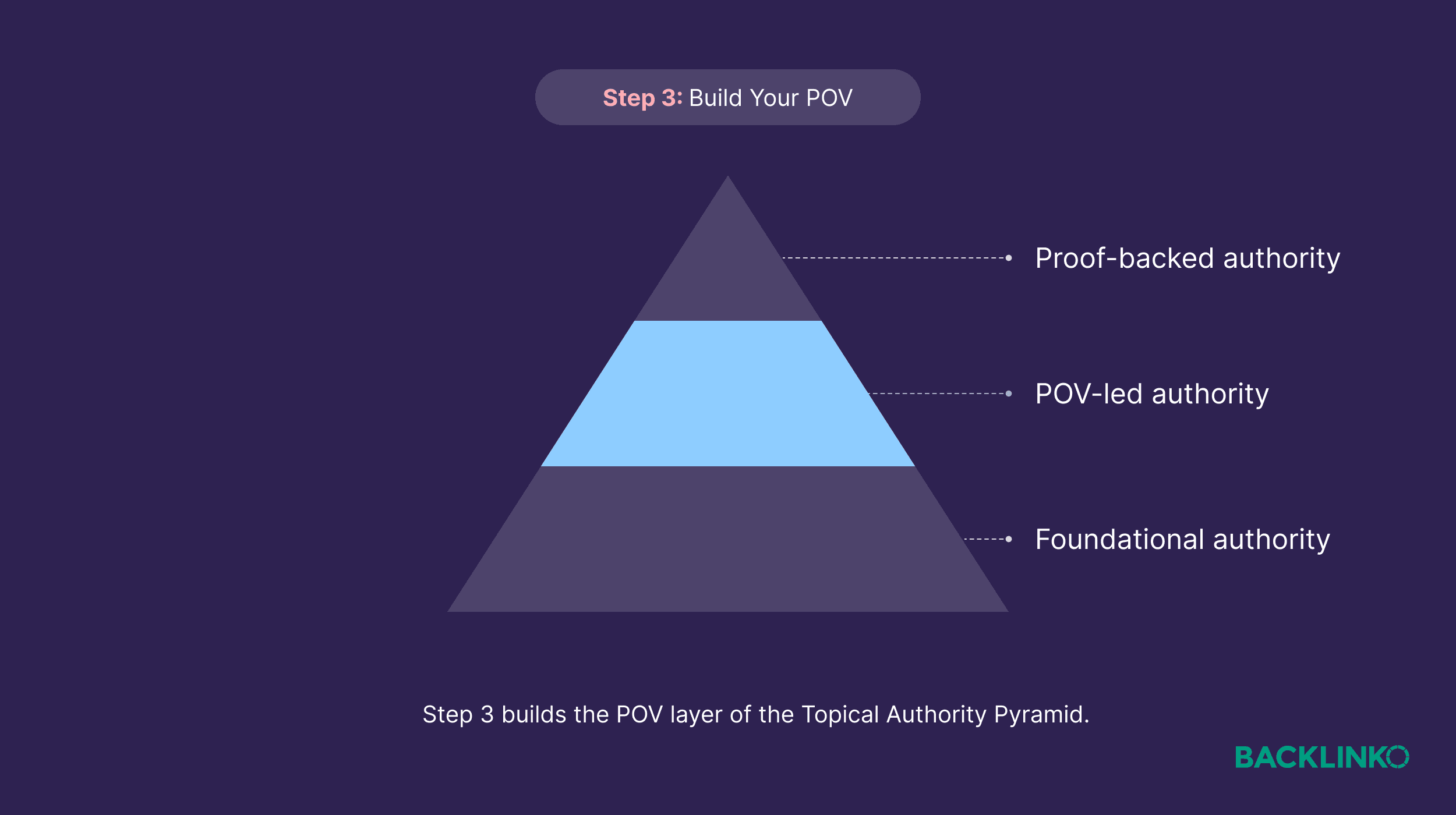
To navigate this complex environment, a structured approach is essential. The Topical Authority Pyramid is a framework designed to transform a brand into the definitive voice within its niche. Developed through insights from leading industry professionals like Amanda Milligan and extensive experience in brand positioning across e-commerce, SaaS, and finance, this framework divides topical authority into three interconnected layers:
- Foundational Authority: The basic recognition that your brand is relevant to a topic.
- Point of View (POV) Authority: Your unique, specific angle or stance within that topic.
- Proof Authority: The verifiable external evidence that supports your POV.
Each layer builds upon the other, establishing a comprehensive reputation that resonates with both human audiences and AI systems. Many brands, including Great Jones, possess strong foundational authority (they are known for kitchenware) and scattered proof (positive reviews), but lack a consistent POV that explicitly links them to a specific niche within a broader topic, such as "Dutch ovens." The following steps outline how to build all three layers effectively.
Step 1: Audit Your Topic Reputation
Before embarking on building topical authority, it’s crucial to understand your current standing. Your brand already possesses a topical reputation, whether intentionally cultivated or not. An audit helps identify existing strengths and critical gaps.
Research Your Current On-Site Associations:
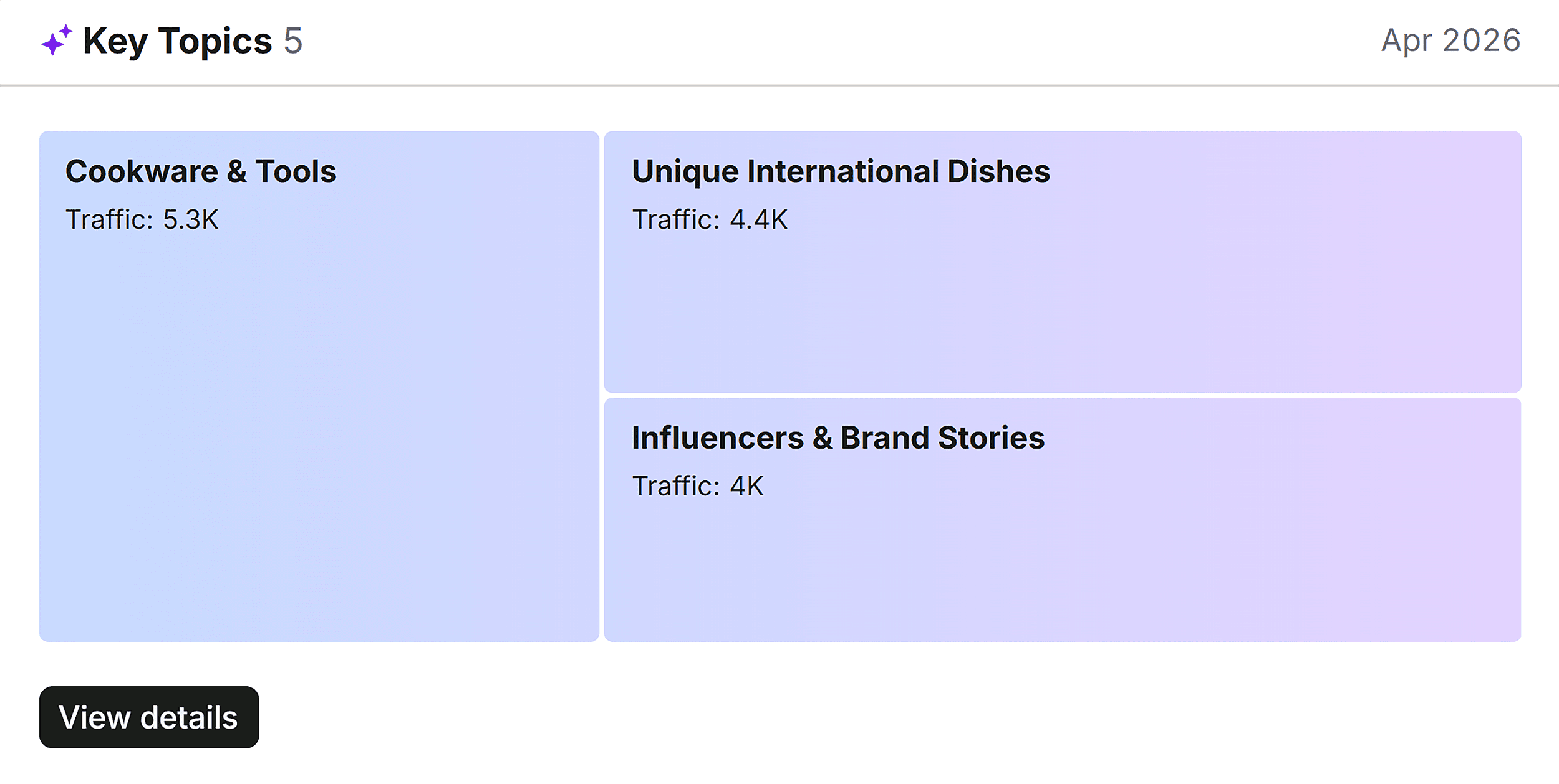
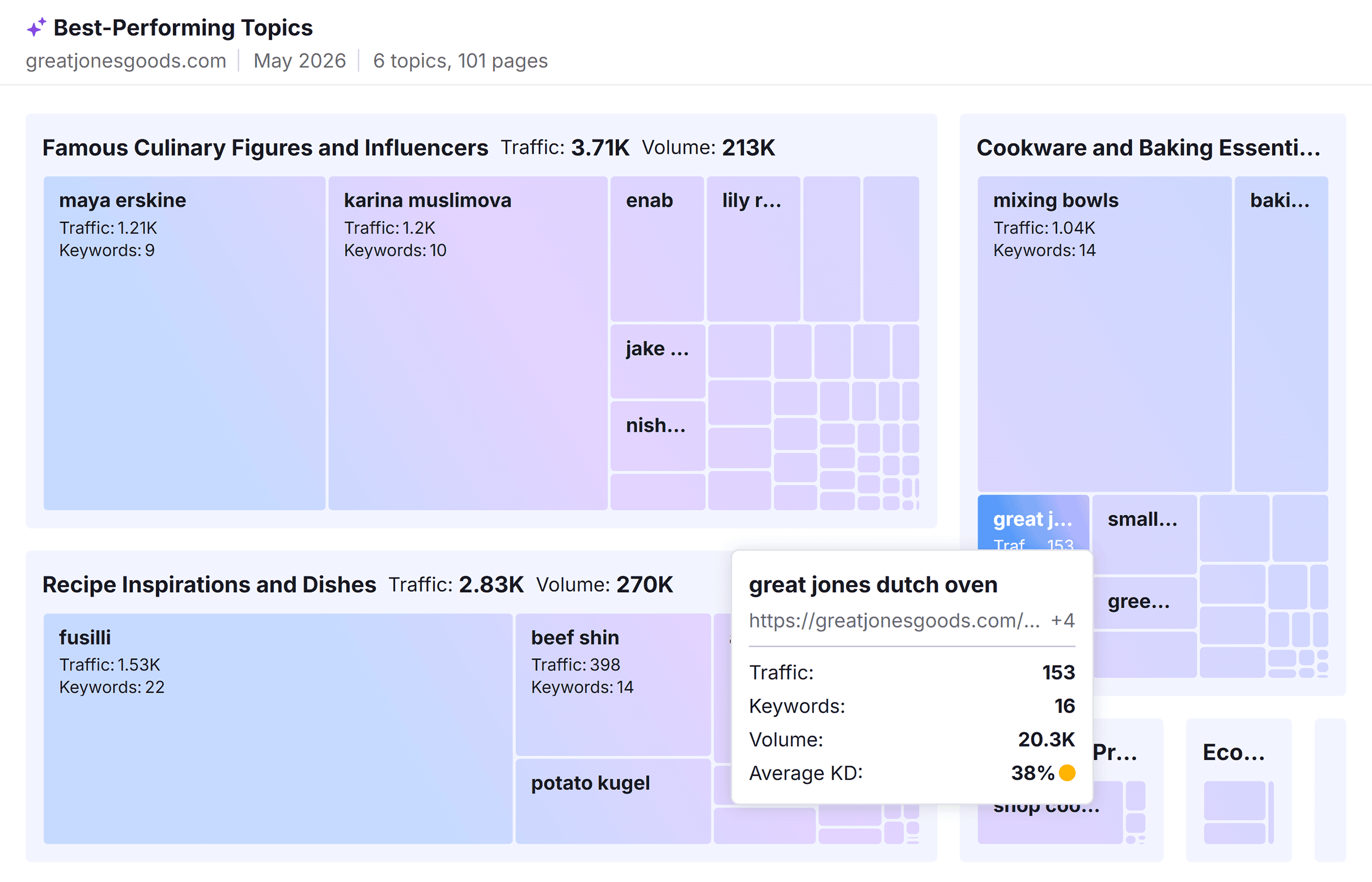
Begin by assessing what topics your own site is currently associated with. Tools like Semrush’s Organic Rankings can reveal your brand’s strongest topic associations based on organic visibility. For Great Jones, such an analysis might show a strong association with "recipes" and "celebrity chefs," but a surprisingly weak connection to "Dutch ovens," despite it being a flagship product. This disconnect highlights a significant opportunity.
Additionally, examine your internal content strategy:
- Content Inventory: Review blog posts, product descriptions, guides, and other on-site content. Does it consistently mention your target topic?
- Internal Linking: Are relevant pages interconnected using descriptive anchor text, signaling to search engines the relationships between your content?
Audit Your Off-Site Presence:
Next, evaluate your third-party coverage, including mentions, reviews, product roundups, and editorial features. This external validation is heavily weighted by AI systems. Perform the following checks:
- General Search Queries: Search for the broad topic (e.g., "Dutch ovens") and "best [topic]" (e.g., "best Dutch ovens") on Google and LLMs. Note which brands consistently appear and how your brand ranks, if at all.
- Brand-Specific Queries: Search "[Your Brand] + [Topic]" (e.g., "Great Jones Dutch oven"). This reveals how search engines and LLMs currently describe your specific offering.
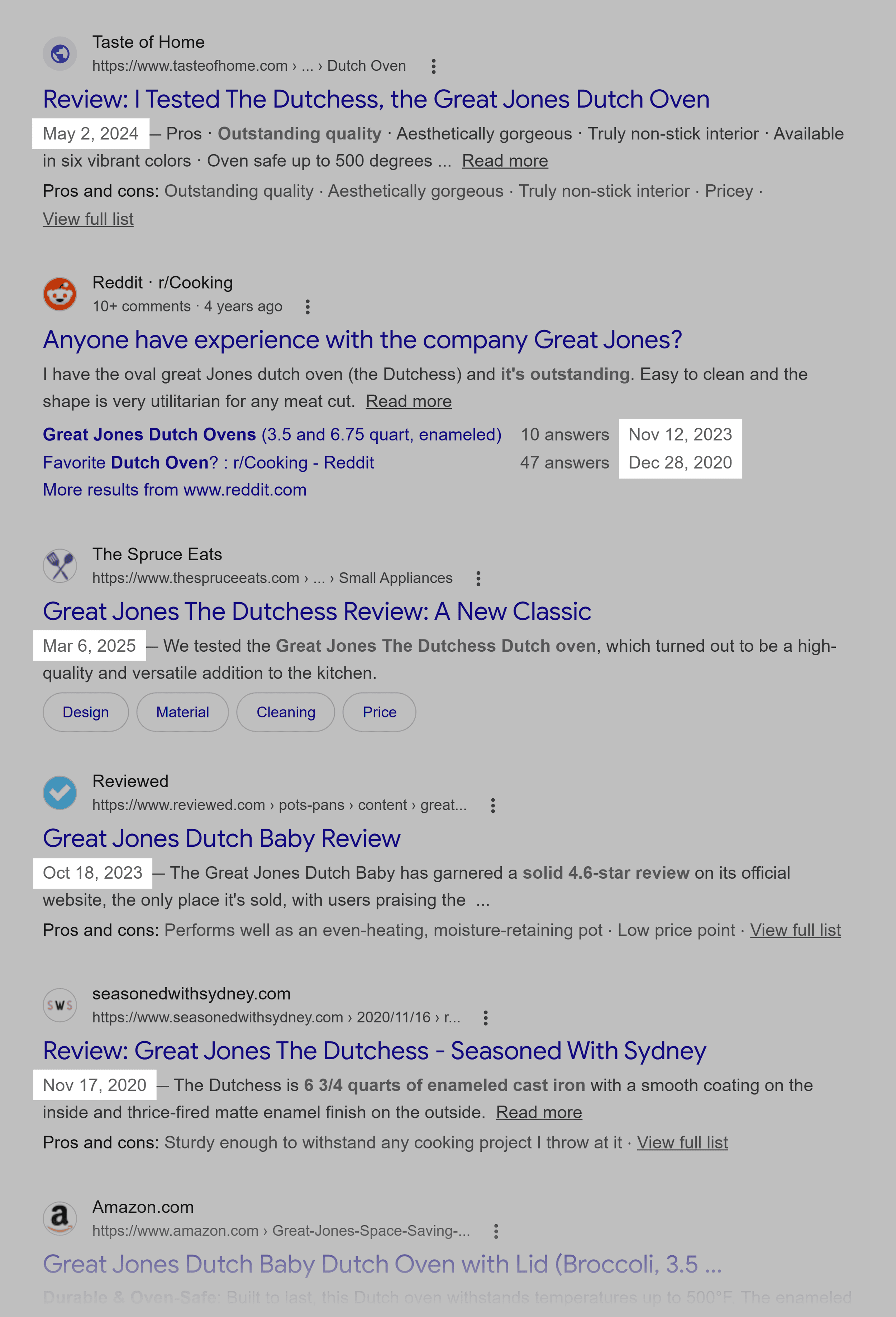
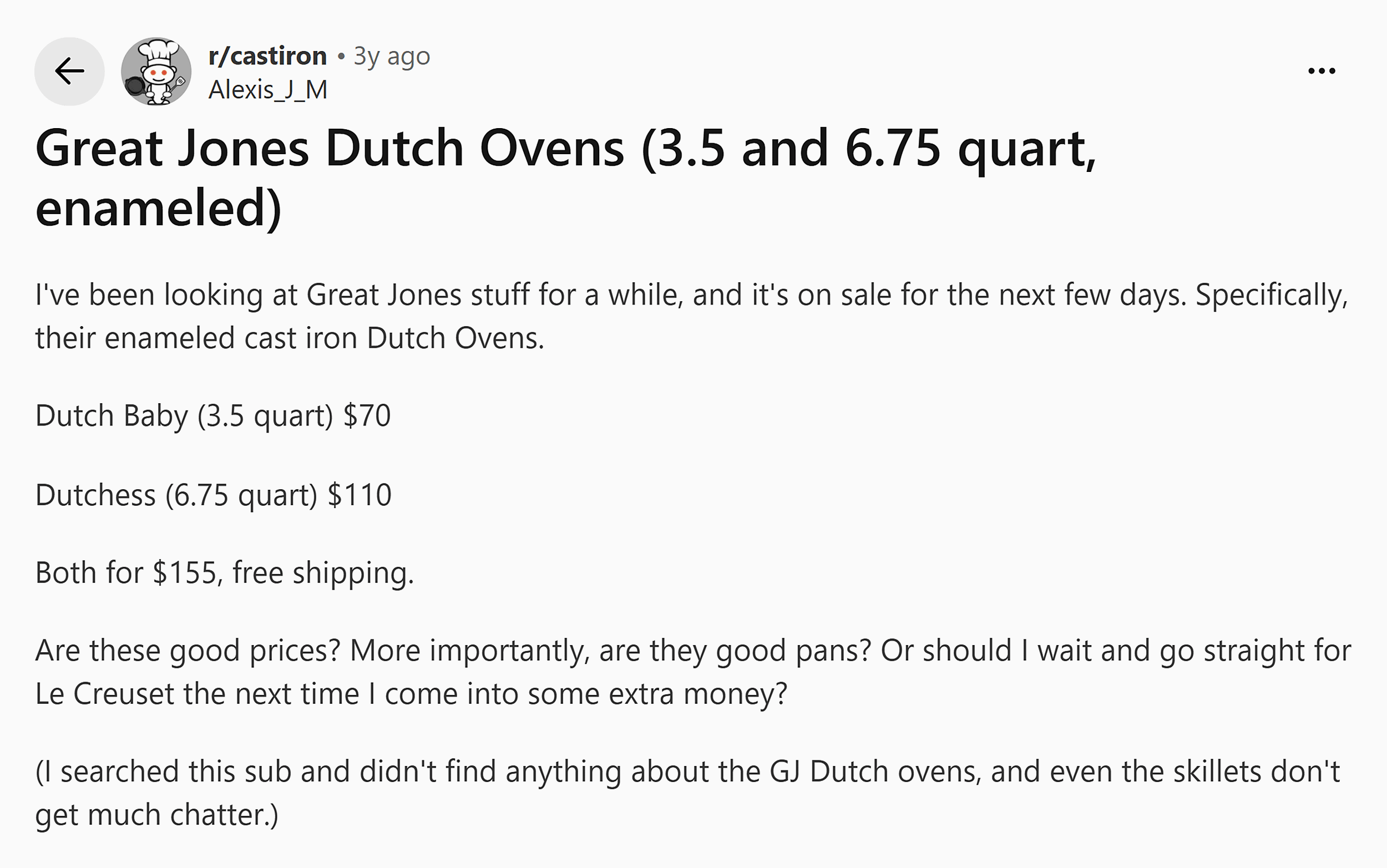
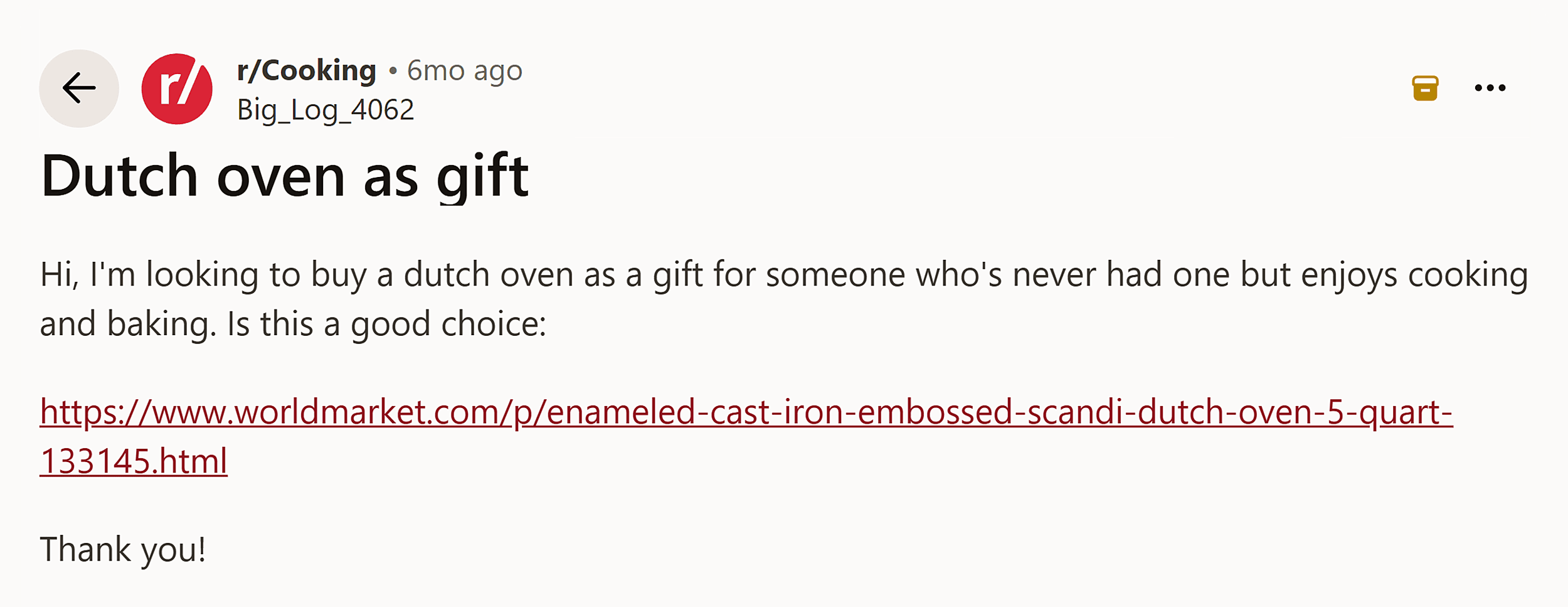
- Niche Community Mentions: Explore forums like Reddit (e.g., r/cooking, r/kitchenware) for unprompted discussions and recommendations.
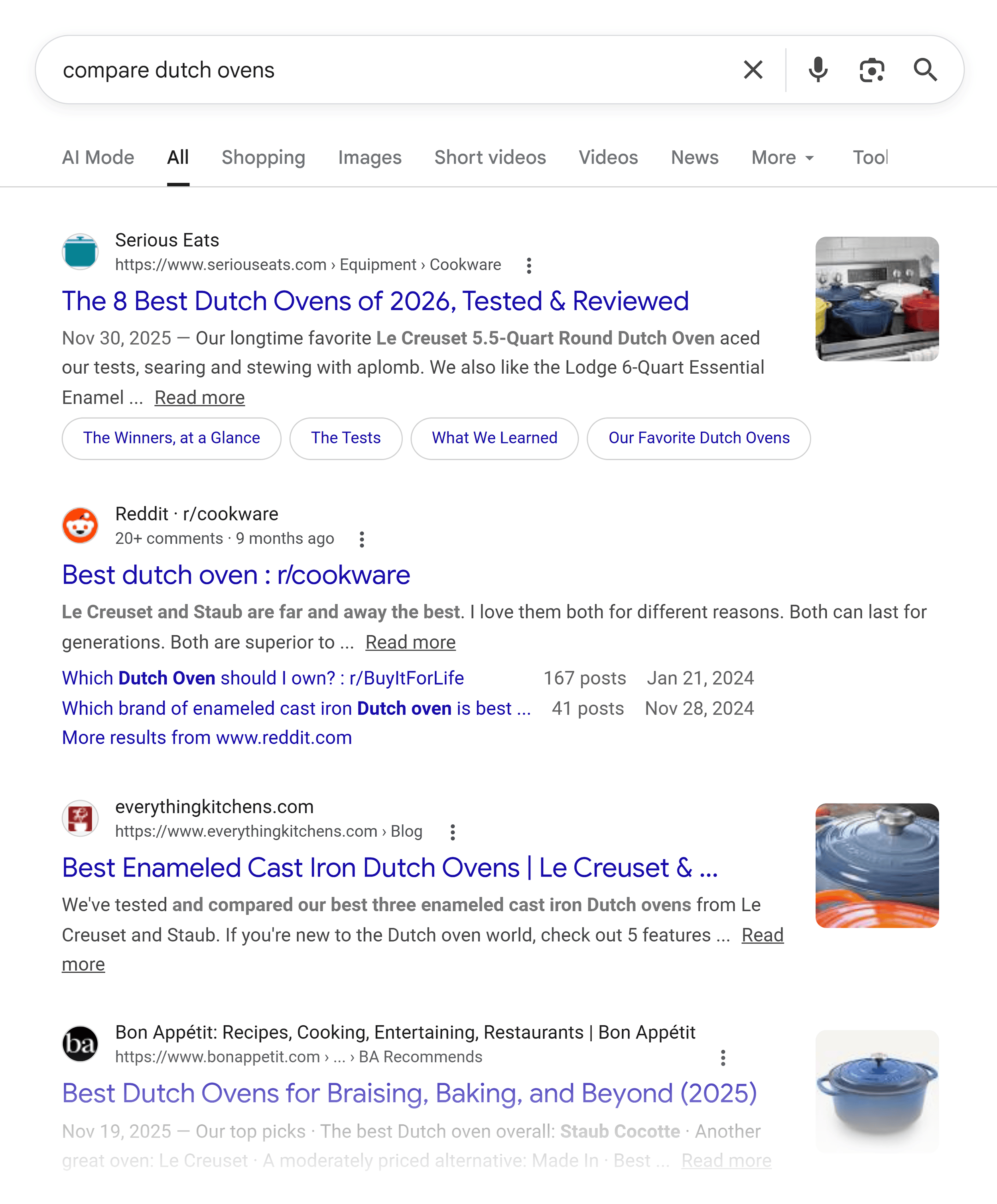
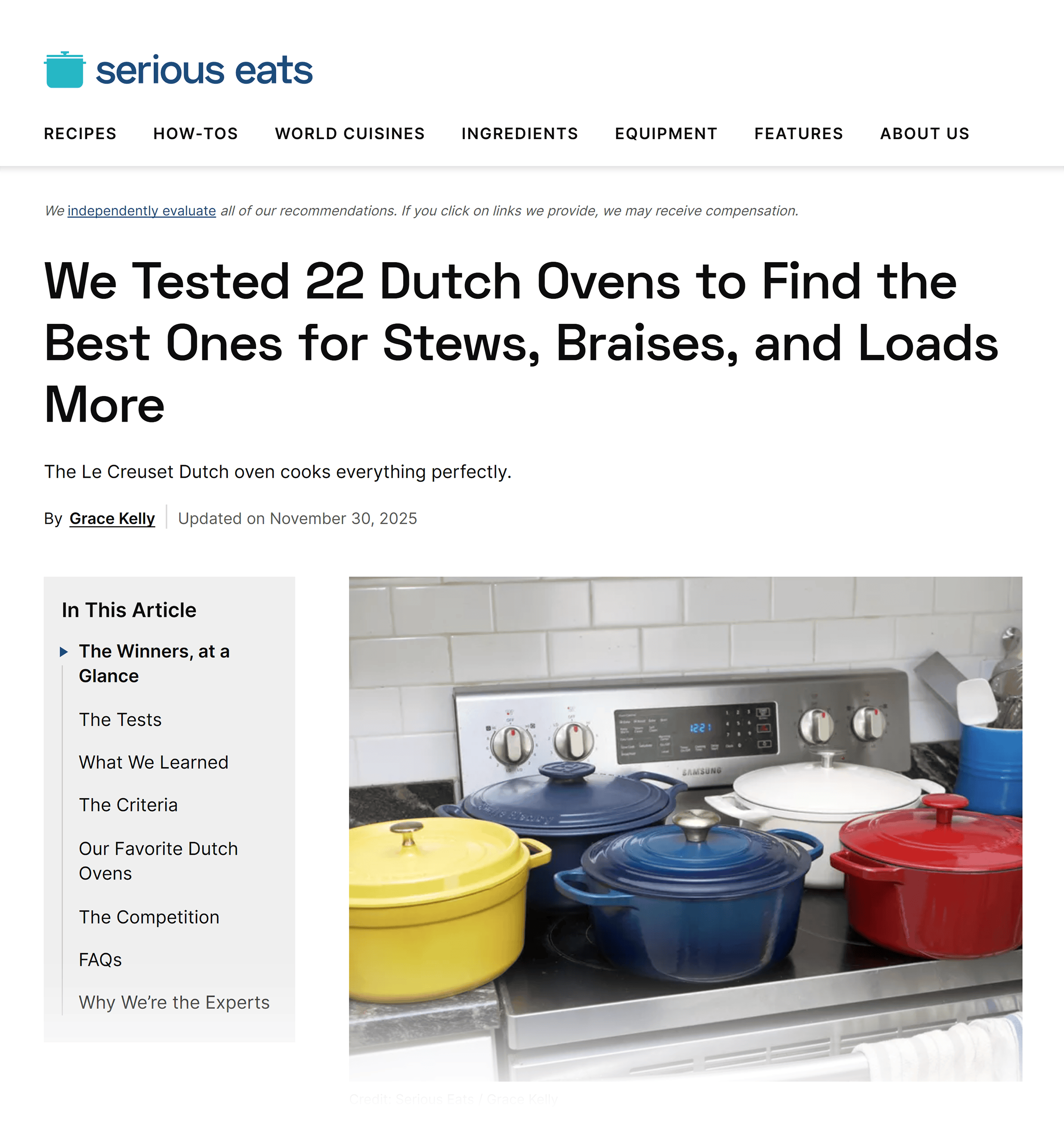
For Great Jones, an off-site audit reveals a trove of enviable press in major lifestyle publications. However, when specifically looking at "Dutch oven" coverage, the signals are inconsistent. Many articles featuring The Dutchess are several years old, and sentiment can be mixed; some reviews praise its beauty but note functional drawbacks, while others outright omit it from "top picks." Crucially, in user-driven communities like Reddit, Great Jones Dutch ovens rarely feature in current recommendation threads. This audit clearly indicates that while Great Jones has brand equity, it hasn’t translated into a solid, consistent reputation for Dutch ovens in the eyes of AI and consumers performing general searches.
Step 2: Choose the Topic You’ll Build Authority Around
Building authority on every conceivable topic simultaneously is impractical. This step involves narrowing your focus to one high-potential topic based on strategic factors:
- Revenue Impact: Does the topic directly drive sales or support a core product/service?
- Brand Alignment: Is it central to your brand’s identity and offerings?
- Market Opportunity: Is there a clear demand or an unmet need where you can establish a unique position?
Build and Prioritize Your Topic List:
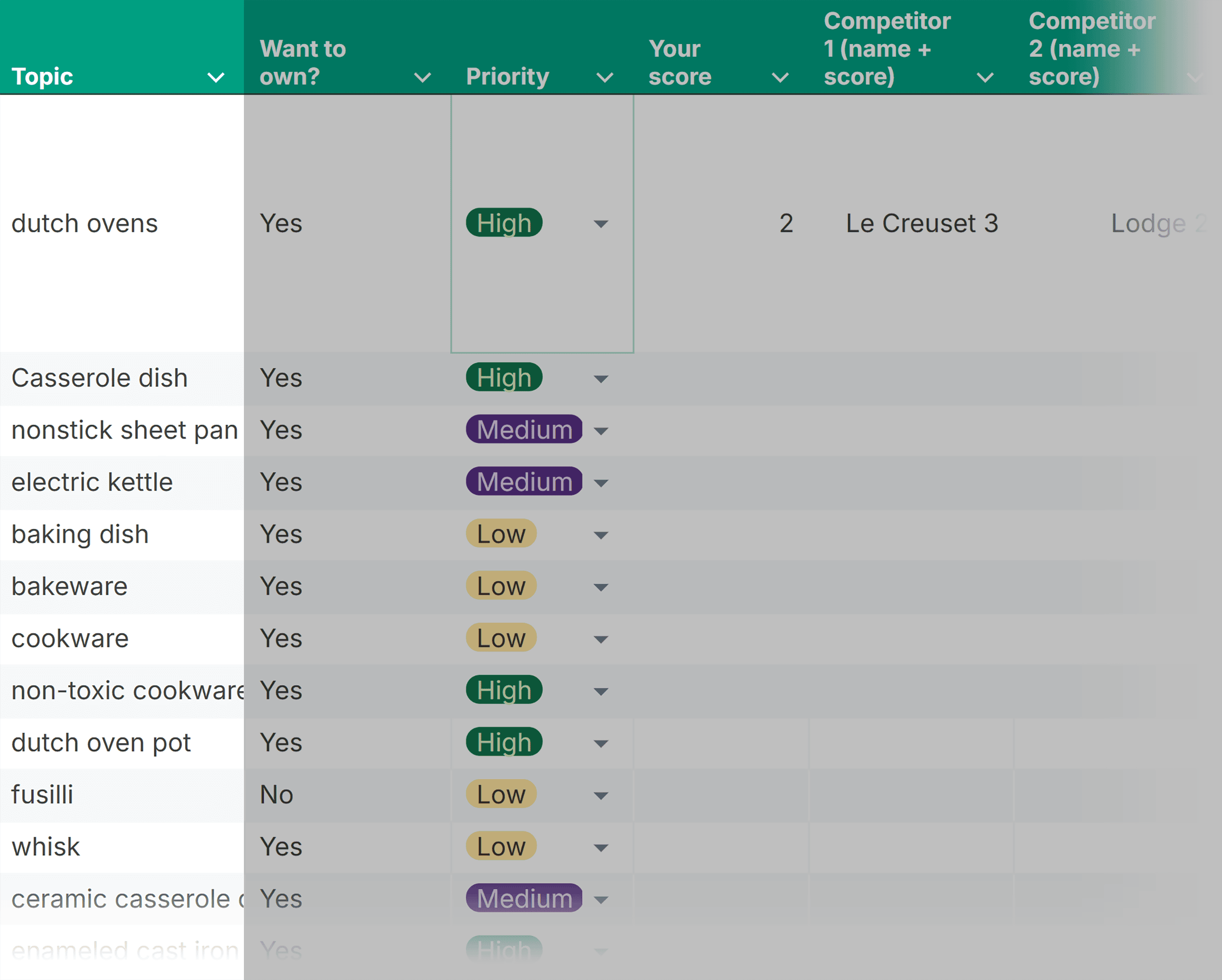
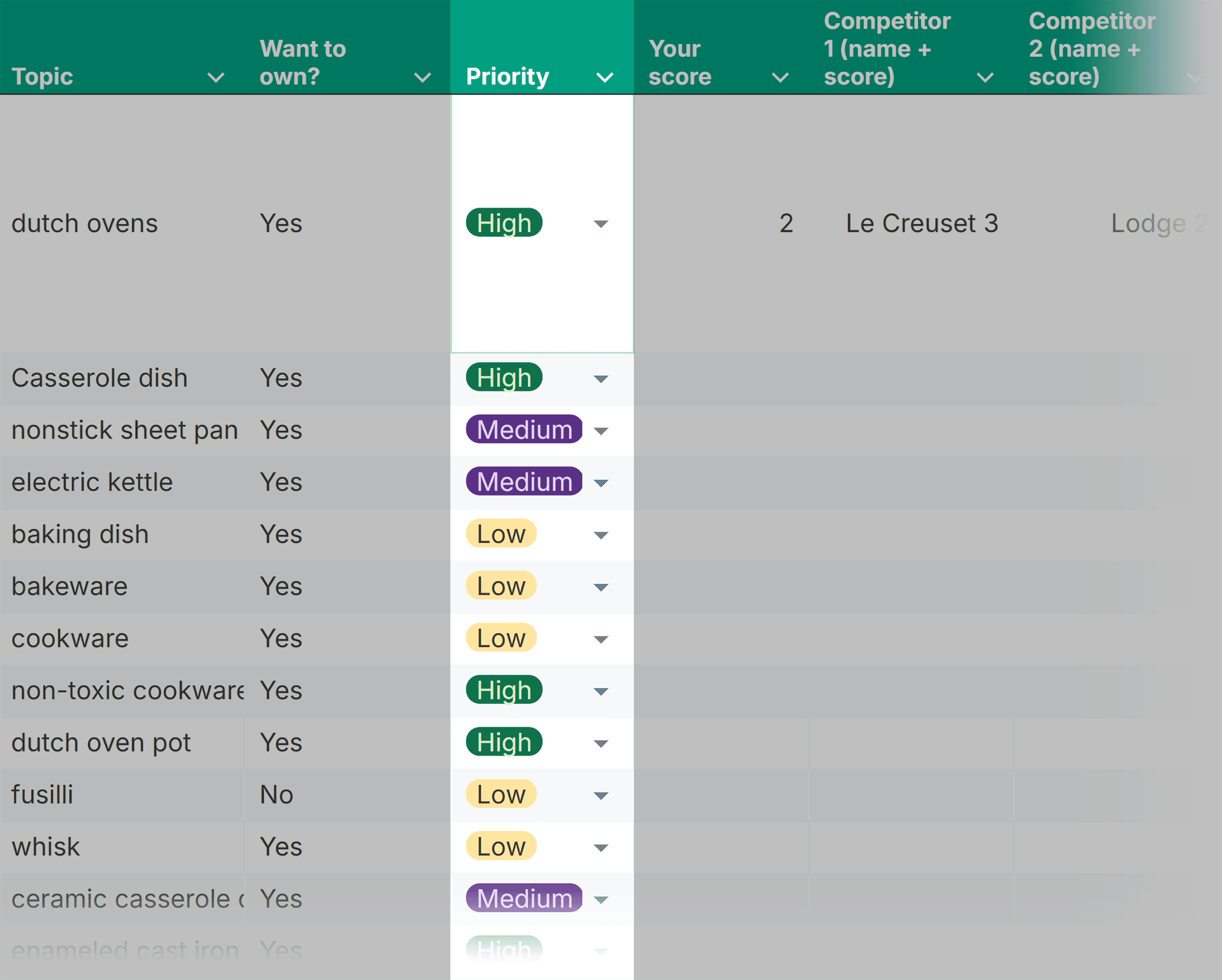
Start by brainstorming a comprehensive list of topics you want to own, including core products, categories, use cases, and problem-solution areas. For Great Jones, this might include obvious choices like "Dutch ovens," but also adjacent areas like "slow cooking," "one-pot meals," "kitchen gifting," or "cookware care." Prioritize topics where you already have some traction, competitors are weak, or your brand should be associated but isn’t.
Run a Query Audit for Shortlisted Topics:
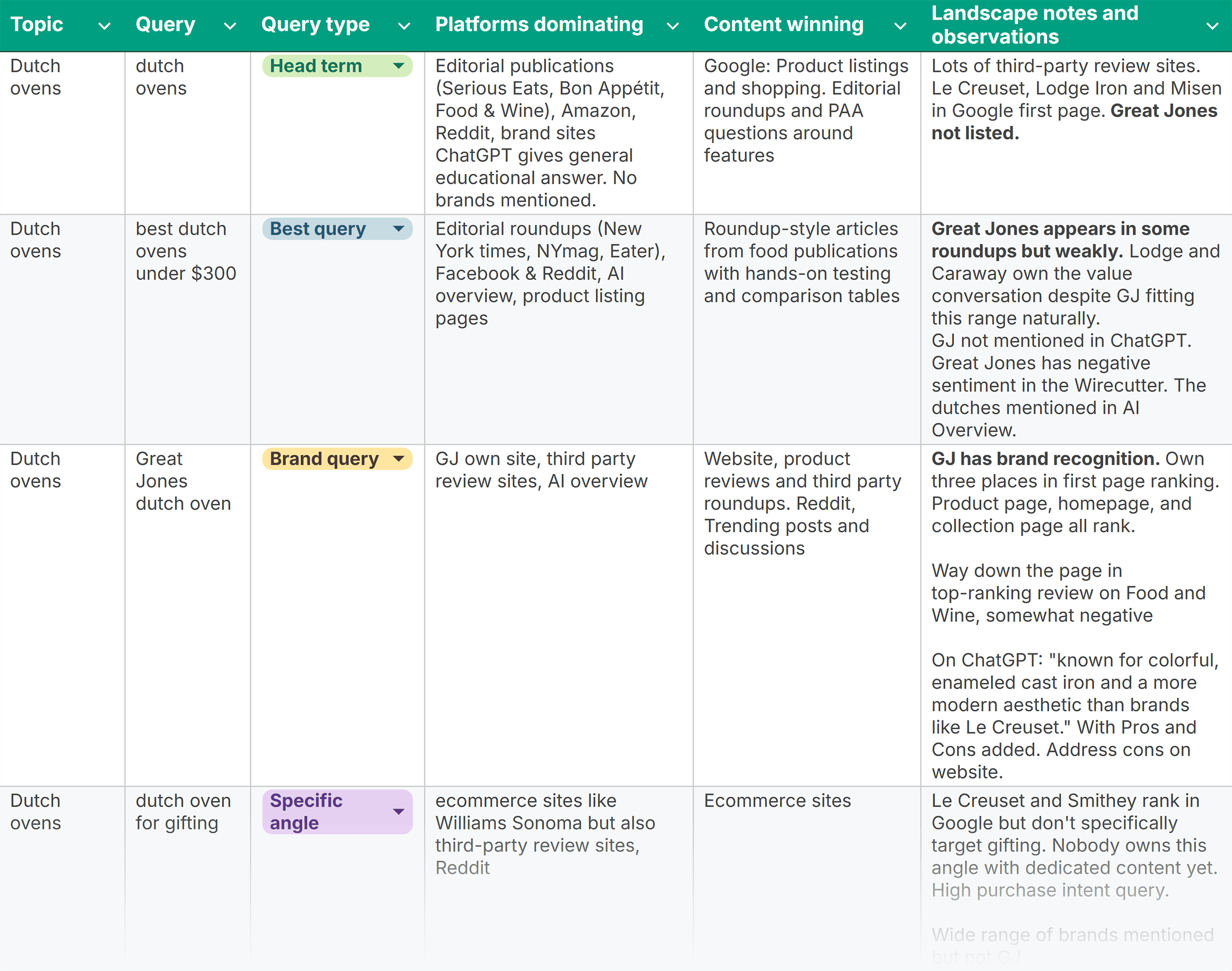
For each high-priority topic (3-5), conduct four types of queries on Google and LLMs:
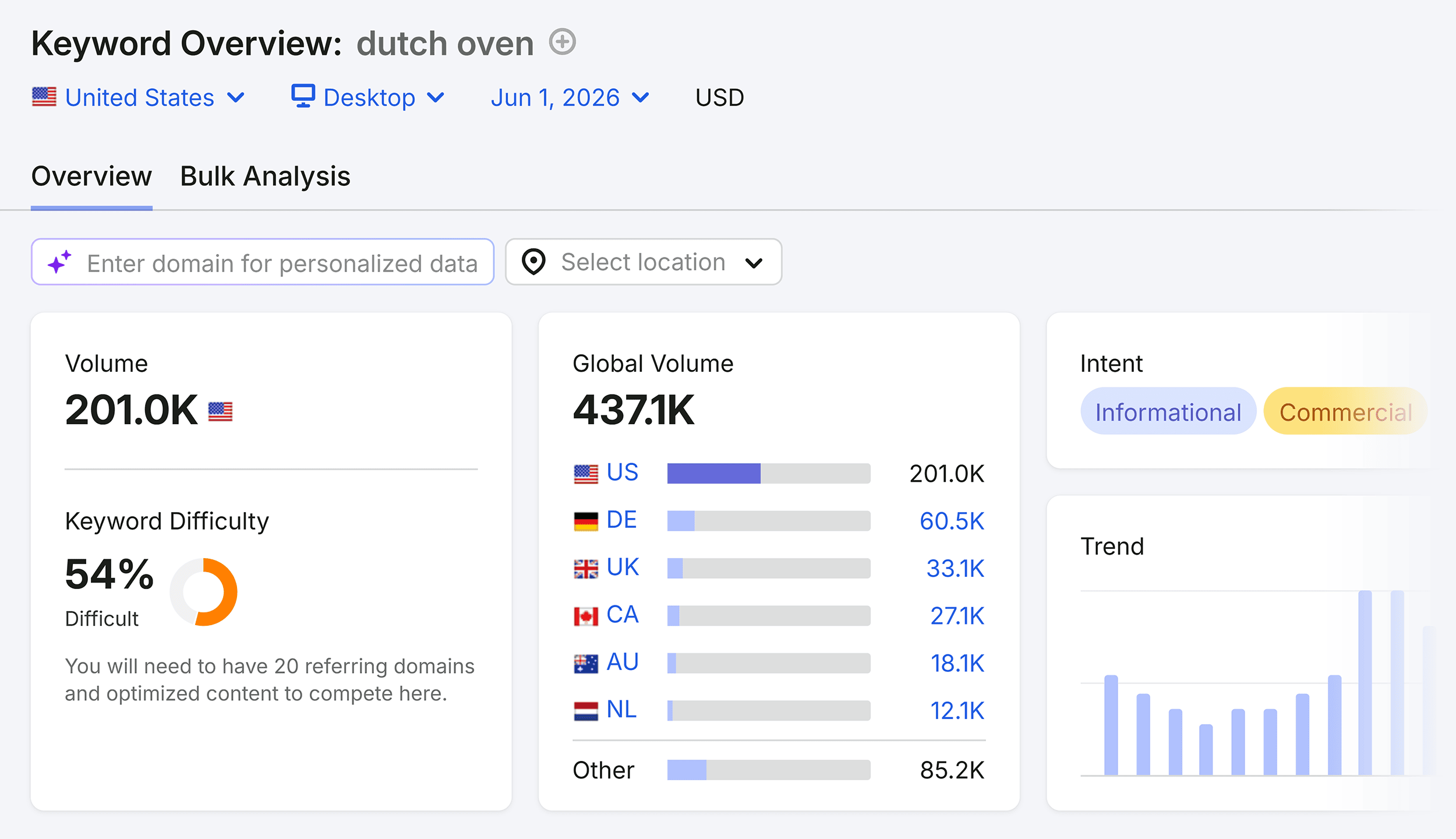
- Head Term: The topic as-is (e.g., "Dutch ovens"). Reveals dominant players and AI defaults.
- Best Query: Add "best" or a qualifier (e.g., "best Dutch ovens under $200"). Indicates buyer intent and AI recommendations.
- Brand Query: Your brand + the topic (e.g., "Great Jones Dutch oven"). Shows your current specific standing.
- Specific Angle: A query tied to a potential unique association (e.g., "Dutch oven for gifting"). Uncovers unclaimed territory.
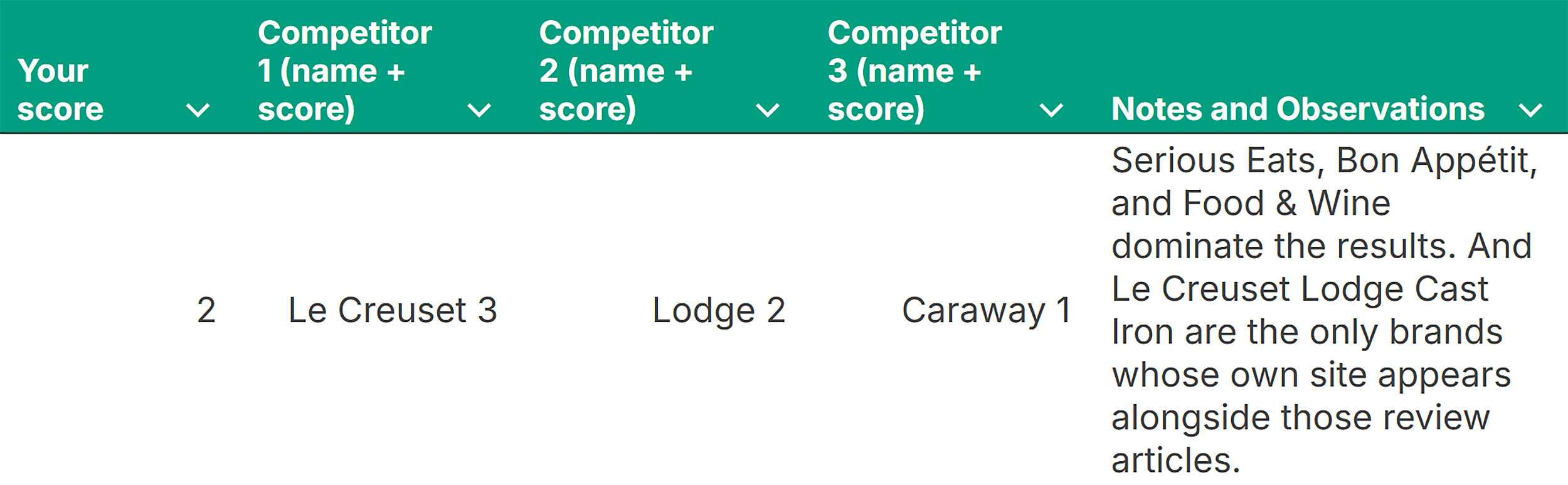
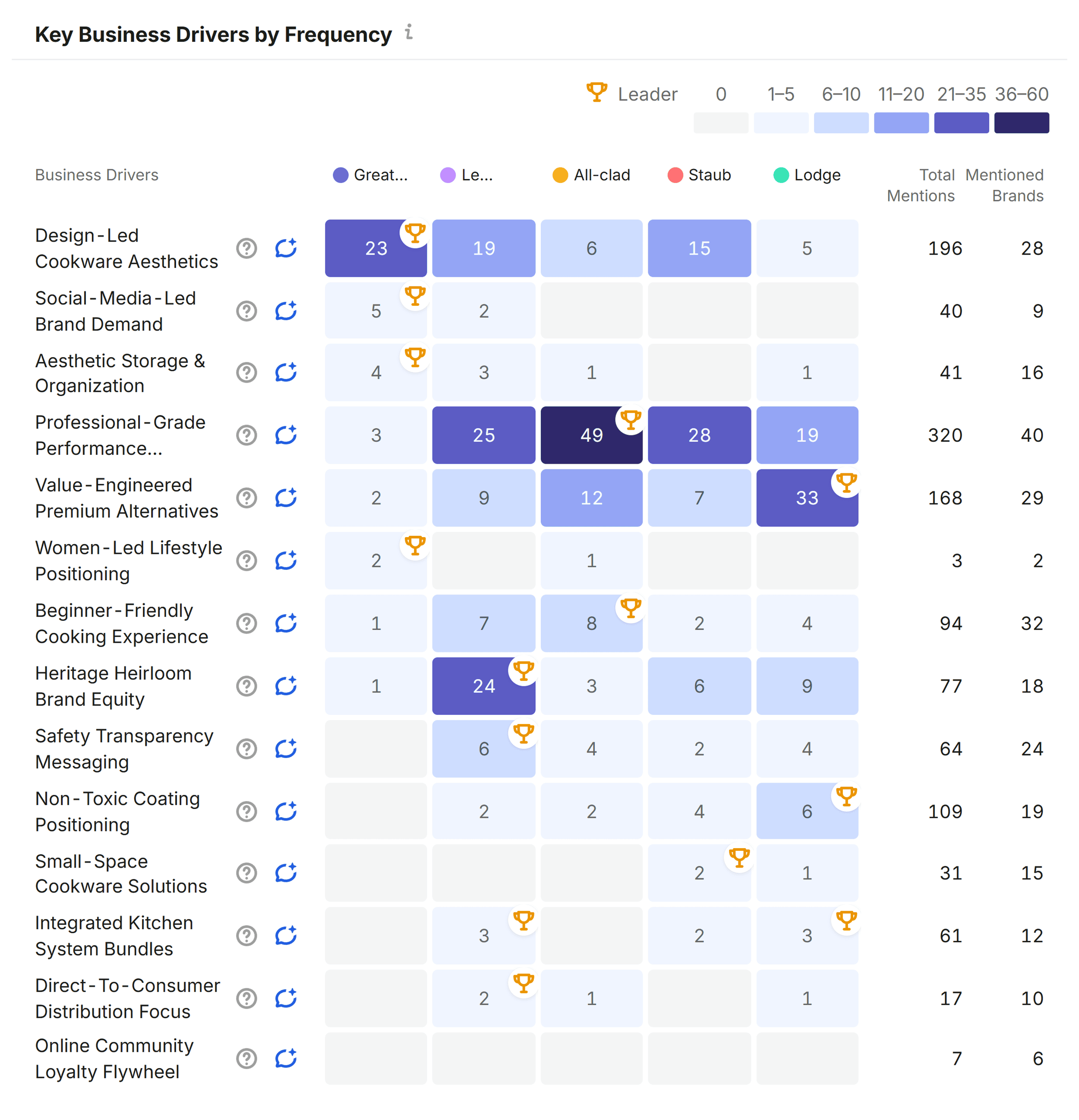
As you perform these queries, record the top-ranking brands, the overall sentiment, and any unmet needs or gaps. For Great Jones, queries for "Dutch ovens" and "best Dutch ovens" consistently feature major players like Le Creuset, Staub, Lodge, and Caraway, with Great Jones largely absent. However, a query for "Dutch oven for gifting" on an LLM like ChatGPT might not explicitly mention any brand as the primary leader, signaling an open opportunity.
Score by Association Strength:
Rate your brand’s presence for each topic (0-3 scale, where 3 is consistently prominent across high-authority sources and AI). Score competitors similarly. Look for topics where your brand scores 1 or 2 (present but inconsistent/weak) and at least one competitor scores 0 or 1 (not present or very weak). These represent winnable positions. For Great Jones, "Dutch ovens for gifting" emerges as a high-priority topic with real buyer demand and no clear market leader.
Step 3: Identify Your Topic POV
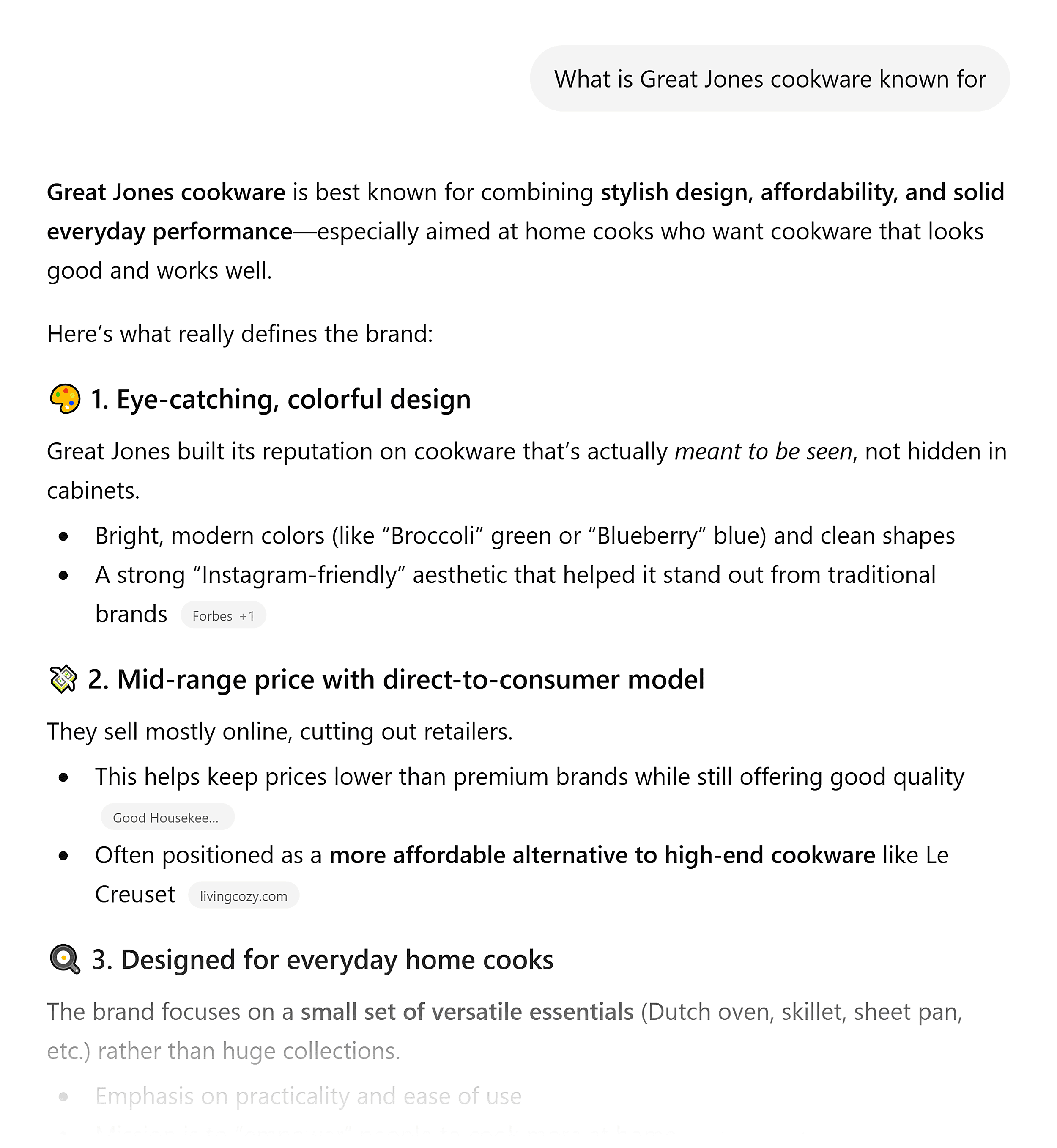
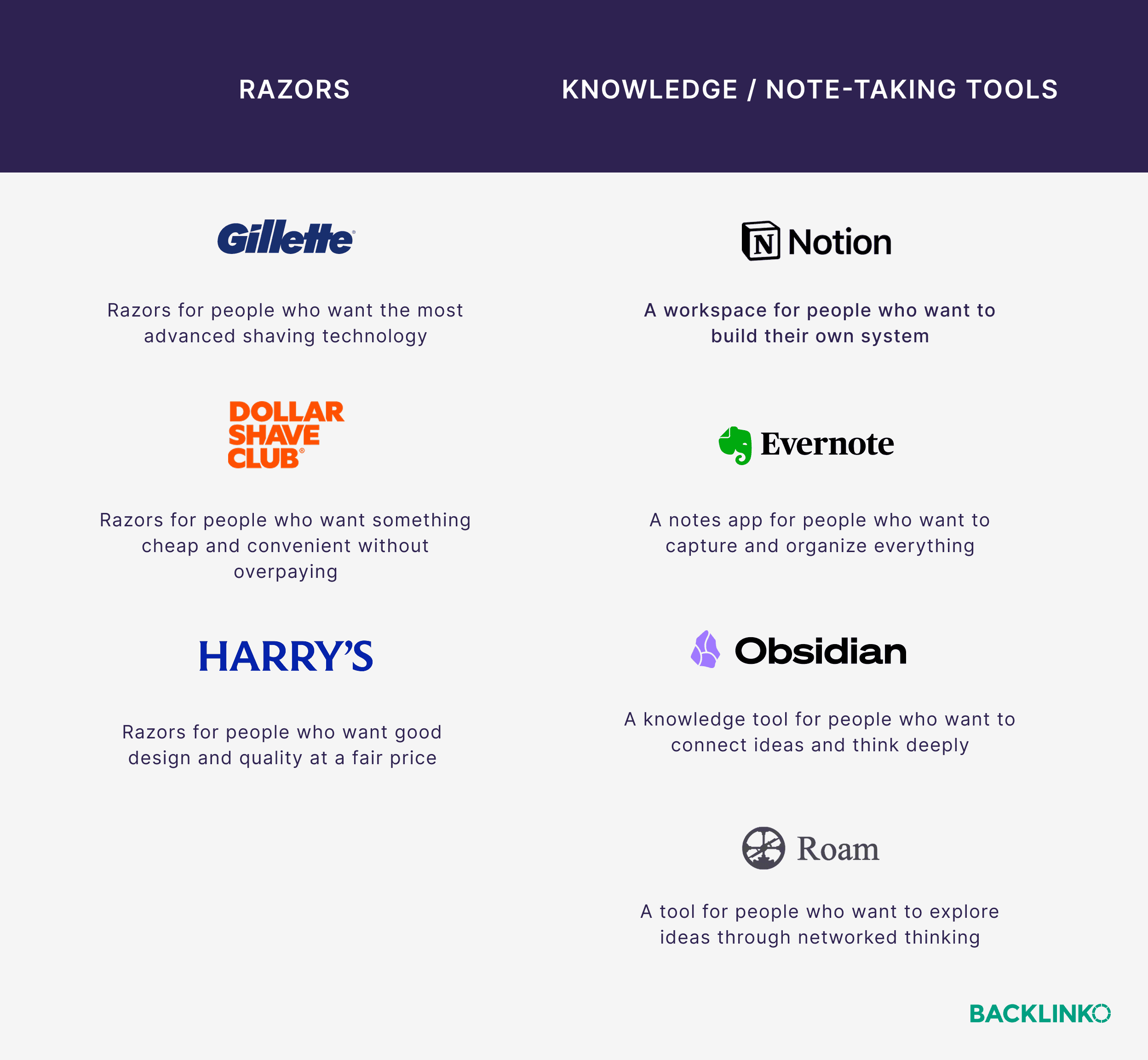
Once a viable topic is chosen, the next step is to define your brand’s unique Point of View (POV) within that space. This POV differentiates your brand and creates a distinct association for buyers, search engines, and AI systems. Just as different razor brands cater to different needs (e.g., Harry’s for simplicity, Gillette for precision), your POV defines your specific value proposition.
Research What’s Already Owned:
Before crafting your POV, identify the established POVs of dominant competitors. Use tools like the Semrush AI Visibility Toolkit to understand competitors’ winning associations in AI-generated answers. For Great Jones, the audit reveals:
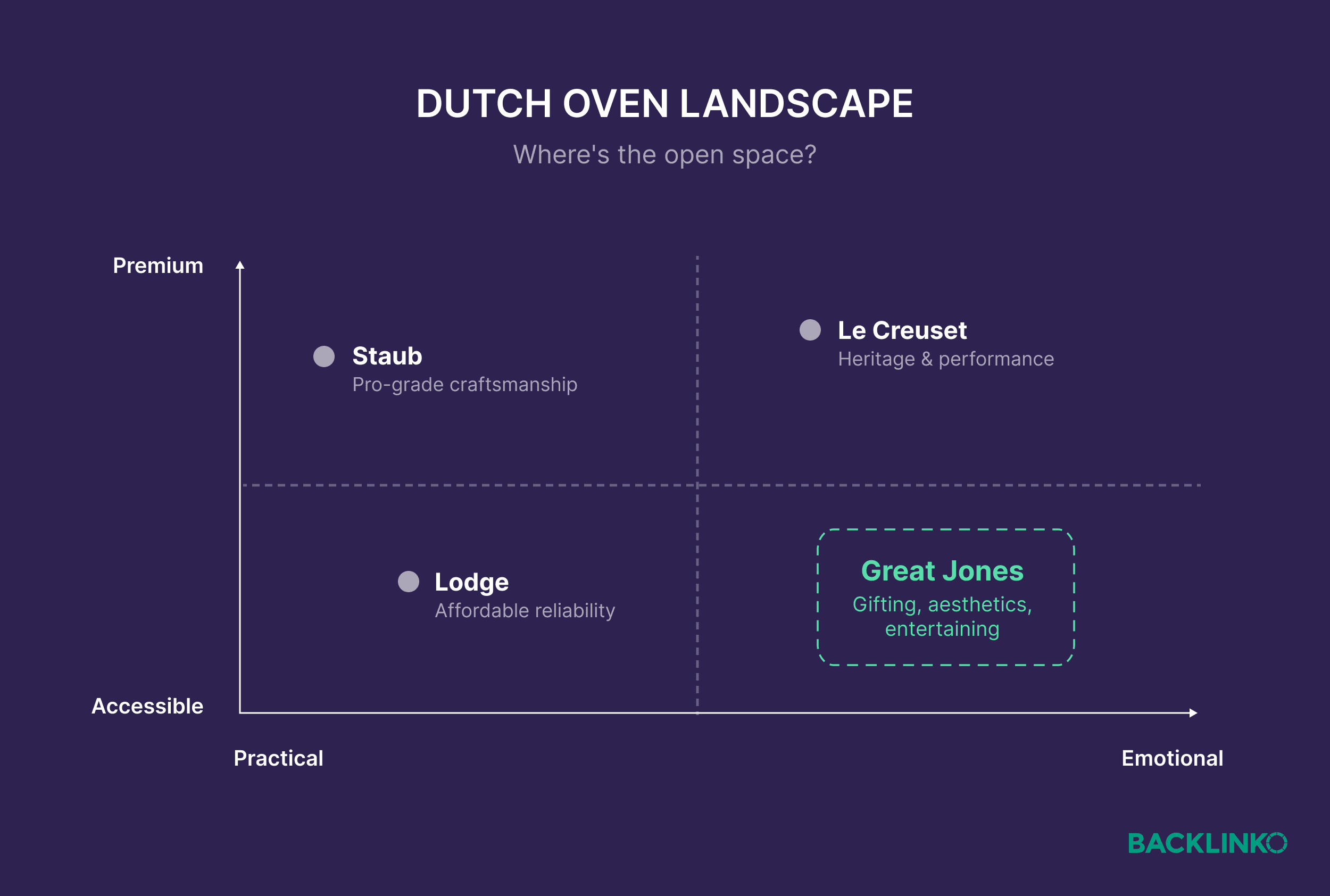
- Le Creuset: Heritage, luxury, timelessness.
- Staub: Professional-grade, superior heat retention.
- Lodge: Affordability, durability, rustic charm.
- Caraway: Non-toxic, modern aesthetics, health-conscious.
These are territories to avoid direct competition. Instead, identify unclaimed or underserved angles. For Great Jones, areas like "gifting Dutch ovens," "visual appeal/kitchen decor," or "beginner-friendly cooking" are less saturated.
Choose Your POV:
Test potential POVs against three criteria:
- Customer Demand: Do buyers care about this angle?
- Brand Authenticity: Can your brand genuinely own this position based on your product, values, or history?
- Competitive Differentiation: Is this POV largely unclaimed by competitors?
For Great Jones, "Dutch ovens for gifting" successfully passes these tests. There’s clear evidence of buyers searching for Dutch ovens as gifts. Great Jones’s products are frequently described in reviews as "beautiful," "modern," and "super attractive," aligning perfectly with a gifting narrative. Critically, no competitor has explicitly cornered the "gifting" segment for Dutch ovens.
Write Your POV as One Sentence:
A strong POV is concise and memorable. For Great Jones, a compelling POV could be: "Great Jones makes the most beautiful and thoughtful Dutch ovens, perfect for gifting that lasts a lifetime." This clearly defines the target buyer and the unique reason to choose their product.
Step 4: Map Your POV Proof Architecture
A compelling POV is merely a claim without concrete evidence. This step involves planning the "proof architecture"—the specific evidence needed to validate your POV across the entire buyer journey, both on your site and across the web.
Audit Your Proof Across the Buyer Journey:
To build credibility, you need evidence that supports two core beliefs:
- You belong in the category (Foundational).
- You are the go-to brand for your claimed POV (POV and Proof).
Reinforce these at every stage of the buyer journey:
- Awareness: Show that your solution solves a problem (e.g., research data on cookware gifting trends).
- Consideration: Demonstrate desirable qualities (e.g., third-party reviews highlighting aesthetic appeal and gift-worthiness).
- Comparison: Prove superiority over alternatives (e.g., awards for design, expert endorsements as a top gift item).
- Active Evaluation: Illustrate how it works for specific situations (e.g., case studies of gifting experiences, curated gift sets).
- Decision: Confirm trust from others (e.g., customer testimonials about receiving/giving The Dutchess as a gift, high repeat purchase rates for gifts).
Using a POV Proof Planner, identify existing and missing proof assets. For Great Jones’s "gifting" POV, a quick audit might surface existing customer reviews praising the product’s aesthetic suitability for gifts, and some incidental mentions in gift guides. However, there’s likely a gap in dedicated comparison content, independent test results for gift-giving scenarios, or specific usage data related to gifted Dutch ovens.
Step 5: Build Your On-Site Foundation
Before external sources can consistently associate your brand with your POV, you must establish this connection firmly on your own website. This foundational layer involves creating a central hub and supporting pages that weave together your topic, POV, and initial proof signals.
Create a Hub Page for Your POV:
The hub page serves as the authoritative document for your POV. For Great Jones, this could be a "Dutch Oven Gifting Guide" or "The Art of Gifting a Dutch Oven." This page would:
- Define why Dutch ovens make exceptional gifts (linking to the product page for The Dutchess).
- Explain the unique aspects of The Dutchess that make it an ideal gift (e.g., design, color options, modern appeal).
- Route buyers to supporting pages that delve deeper into various gifting scenarios or proof points.
Build Supporting Pages:
These pages expand on specific aspects of your POV and provide detailed proof for different stages of the buyer journey. Based on Great Jones’s proof audit, supporting pages could include:
- "Top 10 Dutch Oven Gift Ideas for Every Occasion": Featuring themed gift baskets and pairing suggestions.
- "Why The Dutchess is the Perfect Wedding Registry Addition": Highlighting durability and aesthetic appeal for newlyweds.
- "Caring for Your Gifted Dutch Oven: A Comprehensive Guide": Offering practical advice that adds value beyond the sale.
- "Great Jones vs. Competitor X: The Gifting Perspective": Directly comparing The Dutchess’s suitability as a gift against other brands, focusing on factors like unboxing experience, aesthetic variety, and perceived value.
Ensure each page adheres to the inverted pyramid structure (most important info first) and includes clear headings, relevant keywords, internal links, and semantic HTML to aid both human readability and machine interpretation.
Link Your Pages:
Interlink your hub and supporting pages strategically to create a robust proof system. This signals to search engines the depth and breadth of your expertise on the topic. Use descriptive anchor text (e.g., "Dutch ovens for new homeowners" instead of "click here") and link relevant product pages.
Step 6: Create an Off-Site Proof System
A strong on-site foundation must be mirrored by external validation. As Amanda Milligan emphasizes, "The biggest shift is that on-site expertise needs to be validated off-site for AI to trust it." This step involves reinforcing your POV in trusted third-party spaces where buyers and AI systems already gather information.
Start with One Signature Proof Point:
Develop an original, specific insight related to your topic and POV that others would want to reference. For Great Jones, leveraging internal sales data could be powerful. Imagine they discover a "4x spike in Dutch oven purchases in the two weeks before Mother’s Day." This could be spun into a "State of Mother’s Day Gift-Giving Report," highlighting the trend towards practical yet beautiful kitchenware gifts.
Distribute Your Proof Point:
Amplify this signature insight across various channels:
- Earned Media: Pitch the report to lifestyle publications, food blogs, and gift guide curators.
- Owned Media: Create a video discussing the report for your YouTube channel, a detailed blog post, and social media threads.
- Shared Media: Partner with influencers known for gifting or home decor to promote the findings and feature The Dutchess.
- Paid Media: Run targeted ads promoting the "gifting" angle, potentially showcasing the report.
Identify specific platforms and communities where your insight is most relevant (e.g., Real Simple‘s gift guides, Food & Wine holiday features, Reddit’s r/gifts). For Great Jones, existing collaborations with figures like cookbook author Molly Baz provide a strong starting point to disseminate this gift-centric message. Focused distribution of insights around the gifting POV might look like:
- Press Releases: Announcing the "Mother’s Day Gift-Giving Report" to consumer and lifestyle media.
- Guest Contributions: Writing articles for prominent gifting blogs or home decor sites on "The Enduring Appeal of Gifting a Dutch Oven."
- Influencer Campaigns: Collaborating with home chefs and lifestyle influencers to showcase how The Dutchess is both a practical tool and a beautiful gift.
- Community Engagement: Actively participating in online forums discussing gift ideas, subtly positioning The Dutchess as an ideal choice.
Step 7: Track Topical Authority Progress
Building topical authority is an ongoing process. Regular monitoring is essential to gauge the impact of your efforts and refine your strategy. Use a progress tracker to record findings at regular intervals (e.g., 30, 60, 90 days).
Foundational Layer: Are You Showing Up More?
Monitor your topical footprint:
- Query Visibility: Re-run the queries from Step 2. Are you appearing unprompted in more searches?
- Organic Impressions & Rankings: Track rising impressions and improved rankings for non-brand queries related to your topic (e.g., "Dutch ovens for gifting").
- Site Traffic: Analyze traffic increases to your hub and supporting pages.
Tools like Google Search Console (for queries and impressions) and Semrush’s Organic Research tool (for keyword rankings and visibility) are invaluable here. For Great Jones, seeing their pages rank for "Dutch ovens for gifting" or "unique kitchen gifts" would be a significant indicator of progress.
POV Layer: Are You Being Described Correctly?
This layer tracks language. Are mentions of your brand increasingly paired with your specific POV?
- Prompt Monitoring: Regularly test LLMs with POV-specific prompts (e.g., "best Dutch oven for wedding gifts").
- Sentiment Analysis: Monitor reviews, comparisons, and listicles for language that aligns with your POV (e.g., "a thoughtful house-warming gift," "splurge-worthy present," "the kind of gift that gets displayed").
Semrush’s Brand Monitoring and Perception tools can help track how your brand is being discussed and the sentiment associated with it.
Proof Layer: Are Others Confirming Your POV?
Track third-party confirmation:
- Citation Tracking: Are others citing or referencing your signature proof point (e.g., the Mother’s Day report)?
- External Mentions: Are you appearing in more third-party sources associated with your POV? Are buyers recommending you unprompted in niche communities?
- Backlinks: Are your hub pages attracting high-quality links from relevant sites?
Google Alerts (for brand and POV mentions) and Semrush’s Backlink Analytics (for monitoring new backlinks) are crucial tools. For Great Jones, success would mean seeing The Dutchess consistently recommended in gift guides or being highlighted as a top wedding gift on reputable culinary sites.
Build the Pattern That Wins in AI Search
The experience of Great Jones illustrates a powerful lesson: exceptional product quality and impressive traditional press alone are insufficient for establishing robust topical authority in the era of AI search. If search engines and LLMs cannot confidently and consistently associate your brand with your core topics, your online visibility will suffer, regardless of your accolades from high-profile publications.
However, this challenge is entirely surmountable. The Topical Authority Pyramid provides a clear, actionable framework:
- Audit your current reputation to identify gaps.
- Choose a strategic topic where you can genuinely compete.
- Define a unique Point of View within that topic.
- Map out the necessary on-site and off-site proof.
- Build a strong on-site foundation of hub and supporting pages.
- Create an off-site proof system, starting with a signature insight.
- Track your progress diligently.
Once authority is established for one topic, the framework can be applied repeatedly to expand your influence into adjacent niches, deepening your overall brand authority. By meticulously building these consistent patterns of association, brands can significantly enhance their chances of being recommended by default by search engines and LLMs, securing their position as a true expert in their field. For a repeatable methodology to monitor AI visibility, explore a comprehensive AI visibility audit guide.
Backlinko is owned by Semrush. We remain committed to delivering world-class SEO insights, grounded in hands-on experience. Unless explicitly stated otherwise, content is authored by an employee or paid contractor of Semrush Inc.