Migrating to Blocks with Artisanal Care and Industrial Scale: Human Made’s Strategy for Enterprise WordPress Adoption

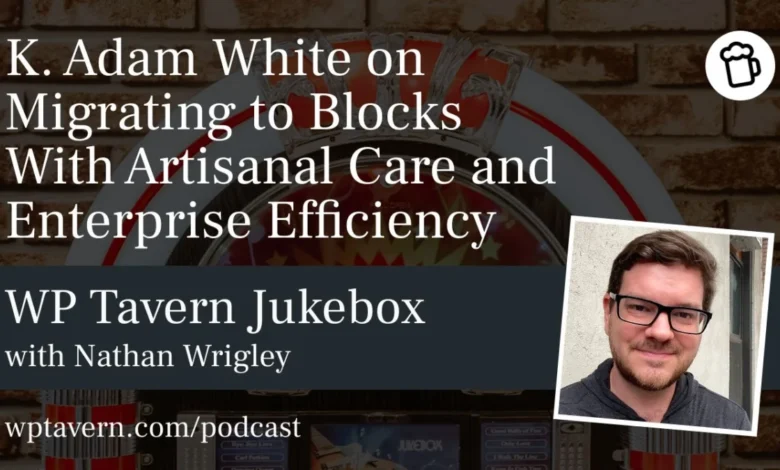
The landscape of enterprise content management systems (CMS) is undergoing a significant transformation as large-scale organizations increasingly pivot toward WordPress. At the heart of this transition lies the Gutenberg block editor, which has evolved from a controversial plugin into the cornerstone of modern WordPress architecture. During the recent WordCamp US, K. Adam White, a principal engineer at the enterprise consultancy Human Made, detailed the sophisticated methodologies required to facilitate these high-stakes migrations. Moving hundreds of thousands of legacy posts from proprietary systems like Sitecore to a block-based WordPress environment requires a delicate balance between maintaining visual fidelity and leveraging the industrial-scale automation necessary for modern digital publishing.
The Evolution of Enterprise Migration
For nearly two decades, WordPress has served as the backbone of the web, yet its reputation in the enterprise sector was historically tempered by concerns regarding content structure and granular permissions. Early iterations of the platform often required heavy reliance on page builders such as Elementor or Divi to achieve complex layouts. However, the maturation of the Gutenberg block editor and the introduction of Full Site Editing (FSE) have fundamentally altered the value proposition for global brands.
Human Made, a consultancy with deep roots in the WordPress ecosystem, has been at the forefront of this shift. Since the inception of the Gutenberg project, the firm has prioritized native block-based development over proprietary alternatives. This approach is not merely aesthetic; it is a strategic decision to ensure future-proof, robust infrastructure. According to industry analysis, organizations migrating from legacy CMS platforms frequently cite the flexibility of the block editor as a primary driver for their digital transformation, noting that native integration provides a superior editorial experience compared to third-party frameworks.
The Technical Challenges of Mass Migration
Migrating massive content repositories presents a unique set of technical hurdles. The challenge is rarely the migration of basic elements, such as text paragraphs or standard images; rather, it lies in the preservation of complex layouts, background styling, and interactive components. When a legacy system like Sitecore—which utilizes a dual-database structure to render content—is transitioned to WordPress, the risk of data loss or visual misalignment is substantial.
To address this, engineering teams are increasingly turning to automated migration pipelines. The process often involves "rehydration"—a method where raw data from a legacy source is mapped into structured WordPress block patterns. By utilizing theme-specific patterns, developers can ensure that headings, columns, and media containers maintain their intended design integrity without the need for manual intervention on a post-by-post basis.
The Role of Emerging Technologies in Migration Workflows
The integration of Artificial Intelligence (AI) has significantly accelerated the pace of these transitions. Modern migration workflows now frequently incorporate Large Language Models (LLMs) and agentic scripts to conduct cross-site audits. These tools allow engineers to analyze the entire breadth of a legacy database, identify edge cases, and automatically generate node.js scripts to standardize content mapping.
One notable tool highlighted during the recent discussions is "rehydrator," an open-source utility developed by Human Made. This tool assists in injecting source data directly into pre-defined theme patterns, effectively automating the translation of legacy markup into clean, block-compatible HTML. By moving away from manual "copy-paste" workflows and toward programmatic rehydration, firms can scale migrations from a few dozen posts to hundreds of thousands with minimal risk of validation errors. This shift toward "pattern-first" development represents a fundamental change in how complex enterprise sites are architected.
The Human Factor: Editorial Training and Workflow
While the technical migration is critical, the success of a platform transition is ultimately measured by the editorial team’s ability to navigate the new environment. Enterprise stakeholders, often accustomed to the rigid structure of legacy systems, may initially find the flexibility of the block editor overwhelming.
To mitigate this, consultancies are increasingly implementing "editorial guardrails." These include disabling unnecessary block options, curating specific color palettes based on brand guidelines, and employing partially synced patterns. Partially synced patterns allow for a controlled level of flexibility, where editors can update content—such as text and image sources—while remaining restricted from modifying structural design elements. This approach ensures brand consistency while empowering the editorial staff to remain agile.
The Need for Granular Permissions in Core
Despite the advancements in block-based design, a critical gap remains in the WordPress core: granular content permissions. In many traditional enterprise CMS environments, administrative control can be defined at the node level, allowing specific users to edit only certain strings or components of a page. WordPress currently operates on a broader, post-level capability model.
Industry leaders argue that as WordPress continues to scale, the platform must evolve to support more granular control. Currently, agencies must build custom validation logic or rely on third-party workflow plugins to fill these gaps. There is a growing consensus among developers that a more opinionated, native approach to editorial workflows—including approval steps and refined permission sets—should be prioritized in future WordPress roadmaps to better serve the needs of large-scale, multi-user organizations.
The Future of the WordPress Enterprise Market
The shift toward WordPress in the enterprise space is not slowing down. As organizations move away from costly, proprietary licensing, they are seeking platforms that offer transparency, community support, and a modern, modular architecture. The ability to use the "lego kit" of native blocks and patterns allows for a lower total cost of ownership while maintaining high design standards.
The long-term success of this migration trend will likely depend on the continued collaboration between agencies and the WordPress Core team. As more enterprise-level challenges are surfaced through GitHub and community feedback loops, the platform is expected to gain the sophisticated tools required for truly global-scale deployments. For firms like Human Made, the focus remains on pushing the boundaries of what the block editor can achieve, ensuring that even the most complex digital infrastructures can be housed within a stable, open-source environment.
The shift toward patterns and block-driven development has not only simplified the build process but has also standardized the way data is handled across the ecosystem. By treating patterns as the fundamental unit of design, organizations can ensure that their digital assets are portable, maintainable, and aligned with the rapidly evolving standards of the web. As the industry looks toward 2026 and beyond, the integration of artisanal care—the human oversight of design and user experience—coupled with industrial-scale automation, appears to be the defining strategy for the next generation of enterprise content management.