Nvidia Doubles Down on Infrastructure with $3 Billion SB Energy Stake Ahead of US IPO

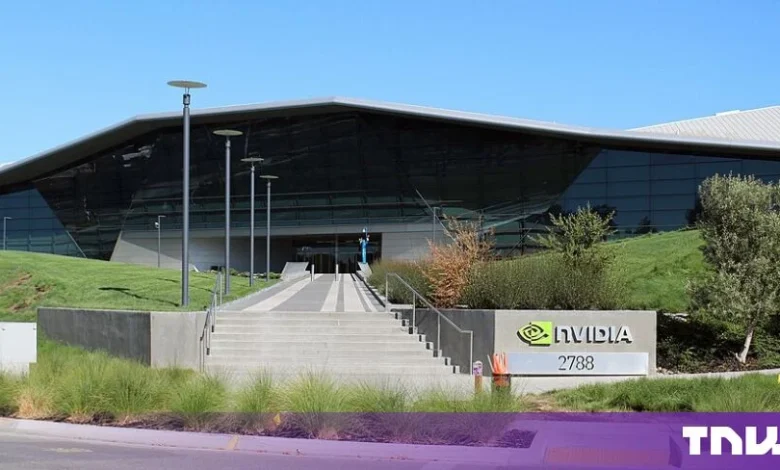
Nvidia has solidified its role as a central architect of the global artificial intelligence infrastructure by doubling its investment in SB Energy, the data center development arm of SoftBank. According to a regulatory filing submitted on Monday, the chipmaking giant is purchasing an additional $1.5 billion in shares of the developer. This transaction, executed at a 10% discount to the price set for the company’s impending initial public offering (IPO) in the United States, brings Nvidia’s total financial commitment to the entity to $3 billion.
The move is not merely a capital allocation; it represents a strategic alignment between the hardware supplier that powers the AI revolution and the physical infrastructure developers tasked with housing the next generation of massive computing clusters. By acquiring "N class" nonvoting shares in a private placement, Nvidia is securing its economic stake in the future of high-density data center real estate while simultaneously ensuring that the power and land resources required for its increasingly thirsty hardware are prioritized.
The Rationale Behind the Discount
The 10% discount on the pre-listing shares is a significant signal of the symbiotic relationship between chip manufacturers and infrastructure developers. Nvidia is currently facing the architectural constraints of its own success. With the introduction of its Rubin-class processors, rack density requirements have surged from approximately 250 kilowatts (kW) to 600 kW. This jump in power demand means that traditional data center designs are rapidly becoming obsolete.
Nvidia’s strategy, which included the acquisition of stakes in three other land and power companies during August alone, is designed to solve the "last mile" problem of AI deployment. By backing SB Energy, Nvidia is not just an investor; it is an anchor tenant and a supply-chain enforcer. The company is effectively subsidizing the development of the facilities that will host its own H100, B200, and future Rubin-generation GPUs, ensuring that there is no shortage of capacity for its customers.
SB Energy’s Pipeline and Market Positioning
SB Energy currently serves as a linchpin in the American AI landscape, holding a portfolio of 8.8 gigawatts of data center capacity either under contract or in various stages of construction. The company’s focus is heavily concentrated in regions like Ohio and Texas, states that have become the primary battlegrounds for the "hyperscale" wars due to their relatively favorable regulatory environments and available power infrastructure.
SB Energy’s IPO, which is targeting total proceeds between $5 billion and $7 billion, is being viewed as a bellwether for the infrastructure-as-a-service market. The company’s valuation is bolstered by its ability to secure major tenants. Most notably, OpenAI has emerged as a significant strategic partner. In a move that highlights the intensity of the competition for space, SB Energy granted OpenAI warrants valued at $5.5 billion to anchor a 20-year lease on a 10-gigawatt campus in southern Ohio, expected to become operational in 2028. These warrants, initially issued in January at a value of $3.6 billion, appreciated by roughly $1.9 billion by June, reflecting the rapid growth in market confidence regarding AI-focused infrastructure.
A Tale of Two Continents: The European Divergence
While the United States is seeing aggressive, rapid-fire investment into AI infrastructure, the situation in Europe remains starkly different. SoftBank has pledged up to 75 billion euros to develop 5 gigawatts of AI-ready data centers in France, with initial construction slated for sites in Dunkirk, Bosquel, and Bouchain. However, the first phase of this project is not expected to be operational until 2031, leaving a three-year gap between the realization of European capacity and the American rollout.
This discrepancy is not coincidental. The European projects are housed in a separate corporate vehicle from the entity currently listing in New York, a separation necessitated by vastly different regulatory, energy, and economic environments. In Dunkirk, SoftBank has partnered with Schneider Electric, leveraging a local grid that draws roughly 70% of its power from nuclear energy. Despite this, the lack of private-placement investment from chipmakers like Nvidia in European infrastructure underscores the systemic hurdles facing the continent.
The Stargate UK Precedent
The limitations of the European market were highlighted earlier this year when OpenAI paused the "Stargate UK" project in April. The initiative, originally announced in partnership with Nvidia and Nscale for northeast England, was intended to be a flagship European AI hub. However, OpenAI cited British industrial electricity prices—which are currently more than four times higher than those in the United States—and ongoing uncertainty regarding copyright legislation as primary reasons for the suspension.
Industry analysts note that while the US market benefits from a combination of lower energy costs and a more aggressive regulatory push toward deregulation, European markets are struggling to balance industrial ambitions with strict climate and digital sovereignty mandates. The failed attempt to launch Stargate UK serves as a cautionary tale: infrastructure capital is fluid, and it will inevitably flow toward jurisdictions that offer the lowest friction for high-density power consumption.
Implications for the AI Value Chain
The integration of chip design and power distribution marks a new era in the technology sector. For years, companies like Nvidia focused almost exclusively on silicon and software layers. Now, they are becoming "power brokers" in the literal sense. By securing discounted equity in SB Energy, Nvidia is hedging against the risk of power shortages that could otherwise stifle demand for its hardware.
This trend is likely to trigger further consolidation in the energy sector. Utility providers and independent power producers are increasingly becoming part of the "AI stack." As data centers shift from being peripheral assets to the core product, the ability to control the supply of electricity will be just as valuable as the ability to manufacture advanced semiconductors.
Looking Ahead: The IPO and Beyond
As the SB Energy IPO approaches, investors are scrutinizing the long-term sustainability of these "tenant-as-investor" models. While the partnership between OpenAI, Nvidia, and SB Energy provides a veneer of stability, the model relies on the continued, rapid scaling of AI models. If the demand for compute plateaus or if power costs in the U.S. rise to meet international levels, the valuation of these massive campuses could face significant downward pressure.
Furthermore, the "N class" share structure—which prioritizes economic exposure without granting voting control—suggests that SoftBank intends to maintain tight operational command over its energy assets. For the broader market, the success of this listing will determine whether other infrastructure developers can replicate the "warrants-for-rent" model that has allowed SB Energy to secure massive long-term commitments from major players like OpenAI.
Ultimately, the infusion of $3 billion from Nvidia into SB Energy is a strategic insurance policy. It confirms that in the race to achieve Artificial General Intelligence (AGI), the most critical raw material is no longer just data or talent; it is the physical capacity to process that data at an industrial scale. Whether this investment pays off in the long term depends on whether the energy infrastructure can keep pace with the exponential growth of Nvidia’s silicon roadmap. As the industry moves toward 2031 and beyond, the gap between the U.S. and European infrastructure landscapes will likely become the defining narrative for the next decade of digital development.