The landscape of modern web development continues to shift at a rapid pace, with recent weeks yielding a series of critical updates to CSS specifications and browser implementations. This edition of the industry bulletin highlights a concerted effort by the web standards community to refine user interface interactions, enhance layout control, and improve the efficiency of syntax styling. From the introduction of advanced interest-tracking properties to the emergence of experimental selector syntaxes, these developments represent a significant maturation of the web platform’s core capabilities.
Refined User Experience Through Intelligent Tooltip Management
One of the most persistent challenges in user interface design involves the management of tooltips. For years, developers have struggled to find a balance between responsiveness and intentionality—ensuring that tooltips appear promptly when needed while avoiding intrusive flickering during cursor movement. Abhishek Jakhar’s recent research into this area advocates for a hybrid approach: a slight delay before triggering, combined with an immediate dismissal upon exit. This dual-state mechanism prevents the accidental activation of informational overlays while maintaining a fluid user experience.
However, implementation complexities persist. If the hoverable hit area is too constrained, the tooltip may be inadvertently de-triggered. Industry experts, including Chris Coyier, have proposed a modern solution utilizing the "interest invokers" API. This feature introduces two specific CSS properties, interest-delay-start and interest-delay-end, designed to handle the timing of UI state changes natively. While current support is limited primarily to the Chromium engine, the adoption of these properties signals a move toward declarative UI state management, potentially reducing the need for complex, resource-heavy JavaScript event listeners.
Evolution of the Geolocation API and Native HTML Integration
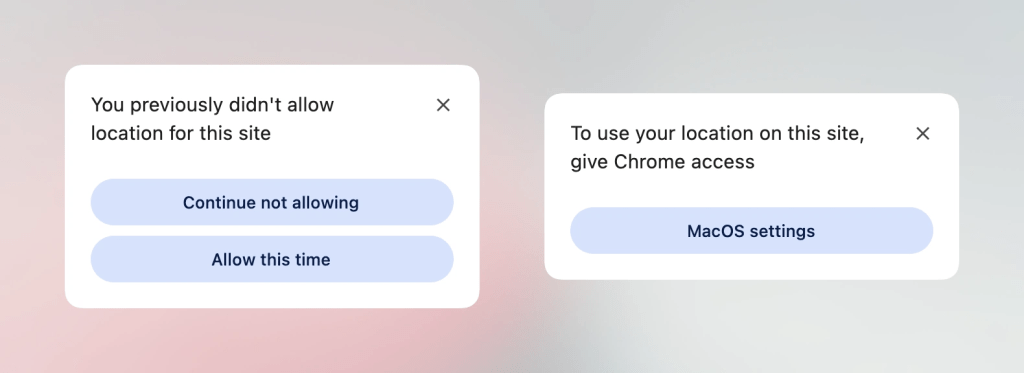
The integration of location-based services into web applications has historically relied on the Geolocation API, a system often hampered by its dependence on external hardware metrics—including GPS satellites, Wi-Fi triangulation, and cellular tower proximity. The recent introduction of the <geolocation> HTML element aims to streamline this process, though it has brought to light new challenges regarding styling restrictions and permission management.
For developers, the transition from the legacy API to this new native element is not instantaneous. Current best practices involve a progressive enhancement strategy, where the <geolocation> element is used in tandem with the traditional API to ensure backward compatibility across non-supporting browsers. This transitional phase is critical, as it allows for the deployment of modernized codebases while maintaining functional parity for users on older browser versions. The move toward a native element also addresses the long-standing frustration regarding the persistence of permission states, offering a more standardized approach to user privacy and consent.
Syntax Highlighting via the Custom Highlight API
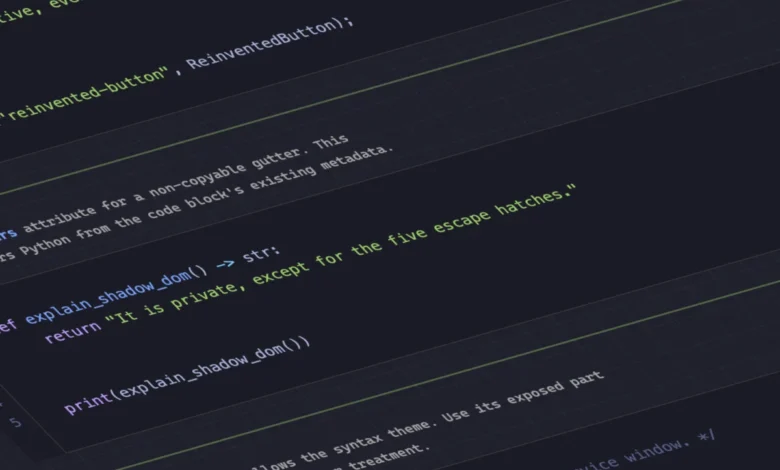
The introduction of the Custom Highlight API has provided developers with a powerful tool for visual manipulation. Dave Rupert’s "MicroLighter" project serves as a practical demonstration of how this API can be leveraged to create lightweight, high-performance syntax highlighting without the traditional overhead associated with DOM-heavy approaches. By utilizing the ::highlight() pseudo-element, developers can dynamically apply styles to text ranges based on programmatic criteria.
This shift away from wrapping code in numerous <span> tags significantly reduces the Document Object Model (DOM) size, leading to improved rendering performance and reduced memory consumption. As browser support for the Custom Highlight API expands, it is expected to become the industry standard for code editors, document viewers, and real-time text analysis tools built on the web.
Precision Control in CSS Grid and Layout Architectures
The ability to extract layout data into CSS variables has long been a "holy grail" for frontend engineers. Temani Afif has pioneered techniques to capture CSS Grid information—specifically row and column counts and cell coordinates—directly into custom properties. This capability opens new doors for responsive design, allowing for layout-aware components that can adjust their behavior based on their position within a grid.
This breakthrough is particularly significant for implementing hover-proximity effects, where an element’s state is determined by its distance from the cursor relative to the grid structure. While this technique currently requires uniform column widths, the rapid evolution of CSS standards suggests that more flexible, non-uniform grid support may be on the horizon. This level of granularity in layout management allows for a degree of design sophistication previously achievable only through manual calculations or intensive JavaScript intervention.
The Debate Over Dark Mode State Management
As dark mode becomes a standard requirement for web interfaces, the conversation has shifted toward how these states should be toggled and stored. The industry is currently divided between two-state (light/dark) and tri-state (light/dark/system-default) implementations. Lea Verou has championed the two-state approach, citing simplicity and user predictability. Conversely, Bramus and other advocates for the tri-state model argue that users require the ability to explicitly override the system preference while retaining the option to return to "automatic" mode.
The consensus emerging among experts is the "auto-until-overridden" approach. This methodology respects the user’s operating system settings by default but allows for a manual toggle that persists across sessions, providing the best of both worlds. This nuanced approach to user preference underscores the growing importance of personalization in modern web standards.
Future Selectors and Feature Detection
Looking ahead, two major proposals are poised to change the way developers write CSS. The first is the "class prefix selector," which aims to simplify the targeting of multiple classes using a pattern-matching syntax. This would replace the current, more verbose attribute selector approach (e.g., [class^="something-"]), offering cleaner code and potentially improved selector performance. While not yet implemented, the simplicity of this proposal suggests a high likelihood of adoption by standards bodies.
The second development is the named-feature() function within the @supports at-rule. This feature allows for the detection of specific, previously "undetectable" browser behaviors, such as the interaction between transforms and anchor positioning. By providing a standardized way to query these granular browser features, @supports named-feature() empowers developers to build highly complex, feature-dependent interfaces that degrade gracefully.
Balancing Flexbox and Future Trends
Finally, the introduction of flex-wrap: balance in Chromium marks a significant step forward for typography and layout harmony. Mirroring the functionality of text-wrap: balance for block-level text, this property allows flex items to be distributed more evenly across rows or columns, preventing orphans and awkward white-space distribution. As Ahmad Shadeed has noted, this small change can drastically improve the aesthetic quality of grid-based layouts, particularly in responsive cards and navigation menus.
These developments, collectively, illustrate a web platform that is becoming increasingly declarative. By shifting logic from imperative JavaScript to declarative CSS and HTML, the web is becoming faster, more accessible, and easier to maintain. As the industry transitions into the final quarter of the year, these tools will undoubtedly play a pivotal role in shaping the next generation of web-based experiences. The ongoing collaboration between browser vendors and the developer community continues to be the primary engine driving these innovations, ensuring that the web remains a robust and evolving ecosystem.