Taming the Digital Cookbook: How AI-Powered App ReciBites Seeks to Solve Modern Meal Planning Fatigue

The modern home cook faces a unique digital paradox: while the internet offers an infinite, unprecedented catalog of culinary inspiration, the actual mechanics of organizing and executing a weekly menu have arguably never been more fragmented. Across the globe, millions of households navigate the daily dinner dilemma not by consulting dog-eared volumes on a kitchen shelf, but by sifting through a chaotic digital ecosystem of bookmarked TikTok videos, saved Instagram reels, Pinterest boards, camera roll screenshots, and hastily typed notes apps. This modern phenomenon—often referred to by culinary technologists as recipe fragmentation—has created a paradox where having access to millions of recipes results in cooking fewer of them, plagued by decision fatigue and logistical disorganization.
Enter a new wave of artificial intelligence-driven culinary platforms designed to bridge the gap between digital content consumption and tangible kitchen execution. Among them, ReciBites has emerged as a prominent contender, attempting to centralize the disparate pieces of the modern recipe puzzle. For a limited time, the platform is offering lifetime access to its premium tier, ReciBites Plus, for $39.99—a steep discount from its standard $360 valuation. This aggressive pricing strategy highlights a broader industry trend: software developers are betting that consumers are increasingly willing to invest in centralized digital infrastructure to reclaim control over their daily routines, grocery budgets, and nutritional goals.
The Anatomy of Recipe Fragmentation: A Chronological Evolution of Cooking Inspiration
To understand the current market demand for AI-driven meal planning applications, it is necessary to examine how home cooking information has evolved over the past two decades. In the pre-internet era, recipe management was largely physical. Households relied on recipe boxes filled with handwritten cards, clipped newspaper columns, and a curated selection of hardcover cookbooks. While limited in volume, these collections were cohesive and localized to the cook’s immediate preferences.
The advent of the Web 1.0 and 2.0 eras shifted this paradigm toward digital blogs and recipe aggregators. Suddenly, home cooks could search for specific ingredients online, leading to the birth of early digital bookmarking. However, the true disruption occurred with the rise of short-form video platforms and social media algorithms. Platforms like TikTok, Instagram, and YouTube Shorts transformed cooking into visual entertainment. Users were no longer searching for recipes out of immediate necessity; rather, they were passively consuming visually appealing food content while scrolling through their feeds, saving videos with the vague intention of recreating them later.
By the early 2020s, smartphones had turned everyone into an accidental archivist. A typical home cook might have thirty recipes saved on Instagram, fifteen pins on Pinterest, a half-dozen screenshots of a food blogger’s website in their camera roll, and a physical cookbook with sticky notes marking favorite pages. This decentralization created a significant friction point: when it came time to actually cook, the cognitive load of finding, retrieving, and organizing these disparate sources often proved too high, leading to the default fallback of ordering takeout or repeating a rotating handful of familiar meals.
The Technological Solution: Centralization Through Artificial Intelligence
ReciBites and similar contemporary applications attempt to solve this friction through automated ingestion and artificial intelligence processing. The core utility of the platform lies in its omni-channel import capabilities. Rather than requiring users to manually type out ingredients and instructions—a notoriously tedious barrier that dooms most traditional digital recipe boxes—modern tools leverage scraping technology and optical character recognition (OCR).
Users can import recipes directly from major social networks including Instagram, Facebook, TikTok, YouTube, and Pinterest, as well as traditional web pages. Furthermore, the inclusion of OCR allows users to photograph physical documents—ranging from pages of vintage cookbooks to scribbled handwritten recipe cards left by family members—and instantly convert them into editable, searchable digital text.
Once ingested, the application employs deduplication algorithms to prevent the user’s digital cookbook from becoming cluttered with multiple variations of the same dish. This mirrors the database management principles used in enterprise software, applied here to domestic household management.
Nutritional Breakdown and Dietary Customization
Beyond mere archiving, the modern culinary software market increasingly emphasizes health metrics and dietary adherence. As public awareness of nutrition, macronutrients, and specialized diets grows, static recipe blogs often fall short because they rarely provide comprehensive nutritional data tailored to individual user needs.
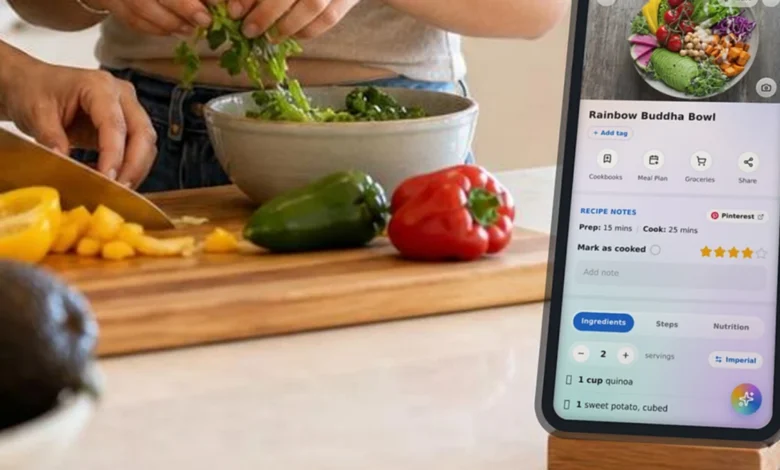
ReciBites utilizes artificial intelligence to automatically parse imported text, breaking recipes down into granular components: precise ingredient lists, caloric counts, macronutrients (proteins, carbohydrates, fats), and key micronutrients. This automated nutritional profiling addresses a significant pain point for individuals managing specific health conditions, fitness goals, or dietary restrictions.
Furthermore, the platform incorporates smart dietary alerts. If a user inputs a recipe that conflicts with their saved preferences—such as allergens, religious dietary laws like halal or kosher, or macro-nutrient targets like high-protein or low-sugar—the system flags the discrepancy. More advanced features allow for personalized ingredient substitutions, suggesting functional swaps that maintain the structural integrity and flavor profile of the dish while accommodating the user’s nutritional parameters.
Bridging the Gap: From Meal Planning to Smart Grocery Shopping
Perhaps the most persistent failure point in home cooking is the disconnect between inspiration and logistics. Finding a recipe is one challenge; ensuring the refrigerator contains the necessary ingredients without making multiple trips to the grocery store is entirely another.
To address this, ReciBites integrates its recipe database directly with automated weekly meal planning and smart grocery list generation. Once a user selects a series of recipes for the upcoming week, the application aggregates the required ingredients into a single, cohesive shopping list. Crucially, the software includes automated duplicate detection and merging capabilities—meaning if three separate recipes call for garlic, the list combines the quantities rather than listing three separate entries.
To optimize the in-store experience, the system sorts grocery items by store aisle. This logistical streamlining mirrors the inventory management systems used in commercial retail and logistics, bringing industrial efficiency to domestic chores. Additional practical features include serving-size scaling—automatically recalculating ingredient quantities whether cooking for one or hosting a dinner party—unit conversion tools, and step-by-step cooking assistants designed to keep screens active and readable while hands are busy in the kitchen.
Addressing Food Waste: The AI Cooking Assistant
In addition to planned weekly menus, modern meal planning applications are increasingly incorporating tools designed to address reactive cooking scenarios: namely, the perennial question of what to make with random ingredients left in the refrigerator.
Food waste is a significant global economic and environmental concern. According to data from environmental agencies and agricultural authorities, household food waste accounts for a substantial percentage of total food loss, driven largely by poor inventory management and a lack of culinary flexibility. By integrating an AI Cooking Assistant, platforms like ReciBites allow users to input whatever leftover ingredients they currently possess and generate customized recipes on the fly.
This functionality not only reduces household expenditures by maximizing the utility of existing groceries but also encourages creative cooking, lowering the barrier to entry for novice cooks who might otherwise abandon a half-used head of lettuce or leftover proteins to spoilage.
Social Integration and Community Culinary Sharing
While traditional recipe apps have historically functioned as isolated, solitary databases, recent industry trends point toward modest social integration. ReciBites incorporates a social layer that allows users to connect with friends, family members, or fellow home cooks within the platform ecosystem.
This feature shifts the source of culinary inspiration away from algorithmic feeds populated by internet strangers and toward trusted personal networks. By observing what real-life acquaintances are saving, bookmarking, and successfully preparing, users can leverage social proof to drive their own kitchen habits. This mirrors the cultural tradition of borrowing recipe cards from neighbors or sharing family dishes, translated into a modern, encrypted digital format.
Economic Analysis: The Lifetime Subscription Model and Market Implications
The offering of lifetime access to ReciBites Plus for $39.99, contrasted with its stated regular pricing structure of $360, warrants closer examination from an economic and business model perspective. The software-as-a-service (SaaS) industry has traditionally relied on recurring monthly or annual subscriptions to ensure steady cash flow and fund ongoing server maintenance, software updates, and feature development.
However, consumer subscription fatigue has become a pervasive trend across digital media and productivity software. Users increasingly balk at accumulating dozens of small monthly fees for utility apps. In response, promotional pricing strategies that offer "lifetime" or deeply discounted multi-year tiers have become common tactics for emerging platforms seeking to rapidly capture market share, build a robust user base, and generate upfront capital.
For consumers, a one-time payment of $39.99 represents a relatively low-risk investment if the software successfully alters daily routines and reduces friction in meal preparation. For the developers, the strategy relies on the assumption that a large volume of lifetime users will create network effects, provide valuable product feedback, and potentially advocate for the platform within their social circles.
Broader Impact on Domestic Labor and Lifestyle Technology
The proliferation of AI-assisted culinary tools reflects a broader societal shift toward the digitization and optimization of domestic labor. For decades, technology in the kitchen was defined by hardware: faster blenders, more efficient ovens, and automated pressure cookers. Today, the frontier has shifted decisively toward software and cognitive offloading.
By automating the tedious administrative overhead of cooking—organizing bookmarks, calculating nutrition, planning weekly schedules, and generating optimized grocery lists—applications like ReciBites attempt to reduce the mental burden traditionally associated with meal management. In dual-income households or fast-paced modern environments where time is at a premium, this cognitive outsourcing can be the deciding factor between cooking a fresh meal at home and resorting to less healthy, more expensive convenience alternatives.
As artificial intelligence continues to mature, it is anticipated that consumer applications will move beyond simple data parsing and begin offering predictive meal planning based on biometric data, regional weather patterns, and real-time pantry inventory tracked via smart home appliances. For now, however, platforms focusing on the consolidation of digital recipe clutter represent a pragmatic and immediately actionable step toward modernizing the ancient human ritual of preparing food.
The ongoing availability of promotional access tiers suggests that competition within the culinary tech sector will remain fierce as developers vie to become the definitive operating system for the modern kitchen. Whether users will permanently alter their digital habits remains to be seen, but the market demand for order amid the chaos of online recipe consumption is undeniable.