From Gold Rush to Algorithms: Two Decades of Search Marketing Evolution Through the Eyes of Veteran Matt Van Wagner

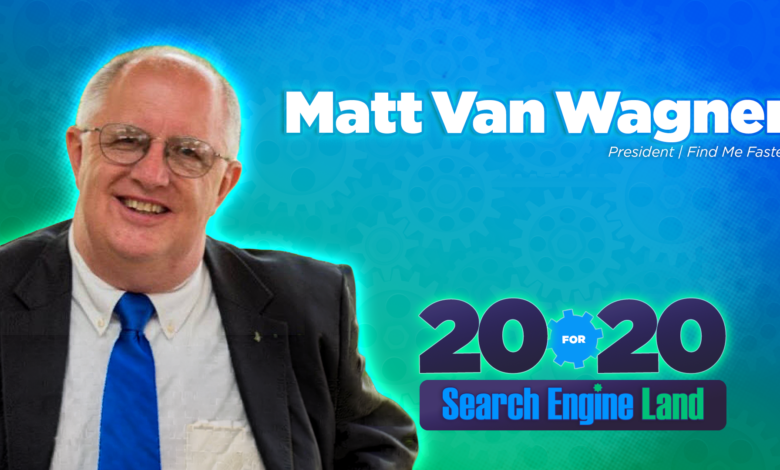
The search marketing industry has undergone a radical transformation, evolving from an entrepreneurial gold rush characterized by unbridled experimentation into a heavily consolidated ecosystem dominated by artificial intelligence and automated platforms. To understand how search engine optimization (SEO) and pay-per-click (PPC) advertising arrived at their current intersection, industry veterans often look back at the foundational years of the 2000s. Reflecting on this evolution, paid search pioneer Matt Van Wagner recently shared insights into the early days of Google Ads, the launch and maturation of industry trade publications like Search Engine Land, the tactical shifts that reshaped digital marketing, and the enduring necessity for advertisers to critically evaluate platform recommendations.
The Origins of Search Marketing: A Wild West Gold Rush
The genesis of modern search marketing dates back to the early 2000s, a period when traditional B2B and B2C marketing channels—such as print trade publications, physical conferences, and direct mail campaigns—were beginning to yield diminishing returns for customer acquisition. Professionals transitioning into the digital space often came from traditional technology sales and marketing backgrounds.
Upon attending early search marketing conferences, practitioners encountered an atmosphere vastly different from corporate trade shows. These nascent gatherings buzzed with entrepreneurial energy, populated by individuals who recognized that search engines were creating an entirely new behavioral paradigm for how consumers discovered commercial intent. This emerging frontier convinced early adopters to leave established career paths to establish some of the world’s first dedicated search advertising agencies—operating in a market where corporate clients barely understood the nomenclature of search engine marketing.
During these formative years, selling Google Ads (then known as Google AdWords) was remarkably straightforward once a brand understood the value proposition. Demand vastly outpaced supply, and because the overall pie was expanding at an exponential rate, early agencies maintained a remarkably collaborative relationship. Competitors shared tactical insights openly because market growth ensured there was more than enough business for everyone. According to retrospective analyses, the primary operational error made by early agencies was not strategic failure, but rather undervaluing their services and undercharging clients for the substantial commercial impact they delivered.
The Maturation of the Industry and Independent Journalism
As the search landscape matured, the initial wave of industry conferences began to stagnate, frequently recycling the same foundational presentations and speakers. This plateau threatened to stunt the professional development of the industry until specialized platforms emerged to elevate the discourse.
The launch of Search Engine Land and the SMX (Search Marketing Expo) conference series marked a significant turning point. SMX Advanced broke convention by deliberately bypassing introductory fundamentals, pitching its sessions at an intermediate-to-advanced level and exploring complex architectural problems. This rigor attracted elite practitioners and fostered high-level discussions. Informative hallway conversations, coffee chats, and evening networking events often rivaled the formal stage sessions in educational value.
Concurrently, independent search journalism established itself as a critical pillar for the industry. As platforms grew increasingly complex and opaque, independent reporting provided an essential counterbalance to the official narratives pushed by search engine operators. Publications like Search Engine Land gave practitioners an objective venue to question algorithmic shifts, evaluate product releases, and analyze policy changes without the bias inherent in platform-driven documentation.
Tactical Shifts: From Granular Control to Broad Automation
The operational mechanics of PPC advertising have shifted dramatically over the past two decades. Practices that were once considered the gold standard of campaign management—such as single-keyword ad groups (SKAGs), highly fragmented match type distributions, and exhaustive negative keyword hierarchies—have largely become obsolete.
In the early days, managing PPC required extreme manual granularity. Advertisers meticulously sculpted traffic paths by isolating keywords into tightly controlled ad groups to maximize relevancy and control costs. However, the rise of machine learning and automated bidding algorithms has rendered these hyper-granular structures largely unnecessary. Today, platforms discourage excessive fragmentation, arguing that algorithms require aggregated data pools to optimize bidding efficiency.
This shift toward automation has not been without friction, particularly regarding default settings. A persistent point of contention for veteran marketers is Google’s continued reliance on broad match as a default setting for new campaigns. Industry critics argue that inexperienced advertisers frequently burn through valuable ad spend while systems learn lessons that the advertiser’s own business data already accounts for. The underlying frustration stems from the reality that modern automated tools often require advertisers to spend capital teaching algorithms parameters that the human operators already know.
The Evolution of the Google-Advertiser Relationship
In the early years of search engine marketing, the relationship between Google and the practitioner community was notably accessible. Cultural milestones like the "Google Dance"—informal parties hosted at the Googleplex—allowed everyday SEOs and PPC managers to converse directly with the engineers building the search algorithms. Prominent figures like Matt Cutts served as public bridges between the search engine and the optimization community, demystifying ranking factors and outlining Webmaster Guidelines.
This openness largely existed because Google itself was still actively defining its product ecosystem. Advertisers, webmasters, and the search engine were charting uncharted territory together. Over time, as Google transformed into a publicly traded technological behemoth, that direct accessibility receded behind institutional communication channels.
To mitigate growing disconnects, Google introduced dedicated liaison roles, most notably appointing Ginny Marvin as the Google Ads Liaison. Drawing from her extensive background on the advertiser and publisher side of the industry, Marvin has been widely credited with bridging the gap between corporate directives and frontline marketer frustrations, offering a structured channel for feedback and policy clarification.
Nonetheless, veterans emphasize a fundamental principle that modern advertisers must keep in view: Google’s commercial definition of success does not automatically align with an individual business’s objectives. While advertisers optimize for net profitability, customer lifetime value, and measurable ROI, Google’s primary incentive is increasing overall platform spend. Consequently, automated recommendations, default configurations, and campaign type introductions must be audited independently rather than accepted as objective, risk-free guidance.
Historical Turning Points: The Florida Update and Algorithmic Volatility
The inherent volatility of search engines was underscored dramatically by major algorithmic interventions, most notably Google’s "Florida" update in late 2003. Hitting just weeks before the critical holiday shopping season, the Florida update devastated organic search rankings for countless e-commerce websites and agencies that had relied on prevalent optimization tactics of the era.
While some penalized strategies crossed ethical boundaries, the update served as a brutal wake-up call for the digital marketing industry. It demonstrated that organic search visibility could be wiped out overnight by unilateral platform adjustments, vaporizing revenue streams in the process. This structural vulnerability catalyzed a strategic shift: paid search quickly evolved from an experimental marketing channel into an essential insurance policy for organic visibility. If an algorithm update severed a brand’s organic traffic, PPC campaigns guaranteed continued acquisition channels.
Similarly, product rollouts frequently reshaped user behavior and media landscapes. The introduction of Google Instant in 2010—which predicted and displayed search results dynamically as users typed characters into the query box—showcased the immense public relations power wielded by search engines. While competitors like Microsoft invested heavily in conventional out-of-home and television advertising to promote Bing, Google’s native product updates routinely commanded global mainstream media coverage simply by altering the user interface.
Strategic Lessons from Two Decades of PPC
Reflecting on historical missteps provides a clear picture of how digital advertising strategy matured. In the early days of PPC, a common misconception was that securing the top position required outbidding all competitors at any cost. Advertisers routinely authorized exorbitant cost-per-click (CPC) rates purely for the corporate prestige of occupying the number-one sponsored slot. Over time, sophisticated marketers recognized the economic fallacy of this approach, frequently pivoting to target second-place positioning or focusing strictly on marginal return on ad spend (ROAS) rather than vanity metrics.
Furthermore, the fast-paced nature of campaign management historically bred creative rationalizations when performance anomalies occurred. Veteran practitioners often recount instances of costly human error—such as accidentally applying critical terms as broad-match negatives during high-budget financial campaigns and exhausting thousands of dollars in hours. The consensus among seasoned managers is that operational transparency, rapid admission of mistakes, and systematic post-mortem analyses yield far better long-term outcomes than attempting to deflect blame onto platform anomalies.
The Broader Impact and Future Implications
As search marketing enters a new era defined by generative artificial intelligence, zero-click searches, and heavily consolidated ad inventories, the foundational lessons of the past twenty years remain remarkably relevant.
The industry grew out of an era of unprecedented collaboration, where open exchange of ideas drove collective advancement. While modern platforms increasingly restrict manual control in favor of closed-loop machine learning systems, the ultimate responsibility for strategic direction still rests with human operators. Advertisers retain deep, nuanced knowledge of their specific markets, customer pain points, and product margins—variables that algorithms cannot fully interpret on their own.
Ultimately, the transformation of search marketing from an entrepreneurial gold rush into an automated enterprise highlights a permanent truth for digital marketers: technology platforms will continue to evolve, introduce new efficiencies, and alter campaign controls, but critical evaluation, independent journalism, and a healthy skepticism toward platform incentives will remain the absolute prerequisites for commercial success.