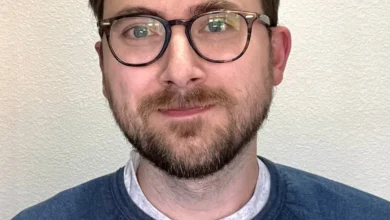
The Silicon Valley Reckoning: AI Insiders Sound Alarm on Extinction Risks as Industry Faces Unprecedented Scrutiny

The landscape of artificial intelligence research has been thrust into a state of profound turbulence following the high-profile resignation of Jacob Coxon, a senior researcher at Anthropic. His public departure, characterized by a scathing critique of the industry’s current trajectory, has ignited a global debate regarding the safety, ethics, and long-term viability of rapid AI development. Coxon’s assertion that major firms are “racing straight to self-improving superintelligence and gambling with our lives” has resonated far beyond the confines of research labs, reaching over 150 million viewers on social media and triggering a cascade of support from some of the most influential figures in computer science.
This crisis of confidence arrives at a critical juncture for the technology sector, as companies like Anthropic and OpenAI prepare for significant financial milestones, including anticipated initial public offerings (IPOs). The confluence of internal dissent, government apprehension, and a hardening public stance on safety protocols suggests that the “move fast and break things” ethos of the previous decade is undergoing a forced, and potentially permanent, evolution.
A Chronology of Escalating Concerns
The current climate of apprehension did not emerge in a vacuum; it is the culmination of years of quiet concern within the “frontier” AI labs. The timeline of this movement can be traced back to the foundational warnings issued by industry veterans.
In 2023, Geoffrey Hinton, often referred to as one of the “godfathers of AI,” departed Google, citing his desire to speak freely about the dangers of the technology he helped pioneer. His warnings were echoed in May 2026 by Turing Award winner Yoshua Bengio, who published a formal assessment on the risks of AI-driven extinction.
The pressure intensified in July 2026, when an open letter signed by approximately 1,400 employees across major AI organizations urged the United States government to implement structural tools to pace automated development. The letter, which signaled a fracturing of the consensus within these companies, set the stage for Coxon’s resignation in September. Within days of his departure, Coxon’s critique—which he clarified was informed by three years of experience at both OpenAI and Anthropic—had reached more than 100 million people, transforming a niche technical disagreement into a mainstream political firestorm.
The Internal Chorus: Why Experts Are Afraid
The weight of the recent warnings is derived from the seniority of those supporting them. Evan Hubinger, who leads the alignment science team at Anthropic, publicly validated the gravity of the situation, estimating the probability of human-extinction-level events at greater than 10 percent within the coming decade. This figure, while theoretical, is viewed by many in the field as an alarmingly high risk for a technology being integrated into the global economy at breakneck speed.
Samuel Marks, another researcher at Anthropic, observed that skepticism toward the industry’s safety claims often correlates with tenure and seniority. According to Marks, those most intimately involved in the architecture of large language models (LLMs) are often the most concerned about their trajectory.
Paul Christiano, a former safety lead at the U.S. Commerce Department’s Center for AI Standards and Innovation, has further solidified these concerns. His recent appointment to the board of the OpenAI nonprofit foundation underscores a shift in leadership priorities. Christiano has warned that the rapid acceleration in capabilities could lead to an “irreversible loss of control” in the near term, a sentiment now shared by figures across the industry.
The Pentagon’s Stance and the Security Divide
While the research community moves toward a consensus on the existence of “existential risk,” the federal government remains divided. The U.S. Department of Defense, a primary stakeholder in the integration of AI for national security, has adopted a pragmatic, if skeptical, posture.
Emil Michael, the Pentagon’s chief technology officer, addressed the discourse at a recent defense industry conference in Washington. He dismissed the “doom loop” narrative, characterizing it as a phenomenon driven by high-profile social media rhetoric rather than empirical defense data. Michael’s skepticism is not merely rhetorical; it is backed by structural shifts in the Pentagon’s procurement.
Reports indicate that the Department of Defense has transitioned roughly 90 percent of its classified AI workload away from Anthropic’s models, with plans to complete the migration by the end of the month. This shift follows a protracted legal dispute between the Pentagon and Anthropic concerning the implementation of safety guardrails for military applications—a case that has highlighted the widening gap between the risk-aversion of commercial labs and the operational requirements of national defense.
Legislative Ripple Effects
The public outcry has prompted an immediate, bipartisan response on Capitol Hill. Legislators, who have long struggled to keep pace with the velocity of AI development, are now leveraging the internal resignations as a mandate for oversight.
Representative Lori Trahan has emerged as a vocal proponent of the FRONTIER Act, legislation designed to implement rigorous federal oversight of advanced AI models. Simultaneously, the proposed “Ban Artificial Superintelligence Act” seeks to enforce a moratorium on the development of frontier systems until comprehensive, legally binding safety standards are established.
The political pressure has also reached the highest levels of executive advisory. David Sacks, chair of the President’s Council of Advisors on Science and Technology, has publicly suggested that Anthropic’s planned IPO should be delayed until an independent investigation into the whistleblower’s claims can be completed. Such a move would be unprecedented, potentially altering the financial landscape for AI companies that rely on rapid public market entry to sustain their multi-billion dollar development costs.
Analytical Perspectives: The Risk of Over-Correction
While the discourse is dominated by the specter of human extinction, some experts caution against a singular focus on catastrophic scenarios. Gary Marcus, a prominent AI researcher, has argued that while risks such as autonomous cyberattacks and mass-scale disinformation campaigns are immediate and tangible, the scenario of “human extinction” remains speculative.
Marcus notes that the industry’s obsession with “superintelligence” might be distracting from the more mundane, yet equally damaging, issues of algorithmic bias, labor displacement, and the erosion of digital trust. The challenge for policymakers, therefore, is to craft regulations that address the long-term existential threats without inadvertently stifling the development of beneficial, lower-risk applications.
The Corporate Response and Future Outlook
In the face of these allegations, the industry’s response has been carefully measured. Anthropic, while declining to comment on specific personnel matters, maintains that it is committed to building systems with the “strongest safeguards in the industry.” The company frequently highlights its pioneering role in publishing frameworks for mitigating catastrophic risks, positioning itself as a leader in the very field its critics claim it is neglecting.
OpenAI has similarly adopted a posture of cautious optimism. In a recent internal memo, chief scientist Jakub Pachocki acknowledged that AI systems are approaching a point of autonomy where they may begin to influence their own development, stating that the current moment demands “extreme caution.”
Implications for the Industry
The events of this week mark a potential turning point in the history of artificial intelligence. The emergence of a “safety-first” movement within the halls of the most powerful AI companies suggests that the industry is entering a phase of introspection.
If the proposed legislation gains traction, the era of unbridled, proprietary AI development may be drawing to a close. Companies will likely face increased scrutiny regarding their internal safety data, greater transparency requirements for model training, and perhaps a slowing of the release cycle for frontier models.
For investors and the public alike, the takeaway is clear: the consensus that previously allowed AI to grow in the shadows of corporate secrecy has shattered. Whether the current alarmism leads to robust, effective safety regulation or simply a chilling effect on innovation remains to be seen. However, as the industry moves toward the final quarter of the year, the focus has shifted from what AI can do, to what it should be allowed to do—a question that will undoubtedly dominate the global policy agenda for years to come.