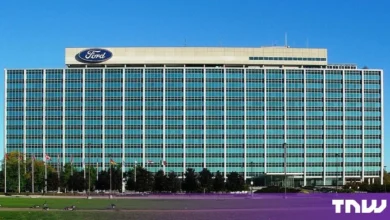
Ford Partners with Apple to Integrate Native Maps in Next-Generation Electric Pickup Platform Starting in 2027


Ford Motor Company has announced a definitive strategic shift in its in-car software ecosystem, confirming that it will embed Apple Maps as the native, built-in navigation system for its upcoming "Universal Electric Vehicle" (UEV) platform. This transition is scheduled to debut in 2027 with the launch of a highly anticipated midsize electric pickup truck priced at approximately $30,000. By leveraging Apple’s new MapKit for Automotive software development kit (SDK), Ford aims to move away from its current Google-based navigation architecture for its future flagship electric models. The partnership represents a significant evolution in the relationship between Detroit’s legacy automakers and Silicon Valley’s tech giants, marking one of the first times a major manufacturer has chosen to integrate Apple’s mapping technology directly into the vehicle’s core operating environment rather than simply mirroring it through a smartphone interface.
A Strategic Pivot in Automotive Software
The decision to adopt Apple Maps as a primary navigation tool marks a notable reversal for Ford. In 2021, the automaker signed a high-profile six-year partnership with Google to bring the Android Automotive operating system to millions of its vehicles starting in 2023. While that partnership remains in effect for many current internal combustion and electric models, Ford’s leadership has determined that the next generation of affordable, high-volume EVs requires a different software approach.
Chief Executive Officer Jim Farley described the upcoming electric pickup as a vehicle designed to "redefine what advanced technology can be" in the mass-market segment. During a joint announcement with Apple, Farley expressed that Ford is "honored to be among the first to embed" Apple Maps directly into the vehicle’s dashboard. This move is part of a broader strategy to differentiate Ford’s user experience from competitors who are increasingly locking users into proprietary systems or sticking exclusively with Google’s ecosystem.
The integration utilizes Apple’s MapKit for Automotive SDK, a toolset that allows car manufacturers to build a navigation experience that aligns with the specific aesthetic and functional requirements of their own vehicle software. Unlike traditional Apple CarPlay, which projects a standardized interface from an iPhone onto the car’s screen, this native integration allows Apple Maps to access vehicle-level data, providing a more cohesive and responsive user experience.
Enhancing Autonomous Capabilities and BlueCruise
Beyond the visual interface of the dashboard, the partnership extends into the realm of advanced driver-assistance systems (ADAS). Ford’s Latitude AI team, which focuses on developing automated driving technology, will utilize Apple’s high-fidelity, road-level mapping data to enhance the performance of BlueCruise, Ford’s hands-free highway driving system.
The integration of Apple’s mapping data is expected to facilitate a more seamless "on-ramp-to-off-ramp" experience. By feeding precise road geometry, interchange layouts, and merge-point data into the BlueCruise algorithms, the vehicle can better anticipate complex highway transitions. This level of data integration is critical for Level 2+ and Level 3 autonomous features, where the vehicle must understand its precise location relative to infrastructure that may not be immediately visible to onboard cameras or radar sensors.
Industry analysts note that this collaboration provides Ford with a robust alternative to Google’s HD Maps, which currently power similar features for several other global automakers. By diversifying its data sources, Ford is positioning itself to be less dependent on a single software provider while tapping into Apple’s extensive investment in geospatial data and natural language processing.
Technical Specifications and the $30,000 Price Point
The vehicle that will introduce this technology—a midsize electric pickup—is the cornerstone of Ford’s "Skunkworks" project, a specialized team tasked with developing a low-cost EV platform capable of competing with low-cost Chinese imports and Tesla’s future offerings. To achieve the ambitious $30,000 starting price, Ford is implementing several advanced manufacturing and chemical engineering strategies:
- UEV Platform Architecture: The Universal Electric Vehicle platform is designed for maximum efficiency and modularity, allowing Ford to scale the technology across various body styles after the initial pickup launch.
- Megacasting: Borrowing a page from the manufacturing playbooks of Tesla and various Chinese manufacturers, Ford will utilize large-scale die-casting (megacasting) to reduce the number of individual parts in the vehicle’s chassis. This significantly lowers assembly costs and reduces the weight of the vehicle.
- LFP Battery Chemistry: The 2027 pickup will utilize Lithium Iron Phosphate (LFP) batteries. While LFP batteries typically offer lower energy density than traditional Nickel Cobalt Manganese (NCM) cells, they are substantially cheaper to produce, more durable over long-term charging cycles, and do not require expensive and ethically sensitive materials like cobalt.
- Louisville Assembly Plant: Ford has confirmed that this new generation of EVs will be manufactured at its Louisville Assembly Plant in Kentucky, following a significant retooling of the facility to accommodate the UEV platform.
The EV Navigation Experience: Preconditioning and Routing
One of the primary advantages of native Apple Maps integration is its ability to communicate directly with the vehicle’s battery management system (BMS). The system will offer EV-specific route planning that calculates charging stops based on real-time battery status, weather conditions, and terrain.
A critical feature included in this integration is automatic battery preconditioning. When a driver selects a fast-charging station as a destination in the native Apple Maps interface, the vehicle will automatically begin warming or cooling the battery to the optimal temperature for DC fast charging. This process can reduce charging times by several minutes, addressing one of the primary pain points for EV owners.
Furthermore, the system will feature natural language search, allowing drivers to find locations and charging points using conversational voice commands. Real-time traffic data and incident reporting will be standard, ensuring that the built-in system remains as current as a mobile application.
Timeline and Historical Context
Ford’s journey with in-car software has been a long and sometimes turbulent one. In the late 2000s, Ford partnered with Microsoft to develop the original SYNC system, which was revolutionary at the time but eventually faced criticism for its complex user interface. This led to a switch to BlackBerry’s QNX operating system for SYNC 3 and SYNC 4.
The 2021 pivot to Google was seen as a move toward a more "app-centric" future. However, the 2027 shift toward Apple for the UEV platform suggests that Ford is moving toward a hybrid software strategy. While existing models like the Mustang Mach-E and the F-150 Lightning currently utilize a mix of SYNC 4A and Android-based architectures, the 2027 UEV lineup represents a clean slate.
Key Milestones in Ford’s Software Evolution:
- 2007: Launch of SYNC with Microsoft.
- 2014: Transition to BlackBerry QNX for SYNC 3.
- 2021: Announcement of a six-year partnership with Google for Android Automotive.
- 2023: First Ford vehicles with Google Built-in hit the market.
- 2024 (Wednesday): Announcement of Apple Maps integration for the 2027 UEV platform.
Market Implications and Competitive Landscape
Ford’s decision comes at a time when the automotive industry is deeply divided over the role of tech giants in the cockpit. General Motors (GM) recently made headlines by announcing it would phase out Apple CarPlay and Android Auto in favor of its own proprietary Google-based system, arguing that a native system allows for better data integration and safety.
In contrast, Ford is doubling down on consumer choice. Even with the native Apple Maps integration, Ford has confirmed that Apple CarPlay (and likely Android Auto) will remain available for users who prefer to mirror their phones. By embedding Apple Maps as the native system, Ford is attempting to offer the "best of both worlds"—the deep hardware integration that GM seeks, combined with the familiar ecosystem that Apple users demand.
This strategy could give Ford a competitive edge in the midsize truck market, particularly among younger, tech-savvy buyers. The $30,000 price target is also crucial; as the initial wave of early adopters for EVs has plateaued, manufacturers are now racing to capture the "middle market" where affordability is the primary driver of adoption.
Unresolved Questions and Future Outlook
While the announcement provides a clear roadmap for the 2027 UEV platform, several questions remain regarding Ford’s existing lineup. The company has not yet clarified whether current models running Google-based software will receive over-the-air updates to switch to Apple Maps, or if the two software ecosystems will coexist within Ford’s portfolio indefinitely.
Furthermore, the success of this partnership will depend on Apple’s ability to maintain high-quality mapping data in rural areas, where pickup truck owners often operate. While Apple Maps has seen dramatic improvements in urban environments over the last five years, its utility in off-road or remote industrial settings—key environments for Ford trucks—will be a critical test of the SDK’s capabilities.
As 2027 approaches, the industry will be watching closely to see if Ford can deliver on its $30,000 price promise while maintaining the high software standards promised by the Apple partnership. If successful, this collaboration could serve as a blueprint for how legacy automakers can maintain their brand identity while successfully integrating the world’s most popular software ecosystems.
Related posts: