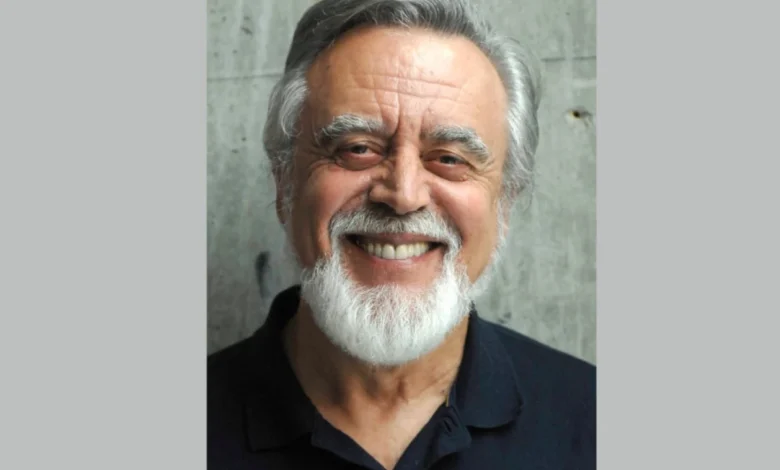
Professor Emeritus Dimitri Bertsekas, influential computer scientist and prolific author, dies at 83

A Life Dedicated to Knowledge and Innovation
Bertsekas’s extensive career, spanning decades of groundbreaking research and dedicated mentorship, was characterized by an unwavering commitment to pushing the boundaries of theoretical understanding and practical application. His work fundamentally influenced the trajectory of optimization theory, control systems, large-scale computation, reinforcement learning, and artificial intelligence. Beyond his academic pursuits, Bertsekas was a multifaceted individual whose influence extended into the commercial and entrepreneurial realms. He served as a consultant to numerous private companies, lent his editorial expertise to several prestigious scientific journals, and founded Athena Scientific, a publishing company dedicated to disseminating high-quality academic works. His role as chief scientific advisor for Bayforest Technologies, a quantitative investment firm, further underscored his ability to translate complex theoretical insights into tangible real-world solutions.
However, it is arguably through his prolific authorship and co-authorship of over 20 highly influential books, monographs, and textbooks that Bertsekas’s most enduring impact will be felt. These seminal works have become indispensable resources for generations of students and researchers, laying the groundwork for countless advancements. Equally significant is the vast network of students, mentees, friends, and collaborators he cultivated, many of whom have gone on to become leaders in their respective fields, carrying forward his intellectual torch.
An Illustrious Academic Journey
Dimitri Bertsekas’s educational foundation was laid at the National Technical University of Athens, Greece, where he earned his undergraduate degree. He then pursued advanced studies in the United States, obtaining his Master of Science in electrical engineering from George Washington University in 1969, followed by his Doctor of Philosophy in system science from the Massachusetts Institute of Technology (MIT) in 1971.
His distinguished academic career began at Stanford University, where he spent three years on the faculty. He then moved to the University of Illinois at Urbana-Champaign, dedicating another five years to teaching and research. In 1979, Bertsekas returned to MIT, joining the Department of EECS, where he would remain a central figure until 2019. Upon his retirement from MIT, he transitioned to Arizona State University in Tempe, continuing his impactful work as a full-time faculty member. Throughout these institutions, Bertsekas was renowned for his exceptional ability to teach, advise, and mentor students, many of whom later became his esteemed colleagues, a testament to his nurturing and inspiring pedagogical approach.
Mentorship: A Defining Pillar of His Legacy
The profound impact of Dimitri Bertsekas as a mentor is echoed in the heartfelt testimonials of his former students and colleagues. Asu Ozdaglar, the current department head of EECS at MIT, credits Bertsekas with a pivotal role in shaping her career. "Dimitri played a defining role in my career," Ozdaglar stated. "I decided to change my research focus after taking his nonlinear optimization class. The conceptual clarity and the mathematical rigor he brought to every topic, combined with his ability to connect theory to important problems, established a foundation that has continued to inform my scholarly work in the years to follow."
Jinane Abounadi, another former MIT student and now executive director of the MIT Sandbox Innovation Fund Program, fondly recalls Bertsekas’s tutelage as a highlight of her academic experience. "I feel so fortunate to have had Dimitri as my professor and advisor," Abounadi shared. "I had the opportunity to learn about optimization, dynamic programming, and neuro-dynamic programming from a true master."
Steven E. Shreve, a former student at the University of Illinois who later became the Orion Hoch University Professor Emeritus in the Department of Mathematical Sciences at Carnegie Mellon University, recounted a particularly insightful mentorship experience. Impressed by Bertsekas’s course on nonlinear optimization, Shreve inquired about doctoral supervision. Instead of a direct answer, Bertsekas provided him with a preliminary draft of his manuscript, which would eventually become the seminal book "Dynamic Programming and Stochastic Control," and asked Shreve to proofread it. "From this manuscript, I learned the theory of dynamic programming and mastered many important special cases," Shreve reminisced. "Talking with Dimitri as I read, I received one-on-one instruction. When the book finally appeared, Dimitri generously acknowledged my participation, as if I had done him a favor, rather than the other way around." This anecdote exemplifies Bertsekas’s characteristic understated approach to mentorship. Following this initial collaboration, Bertsekas facilitated a research fellowship for Shreve, challenging him to address a fundamental question in dynamic programming. This intellectual rigor led to their co-authored book, "Stochastic Optimal Control: The Discrete Time Case."
Shreve further elaborated on the pedagogical value of this collaboration: "Working with Dimitri on [that book] is how I learned to write," he stated. "I learned from Dimitri that if you want to be recognized for your research, you must present it so others want to read it, and I learned how to do that." This emphasis on clear and compelling communication became a hallmark of Bertsekas’s scholarly output.
The Art of Explanation and Synthesis
The clarity and elegance of Bertsekas’s explanatory style were universally recognized and became a cornerstone of his educational philosophy. Robert Gallager, professor emeritus of electrical engineering at MIT and co-author of the 1987 book "Data Networks" with Bertsekas, praised his exceptional ability to organize complex subjects. "Everyone recognized Dimitri’s great talents as a writer, but he went far beyond that, organizing entire subjects into something that was understandable and a well-organized totality," Gallager commented. He recalled the dynamic landscape of data networks during the time of their collaboration, characterized by rapid technological advancements. "Dimitri and I each understood only parts of this field, with the rest a fast-moving learning experience. Dimitri was the ideal partner in this, able to quickly translate hard concepts into simple but accurate explanations and able to combine my knowledge with his into an understandable whole."
Munther Dahleh, a close colleague of Bertsekas at MIT’s Laboratory for Information and Decision Systems (LIDS), echoed this sentiment. "What always struck me was that, through his writing, one could almost hear Dimitri speaking directly to the reader," Dahleh observed. "His intuition, clarity of thought, and distinctive perspective come through beautifully in his books. They reflect not only his profound technical contributions, but also his passion for teaching and his desire to help others understand the subject at a deep level." Dahleh specifically highlighted the joint book with John Tsitsiklis on neuro-dynamic programming as a "tour de force," noting its prescience in anticipating and defining many of the concepts that later became central to reinforcement learning and approximate dynamic programming.
John Tsitsiklis, a frequent collaborator, fondly remembered the co-writing process with Bertsekas as a creative endeavor. "For Dimitri, research was a creative form, combining craftsmanship and the creativity that we usually call art," Tsitsiklis remarked. This fascination with the nature of art and creativity was explored in Bertsekas’s 2025 essay, "Academia, Art, and Life," where he categorized creative work into the roles of technician, craftsman, and artist. Beyond his scholarly writing, Bertsekas possessed a keen graphic eye, evident in the illustrations for his textbooks and his artistically inspired photographs from his global travels.
David Castañeda, a longtime collaborator and friend, and professor of electrical and computer engineering at Boston University, described Bertsekas as a true Renaissance man. "Dimitri had an insatiable curiosity for algorithmic ideas, both theory and practice," Castañeda stated. "Many of these ideas were inspired by new technologies… Whenever we met, Dimitri would introduce new concepts of interest; we would work out theoretical details, design and conduct numerical experiments, and generate results. Then, Dimitri’s artistic talents would take over: designing graphics to illustrate concepts, typesetting text and figures for the papers to be completed. He had a rare gift for generating concise explanations of complex concepts. These talents led to his publishing company Athena Scientific, where Dimitri and his coauthors generated elegant pedagogical volumes with broad appeal." Tsitsiklis concurred, emphasizing Bertsekas’s drive for "discovering meaning, to uncover the ‘right’ way to view a subject, enrich it, and convey it in a crystal-clear manner through his prolific writings."
A Sweeping Influence on Education and Research
The impact of Bertsekas’s extensive body of work is demonstrably evident in its widespread adoption as core curriculum at leading academic institutions. Many of his more than 20 books served as essential textbooks at MIT, covering a broad spectrum of critical subjects, including data networks, nonlinear programming, dynamic programming, network optimization, parallel and distributed computation, neuro-dynamic programming, convex analysis and optimization, probability, and reinforcement learning.
Stephen Boyd, Samsung Professor in the School of Engineering at Stanford University, testified to the immense influence of Bertsekas’s collected works. "Generations of researchers in optimization, control, and many related areas learned these topics from Dimitri’s exquisitely clear and beautifully written textbooks. I was one of them; indeed, I went into these fields in no small part because of Dimitri’s books, and his influence has been with me the whole time." This sentiment underscores the transformative power of Bertsekas’s pedagogical approach, which not only imparted knowledge but also ignited passion and directed career paths.
A Career Adorned with Prestigious Accolades
Bertsekas’s pioneering contributions were recognized with a multitude of prestigious awards and honors throughout his illustrious career. These accolades include the INFORMS 1997 Prize for Research Excellence in the Interface Between Operations Research and Computer Science for "Neuro-Dynamic Programming," the 2001 ACC John R. Ragazzini Education Award, and the 2009 INFORMS Expository Writing Award. In 2014, he received the ACC Richard E. Bellman Control Heritage Award for his "contributions to the foundations of deterministic and stochastic optimization-based methods in systems and control," followed by the 2014 Khachiyan Prize for Life-Time Accomplishments in Optimization and the SIAM/MOS 2015 George B. Dantzig Prize. In 2022, he was honored with the IEEE Control Systems Award.
Furthermore, in recognition of their seminal research monographs "Parallel and Distributed Computation" and "Neuro-Dynamic Programming," Bertsekas and his coauthor John Tsitsiklis were jointly awarded the 2018 INFORMS John von Neumann Theory Prize. In a significant testament to his standing in the scientific community, Bertsekas was elected to the U.S. National Academy of Engineering in 2001 for his "pioneering contributions to fundamental research, practice and education of optimization/control theory."
A Personal Legacy of Warmth and Humility
Beyond his towering intellectual achievements, Dimitri Bertsekas is remembered with deep affection and warmth by his friends, colleagues, and former students. John Tsitsiklis reflected on their collaborative journey: "I was most fortunate to be one of his apprentices, and to have lived his warmth and friendship." Angelia Nedich, a former student at MIT who later became Bertsekas’s colleague at Arizona State University, shared a personal perspective: "Dimitri was an exceptional mind, a gifted soul that shed light for us seekers, but at the same time, he was very humble as he enjoyed simple moments of life, a sip of good coffee, a bite of flavorful food, or a glass of spicy margarita on our road trips in Southwest. That is how I love to remember him."
Benjamin Van Roy, a former student and now a professor at Stanford, described Bertsekas’s evolution from an imposing authority figure to a cherished friend, often the subject of lighthearted teasing. "I recall the intimidating comments of more senior PhD students as I began my own PhD journey in LIDS," Van Roy wrote. "Some referred to Dimitri as an ‘immortal.’ Another comment I recall fondly – and often reminded Dimitri about – was: ‘Professor Bertsekas is a very handsome man!’" Their bond endured long after Van Roy’s graduation. "Dimitri was a treasure to humanity: one of the great scholars of our time, a Renaissance man, and a phenomenal role model. I was privileged to be among the many he mentored, and even more privileged to count him as a longtime friend." Yuchao Li, a postdoc mentored by Bertsekas at Arizona State University, spoke of his mentor as an inexhaustible source of inspiration and support. "For me, Professor Bertsekas was like a loving father, full of infinite wisdom," Li recalled. "He seemed to know everything, yet he remained deeply humble and open-minded. He was always eager to help, even at the slightest sign of difficulty in my life. He instilled in me a lasting faith in the very best qualities of human beings, and I will strive to carry that faith forward."
Family and Farewell
Dimitri Bertsekas was preceded in death by his son, Costas. He is survived by his wife, Joanna Bertsekas (née Palashas); his son, Telis Bertsekas, and his wife, Wendy Bertsekas; and three grandchildren: Melina, Alexandros, and Leonidas. His passing marks the end of an era, but his profound contributions to science and his enduring legacy of mentorship will continue to inspire and guide future generations.
Related posts: