The New Creative Advantage: How Community Intelligence is Reshaping Creative Success in the Age of AI

A groundbreaking study conducted in partnership with Warc and TikTok has revealed a pivotal shift in the marketing landscape: relevance, not sheer volume of output, is the paramount driver of success in the era of artificial intelligence. The report, titled "The New Creative Advantage: How Community Intelligence is Reshaping Creative Success in the Age of AI," underscores that while AI tools are increasingly integrated into marketing workflows, their effectiveness is intrinsically tied to human insight and understanding of cultural nuances. The findings, which draw upon feedback from 400 marketers across the UK, US, Australia, and Brazil, suggest that the future of impactful marketing lies in a symbiotic relationship between advanced AI capabilities and deep-seated cultural intelligence.
The Rise of AI in Marketing Workflows
The integration of Artificial Intelligence (AI) into marketing has accelerated dramatically in recent years, driven by the promise of increased efficiency, personalized customer experiences, and the ability to generate vast amounts of content at unprecedented speed. Generative AI tools, capable of producing text, images, and even video, have become a significant focus for marketing departments seeking to optimize their creative processes and campaign performance. This technological evolution has placed marketers under considerable pressure to scale their output, leveraging AI to facilitate faster and more expansive workflows.
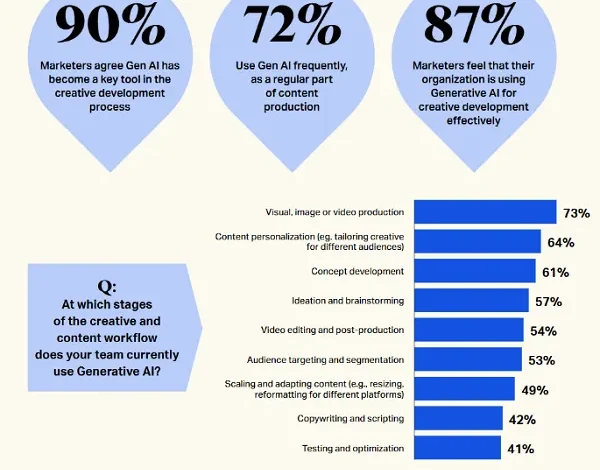
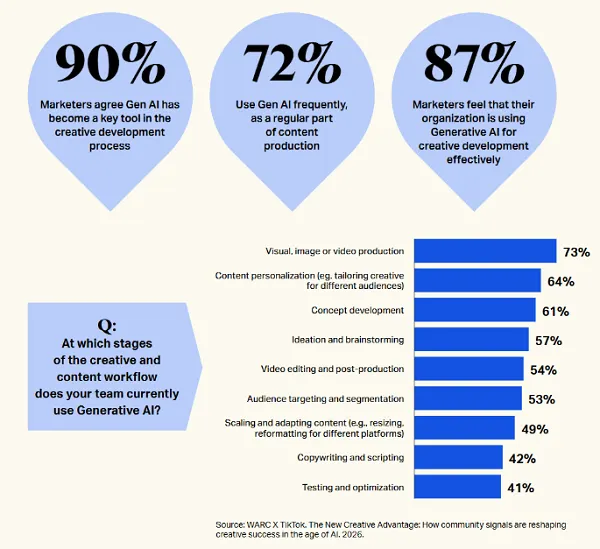
The Warc and TikTok study surveyed marketing professionals to gauge their experiences and perceptions of AI’s role in their day-to-day operations. A significant majority of respondents reported finding AI tools useful for their intended purposes, with most agreeing that AI has become an indispensable component of the creative process. This sentiment highlights the widespread adoption and perceived value of AI in assisting with tasks such as idea generation, initial drafting, and asset creation. The report acknowledges that AI’s ability to automate and expedite these functions has fundamentally altered how marketing campaigns are conceived and executed, offering a tangible boost to productivity.
Relevance Over Volume: The Core Finding
Despite the efficiency gains offered by AI, the study’s central tenet is that the brands currently achieving the most significant impact are not those churning out the highest volume of content. Instead, the leading edge belongs to companies that excel at understanding and responding to their audience’s evolving needs and sentiments. This ability, termed "cultural intelligence" by Andy Yang, TikTok’s Global Head of Creative and Brand Ads, is defined as "the ability to read what a community values, in the moment it is forming that value, and to respond with something that feels native rather than inserted." This crucial distinction emphasizes that genuine connection and resonance stem from an authentic understanding of cultural currents, a domain where AI, in its current form, faces limitations.
The research indicates that while AI can be a powerful tool for generating content, its capacity for nuanced understanding of human emotion, cultural context, and emerging trends remains a significant gap. For tasks such as copywriting and scriptwriting, where creativity, emotional intelligence, and cultural sensitivity are paramount, the value of AI tools is perceived as lower. This suggests that AI can effectively support and augment human creativity by providing foundational elements or facilitating new ideas, but it cannot wholly replicate the entire creative process without human oversight and strategic direction. The report implicitly argues that AI acts as a powerful assistant, but not a replacement for human ingenuity and contextual understanding.

Addressing AI’s Limitations: The Role of Cultural Insights
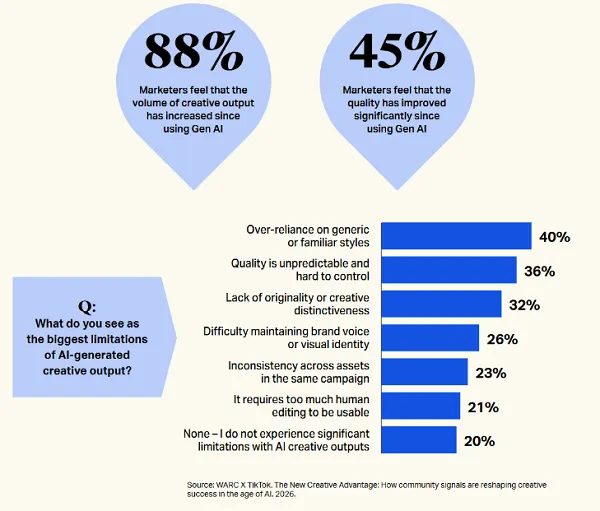
The study delves into the inherent weaknesses of AI, particularly concerning its potential lack of creative originality and its susceptibility to generating generic or irrelevant content if not properly guided. The findings reveal that marketers believe that a deeper integration of cultural insights is the most effective way to bridge these gaps and enhance the relevance of AI-generated outputs. This is where platforms like TikTok, with their inherent connection to cultural trends and user-generated content, become invaluable.
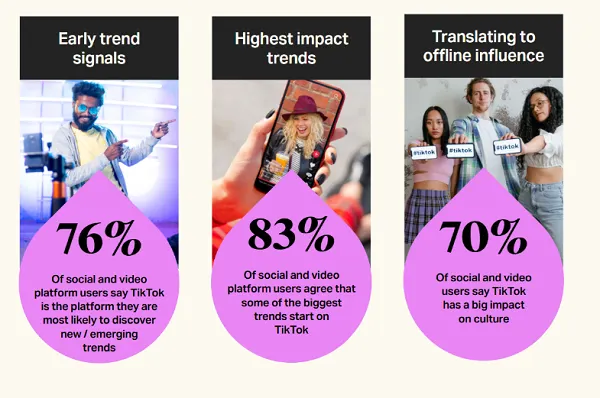
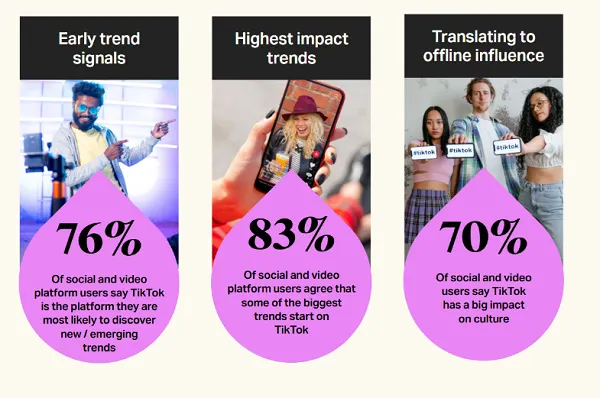
TikTok’s unique position as a hub for emerging trends, subcultures, and real-time audience engagement provides a rich source of "community intelligence." By analyzing the content that gains traction, the conversations that spark engagement, and the emergent language and aesthetics within its vast user base, TikTok can offer marketers unparalleled insights into what resonates with contemporary audiences. This understanding of what is "gaining traction at any given time" allows brands to move beyond generic AI outputs and instead inform their creative strategies with timely and authentic cultural relevance.
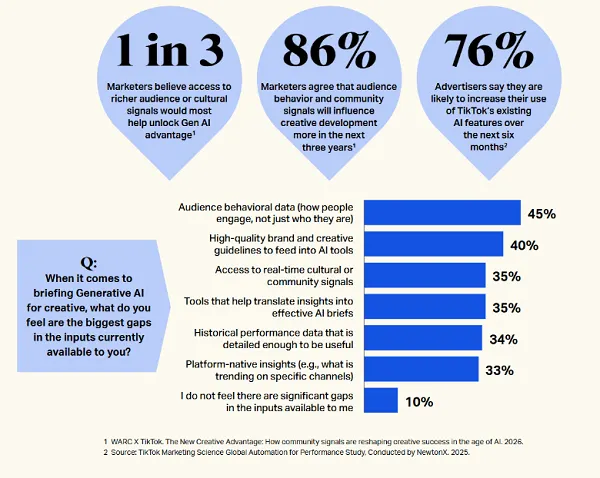
The implication is that by leveraging this data, marketers can refine their creative briefs to be more aligned with current cultural dialogues. AI tools can then be employed to interpret these signals and drive more informed creative choices, ensuring that the final output feels native and engaging rather than an artificial imposition. This collaborative framework, where human cultural intelligence guides AI’s generative capabilities, is presented as the optimal path for achieving superior campaign performance.
Background and Chronology of the Study
The partnership between Warc, a renowned authority on advertising and marketing effectiveness, and TikTok, a leading global platform for short-form video content and cultural trends, signifies a concerted effort to understand the evolving dynamics of creative marketing in the digital age. The study, conducted over a period that would encompass the rapid proliferation of generative AI tools in late 2022 and throughout 2023, aimed to capture the industry’s immediate response and evolving strategies.
The methodology involved a comprehensive survey distributed to a diverse group of marketing professionals. The selection of participants from the UK, US, Australia, and Brazil was strategic, aiming to capture insights from different market contexts and cultural landscapes. This broad geographic scope allows for a more generalized understanding of AI’s impact, while also hinting at potential regional variations in adoption and perceived effectiveness.
The research was initiated with the understanding that AI’s influence on creative workflows was rapidly transforming traditional marketing paradigms. The chronological development of generative AI, from early experimental stages to widespread adoption by major tech companies and independent developers, has created an urgent need for studies that assess its practical application and long-term implications. This report emerged from that need, seeking to provide actionable guidance for marketers navigating this new terrain. The publication of the full report offers in-depth breakdowns of each element examined, providing marketers with a comprehensive toolkit for data-driven strategy development.
Supporting Data and Market Trends
While the provided article does not contain specific quantitative data points beyond the number of survey respondents, the qualitative findings strongly suggest broader market trends. The increasing reliance on AI for content creation is a well-documented phenomenon. Industry reports from various analytics firms, such as Statista and eMarketer, have consistently shown a significant rise in marketing budgets allocated to AI-powered tools and services. For instance, projections indicate that the global AI in marketing market size is expected to grow substantially in the coming years, driven by demand for personalization, predictive analytics, and automated content generation.
The emphasis on relevance is also a recurring theme in marketing discourse. For years, experts have stressed the importance of customer-centricity and personalized messaging. The advent of AI has amplified this need, as consumers are increasingly bombarded with marketing messages and are more likely to engage with content that speaks directly to their interests and needs. A recent HubSpot report, for instance, highlighted that personalized content experiences lead to higher engagement rates and improved customer loyalty. The Warc and TikTok study effectively bridges this gap, illustrating how AI, when informed by cultural intelligence, can elevate personalization from a functional requirement to a strategic advantage.
The rise of platforms like TikTok has undeniably accelerated the pace at which trends emerge and dissipate. The platform’s algorithm, designed to surface trending content rapidly, creates a dynamic environment where cultural relevance is a constantly shifting target. This makes the "cultural intelligence" highlighted in the report not just a desirable trait, but a necessity for brands seeking to maintain a connection with their audience. The study’s findings align with the observation that brands that are agile and responsive to these fleeting trends, often by tapping into user-generated content and authentic creator collaborations, tend to achieve higher engagement and visibility.
Broader Impact and Implications for Marketers
The implications of this study for marketers are profound and multifaceted. Firstly, it underscores the need to move beyond a purely output-driven mindset. The temptation to simply leverage AI to produce more content, without a clear strategic purpose or understanding of audience needs, is likely to yield diminishing returns. Instead, marketers must prioritize developing and integrating genuine cultural intelligence into their strategies. This involves a deeper commitment to understanding consumer behavior, cultural nuances, and emerging trends, not just through data analytics, but through qualitative observation and empathy.
Secondly, the report advocates for a more sophisticated integration of AI. Rather than viewing AI as a standalone solution, marketers should see it as a powerful tool that requires skilled human direction. This means investing in training and development to equip marketing teams with the ability to effectively prompt, guide, and interpret AI outputs. The focus should be on using AI to amplify human creativity and insight, not to replace it. This collaborative approach can lead to more innovative and impactful campaigns.
Thirdly, platforms like TikTok are positioned as crucial partners for marketers seeking to harness community intelligence. Their ability to provide real-time insights into cultural currents and audience sentiment can inform creative briefs and AI-driven content generation. Brands that actively engage with these platforms, not just as advertising channels but as sources of cultural understanding, will be better positioned to create content that resonates authentically. This may involve fostering stronger relationships with creators, monitoring trending conversations, and participating in cultural moments in a genuine and meaningful way.
Finally, the study suggests that the future of creative success in marketing will be defined by the ability to achieve a delicate balance: leveraging the efficiency and scale of AI while remaining deeply connected to human culture and values. This requires a strategic shift, moving from a focus on quantity to a prioritization of quality, relevance, and authentic connection. The brands that master this synthesis will be the ones that not only survive but thrive in the increasingly complex and dynamic marketing landscape of the AI era. The report serves as a crucial guidepost, highlighting that the "new creative advantage" lies not in technological prowess alone, but in the intelligent application of technology guided by a profound understanding of people and culture.
Related posts: