PressMeGPT Bridges the Gap Between AI-Generated Designs and Robust WordPress Themes, Revolutionizing Web Development Workflows

The digital landscape is constantly evolving, with a proliferation of intuitive AI-powered design tools and static site builders offering rapid prototyping and visually appealing frontends. Platforms like Lovable, Bolt.new, and Base44 empower users to quickly craft aesthetically pleasing websites, often without extensive coding knowledge. Similarly, clients frequently arrive with self-made sites or designs from popular platforms such as Figma and Canva, which, while visually impressive, often lack the backend infrastructure for dynamic content management, extensibility, and long-term scalability. This scenario consistently leads to a critical juncture: how does one transition a polished, static frontend into a fully functional, manageable website capable of publishing blog posts, integrating plugins, and supporting robust SEO strategies? Until recently, the prevailing solution involved a labor-intensive, manual rebuild within a comprehensive Content Management System (CMS) like WordPress, due to the absence of a streamlined conversion pathway from AI-generated frontends or existing static sites to native WordPress themes.
The Emergence of PressMeGPT: A Strategic Solution
Into this operational void steps PressMeGPT, an innovative platform specifically engineered to address this pervasive challenge. PressMeGPT is designed to ingest an existing website, an AI-generated project, or even a simple plain text prompt, and transform it into a production-ready WordPress theme or an Elementor template. Crucially, the output is fully owned by the user, allowing for complete hosting flexibility. The platform touts an impressive efficiency claim, stating that the conversion process typically takes mere minutes, delivering approximately 80% of a finished design. This significant acceleration allows developers, agencies, and individual users to allocate their valuable time to refinement and customization rather than the tedious and often redundant task of reconstruction.
Understanding the Core Problem: The Disconnect Between Design and Management
The fundamental issue PressMeGPT seeks to resolve stems from a growing disparity between contemporary web design methodologies and the requirements for effective long-term site management. While AI builders and various online platforms excel at generating visually attractive frontends with remarkable speed, they frequently fall short in providing a robust CMS. Many lock users into proprietary ecosystems, limiting flexibility, data ownership, and expansion capabilities. Furthermore, a significant number of these rapidly generated sites are not inherently optimized for search engines (SEO) out of the box, posing challenges for organic visibility and growth.

The moment a business or individual requires functionalities such as publishing regular blog posts, managing user accounts, integrating e-commerce solutions, or installing specialized plugins – needs almost universally encountered by small businesses – WordPress emerges as the unequivocal standard. Powering over 43% of all websites on the internet, WordPress offers an unparalleled ecosystem of themes, plugins, and community support, making it the preferred destination for extensibility and control. However, migrating a design to WordPress has historically necessitated the manual recreation of layouts section by section, a time-consuming and often frustrating endeavor. This friction is not limited to AI-generated sites; even traditional design processes, such as assembling complex layouts in Elementor or the native block editor, can consume countless hours. Developers familiar with purchasing premium themes from marketplaces like ThemeForest often find that the elaborate demo designs rarely translate seamlessly to their actual content without substantial manual intervention. PressMeGPT aims to circumvent this manual bottleneck by providing a foundational draft that already closely mirrors the intended design, thereby enabling users to focus their efforts exclusively on the critical 20% that demands human creativity and precision.
PressMeGPT’s Versatile Input and Output Capabilities
The core strength of PressMeGPT lies in its flexible conversion process and the diverse range of inputs it can accommodate. Users can initiate a conversion from:
- Existing Website URLs: Simply providing a URL from any live website, regardless of its underlying platform, allows PressMeGPT to analyze and translate its visual structure.
- AI-Generated Project URLs: Direct integration with outputs from various AI design tools, streamlining the transition from conceptualization to a WordPress-ready format.
- HTML/CSS Code: Developers can feed raw HTML and CSS snippets, enabling conversion of custom-coded sections or static pages.
- Plain Text Prompts: For those starting from scratch, descriptive text prompts can guide the AI in generating an initial theme concept.
Looking ahead, PressMeGPT has announced upcoming integrations with popular design tools like Canva and Figma across all its plans. This roadmap feature is particularly significant for designers and agencies who often work within these environments, promising an even more seamless transition from design mock-ups to functional WordPress themes.
Regardless of the chosen input method, each generation cycle within PressMeGPT produces three distinct design variations, offering users immediate choices. The output is consistently a native WordPress theme or an Elementor template, ready for refinement using the user’s preferred page builder. This approach fundamentally differentiates PressMeGPT from earlier generations of "prompt-only" AI website builders. While prompt-based generation is useful for entirely new projects, PressMeGPT’s ability to convert existing sites makes it an invaluable tool for migrations and bringing legacy content into a modern, manageable WordPress environment.
Seamless Integration with Existing WordPress Workflows

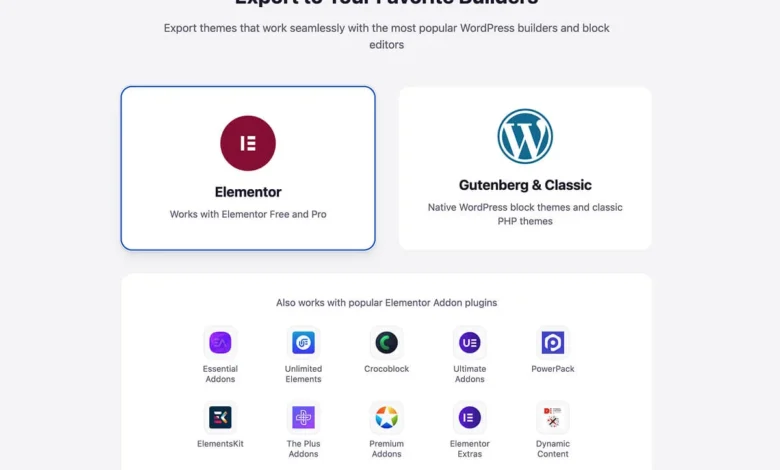
A crucial aspect of PressMeGPT’s design philosophy is its complementary role within existing web development workflows. While it can be leveraged for initial page or post creation, it is not intended to displace a user’s preferred page builder. Instead, PressMeGPT operates "upstream" of tools like Elementor or the native block editor (Gutenberg), handling the initial theme generation. It then hands off a well-structured foundation for subsequent customization. The platform demonstrates broad compatibility, working seamlessly with popular page builder add-ons such as Essential Addons, Unlimited Elements, and Kadence Blocks, ensuring that developers do not have to abandon their established toolkits.
For teams already standardized on Elementor, PressMeGPT’s Elementor template export facilitates a smooth integration into familiar workflows. Notably, these templates are compatible with Elementor’s free version, eliminating the need for a Pro license to utilize the generated output. It is worth noting, however, that Elementor export functionality begins with the Freelance plan, while the entry-level Creator plan focuses on Gutenberg and classic theme exports.
Ownership and Future-Proofing: A Core Principle
A cornerstone of PressMeGPT’s offering is the unequivocal ownership granted to users. Unlike many hosted AI builders or proprietary platforms that retain control over the generated assets, PressMeGPT provides a real, downloadable WordPress theme. Users own the generated files outright, enabling them to install these themes on an unlimited number of sites, switch hosting providers at will, and maintain complete autonomy over their digital presence. This principle applies equally to personal projects and client sites, offering unparalleled flexibility and long-term security against platform lock-in. This emphasis on ownership significantly contributes to the "future-proof" nature of the themes generated, ensuring they remain viable assets independent of PressMeGPT’s ongoing services.
The Conversion Workflow in Practice: A Step-by-Step Overview
The operational workflow within PressMeGPT is structured into three clear and logical steps:

- Input Submission: The user provides the source material, which can be a website URL, an AI project URL, HTML code, or a descriptive text prompt.
- AI Generation: PressMeGPT’s AI engine processes the input, generating three distinct design variations of a WordPress theme or Elementor template.
- Output Download & Refinement: The user selects their preferred variation and downloads the generated theme or template, which can then be refined using WordPress’s native Full Site Editor (for block themes) or Elementor.
A particularly noteworthy detail is PressMeGPT’s output of "proper block themes." Unlike many AI tools that merely generate isolated blocks or sections, PressMeGPT delivers themes complete with real header and footer template parts. These are fully editable within WordPress’s native Full Site Editor, eschewing proprietary interfaces and adhering to modern WordPress development standards. The platform’s FAQ further reinforces this commitment, promising themes that require no additional plugins or subscriptions to function. This adherence to best practices translates into several tangible benefits: faster site speeds, reduced potential for plugin conflicts, and an inherently cleaner and more secure approach to web development, especially considering that third-party plugins are frequently identified as common vectors for security vulnerabilities.
Who Benefits Most from PressMeGPT?
PressMeGPT presents a compelling value proposition for several key user segments within the web development ecosystem:
- Agencies: For web development agencies managing multiple client projects, the ability to generate 80% of a website’s design in minutes represents a monumental time-saving opportunity. These saved hours compound rapidly across a client roster, significantly improving project profitability and turnaround times. Moreover, the Elementor export feature allows junior team members to handle the refinement stage, freeing senior developers for more complex, custom coding tasks.
- Freelancers: Similar to agencies, independent freelancers can drastically reduce the time spent on repetitive layout creation. By automating the foundational build, freelancers can dedicate more energy to the custom functionalities and unique design elements that clients truly value and are willing to pay a premium for. This tool seamlessly integrates with other AI tools for WordPress development that are already reshaping the freelance workflow, enhancing efficiency and competitive edge.
- Bloggers and Content Creators: For individuals focused on content creation rather than web development, PressMeGPT offers an unprecedented level of accessibility. The capacity to describe a desired site, receive a functional theme, and then easily adjust it without needing to learn theme development or invest in expensive custom builds democratizes access to professional-grade websites. This empowers content creators to launch and manage their platforms with greater autonomy and efficiency.
The 80% Problem: A Realistic Expectation
While PressMeGPT’s claim of delivering approximately 80% of a design in minutes is a significant breakthrough, it is crucial for users to approach this figure with a balanced understanding. The remaining 20% represents the critical elements of polish, brand integration, specific content adaptation, and subtle details that imbue a website with its unique identity and professionalism. This final 20% remains firmly within the human domain, requiring creative input and meticulous attention. Setting this expectation upfront is vital for maximizing user satisfaction and ensuring that the tool is perceived as an accelerator and enabler, not a magic wand for complete automation.
Furthermore, while the themes are robust, PressMeGPT does not currently offer built-in review features for critical aspects like accessibility guidelines or Core Web Vitals. Although a "Theme Checker" feature is slated for higher plans, users are advised to manually audit the initial themes generated, particularly before deploying them on a live, public-facing site.

One practical detail highlighted in PressMeGPT’s knowledge base concerns media handling. By default, exported themes reference images and videos via their remote paths. Localizing this media into the WordPress media library is a separate step that consumes credits and is not included in the free plan. While manageable, this is an important consideration to be aware of during the initial project setup to avoid unexpected costs or workflow interruptions.
PressMeGPT Pricing, Credits, and Long-Term Value
As is common with AI-powered services, PressMeGPT operates on a credit-based system. Generating a new theme consumes 3 credits and yields three design variations. Each AI modification or refinement costs at least 1 credit, and converting an existing website typically uses 2 to 3 credits. PressMeGPT estimates that a fully customized theme might require a total of 7 to 10 credits.
For those eager to experiment, a free plan offers 5 credits per month, sufficient for testing a theme. However, it’s important to note that themes generated on the free plan are public, media migration is excluded, and exports are limited to classic themes.
Paid plans, billed annually, start at $69 per year for the "Creator" plan, which includes 120 credits (approximately one completed site per month). The "Agency" plan, priced at $399 per year, provides 1,800 credits (sufficient for around 15 sites per month). Monthly and one-time billing options are also available, backed by a 30-day money-back guarantee across all plans.
The complete ownership of exported themes, free from per-site fees, ongoing subscriptions, or mandatory plugins, underscores PressMeGPT’s commitment to providing a truly future-proof solution. This model ensures that the investment in theme generation translates into a lasting, independent asset for the user.

Conclusion: A Game-Changer for WordPress Development
In an era where rapid iteration and efficient development are paramount, PressMeGPT emerges as a vital tool bridging a long-standing chasm in the web development workflow. For individuals and organizations grappling with the challenge of migrating sites from AI builders or proprietary platforms to the robust, extensible environment of WordPress, PressMeGPT offers a genuinely innovative and practical solution. It promises to significantly cut down development time, allowing professionals and casual users alike to focus on the creative and strategic aspects of their digital presence rather than the repetitive mechanics of site construction.
For agencies and freelancers seeking to optimize their project delivery and enhance profitability, or for bloggers and content creators aiming to establish a professional online footprint without extensive technical overhead, PressMeGPT warrants serious consideration. The availability of a free plan with sufficient credits for a test theme provides an accessible entry point to evaluate its capabilities in a real-world scenario. The ability to transform diverse inputs into native, editable WordPress themes, coupled with a strong emphasis on user ownership, positions PressMeGPT as a potentially transformative force in the ongoing evolution of web development. As the digital landscape continues its rapid expansion, tools like PressMeGPT will be instrumental in democratizing access to powerful web platforms and accelerating the pace of digital innovation.