Share of Voice: The Essential Metric for Navigating the AI-Driven Digital Landscape


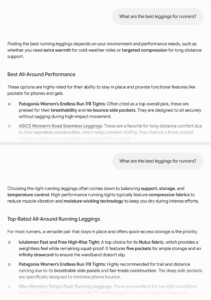
In an increasingly complex digital ecosystem, traditional analytics dashboards, while tracking valuable metrics like clicks, often fail to provide a comprehensive understanding of a brand’s true market presence and influence. This incomplete picture stems from the growing prevalence of "lost visibility" – instances where potential buyers encounter information about a brand or its competitors without directly interacting with owned digital properties. Whether a buyer reads an AI-generated answer featuring a rival product or scrolls past a community forum discussion where a brand is conspicuously absent, this form of engagement remains largely untracked by conventional traffic data, leaving significant blind spots for marketers.

The Evolution of Digital Visibility Measurement
The concept of Share of Voice (SoV) has emerged as a critical antidote to these analytical shortcomings. SoV transcends simple traffic metrics by quantifying a brand’s overall visibility relative to its competitors across the myriad channels where buyers conduct research and make purchasing decisions. Historically, SoV primarily referred to a brand’s proportion of advertising spend within a given market. However, in the digital age, its definition has dramatically expanded to encompass a brand’s presence across every conceivable digital touchpoint, including organic and AI search, social media platforms, online review sites, specialized community forums, and paid media placements. In essence, SoV articulates the percentage of the market conversation a brand effectively owns within its category, compared to its competitive set.

While SoV’s scope is broad, encompassing various digital channels, expert consensus suggests that search – both traditional organic search and the rapidly evolving AI-powered search – represents the most strategic starting point for most brands. This prioritization is driven by two key factors: search is where buyers exhibit the strongest purchase intent, actively seeking solutions to their needs, and it offers the most mature and accessible tools for competitive measurement. The current landscape, marked by the proliferation of AI tools like ChatGPT, Perplexity, and Google AI Mode, further underscores the urgency of integrating AI search into SoV calculations.
Why Share of Voice is More Critical Now Than Ever
The renewed importance of SoV is underpinned by fundamental shifts in consumer behavior and technological advancements:
Beyond Traditional Traffic Data: The Zero-Click Phenomenon
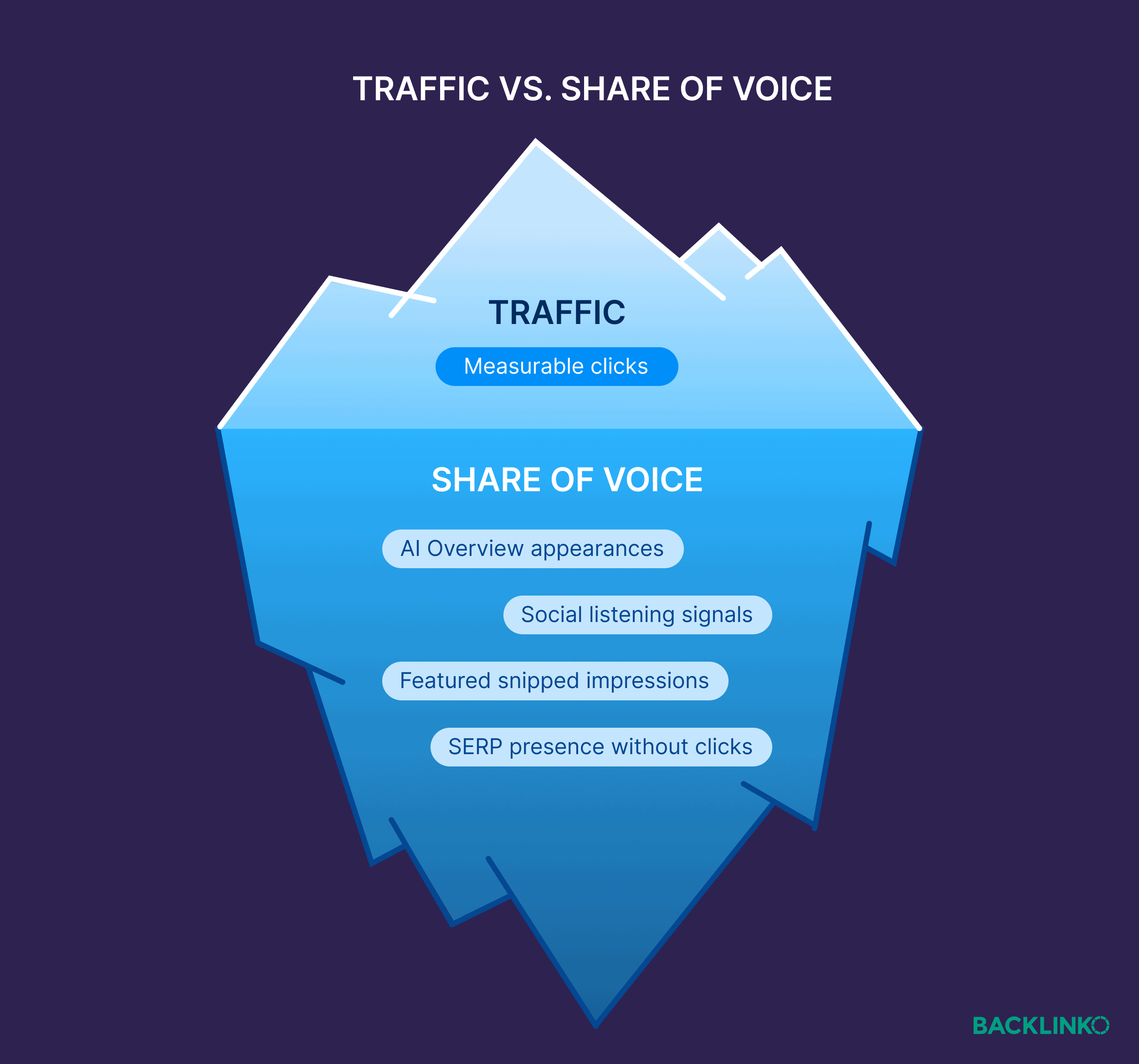
Traditional organic traffic data, a long-standing cornerstone of digital marketing, now presents only a partial view of consumer engagement. The rise of zero-click searches, where users find answers directly within search engine results pages (SERPs) or AI Overviews without clicking through to a website, means that a substantial portion of brand visibility is never recorded by tools like Google Analytics. Industry reports indicate that over 65% of Google searches are now zero-click, signifying a profound change in how information is consumed. This renders traffic a lagging indicator of true market visibility.

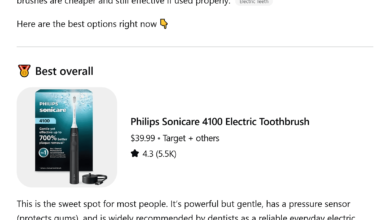
SoV offers a superior metric because it accurately measures a brand’s presence within the critical "consideration set," even when direct website clicks don’t occur. Consider a scenario where a user searches for "best project management software for remote teams." An AI Overview might list five tools, including yours. The user absorbs this information, forms an initial impression, and later navigates directly to your site for a demo. Conventional analytics would classify this as "direct traffic," obscuring the crucial discovery phase facilitated by AI search. SoV, however, captures this initial brand exposure, providing insights into its influence on the buyer journey.
A Unified Metric for Cross-Functional Marketing Teams
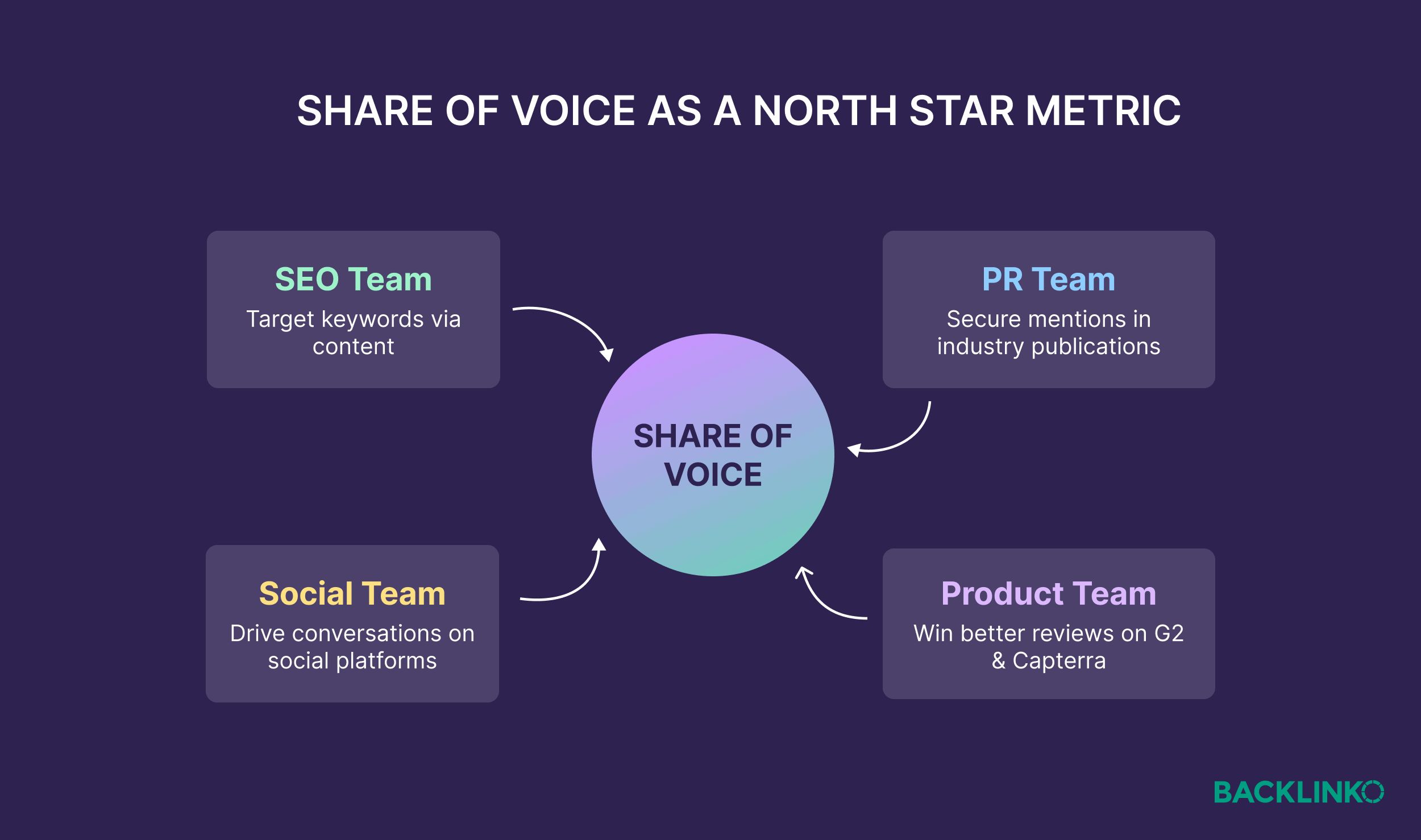
A common challenge in large organizations is the siloing of marketing teams, each operating with distinct Key Performance Indicators (KPIs). SEO teams chase website visits, PR departments focus on media mentions, and social media teams prioritize engagement rates. This fragmentation often leads to misaligned strategies and a lack of cohesive effort towards a singular business objective.
SoV, when adopted as a "North Star Metric," offers a powerful solution, fostering collaboration and strategic alignment across diverse marketing functions. When every team understands how their individual efforts contribute to a collective visibility percentage, it fundamentally transforms inter-departmental cooperation. For instance, the SEO team’s optimization for specific keywords directly impacts organic search SoV, while the PR team’s success in securing mentions in reputable publications can enhance AI search SoV by improving brand credibility for Large Language Models (LLMs). Similarly, content teams focused on creating authoritative articles contribute to both organic rankings and AI citations. This integrated approach ensures that all marketing activities are harmonized towards maximizing overall brand presence where it matters most to the buyer.
Measuring Share of Voice: A Four-Step Strategic Approach
Implementing an effective SoV measurement framework requires a structured approach, particularly for organic and AI search.
Step 1: Defining Your Industry Landscape
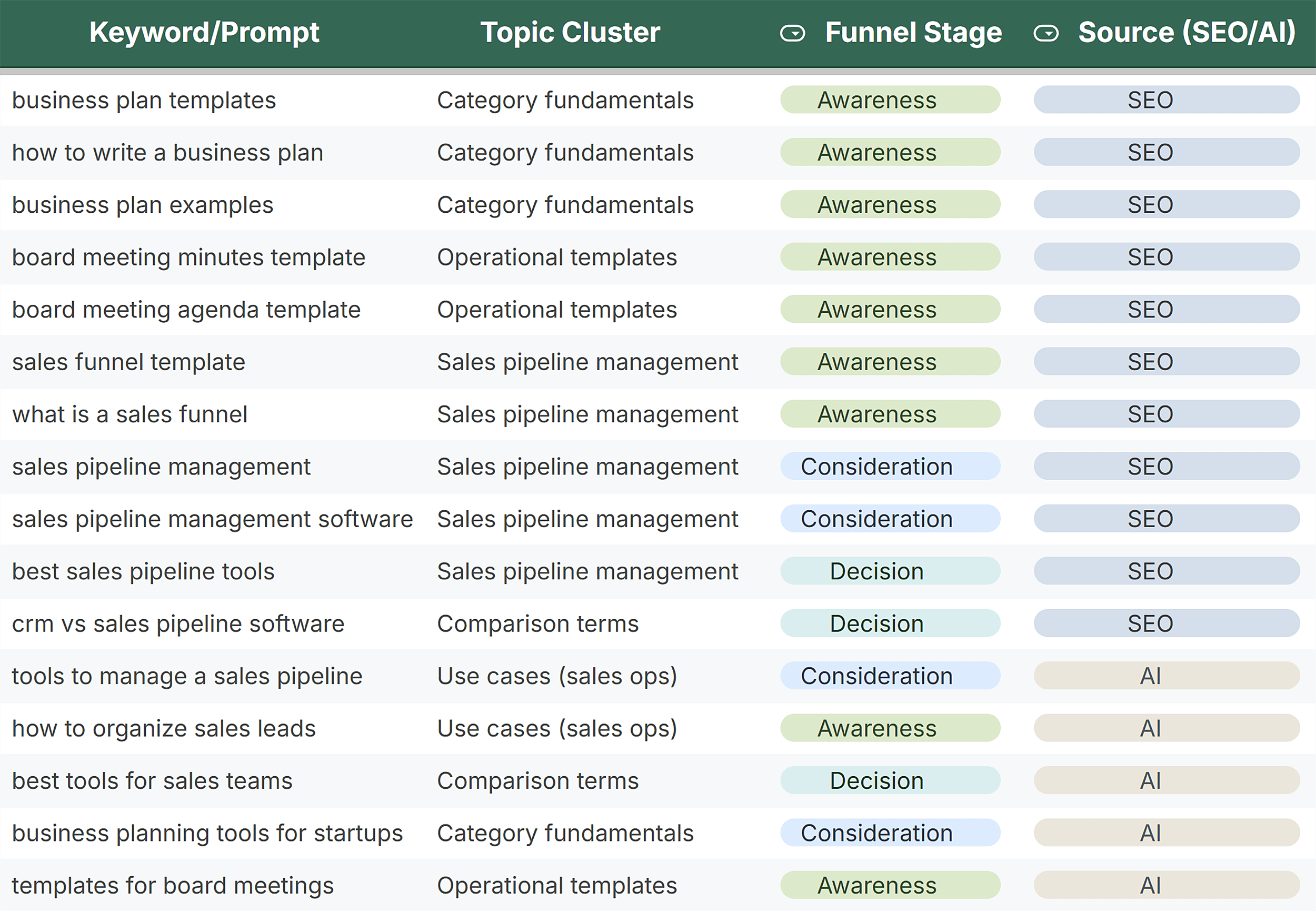
The foundation of accurate SoV measurement lies in clearly delineating the competitive arena. This involves identifying key competitors and establishing topic clusters directly linked to revenue generation. For a fictional project management software company, such clusters might include "agile project management," "team collaboration tools," or "project tracking software."
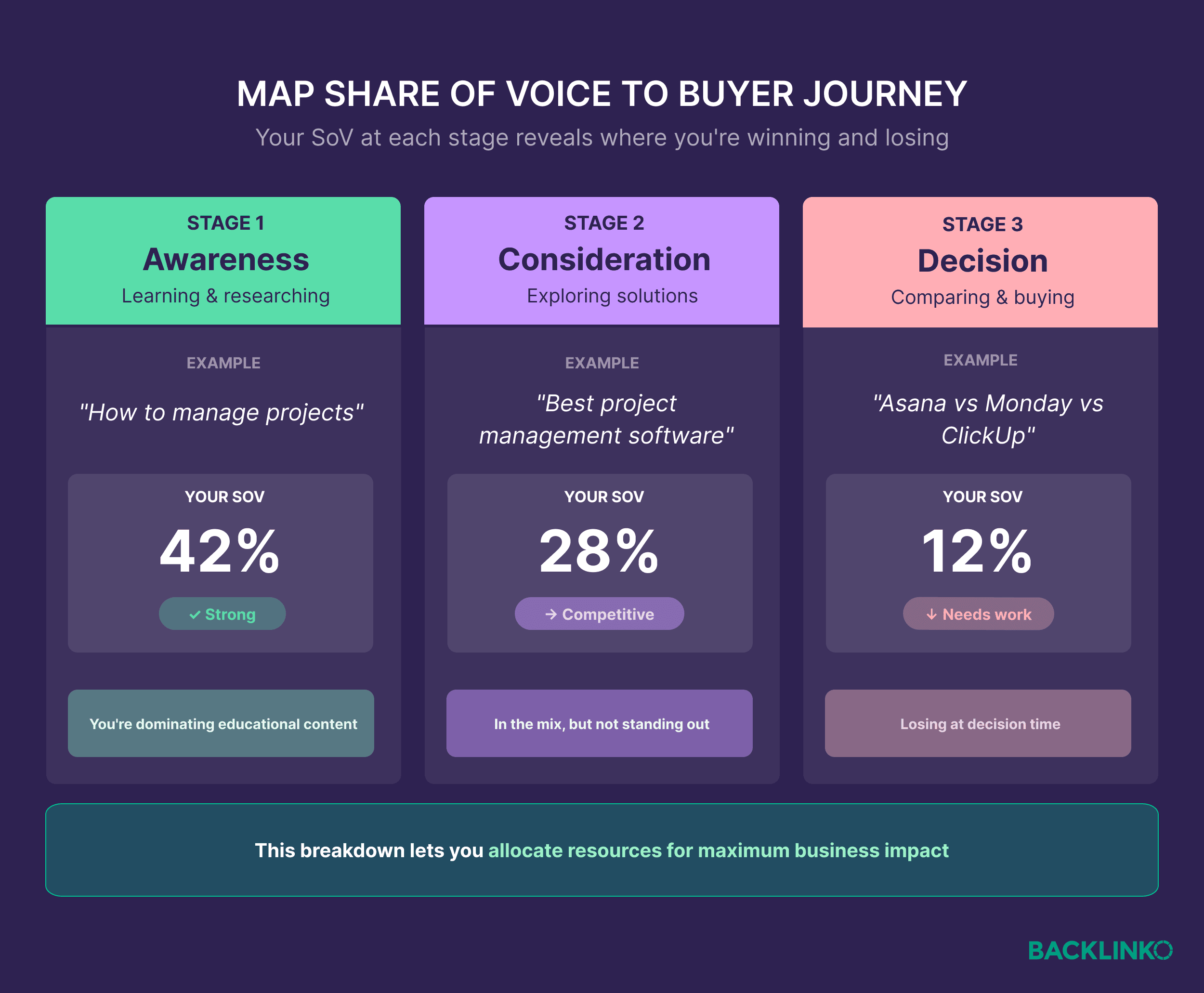
Crucially, these topic clusters should be mapped to specific stages of the buyer’s journey:
- Awareness: Broad topics like "what is project management" or "benefits of agile methodology."
- Consideration: Queries such as "best project management software for agencies" or "project management software comparison."
- Decision: Highly specific searches like "[Your Brand] vs. [Competitor A]" or "buy project management tool."
Analyzing SoV at each stage provides invaluable insights into a brand’s strengths and weaknesses throughout the buyer journey, enabling precise resource allocation. For example, if a project management software brand exhibits high SoV in awareness-stage queries but negligible visibility at the decision stage, it suggests a strategic flaw: the brand is educating the market but failing to appear when prospects are actively evaluating purchase options. The strategic implication is clear: shift focus to comparison pages, case studies, and feature-specific content to capture decision-stage visibility.

Competitor identification is equally vital. Beyond direct business rivals, "invisible competitors" – third-party sites like review platforms, industry blogs, and news outlets – often dominate search results and influence buyer perceptions. Tracking both direct and invisible competitors provides a holistic view of who controls market visibility.
Step 2: Building Robust Keyword and Prompt Libraries
A comprehensive library of 200-500 queries is essential to capture the full spectrum of how users search within a given category. This library must include both traditional keywords and conversational AI prompts.
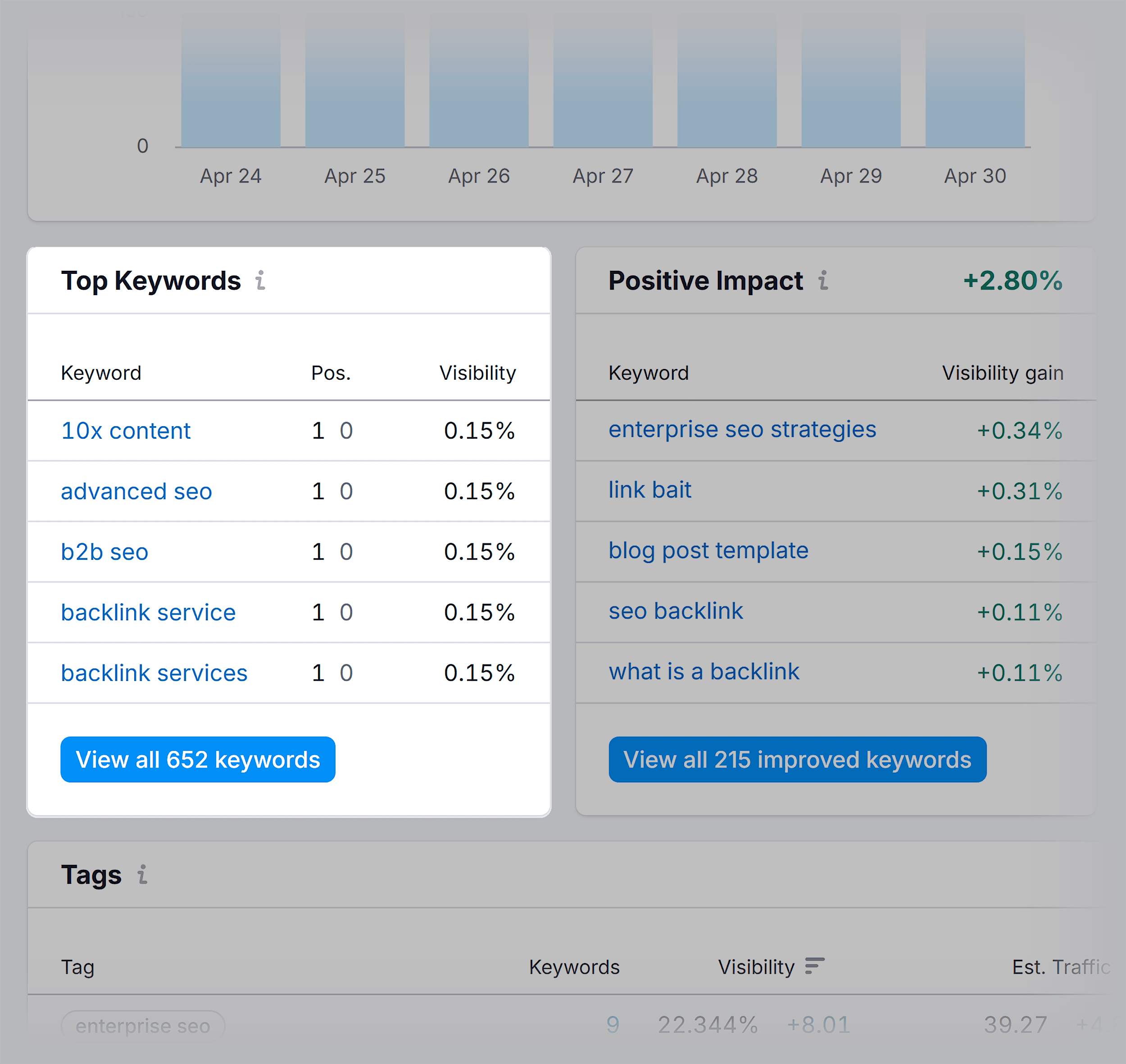
Sourcing SEO Keywords: Google Search Console (GSC) is an indispensable starting point, providing data on actual search impressions – every instance a brand appears in search results, regardless of clicks. Exporting high-impression queries from GSC’s "Performance" report reveals existing visibility. Supplementing this with data from paid search campaigns (PPC keyword lists filtered by conversions or high CTR) and competitive intelligence tools like Semrush’s Keyword Gap tool allows brands to identify terms where competitors are visible but they are not. For instance, if competitors rank highly for "Gantt chart software" but your brand does not, this represents a significant gap to address.
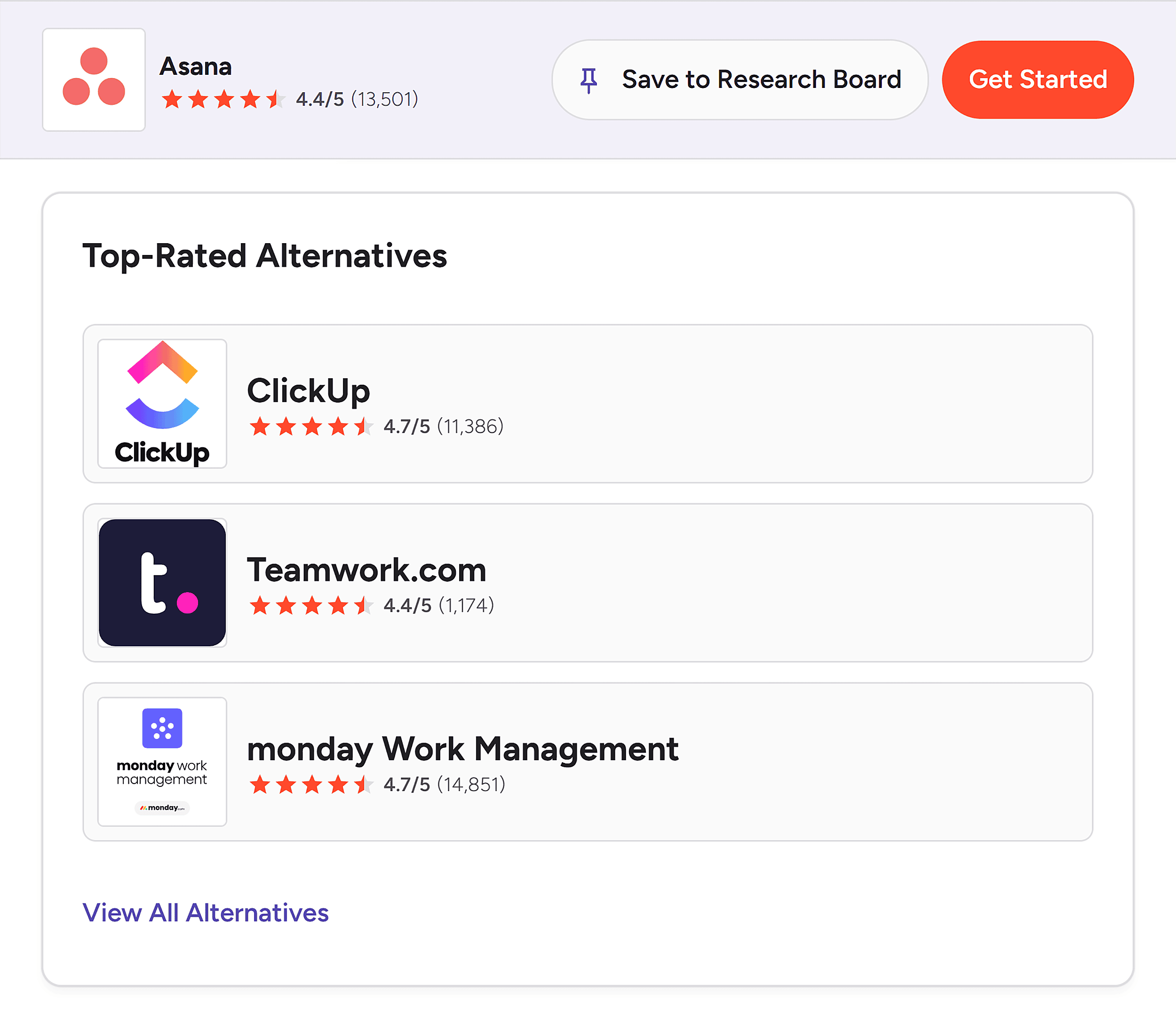
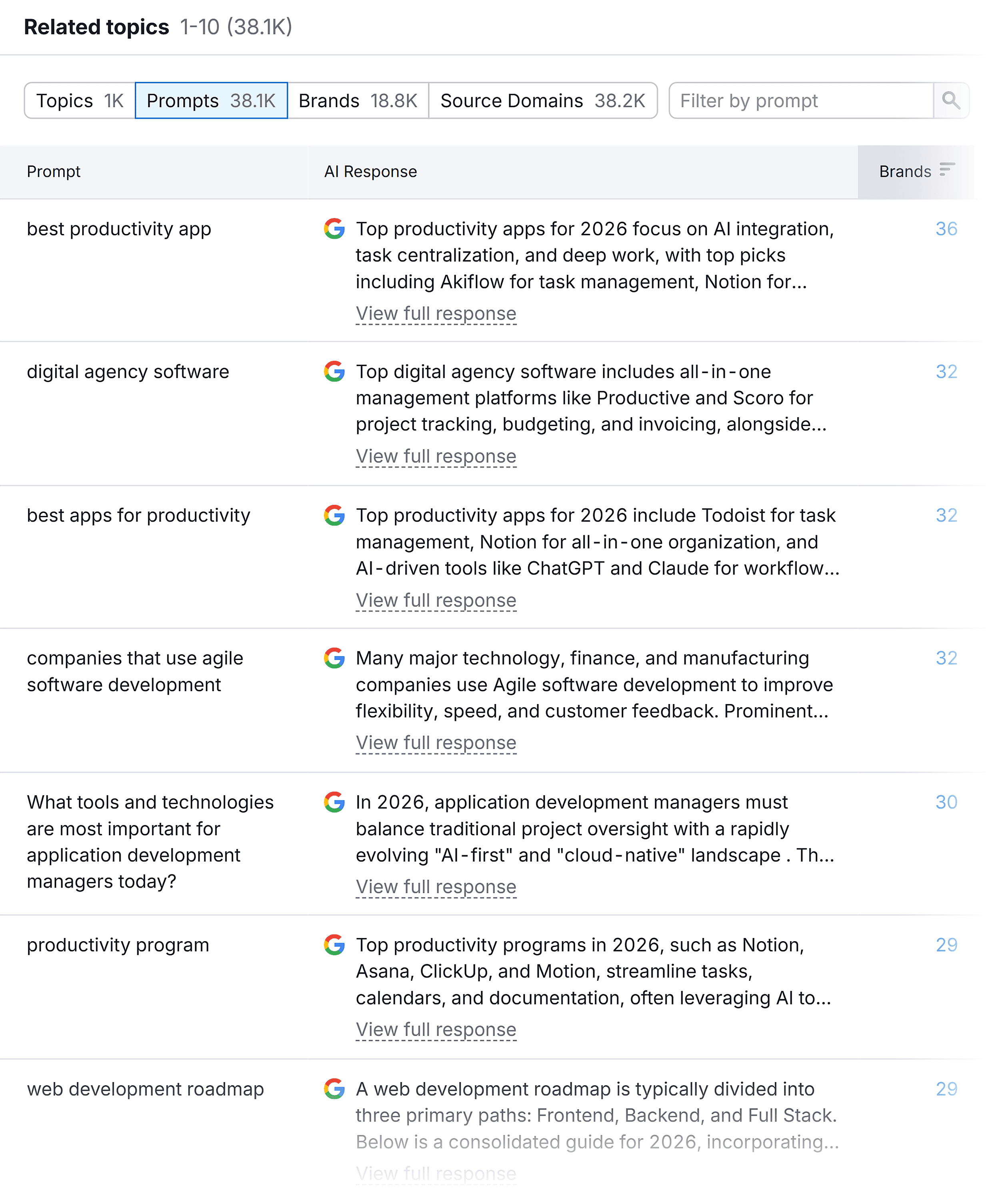
Developing AI Prompt Libraries: AI search queries tend to be more conversational and reflect natural language. Therefore, building an AI prompt library requires delving into community platforms like Reddit, Facebook groups, and Slack channels to understand how target audiences articulate their needs and pain points. A Reddit discussion revealing agencies seek "user-friendly project management tools, not too corporate" can be directly translated into an AI prompt like "What’s the most user-friendly project management tool for small creative agencies?" For decision-stage prompts, review sites like G2 and Capterra are invaluable resources, offering ready-made comparisons (e.g., "[Your Brand] vs. [Competitor]") and lists of alternatives that buyers frequently query in AI search. Tools like the Semrush AI Visibility Toolkit can further assist in uncovering prompts where competitors are cited in AI answers, but your brand is not.
Finally, all gathered data – keywords, prompts, competitors, and their associated topic clusters and funnel stages – must be meticulously documented in a master spreadsheet. This metadata acts as a strategic lens for future analysis and decision-making.
Step 3: Calculating Your Share of Voice
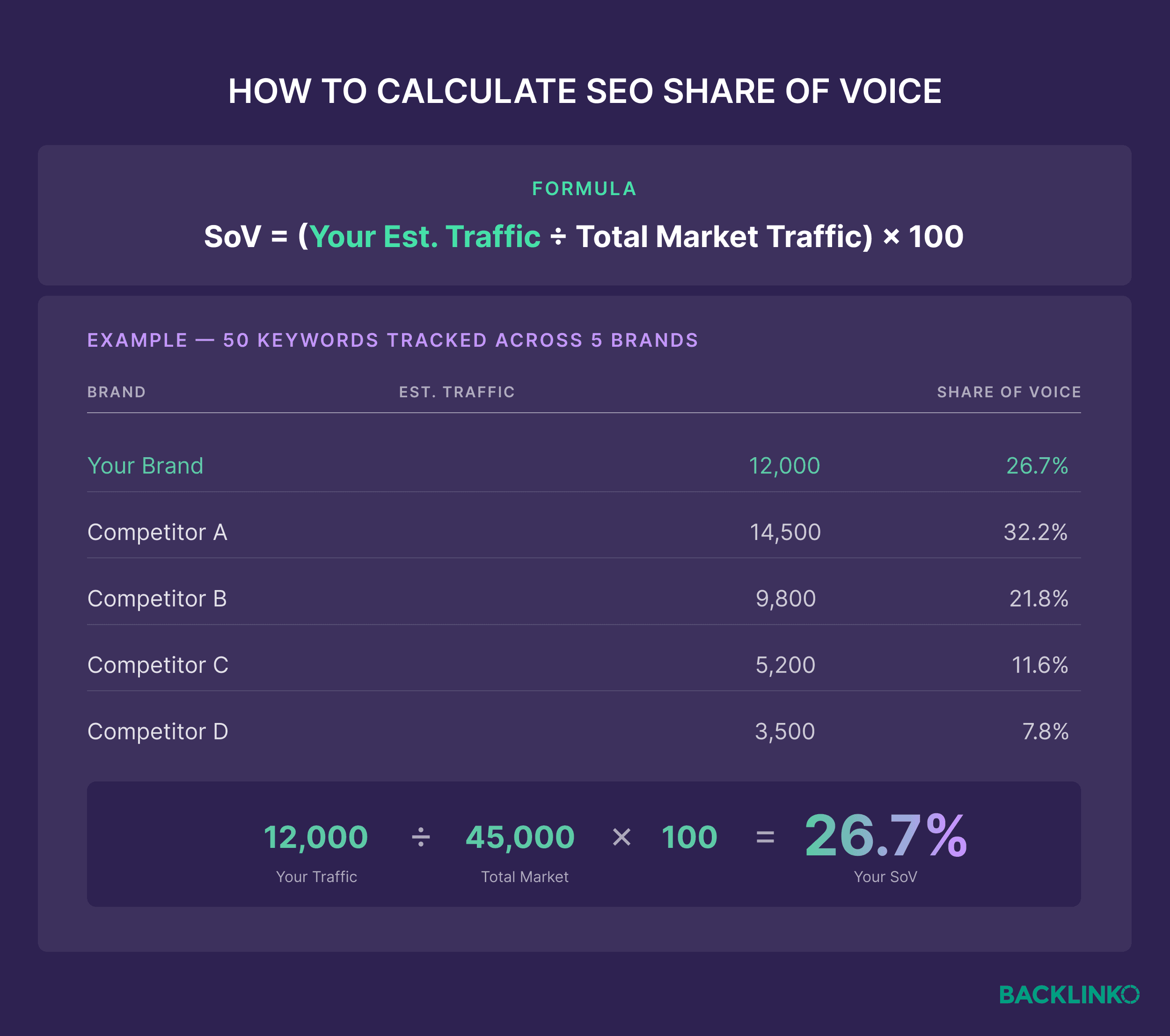
SoV is calculated as a brand’s estimated traffic (or mentions) divided by the total for all tracked brands, multiplied by 100. This calculation is performed separately for SEO and AI SoV to provide a nuanced understanding.

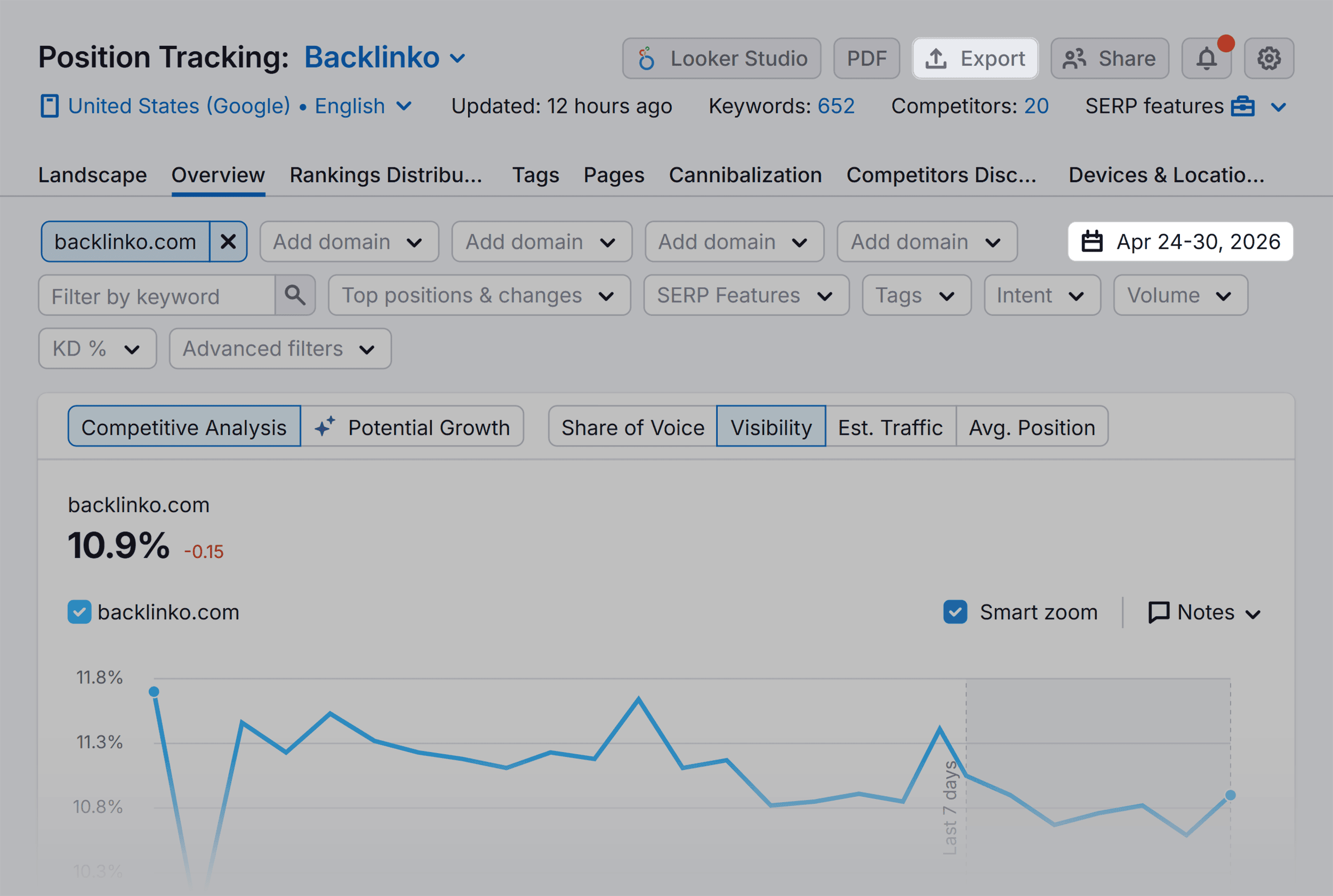
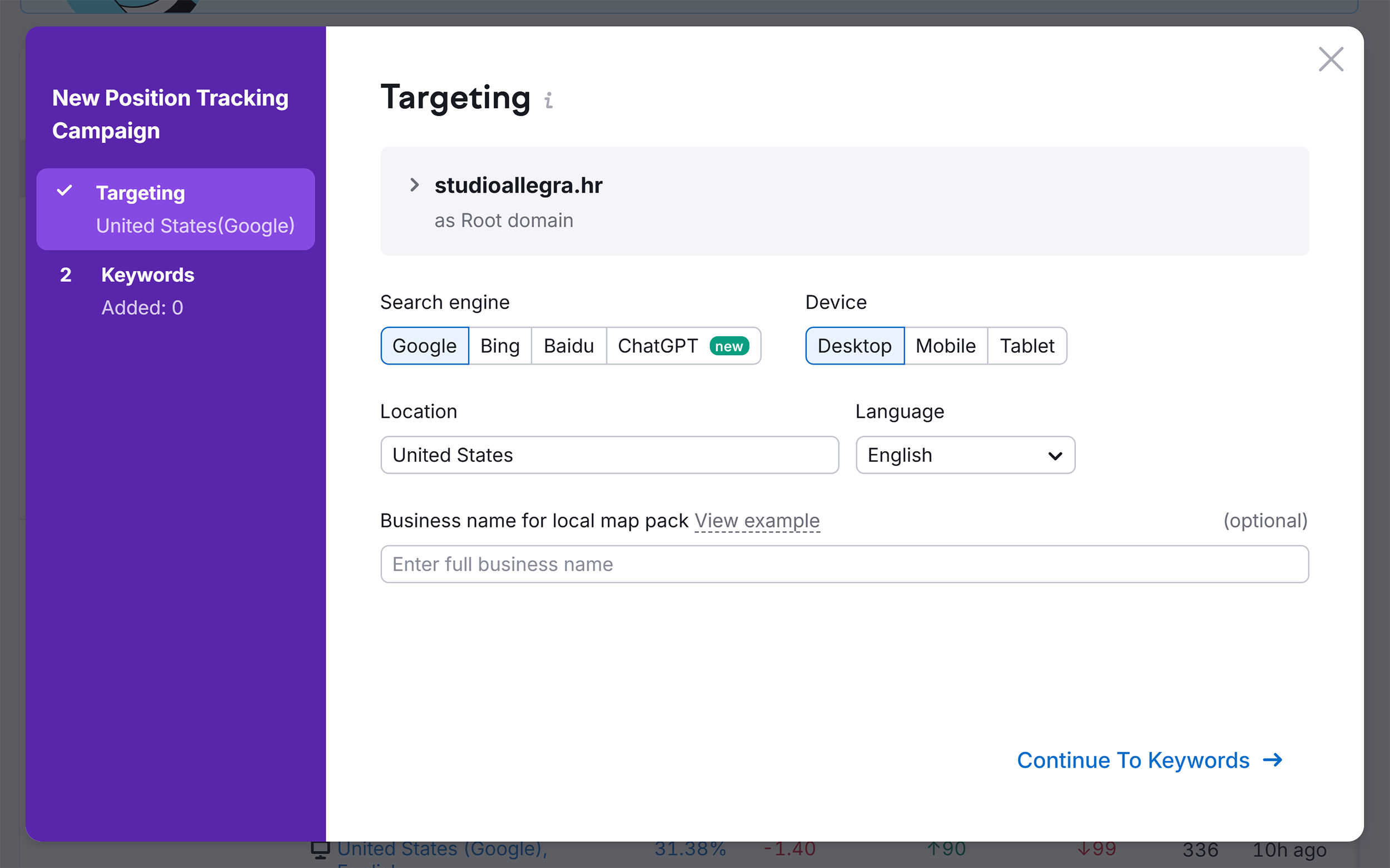
Calculating SEO Share of Voice: This involves tracking a brand’s and its competitors’ rankings for all keywords in the library. Each ranking position correlates with an average share of clicks (e.g., position 1 typically receives around 27% of clicks). By multiplying each keyword’s monthly search volume by the click-through rate for the ranking position, an estimated traffic share per keyword can be derived. Summing these estimates across all keywords for each brand yields the total estimated organic traffic. Dividing a brand’s total by the combined total for all tracked brands, then multiplying by 100, provides the SEO SoV percentage. While this can be done manually, tools like Semrush Position Tracking automate this complex calculation, providing daily ranking data and aggregated SoV percentages against competitors across specific geographic locations and device types.
Calculating AI Share of Voice: AI SoV quantifies how often LLMs reference a brand when responding to category-specific queries. As AI responses can vary, a manual approach involves systematically testing each prompt from the library across target AI platforms (e.g., ChatGPT, Google AI Mode, Perplexity) and meticulously recording every brand mention and citation. The total number of mentions for each brand, divided by the total prompts tested, and multiplied by 100, provides a directional AI SoV. Given the variability of AI responses and the scale of prompts, specialized tools like Semrush’s AI Visibility Toolkit are crucial. This toolkit automates the process, testing hundreds of prompts, analyzing AI responses for brand mentions, citations, and even sentiment, and aggregating this data into a comprehensive AI SoV percentage for multiple competitors. It also highlights "business drivers" – frequently mentioned topics – allowing brands to identify where they are comparatively stronger or weaker in AI conversations.

Interpreting SEO vs. AI SoV: It’s important to recognize that SEO and AI SoV may not always align. A brand could have a high organic search SoV (strong rankings) but a low AI SoV if LLMs don’t perceive its content as credible or citable. Conversely, a brand with less organic visibility might still command a strong AI SoV due to highly authoritative and frequently cited content. A simple matrix helps in interpretation:
- High SEO SoV, High AI SoV: Dominance in both traditional and AI search. Focus on maintaining content freshness and expanding into adjacent topics.
- High SEO SoV, Low AI SoV: Strong organic rankings, but LLMs aren’t citing the brand. Implement content chunking and create highly citable assets to improve AI credibility.
- Low SEO SoV, High AI SoV: AI tools cite the brand despite lower organic rankings. Prioritize SEO fundamentals (title tags, internal linking, site speed) to capitalize on AI-driven visibility.
- Low SEO SoV, Low AI SoV: Requires foundational content strategy. Focus on creating definitive, well-researched resources for core topic clusters to build visibility across both search types.
Step 4: Establishing Your Baseline and Tracking Trends
The final step transforms raw SoV numbers into an actionable, ongoing tracking system. A baseline dashboard should be created to capture three levels of detail: overall SoV, SoV by topic cluster, and SoV by funnel stage. This dashboard provides a quick snapshot of performance and highlights critical areas for intervention.
Once the baseline is established, a consistent tracking cadence is vital. Monthly monitoring allows for the identification of significant trends without overreacting to minor fluctuations. Quarterly deep dives, however, are essential for:
- Strategic Reassessment: Evaluating the effectiveness of ongoing campaigns.
- Competitive Analysis: Identifying emerging threats and opportunities.
- Resource Allocation: Adjusting budgets and efforts based on performance across different clusters and funnel stages.
This structured rhythm ensures that SoV data drives informed strategic decisions rather than reactive tactical adjustments.

Leveraging SoV to Drive Strategic Action
SoV is not merely a reporting metric; it’s a diagnostic tool that guides strategic marketing efforts.
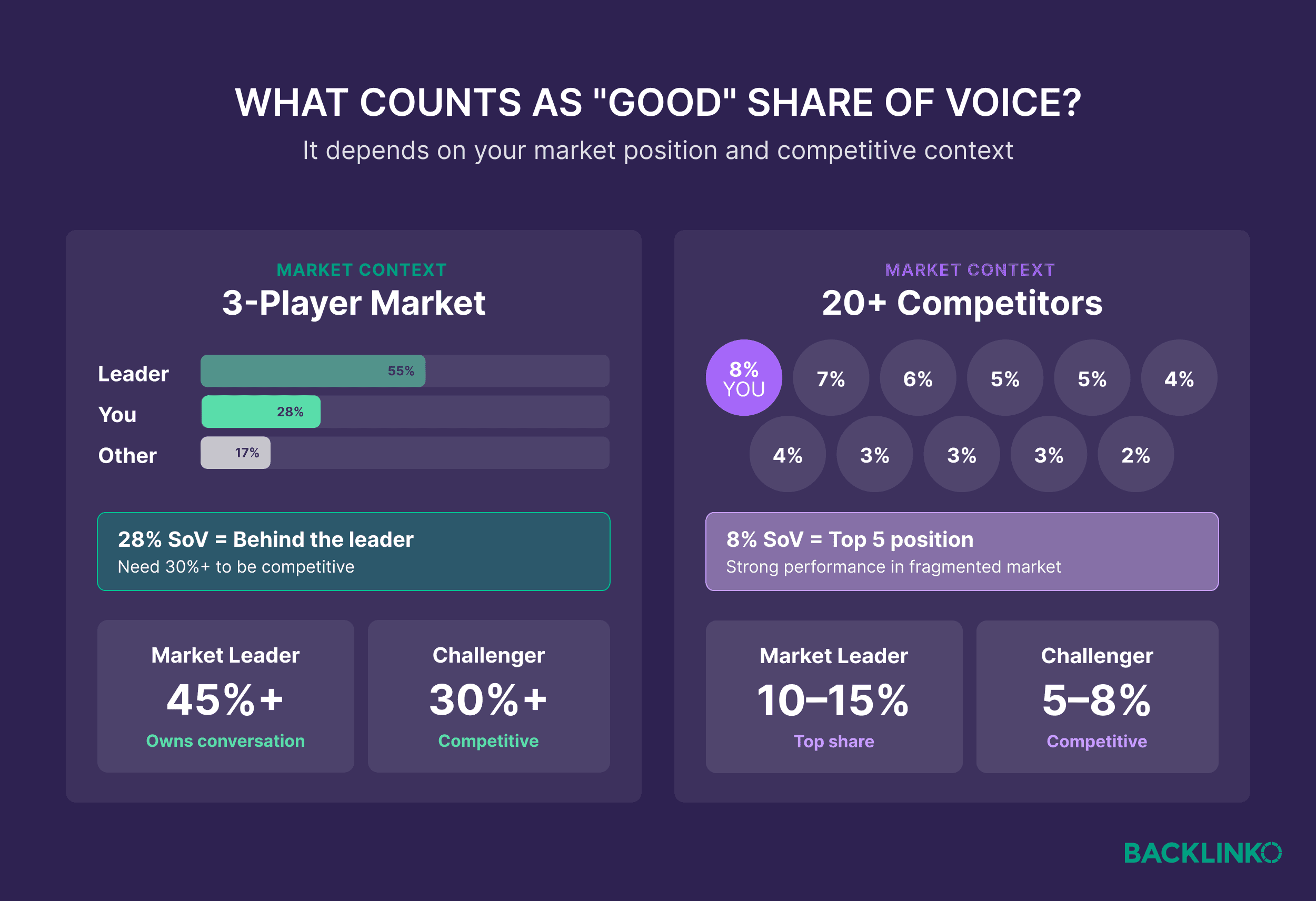
1. Closing Visibility Gaps: Clusters with less than 10% SoV indicate near invisibility, particularly damaging for decision-stage queries. If a brand isn’t appearing for "best project management software," it’s not even in the buyer’s consideration set. Brands should also identify areas where competitors dominate but present clear opportunities for entry. For a project management tool serving creative agencies, zero visibility for "project management for creative teams" signals an untapped niche. Solutions include building topical authority through pillar content and supporting articles, strategically acquiring backlinks, and prioritizing comparison pages (e.g., "[Your Brand] vs. [Competitor]") and buyer’s guides.
2. Solving Efficiency Problems: A high SoV that doesn’t translate into meaningful business outcomes (e.g., high SoV for "what is project management" but only 1% conversion rate) suggests inefficient resource allocation. The brand is capturing broad awareness but failing to engage high-intent buyers. The solution lies in reallocating resources from awareness content to bottom-of-funnel content, such as detailed comparison pages, customer case studies, and ROI calculators, directly targeting prospects ready to make a purchase.
3. Addressing Competitive Threats: Vigilant monitoring of competitor SoV gains is crucial. A competitor increasing its SoV by over 5% in a brand’s strong clusters indicates an active challenge to market share. The response must be tailored to the nature of the competitor’s gains. If rivals are excelling on review sites, optimizing brand profiles and actively soliciting customer reviews is imperative. If their strength lies in community platforms, proactive engagement in relevant online forums can help reclaim visibility.
Prioritizing Efforts Based on Impact and Effort: Not all SoV gaps or opportunities are created equal. Marketing teams should prioritize actions based on an "effort vs. impact" matrix:
- High Impact, Low Effort: Quick wins such as optimizing existing high-ranking pages for AI search, updating meta descriptions, and improving internal linking.
- High Impact, High Effort: Long-term investments like comprehensive content audits, building new pillar content, and securing high-quality backlinks.
- Low Impact, Low Effort: Tasks like fixing minor technical SEO issues on low-traffic pages.
- Low Impact, High Effort: Should generally be avoided unless strategic shifts dictate otherwise.
This structured prioritization ensures that marketing resources are allocated to initiatives that genuinely move the revenue pipeline.
Share of Voice: The Imperative for 2026 and Beyond
Share of Voice is no longer just a valuable metric; it is an indispensable strategic compass for brands navigating the fragmented and AI-driven digital landscape. By capturing visibility across all platforms where buyers research and decide, SoV provides a holistic view that traditional traffic metrics simply cannot. The imperative for businesses is clear: establish a robust SoV measurement framework for both SEO and AI search, analyze the resulting data to identify critical gaps and opportunities, and then strategically deploy resources to close those gaps and solidify market presence. In an era where AI profoundly influences consumer discovery, adopting SoV as a core North Star metric is not merely a best practice but a fundamental requirement for sustained brand growth and competitive advantage.