LinkedIn Content Emerges as a Premier Source for AI Chatbots, Driven by Individual Expertise and Structured Text.

The professional networking giant, LinkedIn, has significantly solidified its position as a critical information hub within the rapidly evolving landscape of artificial intelligence. A comprehensive new report from Meltwater reveals that content published on LinkedIn is now one of the most frequently cited sources by leading AI chatbots, with a distinct preference shown for posts originating from individual professional profiles. This development underscores a profound shift in how authoritative information is discovered and disseminated in the age of generative AI, particularly impacting business-related queries and B2B sectors.
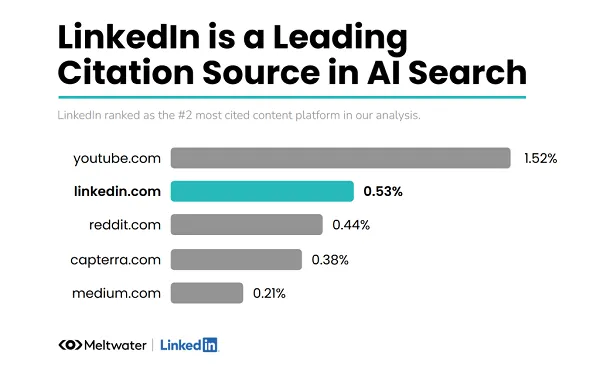
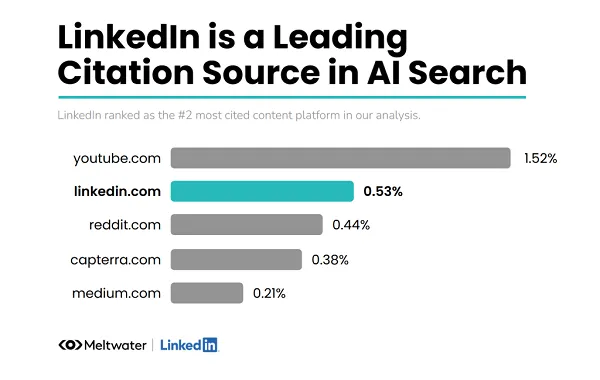
The findings, shared by LinkedIn itself on Thursday, highlight the platform’s rising performance in AI-powered search presence. While previously acknowledged for its efforts in optimizing content for AI discoverability, this latest Meltwater research provides granular insights into the specific types of content and authors that AI models prioritize. The study, which meticulously analyzed 9.5 million AI citations across six major AI models, positions LinkedIn as the second most-cited domain overall, a remarkable achievement that signals its growing influence beyond traditional human-driven search.
The Ascendance of AI Chatbots and the Quest for Credibility
The past few years have witnessed an unprecedented explosion in the development and adoption of AI chatbots, spearheaded by the public launch of OpenAI’s ChatGPT in late 2022. This event marked a watershed moment, democratizing access to powerful conversational AI and igniting a global race among technology giants to integrate similar capabilities into their products and services. Google’s Bard (now Gemini), Microsoft’s Copilot, Anthropic’s Claude, and a host of other large language models (LLMs) have since emerged, transforming how users seek information, generate content, and interact with digital platforms.
Unlike traditional search engines that primarily provide a list of links, AI chatbots aim to synthesize information from various sources to provide direct, conversational answers. This paradigm shift places immense pressure on AI models to access not only vast quantities of data but also credible and authoritative information. The phenomenon of "AI hallucinations," where models generate plausible but factually incorrect responses, has highlighted the critical importance of reliable source attribution. Consequently, platforms that consistently host high-quality, expert-validated content are naturally favored by these advanced algorithms.
LinkedIn, with its inherent structure as a professional network, has long cultivated an environment conducive to the sharing of expert insights. From its early days as a digital resume repository to its evolution into a robust content publishing platform, it has consistently attracted professionals seeking to establish thought leadership, share industry knowledge, and connect with peers. This inherent focus on professional credibility and domain expertise has inadvertently made it an ideal training ground and reference point for AI models seeking reliable business and industry-specific information.
Meltwater’s Landmark Study: Unpacking the Data
The Meltwater report, a cornerstone of LinkedIn’s recent announcement, offers a revealing glimpse into the mechanics of AI citation. By sifting through 9.5 million citations from half a dozen prominent AI models, the study provides a quantitative measure of content influence in the AI era. The finding that LinkedIn ranks as the second most-cited domain across all AI chatbots is particularly noteworthy. While YouTube retains its top spot – a testament to the power of video tutorials, demonstrations, and expert interviews – LinkedIn’s ascent is significant.
This dominance of YouTube and LinkedIn underscores a preference among AI models for content that is either highly instructional and demonstrative (YouTube) or deeply rooted in professional expertise and real-world experience (LinkedIn). Both platforms, in their own ways, offer content that often goes beyond mere factual recall, providing context, practical application, and nuanced perspectives from verified individuals. This contrasts with more general news sites or blogs, which might offer broader coverage but perhaps less specialized, first-hand expertise relevant to specific queries.
The implication here is profound for content creators and digital strategists. It suggests that for an AI model to deem a piece of information worthy of citation, it must possess a demonstrable level of authority, clarity, and utility. LinkedIn’s ecosystem, populated by professionals detailing their careers, sharing case studies, and engaging in industry discourse, naturally fulfills these criteria, especially for the complex, often niche, business-to-business (B2B) queries that AI users increasingly pose.
The Human Element: Personal Profiles Outperform Company Pages

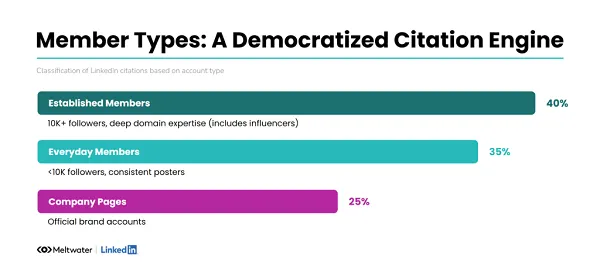
One of the most compelling insights from the Meltwater analysis is the pronounced preference of AI chatbots for content originating from individual user profiles over official company pages. This finding challenges conventional wisdom in corporate digital marketing, which often prioritizes branded content channels. The report explicitly states, "AI models prefer content written by credible people who share their domain expertise with examples, data, and specific details."
This preference is not arbitrary. AI models, in their quest for accurate and trustworthy information, are designed to identify and prioritize sources that exhibit genuine authority and firsthand experience. An individual professional, sharing insights based on years of industry practice, specific project outcomes, or unique research, often presents a more authentic and detailed perspective than a company’s marketing-driven update. Personal profiles are perceived as conduits for direct, unfiltered expertise, often enriched with specific examples, verifiable data points, and the context of practical application that a generic corporate statement might lack.
For businesses, this insight presents both a challenge and a tremendous opportunity. It underscores the critical importance of fostering employee advocacy and encouraging individual thought leadership. Instead of solely investing in corporate content, organizations must empower their internal experts – their engineers, marketers, sales leaders, and executives – to actively publish and share their knowledge on LinkedIn. This strategy not only amplifies the brand’s presence in AI search results but also builds individual credibility, which can have cascading benefits for recruitment, partnerships, and overall market perception. The collective expertise of a company’s workforce, when effectively leveraged through individual profiles, becomes a potent force in the AI-driven information economy.
Optimizing Content for AI: Structure and Substance
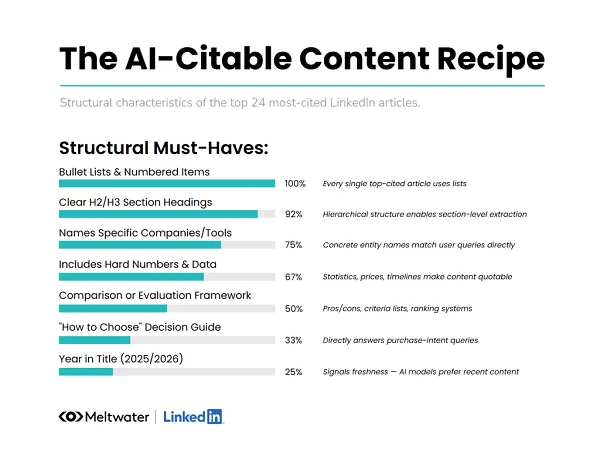
Beyond the author’s identity, the Meltwater report delves into the structural characteristics of LinkedIn content that AI models favor. It reveals that LinkedIn articles and plain text posts constitute a staggering 83% of all AI citations from the platform. This highlights the foundational importance of well-crafted textual content in the AI era, even amidst the rise of video and interactive formats.
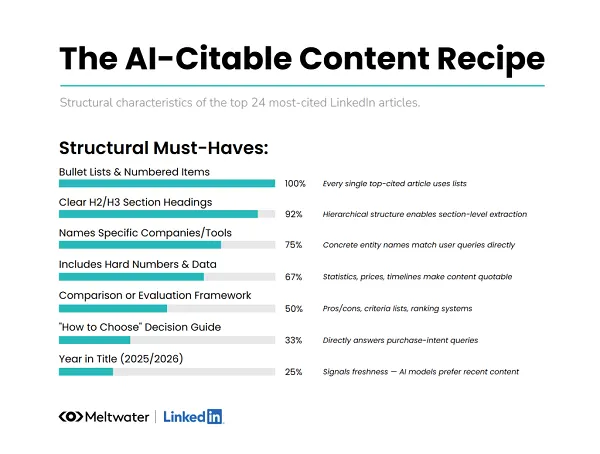
The study further emphasizes that "Every top-cited article in the study used bulleted or numbered lists, and clear headings were present in 92% of the most successful posts. This hierarchical structure allows LLMs to extract specific sections to answer direct user queries." This is a profoundly actionable insight for any content creator. Large Language Models are highly adept at parsing and understanding structured text. Bullet points, numbered lists, and clear, descriptive headings act as signposts, guiding the AI to the most relevant pieces of information within a longer article. This structured approach facilitates quick extraction of specific facts, definitions, or steps, enabling the AI to formulate precise and concise answers to user prompts.
For content strategists, this means a renewed focus on readability and logical organization. It’s no longer just about attracting human readers; it’s also about making content digestible for AI. Employing robust internal linking, using bolding and italics judiciously, and breaking down complex topics into easily scannable sections can significantly enhance a piece of content’s "AI readability" and, consequently, its chances of being cited. This convergence of user experience (UX) best practices and AI optimization (AIO) is a defining characteristic of modern content strategy.
LinkedIn’s Dominance in B2B Queries
The professional nature of LinkedIn naturally lends itself to business-to-business (B2B) interactions and information exchange. The Meltwater data strongly corroborates this, demonstrating that LinkedIn dominates B2B queries, consistently ranking among the top five sources across key industries. This means that when a user asks an AI chatbot about "digital marketing trends," "attribution models," "supply chain logistics," or "enterprise software solutions," there is a high probability that the AI’s answer will draw from LinkedIn articles and posts.
This insight is particularly valuable for B2B marketers. It confirms LinkedIn’s unparalleled role not just as a networking and lead-generation platform but also as a primary source of authoritative, AI-validated information in the business domain. Companies looking to establish their expertise and capture mindshare in specific B2B niches must recognize that their LinkedIn content strategy is now directly influencing their visibility in AI search results. This goes beyond traditional SEO for Google; it’s about optimizing for the conversational AI interfaces that are increasingly becoming the first point of contact for business professionals seeking answers.
The implications extend to thought leadership, industry analysis, and even competitive intelligence. Businesses that consistently publish high-quality, data-rich articles on LinkedIn, authored by their subject matter experts, are positioning themselves as preferred sources for AI models, thereby gaining a significant advantage in shaping the narrative and influencing decision-makers who rely on AI-generated summaries.
LinkedIn’s Strategic Approach to AI Search Optimization
LinkedIn’s strong performance in AI citations is not accidental; it is the culmination of deliberate strategic initiatives. The platform has previously shared insights into its AI search optimization approach, actively working to make its vast repository of professional content more discoverable and valuable to AI chatbot tools. This has likely involved several key areas:
- Enhancing Content Semantics: Improving the underlying data structures and metadata associated with content to help AI models better understand its context, topic, and relevance.
- Promoting Author Credibility: Developing features and algorithms that highlight and validate the expertise of individual contributors, making it easier for AI to identify authoritative voices.
- Facilitating Structured Content Creation: Potentially guiding users towards creating content with clear headings, lists, and summaries, either through platform tools or educational initiatives.
- API Access and Partnerships: Engaging with AI developers and researchers to ensure LinkedIn’s content is accessible and properly indexed by leading AI models, while also maintaining data privacy and content integrity.
By proactively addressing the needs of AI models, LinkedIn has effectively transformed itself from a mere social network into a vital knowledge base, curated and validated by millions of professionals worldwide. This evolution positions LinkedIn not just as a platform for career development and networking, but as an essential component of the global AI information ecosystem.
Implications for Content Strategy in the AI Era
The Meltwater report provides a compelling mandate for content creators and businesses navigating the AI-driven future:
- Prioritize Individual Expertise: Companies should empower and incentivize their employees to become visible thought leaders on LinkedIn. Investing in personal branding for internal experts is no longer a luxury but a strategic imperative.
- Embrace Structured Text: The era of long, unstructured blocks of text is over for AI optimization. Content must be meticulously organized with clear headings, subheadings, bullet points, and numbered lists to facilitate AI parsing and extraction.
- Focus on Depth and Detail: AI models value content that offers concrete examples, supporting data, and specific details. Generic or superficial content is unlikely to be cited. Content should demonstrate genuine domain expertise.
- Reinforce B2B Authority: For businesses operating in the B2B space, LinkedIn content is now a direct conduit to AI-driven information retrieval. A robust, expert-led content strategy on LinkedIn is crucial for establishing and maintaining industry authority.
- The Convergence of SEO and AIO: Traditional Search Engine Optimization (SEO) principles, such as keyword research and link building, must now evolve to incorporate AI Optimization (AIO). This involves understanding how AI models interpret and value content, moving beyond mere keyword stuffing to semantic relevance and structural clarity.
This shift signifies that the "attention economy" is now augmented by the "credibility economy" in the AI sphere. Merely generating buzz or traffic is insufficient; content must earn the trust and validation of sophisticated algorithms that prioritize accuracy, depth, and expert provenance.
Challenges and Future Outlook
While LinkedIn’s position as an AI-preferred source is a significant advantage, it also comes with responsibilities and potential challenges. Maintaining content quality, preventing the spread of misinformation, and ensuring ethical AI utilization of content will be ongoing concerns. The platform will need to continue investing in moderation, verification tools, and clear content guidelines to preserve its reputation as a credible source.
The long-term impact of AI’s reliance on platforms like LinkedIn will reshape how individuals consume information, conduct research, and even make business decisions. As AI chatbots become more sophisticated and ubiquitous, the ability for content to be reliably cited by these models will become a key metric of its influence and value. LinkedIn’s early recognition and strategic adaptation to this trend position it strongly for continued relevance in the evolving digital landscape.
In conclusion, the Meltwater report’s findings mark a pivotal moment for LinkedIn and the broader content ecosystem. The platform has successfully leveraged its inherent professional structure and a strategic focus on AI optimization to become a vital, AI-validated source of information, particularly within the B2B domain. For professionals and businesses, the message is clear: cultivating genuine expertise, sharing it transparently and structurally on LinkedIn, and empowering individual voices are no longer just best practices for human engagement, but essential strategies for visibility and influence in the age of artificial intelligence.
Related posts: