The digital landscape has undergone a profound transformation over the last decade, shifting from static informational pages to immersive, high-performance environments that demand a seamless blend of aesthetics and engineering. At the forefront of this evolution is Merlin, an Amsterdam-based "Code Boutique" that has carved out a specialized niche by treating motion, technology, and design as a singular, unified craft. Founded in 2018, the studio has transitioned from a small collective of friends into an international powerhouse, serving ambitious brands and creative agencies across the Netherlands, the United Kingdom, Germany, the United States, and France. By prioritizing the intersection of high-end visual storytelling and robust technical execution, Merlin has demonstrated that digital experiences can achieve significantly higher engagement and conversion rates than industry averages suggest.
The Genesis of an Amsterdam Creative Powerhouse
The story of Merlin is rooted in the academic and creative ecosystem of the Netherlands. The founders—Mees, Servin, and Emiel—were contemporaries at the Amsterdam University of Applied Sciences, where they pursued similar curricula while fostering a friendship that extended beyond the classroom. The foundation of the studio was not merely a business decision but a creative alignment; the trio frequently met to discuss the untapped potential of the web, often trading visions of how interactive technology could move beyond utilitarian functions into the realm of "digital magic."

When they officially established Merlin in 2018, the objective was clear: to prove the limits of what was possible within a browser. The early years of the studio were characterized by a "hands-on" approach where every founder remained deeply involved in the building process. This ethos of "creative development" remains a cornerstone of the firm today. Even as the company has scaled, the founders maintain that everyone in the organization remains a builder at heart, ensuring that the technical integrity of a project is never sacrificed for the sake of management overhead.
The Strategic Pivot: From Local Museum to Global Events
The studio’s initial portfolio was built on local foundations, with the Maritime Museum of Amsterdam serving as their inaugural client. This project set the stage for a series of smaller, high-craft assignments that allowed the team to refine their workflow. However, the true catalyst for Merlin’s rapid expansion was the global disruption caused by the COVID-19 pandemic. As physical gatherings were cancelled worldwide, the conference and events industry faced an existential need to rebuild itself in the digital sphere.
Merlin recognized this shift early, partnering with large agencies to develop 3D web experiences that could replicate the scale and engagement of live events. One of their first major successes in this arena was a 3D open days platform for Avans, one of the largest Dutch universities of applied sciences. This was followed by high-stakes collaborations with Bol.com, the dominant e-commerce platform in the Benelux region. These projects proved that Merlin could handle high-traffic environments while maintaining the sophisticated visual fidelity usually reserved for smaller, experimental sites.

Eurovision Village: A Landmark in Accessibility and Scale
The pivotal moment in Merlin’s chronology occurred when they were commissioned to build the Eurovision Village for the city of Rotterdam. As the host city for the Eurovision Song Contest, Rotterdam required a digital fan platform that could support hundreds of thousands of concurrent visitors during one of Europe’s most significant cultural events. The technical requirements were immense: the platform had to integrate live streaming directly into the interactive experience, update content in real-time as the contest progressed, and remain stable under extreme load.
Perhaps the most significant achievement of the Eurovision project was its commitment to accessibility. Because the project was commissioned by a municipal government, it was required to meet stringent WCAG (Web Content Accessibility Guidelines) compliance standards. Historically, high-motion, 3D-heavy websites have struggled to accommodate users with assistive technologies, often resulting in "lite" versions of the site for those with disabilities. Merlin rejected this bifurcated approach, building a single, unified experience that was fully accessible to all users. This feat of engineering garnered national media attention in the Netherlands and served as a global calling card for the studio, leading to direct partnerships with prestige brands like Nike, Dior, Heineken, and Coca-Cola.
Technical Excellence in Luxury and Media: Dior and Pendragon
As Merlin’s reputation grew, the studio began to work directly with luxury houses and major media productions. The challenge of luxury in the digital space is consistency; a brand like Dior requires its digital storefront to feel as premium on a three-year-old budget smartphone as it does on the latest flagship device. To solve this, Merlin developed proprietary performance-scaling techniques. By dynamically adapting the experience to the user’s hardware, they ensured that the brand’s narrative remained intact across the entire spectrum of consumer technology.

In the realm of entertainment, Merlin’s work on the companion site for the medieval television production Pendragon showcased their ability to drive commercial results through storytelling. In an era where many shows rely on standard social media promotion, Merlin built an interactive 3D map that expanded the show’s universe. The results were quantifiable: 10% of all site visitors clicked through to the subscription page, and the project eventually secured a Webby Award, one of the highest honors in the digital industry.
Social Impact and the "113" Campaign
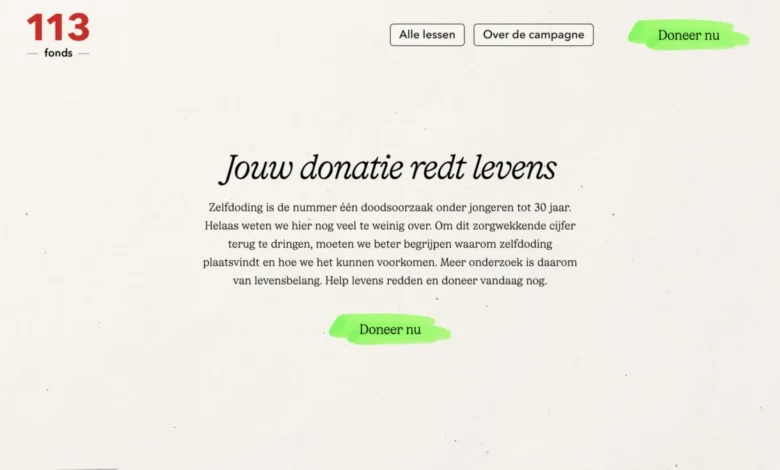
Beyond commercial success, Merlin has utilized its technical expertise for social advocacy. A notable example is their pro bono work for "113," the Dutch suicide prevention hotline. Collaborating with the agency N=5, Merlin developed a campaign site titled "Lessen voor het leven" (Lessons for Life), which shared the stories of teenagers lost to suicide.
The technical challenge here was one of tone and engagement. While most campaign sites suffer from high bounce rates, Merlin’s design encouraged visitors to slow down and absorb the gravity of the content. The average time spent on the page reached four minutes and six seconds—a staggering metric in an industry where average session durations are often measured in seconds. This project underscored Merlin’s belief that "craft" is not just about visual flair, but about using technology to facilitate emotional connection and meaningful dialogue.

Professionalization and the "Merlin Method"
The growth of the studio necessitated a transition from a creative collective to a structured business. This evolution was guided by an expert coach whose own boutique had previously integrated with the global marketing firm Monks. Under this mentorship, Merlin adopted rigorous management rhythms, including OKR (Objectives and Key Results) cycles and defined leadership roles. Mees took the lead on new business and strategy, Emiel focused on operations and production, and Servin assumed responsibility for finance and legal matters.
Crucially, this professionalization did not stifle the studio’s creative output. Instead, it allowed for the codification of the "Merlin Method"—a data-driven approach to creative development. The studio’s success is reflected in its performance metrics:
- Histor: Achieved a 15% conversion rate for newsletter signups through a custom digital flow.
- Heineken Silver: Facilitated a 10% image upload rate for a Singapore-based launch campaign.
- Pendragon: Secured a 10% click-through rate to subscription services.
- 113 Campaign: Maintained a 4-minute average session duration, far exceeding industry benchmarks for social awareness sites.
Broader Implications for the Digital Agency Model
Merlin’s success points to a broader trend in the technology sector: the rise of the specialized "boutique" over the "full-service" agency. As digital products become more complex, brands are increasingly seeking partners who possess deep technical expertise in specific areas like WebGL, motion design, and high-performance scaling.

The studio’s philosophy of "do good; get better" reflects a culture of continuous improvement that is modeled after professional sports teams. This environment of high accountability and rapid iteration has allowed Merlin to maintain a competitive edge in a market that is often saturated with generic digital solutions. By protecting the "drive in the room" and giving significant responsibility to new talent, the studio has positioned itself as a destination for top-tier creative developers who want to work on projects that move the needle both emotionally and commercially.
Future Outlook and Global Expansion
Seven years into its journey, Merlin has solidified its position as a leader in the European creative tech scene. With a headquarters in Amsterdam that remains open to collaborators and brands alike, the studio is now looking toward further international expansion. The team’s ability to bridge the gap between mythic "digital magic" and hard commercial data suggests that they will continue to play a vital role in shaping how the world’s most iconic brands present themselves online.
As the boundary between the physical and digital worlds continues to blur, the demand for experiences that "maximize digital potential" will only grow. Merlin’s trajectory suggests that the future of the web belongs to those who can master the technical intricacies of the craft while never losing sight of the human experience. Whether it is through a 3D map of a mythical kingdom or a high-performance storefront for a Parisian fashion house, Merlin remains committed to the idea that every pixel and every line of code should serve a greater purpose: to inspire wonder and drive meaningful action.