Navigating the Uncharted Territory of Generative AI Visibility: Tools and Strategies for Optimization

The rapid evolution of generative artificial intelligence (GenAI) has introduced a new frontier for digital content creators and marketers: optimizing content for visibility within these advanced AI models. Unlike traditional search engine optimization (SEO), which benefits from decades of established practices and clearly defined ranking signals, the landscape for GenAI visibility remains largely experimental. There is no definitive, step-by-step process to guarantee a prominent position in the outputs of platforms like ChatGPT, Google’s Gemini, Anthropic’s Claude, and others. This lack of a codified methodology leaves practitioners reliant on a strategy of continuous testing and experimentation to discern the implicit priorities of these powerful AI systems.
To navigate this evolving domain, digital strategists are employing a diverse range of tools to gain insights and inform their optimization efforts. Ann Smarty, a prominent voice in digital marketing and founder of the website Smarty Marketing, has identified a suite of Chrome extensions that she finds particularly valuable for assessing and enhancing GenAI visibility. While acknowledging that these tools offer helpful recommendations, Smarty emphasizes that none can provide definitive answers due to the absence of the explicit ranking signals that characterize traditional search engines. The current approach involves leveraging multiple perspectives to build a comprehensive understanding of how GenAI models process and prioritize information.
Emerging Tools for GenAI Visibility
The quest for GenAI visibility is being supported by a growing ecosystem of specialized tools. Among the most promising for Chrome browser users are several extensions designed to audit and score web content for its "AI friendliness." These tools aim to translate the complex, often opaque, workings of GenAI models into actionable insights for website owners and content creators.
GEO Auditor: A Multi-Faceted AI Optimization Scorecard
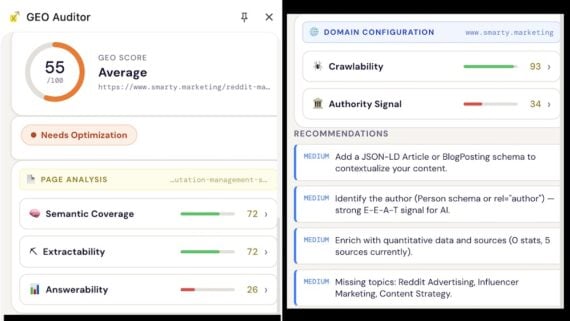
One of the key tools highlighted is GEO Auditor. This Chrome extension provides a comprehensive score for any given webpage based on its optimization for AI bots. The scoring mechanism is built upon three foundational pillars, although the specific details of these three factors are not explicitly enumerated in the initial assessment. However, the extension’s analysis extends beyond a simple numerical score. GEO Auditor delves into crucial technical aspects that influence how AI models interact with a website.

Specifically, it examines the crawlability of a domain by analyzing the robots.txt file and meta robot tags. These elements are critical for search engine bots and, by extension, for AI crawlers that may be indexing the web for information. Furthermore, GEO Auditor assesses domain authority, a concept borrowed from traditional SEO, by evaluating backlinks and citations. While the extension provides this analysis, it is noted that it does not cite its specific sources for these authority metrics, a characteristic that underscores the experimental nature of AI evaluation.
Following its analysis, GEO Auditor offers concrete recommendations for page-level optimization improvements. For instance, in an audit of the Smarty Marketing website, the tool suggested specific actions to enhance AI visibility, which, if expanded upon, would likely include areas such as content structure, keyword relevance, and data clarity. The visual representation of GEO Auditor’s scorecard page underscores its function as a diagnostic tool, offering a snapshot of a page’s current standing in the eyes of AI.
AI SEO Extension by RadarKit: Quantifying "AI Friendliness"
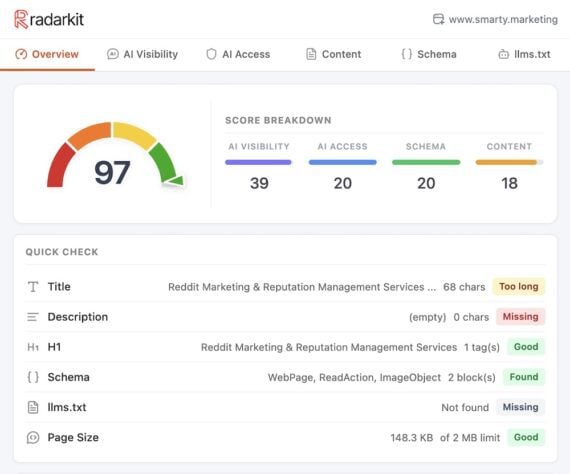
Another significant extension in this emerging category is the AI SEO Extension by RadarKit. This tool takes a direct approach by assigning a score to each page, quantifying its "AI friendliness." Similar to GEO Auditor, the underlying factors contributing to this score are not fully detailed but are understood to encompass elements that AI models find easy to process and understand.
The extension’s analysis typically focuses on various aspects of on-page content and structure that are likely to influence how effectively an AI can extract and utilize information. This could include the clarity of language, the logical organization of content, the presence of structured data, and the overall coherence of the information presented. The screenshots associated with the AI SEO Extension depict a system that provides users with a numerical assessment, offering a clear, albeit simplified, metric for their content’s readiness for AI consumption. The implication is that a higher "AI friendliness" score suggests a greater likelihood of the content being accurately interpreted, summarized, or cited by GenAI models.
All in One SEO Analyzer: Leveraging Traditional SEO for AI Insights
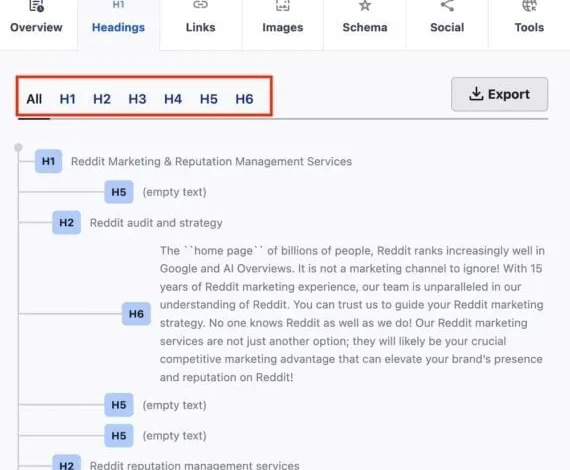
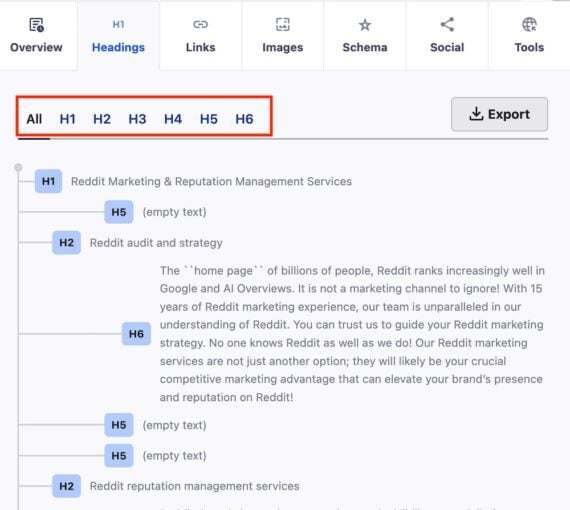
While the primary focus of the All in One SEO Analyzer by AIOSEO is on traditional search engines, it offers valuable insights that can indirectly benefit GenAI visibility. This extension provides a detailed analysis of HTML headings, specifically H1 through H6 tags. In the context of GenAI, these hierarchical headings are crucial because they often serve as the structural backbone of a webpage, clearly delineating topics and subtopics.
AI models frequently rely on these headings to understand the content’s organization, identify key themes, and extract authoritative information. The logical structure provided by well-optimized headings can significantly improve the chances of a webpage being accurately referenced or cited in GenAI outputs. The extension’s detailed breakdown of heading usage and structure offers a practical way for content creators to ensure their content is not only accessible to human readers but also comprehensible to AI algorithms. This indirect approach highlights a core principle: strong foundational SEO practices can often translate into better performance in the nascent field of GenAI optimization.
The Evolving Landscape of GenAI Visibility
The current state of optimizing for generative AI visibility is characterized by a significant degree of uncertainty. Unlike traditional SEO, where algorithms and ranking factors have been extensively studied and documented, the inner workings of large language models (LLMs) and their content prioritization mechanisms are far less transparent. This opacity necessitates a data-driven, experimental approach.
Supporting Data and Context:
The emergence of GenAI models has been nothing short of revolutionary. Since the public unveiling of advanced chatbots like ChatGPT in late 2022, the capabilities of AI in generating text, code, and creative content have captured global attention. This has led to an explosion of interest in how businesses and individuals can leverage these tools. Simultaneously, concerns about AI-generated misinformation and the ethical implications of AI have also risen to prominence.
Within this context, the ability of AI models to accurately and relevantly cite sources has become a critical area of focus. When GenAI models provide answers or generate content, the accuracy and attribution of the information they draw upon are paramount. This is where the concept of "GenAI visibility" takes on significant importance. If content is not discoverable or understandable by these AI systems, it risks being overlooked, leading to a diminished presence in the AI-driven information landscape.
Timeline of Developments:
- Late 2022: Public release of advanced conversational AI models, like ChatGPT, sparks widespread interest in GenAI capabilities.
- Early 2023 onwards: Digital marketers and content creators begin experimenting with methods to improve content discoverability within GenAI outputs.
- Mid-2023 onwards: Development of specialized browser extensions and tools emerges to assist in auditing and optimizing content for AI.
- Present: Continued experimentation and refinement of strategies as understanding of GenAI interaction with content evolves.
Broader Impact and Implications:
The challenge of optimizing for GenAI visibility has significant implications across various sectors:
- Content Creators and Publishers: Websites that fail to adapt risk losing visibility and traffic as users increasingly rely on AI for information. The ability to be "seen" by AI could become as crucial as being found by traditional search engines.
- Businesses and Marketers: Effective GenAI visibility can translate into new avenues for lead generation, customer engagement, and brand awareness. Conversely, a lack of visibility could mean being absent from the AI-powered conversations that shape consumer decisions.
- Information Integrity: As AI models become more integrated into information consumption, the accuracy and reliability of their outputs are critical. Tools that help ensure content is well-structured and understandable by AI contribute to better-sourced AI responses.
- The Future of Search: The rise of GenAI suggests a potential shift in how users seek information, moving from keyword-based searches to more conversational and synthesized answers. Content that is optimized for this new paradigm will be better positioned to succeed.
Official Responses and Industry Trends:
While major AI platform providers like OpenAI, Google, and Anthropic have not released detailed guidelines on how to optimize for their models, their ongoing research and development provide subtle clues. The emphasis on factors like factual accuracy, clarity, and logical structure in AI-generated content suggests that content adhering to these principles will likely perform better.
Industry analysts and SEO experts are actively observing and documenting trends. The consensus is that while traditional SEO principles remain relevant, a new layer of optimization is emerging. This involves not only making content understandable to human searchers but also to the sophisticated algorithms that power generative AI. The development of tools like GEO Auditor, AI SEO Extension, and All in One SEO Analyzer by AIOSEO is a direct response to this emerging need, providing practitioners with the means to experiment and adapt.
In conclusion, the journey to optimize visibility in generative AI models is an ongoing exploration. The tools and strategies currently available, while not definitive, offer essential starting points for content creators seeking to ensure their work is discoverable and influential in this rapidly evolving digital landscape. As AI technology continues to advance, so too will the methods and best practices for ensuring content presence within its burgeoning ecosystem.