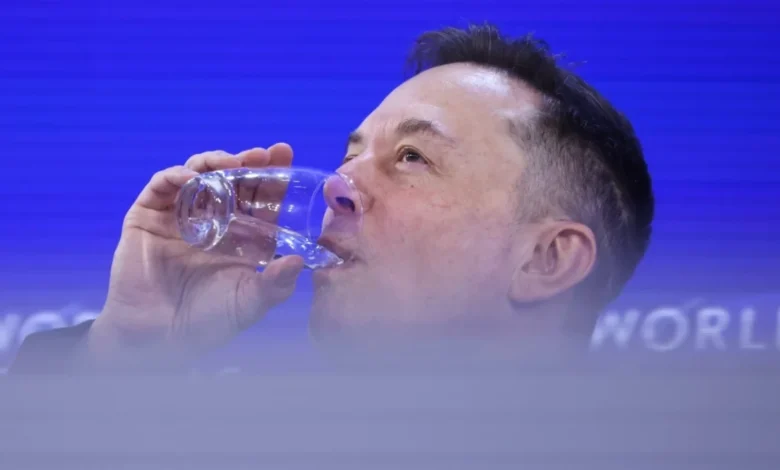
The federal courthouse in Oakland, California, has become the focal point of the technological world as jury selection commenced this week for the high-stakes legal battle between Elon Musk and Sam Altman. The trial, stemming from a lawsuit filed by Musk two years ago, represents more than a mere contract dispute; it is a fundamental clash over the soul of artificial intelligence and the commercial evolution of OpenAI. As legal proceedings begin, the evidence already introduced through depositions and discovery reveals a narrative defined by shifting alliances, personal grievances, and the complex interpersonal dynamics of Silicon Valley’s elite.
Legal experts have described the impending trial as a collision of unprecedented proportions. Corporate litigation attorney Andrew Staltman characterized the situation as "the landing of the Hindenburg on the deck of the Titanic," suggesting that the "messy drama" expected to unfold will expose the inner workings of the industry’s most powerful figures. At the heart of the case is Musk’s allegation that he was defrauded in 2019 when OpenAI, which he co-founded as a non-profit, transitioned into a "capped-profit" entity under Altman’s leadership.
The Core Allegations: Fraud and the 2019 Pivot
The legal foundation of Musk v. Altman rests on the claim that the defendant breached the original founding agreement of OpenAI. When the organization was established in 2015, its mission was to develop artificial general intelligence (AGI) for the benefit of humanity, rather than for shareholder profit. Musk, who provided significant early funding—estimated at over $44 million—argues that the shift toward a for-profit structure was a "betrayal" of the organization’s non-profit charter.
OpenAI’s current valuation, which exceeds $850 billion, makes the stakes of this trial astronomical. Musk’s legal team is seeking damages that could reach $138 billion, arguing that the value generated by the company’s pivot belongs to the original mission rather than the private investors and executives who took control during the restructuring. Furthermore, the timing of the trial is critical; OpenAI is widely expected to launch an initial public offering (IPO) later in 2026. A verdict in favor of Musk could potentially derail these plans or force a massive reallocation of the company’s assets.
A Chronology of the Musk-Altman Relationship
To understand the current animosity, one must trace the timeline of the relationship between the two men, which has devolved from mutual admiration to public litigation.

- 2015: Musk and Altman, along with Greg Brockman and Ilya Sutskever, found OpenAI as a non-profit research lab.
- 2017: Internal tensions begin to surface regarding the pace of development and the need for massive computing power.
- 2018: Musk resigns from the OpenAI board, citing potential future conflicts of interest with Tesla’s own AI development.
- 2019: Under Altman, OpenAI creates "OpenAI LP," a for-profit subsidiary. Microsoft invests its first $1 billion.
- 2023: The release of GPT-4 propels OpenAI to global dominance. Musk launches a competing AI firm, xAI.
- 2024: Musk files his initial lawsuit, alleging breach of contract and fiduciary duty.
- 2025: Tensions escalate as Musk attempts a $97 billion takeover bid for OpenAI, which Altman publicly mocks.
- 2026: The case reaches trial in Oakland.
Burning Man and the Question of Mental Clarity
One of the more surreal elements of the pre-trial discovery involves the 2017 Burning Man festival. Altman’s defense team has sought to undermine Musk’s recollections of critical negotiations by questioning his activities during the event. Specifically, lawyers questioned Musk regarding the ingestion of "rhino ket"—a potent mixture of amphetamines and ketamine.
While Judge Yvonne Gonzalez Rogers has ruled that specific mentions of "rhino ket" are inadmissible to avoid undue prejudice, she has allowed the defense to probe "supposed lapses in memory" occurring during that period. Musk has publicly stated that he uses prescribed ketamine to treat depression, but the defense argues that his presence at the festival during pivotal OpenAI discussions speaks to his "focus, or lack thereof," on the organization’s future. The reconstruction of events from nearly a decade ago in the "Radical Ritual" atmosphere of Black Rock City highlights the unconventional environments where multi-billion dollar tech strategies are often conceived.
The Role of Shivon Zilis: Intelligence or Influence?
The trial has also shed light on the role of Shivon Zilis, a venture capitalist and high-ranking executive at Musk’s Neuralink. Zilis, who is also the mother of four of Musk’s children, served on the OpenAI board until 2023. Court documents reveal that Altman referred to Zilis as an "Elon whisperer," a bridge between the two camps.
The prosecution and defense differ sharply on Zilis’s motivations. Text exchanges from 2018 show Zilis asking Musk if she should "stay close and friendly" to OpenAI to keep information flowing back to him. Musk’s response—"close and friendly"—has led OpenAI’s lawyers to suggest that Zilis acted as a "spy" for Musk’s interests while serving as a fiduciary for OpenAI. Judge Rogers has deemed Zilis’s relationship with Musk "highly relevant" to her credibility as a witness, particularly given her current romantic involvement with the plaintiff.
The Zuckerberg Interference and the Cage Match Context
In an unexpected twist, court filings have implicated Meta CEO Mark Zuckerberg. Despite a history of public animosity—including the infamous 2023 challenge to a "cage match"—documents show Zuckerberg attempting to maintain a rapport with Musk. In February 2025, Zuckerberg allegedly offered to use Meta’s moderation tools to "take down content doxxing or threatening" members of Musk’s Department of Government Efficiency (DOGE) team.
The relevance of these interactions to the trial lies in the defense’s attempt to paint Musk as a figure of such immense power that he could not have been "duped" by Altman. If Musk was influential enough to have the CEO of Meta offering personal censorship services, the defense argues, his claims of being a victim of corporate fraud are less plausible. Furthermore, the documents reveal that Musk invited Zuckerberg to join a $97 billion takeover bid for OpenAI in early 2026, an offer Altman dismissed with a public jibe about buying Twitter (now X) for a fraction of its value.

Interpersonal Friction: "Jeff is a Tool"
The evidence introduced thus far paints a picture of a Silicon Valley culture that resembles a high school hierarchy. In one 2016 email exchange regarding whether OpenAI should use Amazon Web Services (AWS) or Microsoft Azure, Musk’s decision appeared to be driven by personal distaste for Amazon founder Jeff Bezos. "I think Jeff is a bit of a tool and Satya [Nadella] is not, so I slightly prefer Microsoft," Musk wrote.
This candidness extends to the OpenAI leadership’s internal communications. A diary belonging to OpenAI President Greg Brockman, which he was compelled to turn over to the court, contains entries expressing a desperate need to "get out from Elon" as early as 2017. These documents suggest that the rift between Musk and the OpenAI founding team was not merely philosophical but deeply personal and long-standing.
Financial and Industry Implications
The outcome of Musk v. Altman will have profound implications for the AI industry’s regulatory and corporate landscape.
- The Definition of AGI: A central point of contention is whether OpenAI has already achieved AGI. If it has, under the terms of its agreement with Microsoft, certain licenses to the technology would expire, returning control to the non-profit. Musk argues that GPT-4 and its successors represent AGI, while OpenAI maintains they are merely advanced large language models.
- The Non-Profit Model: The trial serves as a test case for whether a non-profit can legally transition into a multi-billion dollar for-profit entity without compensating its original donors or adhering to its founding charter.
- Investment Certainty: A ruling against Altman could cast doubt on the legality of Microsoft’s estimated $13 billion investment in OpenAI, potentially leading to a massive restructuring of the company’s capital table.
Official Responses and Public Sentiment
While OpenAI has officially characterized the lawsuit as "frivolous" and "the result of Elon’s regret that he is not part of the company’s current success," Musk’s supporters view the trial as a necessary check on corporate greed. In a 2023 text to Musk, Altman expressed that it "really fucking hurts" when Musk attacks OpenAI, calling him his "hero." Musk’s response—"the fate of civilization is at stake"—underscores his belief that his legal action is a matter of existential importance rather than personal gain.
As the trial moves forward in Oakland, the tech industry remains on edge. The "tea" being spilled in the courtroom is not merely gossip; it is the documented history of the most significant technological shift of the 21st century. Whether the jury views Musk as a visionary protector of AI ethics or a disgruntled former founder seeking a payday will determine the future trajectory of OpenAI and the broader AI ecosystem.