Scanfully 2.0 Revolutionizes WordPress Site Health and Performance Monitoring Through Actionable Intelligence and AI Integration

The landscape of WordPress maintenance is undergoing a significant transformation as site owners and agencies shift away from reactive troubleshooting toward proactive, data-driven site management. This paradigm shift is being led by the release of Scanfully 2.0, a comprehensive site health and monitoring Software-as-a-Service (SaaS) platform designed to simplify the often overwhelming technical requirements of maintaining a modern WordPress ecosystem. By consolidating security, performance, email deliverability, and DNS monitoring into a single, user-friendly dashboard, Scanfully aims to eliminate the information silos that often plague web professionals.
The Evolution of Site Monitoring
For over two decades, the WordPress ecosystem has evolved from a simple blogging tool into a complex content management system powering over 40% of the web. This growth has brought with it an increase in technical debt and security vulnerabilities. Historically, site owners have relied on a fragmented approach to maintenance—installing individual plugins for security, uptime monitoring, and performance tracking. This reactive strategy frequently results in "alert fatigue," where administrators are inundated with notifications that lack context, often ignoring potential issues until they escalate into critical site outages or data breaches.
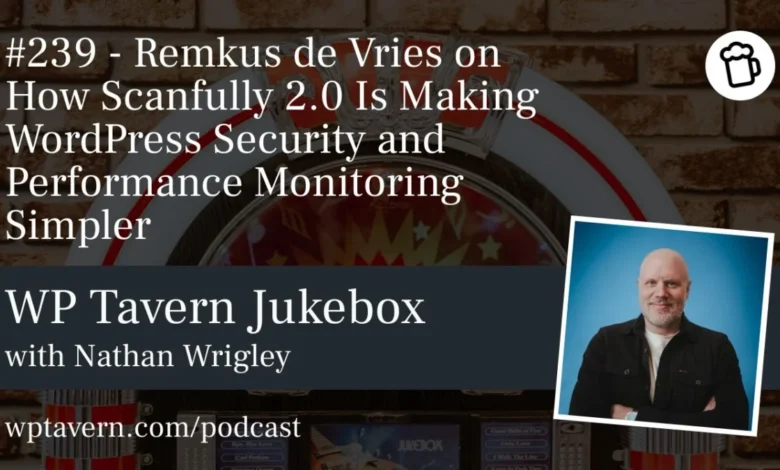
Remkus de Vries, a veteran of the WordPress space with over 20 years of experience in high-performance architecture, co-founded Scanfully alongside Barry de Vries three years ago. The duo recognized that the primary hurdle for most users was not a lack of data, but an inability to parse and prioritize that data effectively. The launch of version 2.0 represents a complete reimagining of the user interface and the underlying logic of how health metrics are presented to the end user.
Key Innovations in the 2.0 Release
The 2.0 update is characterized by a "human-readable" approach to technical data. Instead of presenting raw spreadsheets or complex charts that require deep technical expertise to interpret, the platform now utilizes natural language summaries to highlight the most critical health signals. This design philosophy is aimed at the "spreadsheet-averse" user, ensuring that actionable insights are prioritized over noise.
One of the most notable technical additions is the introduction of a public API, allowing agencies and enterprise clients to integrate Scanfully’s monitoring data directly into their own custom dashboards or client-facing reporting tools. This move is expected to appeal to hosting companies and managed service providers who seek to white-label professional-grade monitoring solutions without building the underlying infrastructure from scratch.
Furthermore, the platform has integrated an Model Context Protocol (MCP) server. This allows users to connect their site data to Large Language Models (LLMs), enabling conversational queries about site health. For instance, a user can ask an AI assistant to identify potential vulnerabilities, analyze DNS record conflicts, or confirm the status of transactional email deliverability. Early testing has shown that this capability can identify subtle, intermittent technical issues—such as conflicting DNS records causing erratic email delivery—that might otherwise take hours of manual investigation to pinpoint.
Addressing the Need for Holistic Security
Security remains the cornerstone of the Scanfully platform. By moving activity logs and monitoring services off-site, Scanfully avoids the performance degradation that typically occurs when logging is handled by the WordPress database itself. This is a critical architectural decision, as heavy logging on high-traffic sites can lead to significant database bloat and latency.
The platform’s 2.3 update, which followed shortly after the 2.0 launch, expanded these capabilities to include advanced user activity tracking. This feature captures not only which user initiated a change, but also the specific nature of that change. It tracks sensitive actions such as the elevation of administrative privileges, changes to administrative email addresses, or the modification of core configuration files. By offloading this data to a secure SaaS environment, site owners maintain a tamper-proof record that remains accessible even if the primary website becomes compromised or inaccessible.
Future Roadmap: Moving Toward Behavioral Monitoring
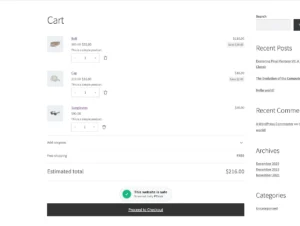
Looking beyond core health checks, Scanfully is expanding its scope into functional business logic monitoring. A significant upcoming feature is the introduction of WooCommerce checkout monitoring. This tool is designed to perform end-to-end testing of the e-commerce path—from product discovery and cart addition to the final payment initiation.
Crucially, this system operates from an external perspective, simulating a user’s journey without incurring actual charges or creating permanent database clutter. The plugin responsible for the connection automatically manages the cleanup of test data, ensuring that performance metrics remain accurate and that the site’s database remains lean. This capability is expected to set a new standard for e-commerce reliability, as it addresses the "silent failure" of checkout processes that often go unnoticed until a customer reports a problem.
Following the rollout of WooCommerce monitoring, the development team has indicated that similar "journey-based" monitoring will be applied to contact forms and other critical site interactions. This roadmap reflects a broader industry trend toward "synthetic monitoring," where automated bots continuously test business-critical user flows to ensure that a site is not just "up," but actually "functional."
Implications for the WordPress Industry
The release of Scanfully 2.0 arrives at a time when the WordPress community is increasingly emphasizing "first principles" in development—the idea that problems should be solved at the foundational level rather than through superficial patches. By providing a centralized, intelligent hub for site health, the platform encourages a more professionalized approach to site maintenance.
For the freelance developer or the agency owner, tools like Scanfully mitigate the risk of catastrophic failure. For the end user, it provides a sense of clarity and control over digital assets that are often perceived as "black boxes." The economic implications are equally significant; by reducing the time spent on manual audits and troubleshooting, agencies can reallocate resources toward growth and innovation.
As the platform matures, its reliance on API-first architecture and AI integration positions it to become a standard tool in the professional WordPress stack. While the market for monitoring tools is competitive, Scanfully’s focus on translating complex data into human-understandable, actionable intelligence provides a distinct value proposition. It serves as a bridge between the high-level technical requirements of modern web performance and the practical needs of business owners who require reliability without the necessity of becoming server administrators.
Conclusion
Scanfully 2.0 is more than a software update; it is an evolution in how WordPress site management is conceptualized. By combining robust, off-site monitoring with modern, conversational AI capabilities, the platform is addressing the long-standing challenges of complexity and reactive maintenance. As the roadmap for custom journey monitoring and form validation continues to unfold, the platform is well-positioned to assist in the professionalization of the WordPress industry, ensuring that websites remain secure, performant, and reliable in an increasingly demanding digital environment. For users, the message is clear: maintaining a healthy WordPress site should no longer be an afterthought, but a foundational, automated aspect of the digital experience.
Related posts: