Managing a modern, high-tech research facility requires a staggering degree of operational coordination. Beyond maintaining multi-million-dollar scientific instruments, facility administrators must seamlessly handle user access clearances, safety training certifications, equipment reservation schedules, billing workflows, and chemical inventory controls. In large-scale, shared academic and government facilities—where hundreds of sophisticated instruments are utilized by thousands of researchers on a daily basis—these administrative burdens can quickly become massive bottlenecks that slow the pace of scientific inquiry. Compounding this operational friction is an even greater structural challenge brought on by the rise of modern interdisciplinary research: discovering the exact specialized equipment, process capability, or technical expertise across a fragmented national landscape of laboratories in the first place.
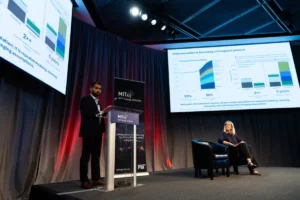
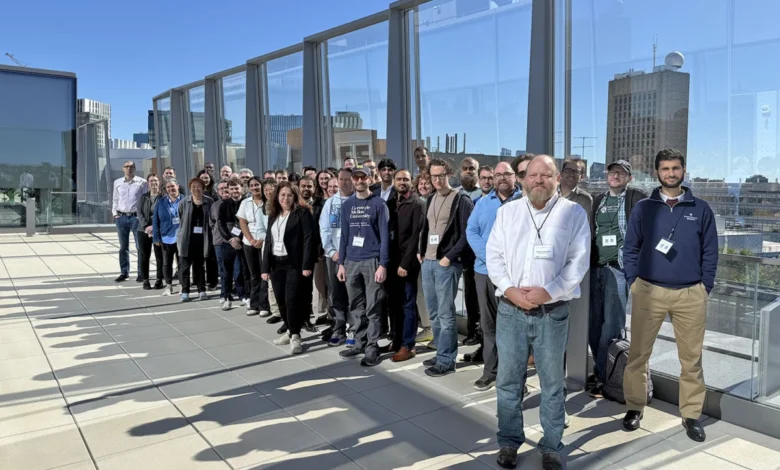
These pressing challenges took center stage at the 2026 NEMO User Meeting, hosted by MIT.nano from October 5 to 6. Sponsored by the Northeast Microelectronics Coalition (NEMC) hub, the two-day gathering convened 65 key representatives from 25 prominent research laboratories, universities, and government agencies. Attendees included facility directors, laboratory managers, technical staff, software developers, industry stakeholders, and federal researchers. Their collective goal was clear: to share advanced operational strategies, streamline day-to-day laboratory management, and forge a deeply connected, collaborative network of research facilities capable of accelerating U.S. innovation, particularly within the critical domain of microelectronics research and development.
The Origins and Evolution of the NEMO Platform
At the beating heart of the collaborative movement showcased at the MIT.nano meeting is the NanoFab Equipment Management and Operations system, universally known as NEMO. Originally released to the public as open-source software by the National Institute of Standards and Technology (NIST) in 2018, NEMO was designed from the ground up to provide a robust, adaptable digital platform for managing shared research environments. Over the years, the software has evolved from a simple tool into an enterprise-grade solution capable of handling complex multi-user facilities.
A critical milestone in this evolution occurred in 2023 with the launch of the NEMO Community Edition (NEMO-CE). This updated iteration empowered individual research institutions not only to utilize the baseline software, but also to develop, test, and share custom extensions, plugins, and modules tailored to their specific operational needs. During the October 2026 meeting, this decentralized innovation model was on full display. Representatives from an impressive roster of institutions—including the Massachusetts Institute of Technology, Stanford University, Columbia University, Princeton University, the University of Pennsylvania, NIST, NASA’s Jet Propulsion Laboratory, and Atlantis Labs—took the stage to demonstrate specialized tools they had built on top of the core NEMO architecture.
These presentations showcased a wide variety of adaptations designed to solve common laboratory headaches. Stanford University, for instance, demonstrated advanced real-time digital displays for tracking equipment status and handling high-demand reservations. Columbia University shared valuable institutional insights regarding its recent, seamless migration to NEMO, highlighting custom extensions built specifically to handle complex institutional billing structures and facility-wide operational workflows. Princeton University presented automated process control charts designed to monitor high-precision tool performance and predict maintenance cycles proactively. Meanwhile, the University of Pennsylvania introduced novel approaches to automated chemical inventory and safety management within shared cleanroom spaces.
These diverse contributions underscored a fundamental truth of the NEMO ecosystem: while the scientific missions, geographical footprints, and institutional scales of these facilities may vary wildly, their core operational challenges are remarkably uniform. A software solution engineered to solve an administrative friction point at a facility in the Northeast can easily become an invaluable, plug-and-play resource for a laboratory halfway across the country.
A Collaborative Blueprint for Technological Development
For Anna Osherov, associate director of Characterization.nano at MIT and the principal organizer of the 2026 user meeting, this collaborative development model represents a paradigm shift in how scientific infrastructure is managed and sustained.
"Open source changes the way we think about technology development," Osherov noted during the conference. "We can build on what others have already developed, contribute improvements back to the community, and collectively create a platform that is more capable than what any one facility could develop on its own."
This sentiment was echoed during the opening remarks by Vladimir Bulović, director of MIT.nano, who emphasized the sheer power of institutional cooperation. "Together we can do way more than any one of us individually can," Bulović told the assembled delegates. "NEMO is the platform that gave us, finally, a streamlined way to do so."
Operating at scale brings these efficiencies into sharp focus. At MIT.nano alone, the NEMO platform currently supports more than 1,600 active researchers who rely on over 200 sophisticated instruments, accumulating approximately 160,000 hours of tool usage every single year. According to Jorg Scholvin, associate director of Fab.nano, managing operations at this magnitude means that even minor administrative improvements yield massive cumulative dividends.
"A small improvement in an administrative workflow can be multiplied across thousands of users and tens of thousands of equipment interactions," Scholvin explained, illustrating why investing in robust, adaptable software infrastructure is vital for modern academic and industrial research hubs.
Bridging the Gap: From Isolated Labs to a Connected Research Ecosystem
As the NEMO community continues to expand and mature, it has naturally illuminated a secondary, systemic challenge within the national scientific enterprise. Universities, federal installations, and private organizations routinely operate highly specialized facilities, each housing unique equipment, proprietary techniques, and rare technical expertise. However, a scientific capability is functionally useless to a researcher if they do not know it exists, cannot easily verify its availability, or do not know how to initiate access.
This discovery bottleneck is particularly acute in microelectronics R&D and advanced semiconductor manufacturing, fields where national competitiveness depends entirely on the speed at which researchers can transition between multidisciplinary capabilities. A cutting-edge project might require advanced semiconductor fabrication at one specialized cleanroom facility, high-resolution nanoscale characterization at a second university, specialized electron microscopy at a federal laboratory, and unique packaging or analytical services available at only a handful of institutions nationwide.
Historically, academic and government networks have attempted to solve this discovery problem by publishing static web pages, PDF capability lists, or manually maintained database directories. However, in fast-moving research environments where instruments are continuously upgraded, taken offline for maintenance, or reconfigured with new capabilities, these static resources inevitably become outdated almost as soon as they are published.
Solving the Discovery Bottleneck with Hydra
To eliminate this friction, MIT.nano used the 2026 user meeting to unveil Hydra, a powerful new open-source platform developed with vital support from the Northeast Microelectronics Coalition. Hydra serves as a foundational software component of the NEMC Technical Concierge, an ambitious program designed to help academic researchers and commercial innovators seamlessly identify, evaluate, and access specialized microelectronics capabilities distributed across a vast network of regional and national facilities.
Unlike legacy directory websites that rely on manual data entry, Hydra is engineered to connect directly with multiple underlying NEMO installations and other laboratory management software. Instead of requiring facility managers to periodically update an external database, Hydra automatically harvests and synchronizes operational metadata directly from the source systems that laboratories actively use every single day. The resulting master index is built entirely upon the ground truths of active facility usage.
"Hydra does not replace any lab management system," Osherov clarified to meeting attendees. "It connects, synchronizes, and keeps data up to date across all connected systems in real time."
In this symbiotic operational architecture, NEMO acts as the reliable source of truth within an individual laboratory, managing day-to-day scheduling, billing, and user access. Meanwhile, Hydra acts as the overarching connective tissue, making those hyper-local capabilities instantly discoverable and searchable across the broader national research ecosystem. For an academic researcher or a startup engineer, this means finding a rare piece of fabrication equipment or an obscure testing capability without needing prior institutional knowledge of which specific university or government lab houses the instrument.
"The focus is to make the distributed infrastructure supporting research more discoverable and usable," Osherov emphasized.
Building Infrastructure Designed for Continuous Evolution
Underpinning both the NEMO software architecture and the newly launched Hydra platform is a broader philosophical commitment: modern research infrastructure must be just as adaptable as the scientific questions it seeks to answer. Physical laboratories and digital workflows cannot remain static if they are to serve the rapidly shifting demands of future scientific generations.
"We need to build a flexible research space and a community-oriented space so that people feel empowered to go to it, use it, and then redefine it as the years progress, adapting it to the needs of the next generation of researchers," Director Vladimir Bulović noted.
This philosophy of flexible, user-driven evolution applies equally to physical cleanrooms and software codebases. As emerging research methods, novel nanomaterials, and sophisticated analytical instruments are continuously introduced into university labs, facility managers require tools that can pivot instantly. By relying on an open-source framework, institutions avoid the vendor lock-in and prohibitive licensing costs associated with proprietary commercial software, ensuring that local improvements can be rapidly packaged, tested, and distributed back to the global user community.
The NEMO Wave: A Self-Sustaining National Movement
Throughout the two-day gathering at MIT.nano, attendees reported a palpable sense of community momentum and shared optimism regarding the future of shared research infrastructure. Plenary sessions and collaborative breakout discussions frequently turned toward the future of lab operations, exploring how emerging technologies such as deep data integration, hardware automation, and artificial intelligence could soon be natively integrated into facility management platforms.
This organic sense of collaboration has transformed the user base into a self-sustaining professional network. Mathieu Rampant, CEO and co-founder of Atlantis Labs, observed firsthand how the culture of mutual assistance has altered the trajectory of the software. "The community is taking on a life of its own," Rampant remarked, noting that as facility managers increasingly rely on one another to share ideas, troubleshoot bugs, and design custom modules, centralized administrative overhead drops significantly.
Facility managers across the country have begun referring to this phenomenon as "the NEMO wave." Samantha Roberts, director of the City University of New York nanofabrication facility, captured the sentiment shared by many attendees during the closing panels.
"Everyone is invested in it and cares about it," Roberts said. "It takes a lot of effort to change your lab management system, and if we keep this going, we can build out something that’s really cool and that works."
Enabling the Future of Scientific Discovery
Despite the heavy focus on software engineering, data integration, and network architectures, participants at the 2026 NEMO User Meeting remained focused on the ultimate human objective of their work: enabling breakthrough scientific research and empowering the next generation of innovators.
"Ultimately, this is about enabling research," Osherov concluded. "The better we can manage the operational side of our facilities, the more effectively we can make our instruments, expertise, and capabilities available to the research community."
In high-stakes technological domains like advanced microelectronics, where national economic security and technological leadership increasingly depend on rapid prototyping and cross-institutional collaboration, the frictionless availability of specialized infrastructure is paramount. By linking disparate laboratories through shared open-source platforms and real-time discovery networks, the NEMO community is actively building the digital and operational foundation required to move ideas seamlessly from academic laboratories into real-world applications and lasting industrial impact.