Apple Cracks Down on Internal AI Budgets as Silicon Valley Confronts the True Cost of Innovation

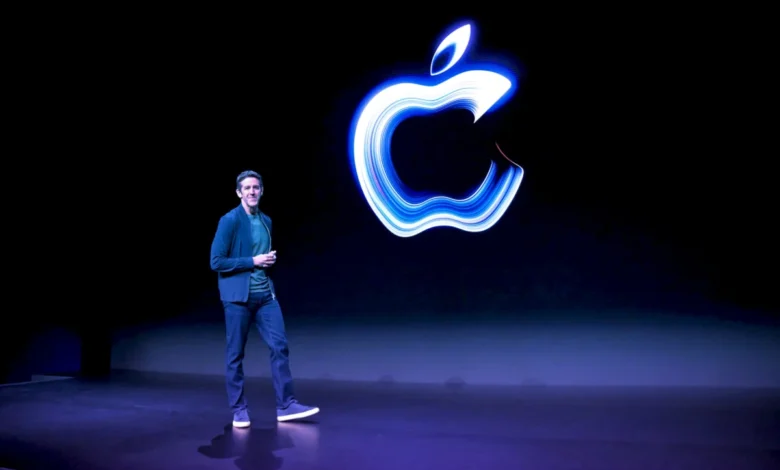
Even Apple, the world’s most valuable publicly traded corporation with a staggering market capitalization approaching $4.98 trillion, is beginning to feel the heavy financial gravity of the artificial intelligence boom. As the tech industry transitions from an era of unchecked experimentation to one of rigorous fiscal accountability, the iPhone maker has quietly instituted aggressive internal spending limits on employee usage of third-party and proprietary AI tools. This shift signals a broader industry reckoning over the spiraling operational costs required to power advanced machine learning infrastructure, raising critical questions about how enterprises will balance productivity gains against ballooning computational expenses.
The implementation of these tighter budgets, first reported by Bloomberg, reveals a delicate balancing act for Apple’s newly minted leadership team. Under CEO John Ternus—who assumed the helm on September 1 following a major executive transition—the company is actively attempting to streamline operations, eliminate organizational bloat, and foster a faster, leaner corporate culture. Yet, these cost-cutting initiatives collide directly with Apple’s aggressive strategic push to embed generative artificial intelligence deeply into its ecosystem of hardware and software products.
The Anatomy of the Crackdown: Token Limits and Budget Cuts
At the heart of Apple’s cost-containment strategy are restrictions placed on "tokens"—the fundamental units of text, code, and data that large language models process to generate responses. Because AI vendors typically bill enterprises based on token consumption, with advanced reasoning models commanding significantly higher price tags, unchecked developer exploration can quickly accumulate massive corporate invoices. Writing complex software code, running automated testing suites, and processing large-scale unstructured data demand substantial token volumes, making engineering departments prime targets for optimization.
Last month, these financial realities hit home for a segment of Apple engineers, whose daily AI spending caps were slashed from $300 to $200. Furthermore, internal discussions indicate that management is actively weighing subsequent reductions that could plummet the daily allowance to as low as $100 for specific engineering cohorts.
Non-engineering divisions are facing an even steeper fiscal squeeze. Traditionally granted a daily allowance of $100 for AI-assisted administrative, marketing, and analytical tasks, these business units are now confronting proposals that would shrink their daily allocation to a mere $25. While employees who can demonstrate a mission-critical need for higher operational limits may apply for executive exceptions, the message from upper management is unmistakable: efficiency and cost-control are paramount.
A Timeline of Corporate Restraint Across Silicon Valley
Apple’s sudden pivot toward thriftiness is far from an isolated corporate anomaly; rather, it represents a synchronized macro-trend sweeping across the technology sector. For the past two years, Silicon Valley firms championed a "frontier-first" philosophy, encouraging employees to experiment freely with generative AI tools to accelerate workflows, boost morale, and discover novel productivity use cases. However, as infrastructure investments soar into the tens of billions of dollars, executives are imposing strict financial guardrails.
The chronology of this industry-wide belt-tightening highlights a rapid escalation of oversight throughout 2026:
- June 2026: Ride-sharing giant Uber became one of the early movers to officially cap employee utilization of advanced coding assistants and LLMs like Claude Code, restricting personnel to a strict $1,500 monthly threshold.
- June 2026: Social media conglomerate Meta announced comprehensive measures to curb employee AI usage by introducing strict token limits to mitigate soaring data center operational expenditures.
- July 2026: Electric vehicle pioneer Tesla informed its global workforce that daily and weekly experimentation would be tightly managed, capping employee-driven AI spending at $200 per week.
- September 2026: Apple’s newly appointed CEO John Ternus initiated a sweeping operational review, bringing in external management consultants to optimize workflow velocity and dismantle redundant corporate layers.
- November 2026: Apple officially rolls out tiered reductions in daily employee AI spending limits, moving from $300 down to $200, with further reductions under active consideration.
Surging Research and Development Expenditures Amid Cost Controls
The internal tightening of employee tool budgets stands in sharp contrast to Apple’s broader capital allocation strategy. According to financial disclosures released by the company, Apple’s total research and development (R&D) expenditures surged by 32% during fiscal year 2026, touching a historic high of $45.8 billion. This massive influx of capital was primarily funneled into building out proprietary data center infrastructure, acquiring advanced silicon capabilities, and training next-generation foundational models designed to power Apple Intelligence features globally.
This dynamic illustrates a fundamental economic paradox facing modern technology enterprises: while capital expenditures (CapEx) on foundational infrastructure and foundational model training continue to scale exponentially to maintain competitive parity, operational expenditures (OpEx) tied to daily employee utilization are facing intense microscopic scrutiny. Corporations are finding that while AI tools undeniably accelerate productivity—often outperforming human benchmarks in specific coding and drafting tasks—the marginal cost of sustaining these efficiencies can quickly erode profit margins if left unchecked.
Internal Reactions and Workforce Anxiety
Within Apple’s corporate campuses, the new financial constraints have elicited a mixed and occasionally anxious reaction among the rank-and-file workforce. Interviews and internal communications cited by industry analysts reveal a deep ideological division among employees.
On one hand, a segment of the engineering workforce acknowledges that a $300 daily threshold was excessively generous, noting that typical software development tasks can be executed efficiently well below that financial ceiling. From this perspective, the adjustments represent a sensible approach to eliminating corporate waste and preventing runaway software licensing bills.
Conversely, a vocal contingent of workers has expressed growing apprehension. Many view the sudden enforcement of token limits as an ominous leading indicator of broader, systemic cost-reduction programs. These anxieties have been amplified by Apple’s ongoing engagement with external management consultants, a maneuver widely interpreted as preparation for a leaner corporate structure. Memories of aggressive workforce reductions across the broader tech landscape have left employees sensitive to any corporate policy signaling financial restraint, raising fears that strict AI budgets could eventually pave the way for targeted layoffs or structural downsizing.
Broader Strategic Implications and Market Outlook
The tightening of AI budgets at Apple and its peers marks the end of the honeymoon phase for generative artificial intelligence in the corporate workplace. As the technology matures from an experimental novelty into a core enterprise utility, businesses are moving away from blank-check innovation models and toward rigorous unit economics.
For enterprise software providers and foundational model developers—such as OpenAI, Anthropic, Google, and Microsoft—this emerging trend introduces a complex variable into long-term revenue forecasting. If major corporate clients systematically cap token usage and scrutinize their daily consumption metrics, software-as-a-service (SaaS) providers and cloud computing hyperscalers may face downward pressure on enterprise average revenue per user (ARPU). Vendors will increasingly need to prove a clear, quantifiable return on investment (ROI) to justify premium pricing tiers, shifting the sales pitch from vague promises of transformative productivity to concrete financial metrics.
For Apple, the challenge lies in executing a delicate pivot. The company must successfully transition its massive user base into an era where intelligence features are central to hardware sales, while simultaneously ensuring that the internal engineering and operational engines driving those innovations do not succumb to runaway operational costs. As John Ternus and his executive team steer the trillion-dollar titan through its next chapter, the success of Apple’s AI strategy will be measured not just by the sophistication of its algorithms, but by its ability to innovate profitably in an increasingly cost-conscious global economy.