Robust Serialization with JSON and Custom Types in Python Machine Learning Pipelines

In the fast-paced environment of modern machine learning engineering, the primary hurdle is rarely the mathematical elegance of a model architecture; rather, it is the invisible, relentless labor of data plumbing. Data scientists and machine learning engineers frequently discover that a significant majority of their development cycle is consumed by the cleaning, preprocessing, and architectural transformation of datasets to ensure compatibility with downstream systems. As organizations shift toward distributed microservices and complex data pipelines, the requirement for a reliable, schema-aware method to serialize and deserialize data has become a critical operational necessity. Without a robust strategy for handling custom data types—such as datetime objects, sets, pathing, and enumerated types—pipelines are prone to frequent, costly failures.
The Problem of Standard Serialization
The standard Python library, specifically the json module, is designed for universal compatibility, which inherently limits its support to a specific set of primitive types: strings, integers, floats, booleans, lists, and dictionaries. In the context of a modern machine learning experiment, where a configuration file might include a datetime.now() timestamp, a pathlib.Path object pointing to a storage bucket, or an Enum defining a specific model architecture, the standard json.dumps() method will trigger a TypeError.
This limitation is not merely a nuisance; it is a point of systemic fragility. When a pipeline crashes due to a serialization error, it can result in the loss of unsaved experiment metrics, the disruption of automated model training loops, and the corruption of logs. Historically, engineers have dealt with this by manually casting objects into strings before serialization—a process that introduces manual overhead and complicates the retrieval of data during the decoding phase, as the original types are permanently lost.
Chronology of the Serialization Evolution
The transition from simple data storage to complex, automated MLOps pipelines has followed a distinct trajectory. In the early days of data science, flat files like CSVs were the standard, requiring little in the way of serialization logic. As data structures became more nested—incorporating hyperparameters, environment configurations, and complex metadata—JSON became the de facto industry standard for configuration management due to its human-readability and widespread support across languages.
However, the rapid adoption of Python’s standard library features—such as pathlib for file system management (introduced in Python 3.4) and Enum for strict classification—created a technical debt. The json module was not updated to natively understand these types, creating a "serialization gap." Over the past five years, the industry has moved toward custom encoders and decoders, leveraging the hooks provided by the json module to bridge this gap without resorting to external dependencies like heavy serialization frameworks, which can introduce unnecessary bloat.
Constructing a Custom Encoder
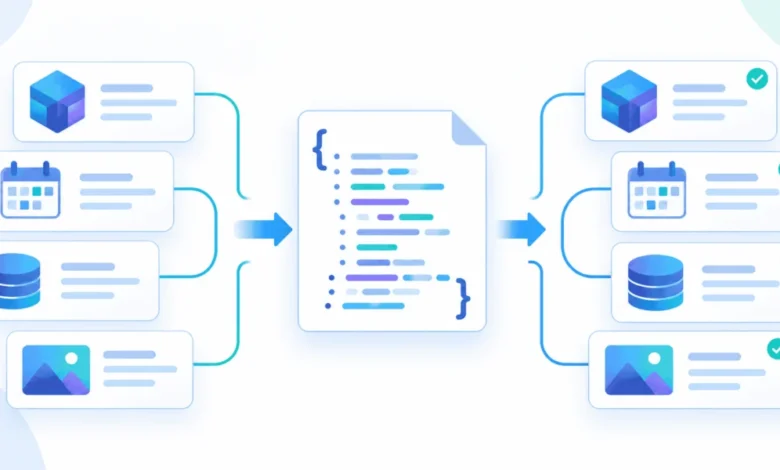
To resolve these failures, engineers must implement a custom encoder class that inherits from json.JSONEncoder. By overriding the default() method, developers can explicitly define how the serializer should handle unknown types. The logic is straightforward: for every object encountered that the standard json module cannot process, the default method checks the object’s type and converts it into a JSON-serializable dictionary format.
Crucially, to ensure data integrity during the decoding process, a marker such as __type__ is attached to these objects. For instance, when serializing a set, the encoder converts the set to a list and tags it with "__type__": "set". This metadata layer is the cornerstone of robust data exchange, ensuring that when the data is read back, the decoder knows exactly how to reconstruct the original Python structure.
The Role of the Decoder and Graceful Recovery
The inverse operation—reconstructing the data—relies on the object_hook parameter within json.loads(). This hook allows the developer to intercept every dictionary as it is parsed. If the dictionary contains the __type__ marker, the robust_decoder function triggers the appropriate constructor, such as datetime.fromisoformat() or pathlib.Path().
A critical aspect of this approach is error handling. In distributed systems, it is not uncommon for a JSON file to arrive in a malformed state—perhaps due to a failed file transfer or a legacy versioning mismatch. A robust pipeline must incorporate try-except blocks within the decoding function. If a specific type cannot be reconstructed, the pipeline should log the error and return the raw data rather than allowing the entire application to crash. This "graceful failure" approach is essential for maintaining uptime in high-frequency production environments.
Managing Schema Evolution and Versioning
Perhaps the most significant challenge in long-term machine learning projects is schema migration. Model configurations change frequently: hyperparameters are deprecated, new metrics are added, and paths are updated. A static loader that expects a rigid structure will inevitably fail when it encounters a configuration file created by an older version of the codebase.
To mitigate this, the industry has adopted factory-pattern loading functions. These functions perform two roles: they parse the JSON using the custom decoder and subsequently validate the output against a "schema template." By using dictionary .get() methods, developers can provide default values for missing keys, ensuring that even if a legacy configuration file is missing a new hyperparameter like learning_rate, the application can still instantiate the model with a sensible, pre-defined default.
Broader Implications and Best Practices
The implications of robust serialization extend far beyond simple file reading. In enterprise settings, these techniques serve as the foundation for:
- Model Reproducibility: By ensuring that complex metadata (like timestamp-linked datasets) is preserved exactly as it existed at the time of an experiment, organizations can reliably reproduce model results, a core pillar of AI governance and compliance.
- System Interoperability: While Python-centric, the
__type__metadata approach can be adapted to other languages, allowing for a shared understanding of data types between, for example, a Python preprocessing service and a Java-based model serving layer. - Pipeline Observability: By logging specific errors during the decoding process, engineers gain visibility into the health of their data pipelines, allowing them to identify patterns in malformed data before they cause downstream issues.
As machine learning continues to integrate deeper into core business processes, the "plumbing" of data becomes just as important as the model itself. The ability to serialize and deserialize data securely and predictably is a baseline requirement for any production-grade system. By moving away from brittle, manual parsing and toward a standardized, extensible framework, engineering teams can minimize technical debt, improve the reliability of their experiments, and focus their efforts on the higher-level challenges of algorithm development and optimization. The methods outlined here provide a scalable framework, allowing engineers to transition from reactive bug fixing to proactive system architecture.