The Trump Administration Intensifies Efforts to Challenge Midterm Election Processes Amidst Widespread Legal and Institutional Pushback

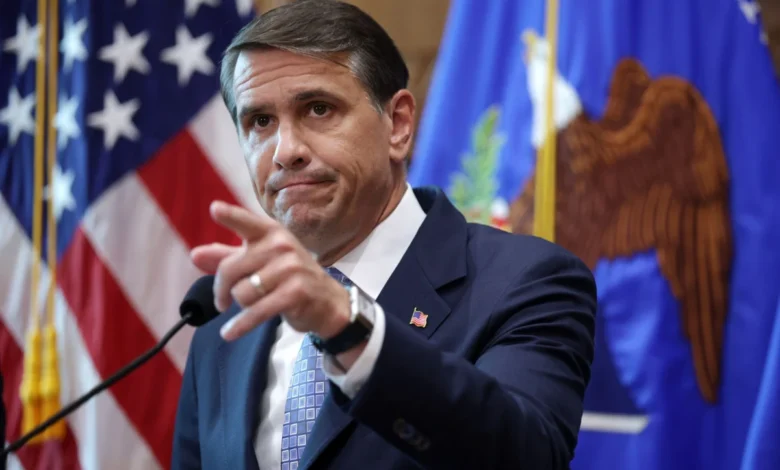
As the nation approaches the conclusion of the 2026 midterm election cycle, the Department of Justice (DOJ), under the leadership of Attorney General Todd Blanche, has engaged in an unprecedented series of legal and administrative maneuvers that critics and legal experts describe as a coordinated effort to undermine public confidence in the electoral process. These actions, which have spanned states from Alaska to California, have been characterized by demands for unredacted voter rolls, threats of criminal prosecution against local election officials, and allegations of mass noncitizen voting—claims that have consistently struggled to survive judicial scrutiny.
The current climate of tension is fueled by a narrative advanced by the administration that the electoral system is fundamentally insecure. This narrative relies heavily on the premise that noncitizens are influencing the outcome of federal elections, despite bipartisan evidence and numerous academic studies confirming that such incidents are statistically negligible. As the DOJ escalates its tactics, the response from federal courts, state officials, and election integrity experts has been one of rigorous defense of established state-led election protocols.
A Chronology of Escalating Federal Intervention
The DOJ’s strategy has unfolded over the past year through a multi-pronged approach that seeks to shift the locus of election oversight from state and local authorities to the federal government. This began with the issuance of executive orders aimed at federalizing aspects of election administration and evolved into aggressive litigation targeting the maintenance of voter registration databases.
In October 2026, the strategy reached a fever pitch. In California, the DOJ filed a federal lawsuit seeking a court order to sequester ballots associated with approximately 20,000 voters whom the department labeled as suspected noncitizens. The response from the federal judiciary was swift and emphatic. US District Judge David Carter rejected the request, noting that the federal government had never before attempted to coerce local jurisdictions into abandoning established constitutional election procedures on the eve of a national vote.
Concurrent with the California litigation, the DOJ directed its attention toward Alaska. In a move that observers described as highly unusual, the department filed a lawsuit to block the certification of election results in the state’s Senate race, citing the presence of a "spoiler" candidate with a name similar to the incumbent. Despite the Alaska Supreme Court ruling earlier in the summer that the candidate’s presence on the ballot was legally permissible, the DOJ persisted, eventually having the case dismissed by a federal judge who cited concerns over the protection of the secret ballot.
Data Discrepancies and Judicial Skepticism
Central to the DOJ’s public-facing argument has been the assertion that noncitizen voting is a widespread phenomenon. However, these claims have repeatedly collapsed under the weight of empirical analysis. In Nevada, for example, the Department of Homeland Security initially claimed that over 15,000 noncitizens were registered to vote. Upon closer inspection, that number was reduced to 185, and subsequent review by state officials concluded that those individuals were, in fact, citizens.
Similar patterns have emerged in Washington state, where the DOJ claimed that 400 noncitizens were registered to vote, labeling them the "tip of the iceberg." Secretary of State Steve Hobbs dismissed the claim, noting that the department failed to provide any individualized proof or documentation regarding the sources of their data. This lack of transparency has led many legal scholars to conclude that the DOJ’s primary goal is not the correction of voter rolls, but the cultivation of a narrative of systemic fraud.
The Brennan Center for Justice reports that 34 federal district courts have ruled against the Trump administration since 2025 regarding its attempts to access voter rolls or enforce executive orders that interfere with state-level administration. These repeated losses suggest that the administration’s legal strategy is either fundamentally misaligned with established statutes or is intended for political signaling rather than legal success.
Official Responses and the Stance of Local Authorities
The administration maintains that its actions are consistent with its responsibility to ensure the integrity of the federal franchise. A DOJ spokesperson stated that the department is "following the facts and the law, not anyone’s political timetable," and pointed to past litigation by previous administrations as a justification for its current focus on voter roll purges.
Conversely, state and local officials have expressed frustration with what they view as a campaign of intimidation. In Washington, Secretary of State Steve Hobbs criticized the timing of the DOJ’s outreach, noting that valid concerns about registration should have been raised months in advance, rather than in the final days of the election. In Alaska, the response from local officials has been equally sharp, with the campaign of candidate Mary Peltola characterizing the administration’s actions as an attempt to "steal this election" by creating administrative chaos.
Legal experts, such as Justin Levitt, a professor at Loyola Marymount University and former official in the DOJ’s Civil Rights Division, argue that the administration’s actions are largely performative. "What you’re seeing now is a ton of marketing," Levitt observed. "They are trying to communicate that they are in charge, but it is really important to remember that the federal government isn’t in charge of the election process. State and local officials are."
Broader Implications for Electoral Integrity
The implications of this standoff extend beyond the immediate results of the midterms. By challenging the legitimacy of local election management, the administration is effectively testing the resilience of the U.S. institutional framework. The strategy of "sowing doubt," as described by Shelby Wayment of UCLA Law’s Safeguarding Democracy Project, involves filing lawsuits with the expectation of losing, only to use the subsequent defeat as a platform to claim that the system itself is rigged or fraudulent.
This tactic risks creating a permanent state of distrust among segments of the electorate. When voters are told repeatedly that the machinery of their democracy is compromised—despite evidence to the contrary—it complicates the process of peaceful transition and undermines the authority of election results.
Furthermore, the introduction of fringe legal theories, such as those seen in Texas where local party officials demanded hand-counted ballots based on speculative fears regarding artificial intelligence and foreign-made machine components, highlights the extent to which misinformation has penetrated the legal system. As Levitt noted regarding the Texas filing, such arguments lack any basis in procedural law and serve only to highlight the desperation of those seeking to disrupt the certification process.
The Institutional Defense of the Ballot
Despite the intensity of the pressure, American election institutions have shown remarkable durability. The fact that federal judges, including those appointed by various administrations, have consistently upheld state election laws against federal overreach serves as a critical check on executive power.
David Becker, head of the Center for Election Innovation and Research, remains optimistic about the structural integrity of the vote. "They have failed at everything they’ve tried to do," Becker said. "Our systems have held firm. Our institutions have held firm."
As the midterm results are tabulated, the focus will shift from the courtroom back to the counting rooms. The resilience of the 2026 election cycle will ultimately be measured not by the success of legal challenges, but by the ability of local officials to carry out their duties despite unprecedented external pressure. The administrative burden placed on these officials—many of whom are now operating under the threat of federal subpoena or criminal investigation—represents a significant challenge to the traditional norms of American federalism.
In the coming weeks, as the legal dust settles, the judiciary will likely continue to play a central role in adjudicating disputes. However, the events of the last several months have solidified a clear divide: one side advocating for a centralized, federalized oversight of elections, and the other defending the decentralized, state-led model that has defined American democracy for over two centuries. Whether the current administration persists in these efforts after the midterms or shifts its strategy remains to be seen, but the precedent set by these months of litigation will undoubtedly influence the landscape of American election law for years to come.