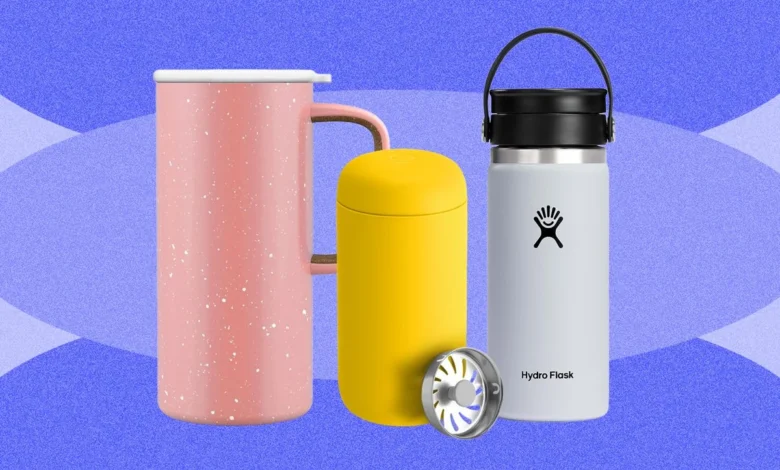
The modern morning routine is an intricate dance of efficiency, and for millions of commuters, the quality of their caffeine delivery system is a non-negotiable variable. As coffee culture has evolved from simple drip machines to artisanal home-brewing setups, the market for travel vessels has seen a parallel evolution. Today’s consumer is no longer satisfied with a generic, leaky plastic cup; they demand thermal integrity, spill-proof security, and a tactile experience that complements the ritual of their morning brew.
The global demand for high-performance drinkware has surged over the last decade, fueled by a rise in remote work, increased focus on sustainability, and the growing preference for high-quality specialty coffee. According to recent market analysis, the global travel mug market is projected to reach significant valuations by 2030, driven by innovations in vacuum insulation technology and a shift away from single-use plastics. As these products become more sophisticated, the criteria for "the best" have shifted from mere durability to a nuanced balance of ergonomics, temperature regulation, and material safety.
The Evolution of Thermal Technology and Material Science
The foundational technology underpinning modern travel mugs is double-wall vacuum insulation. By removing the air between two layers of stainless steel, manufacturers create a vacuum that effectively halts conductive heat transfer. This prevents the liquid inside from losing heat to the ambient air. While the technology has been around for decades, recent advancements have focused on the lid architecture and internal coatings.

The industry has moved toward ceramic or high-grade stainless steel linings to solve the perennial problem of metallic aftertaste. Many older models relied on plastic interiors that would absorb the oils and acids of previous brews, resulting in a "stale" flavor profile over time. The shift toward ceramic-lined interiors, as seen in products like the Fellow Carter Move Mug, represents a major milestone in consumer-facing innovation, prioritizing the integrity of the beverage’s flavor profile as much as its temperature.
A Chronology of Industry Standards
The travel mug industry underwent a significant shift in late 2023 and throughout 2024, when consumer advocacy groups and independent testing laboratories began scrutinizing the use of lead in the sealing process of popular vacuum-insulated products. Historically, some manufacturers utilized a lead-based solder to seal the vacuum hole at the base of the bottle. While the lead is typically covered by a steel cap and poses no risk under normal use, any structural damage that exposes the base could potentially lead to contamination.
This disclosure sparked a wave of transparency across the industry. Major brands, including those frequently cited in consumer reviews, were forced to clarify their manufacturing processes. As of November 2026, the industry standard has largely shifted toward lead-free solder, with top-tier manufacturers proactively advertising their use of alternative sealing methods. This shift marks a turning point in the industry, where safety and supply chain transparency are now treated with the same urgency as thermal performance.
Comparative Analysis of Top-Rated Vessels
Selecting a travel mug today requires an assessment of how the product aligns with specific lifestyle requirements. Our analysis of current market offerings reveals four distinct categories of excellence.

The Hydro Flask Coffee with Flex Sip Lid remains the industry benchmark for durability. Its powder-coated exterior is designed to withstand the rigors of a daily commute, and its wide-mouth design allows for seamless cleaning. From a design standpoint, the interchangeability of lids—allowing users to switch from a coffee-sipping lid to a straw lid for cold beverages—provides a level of versatility that many competitors lack.
For those prioritizing absolute leakproof security, the BrüMate Strova has emerged as a leader. Utilizing a proprietary "BevLock" lid system, this mug addresses the primary failure point of most travel vessels: the gasket. Through stress testing, it has been demonstrated that this locking mechanism can withstand significant agitation, making it a reliable choice for commuters who carry their mugs inside bags alongside sensitive electronics. However, this security comes with a trade-off in the drinking experience; the narrow, fixed-aperture design requires a more deliberate tilting motion, which some users find less intuitive than standard designs.
Value-conscious consumers have gravitated toward the Owala SmoothSip Slider. By leveraging the design language of the popular FreeSip series, Owala has successfully created a product that offers triple-layer insulation at a lower price point. Its strength lies in its modularity and the availability of vibrant, limited-edition colorways, which have helped the brand cultivate a strong following among younger demographics.
Finally, the luxury segment is dominated by the Ember Tumbler 2. Representing the intersection of technology and beverage consumption, this device allows users to set a specific, consistent temperature for their coffee. While the battery life is generally rated for three hours, in real-world conditions, users often find the need to return to the charging coaster during longer shifts. It is an ideal solution for the high-end office environment or for users who suffer from "tepid coffee fatigue."

The Importance of Maintenance and Sanitation
One of the most overlooked aspects of the travel mug industry is the ease of cleaning. A mug that is difficult to disassemble will inevitably harbor bacteria and old coffee oils. Our testing shows that models with complex lid assemblies—such as the Zojirushi Stainless Steel Mug—can become problematic. While the Zojirushi offers market-leading heat retention, the lid contains multiple gaskets and narrow crevices that require manual scrubbing, which may deter users from maintaining a sanitary vessel.
Conversely, the move toward dishwasher-safe components has become a primary selling point for the current generation of mugs. Brands that have successfully redesigned their lids to be top-rack dishwasher safe, like the Fellow Carter line, are seeing higher retention rates among consumers who prioritize convenience.
The Impact of Design on User Behavior
The ergonomics of a mug directly impact its utility. A mug that does not fit into a standard automotive cupholder, like the Ello Campy, is inherently limited in its use for commuters. While the aesthetic appeal of the "camp style" design is high, the lack of compatibility with standard vehicle infrastructure means it occupies a niche role, serving better as a desk-side companion than a true travel vessel.
Furthermore, the drinking interface—how the liquid meets the lips—is often the final deciding factor. Users tend to prefer curved, ergonomic rims that simulate the feeling of drinking from a standard ceramic mug. Products that prioritize this sensory experience, while maintaining the thermal efficiency of a vacuum-sealed canister, represent the current pinnacle of product design.

Future Implications and Market Outlook
As we look toward the remainder of the decade, the travel mug industry is poised to continue its trend of integration. We expect to see more smart-sensing capabilities, better integration with existing kitchen ecosystems, and further refinements in sustainable material sourcing. The transition away from plastics toward fully recyclable or compostable components will likely be the next frontier of competition.
For the consumer, the takeaway is clear: the era of the disposable, lukewarm coffee experience is ending. The modern market offers a specialized tool for every type of drinker, whether they are navigating the urban commute, working from a home office, or seeking the perfect companion for outdoor adventure. By evaluating heat retention, leak protection, and ease of cleaning, consumers can ensure that their morning coffee remains as satisfying at 10:00 AM as it was when it was poured at 7:00 AM.
The current landscape of travel mugs is more robust and diverse than ever before. While price points vary significantly, the correlation between quality and performance has never been tighter. Whether opting for a high-tech temperature-controlled vessel or a rugged, bomb-proof stainless steel tumbler, the modern drinker is well-positioned to find a product that not only meets their immediate needs but stands the test of time and daily use.