The Evolving Landscape of WordPress Commenting Systems and the Shift Toward Community Ownership

The digital publishing industry has reached a critical inflection point regarding how websites manage reader interaction. As the web has matured, the once-ubiquitous "comment section" has transformed from a simple feature into a complex, data-heavy component that requires careful strategic management. Modern site administrators are no longer merely looking for a way to capture text input; they are evaluating platforms based on performance metrics, data sovereignty, and the mitigation of automated spam—a challenge that has escalated in complexity alongside the rise of generative AI and bot-driven traffic.
The history of third-party commenting platforms is one of rapid consolidation and eventual decline. In the early 2010s, the market was dominated by high-profile solutions such as Livefyre and IntenseDebate, which promised to bring social media-style engagement to static blogs. However, the business models supporting these platforms often proved unsustainable. Livefyre was eventually acquired by Adobe and repurposed into a marketing tool, while others fell into obscurity or were shuttered as social media platforms like Facebook pulled their external comment plugins. This shift forced many publishers to reconsider their reliance on third-party "rented" infrastructure, leading to a resurgence in interest for self-hosted or hybrid solutions that prioritize the site owner’s control over their own database.

The Technical Debt of Legacy Commenting
The primary concern for modern web developers is the impact of third-party scripts on Core Web Vitals, the performance metrics now prioritized by search engines. Commenting systems that load external JavaScript files across every page can significantly increase the "Total Blocking Time" and "Largest Contentful Paint" of a website. When a comment section is poorly optimized, it acts as a silent tax on the site’s SEO ranking.
Moreover, the influx of spam has reached unprecedented levels. Modern automated scripts no longer simply post links to malicious sites; they are increasingly used for "SEO spam," where bots inject high-ranking keywords into comment threads to manipulate search results. For a site owner, this necessitates a move away from passive filtering—which occurs after the comment reaches the server—toward active, preventative measures that block automated submissions at the entry point.
Comparative Analysis of Current Market Leaders
As of late 2024, the ecosystem has stabilized around four distinct archetypes of comment management. Each represents a different philosophy regarding how a publisher should handle user data and server load.

GraphComment and the Hybrid Model
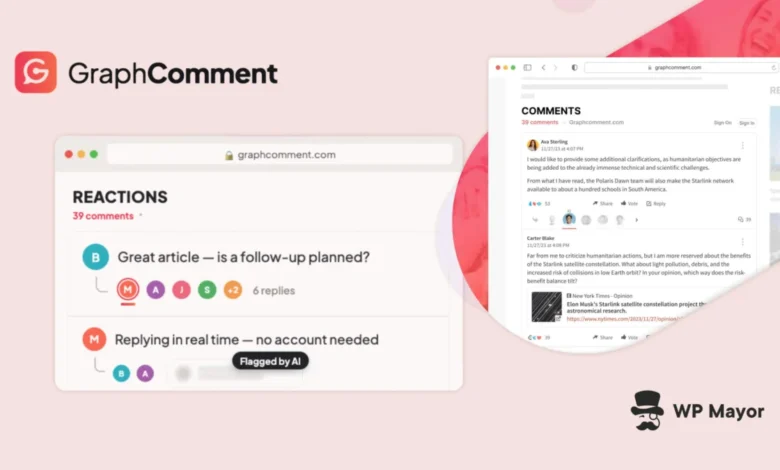
GraphComment has emerged as a preferred solution for publishers seeking a balance between a robust, cloud-enhanced feature set and native database ownership. Its primary technical advantage is its ability to synchronize content back to the WordPress database, ensuring that if the service were to discontinue, the publisher would retain the full archive of reader engagement. By closing the native WordPress comment endpoint to external traffic, it forces bots to interact with an environment that does not accept unauthorized submissions, effectively neutralizing the spam burden at the source.
wpDiscuz: The Self-Hosted Standard
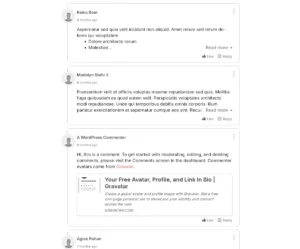
For organizations prioritizing data privacy and complete server control, wpDiscuz remains the industry benchmark. By utilizing the existing WordPress infrastructure rather than external servers, it avoids the latency issues associated with third-party calls. Its "inline" commenting capability—allowing users to attach feedback to specific paragraphs—represents a paradigm shift from the traditional "bottom of the page" format. This feature is particularly valuable for educational platforms, technical documentation sites, and long-form journalism, where context-specific discussion is more conducive to community growth.
The Legacy of Disqus
Disqus continues to command a significant market share, particularly among large-scale publishers. Its strength lies in its network effect: users with existing Disqus accounts can comment on any participating site without creating new credentials. However, the platform has faced criticism from developers regarding its ad-supported model. On the free tier, Disqus injects advertisements directly into the comment stream, which can diminish the professional quality of a site’s design. While these can be removed via a paid subscription, the recurring costs have prompted many smaller publishers to migrate toward more cost-effective or open-source alternatives.

Jetpack and the Simplification Trend
Jetpack, maintained by Automattic, serves the segment of the market that prioritizes ease of use and ecosystem integration. It does not attempt to be a high-performance community engine but rather a streamlined replacement for the standard, dated WordPress form. It is the ideal solution for personal blogs or small business sites where simplicity is paramount. Because it functions as a module within the larger Jetpack suite, it requires no complex configuration, though it lacks the advanced moderation tools, AI-driven sentiment analysis, and sophisticated threading found in more specialized platforms.
Data Privacy and the Regulatory Environment
The shift in how comments are handled is also driven by global data privacy regulations, such as the General Data Protection Regulation (GDPR) in the European Union and the California Consumer Privacy Act (CCPA). When a third-party service hosts comments, the site owner essentially becomes a party to a data-sharing agreement with that service. Publishers are now held accountable for how user data—including email addresses, IP addresses, and behavioral tracking cookies—is processed by their comment provider.
Self-hosted or hybrid solutions that keep data within the primary site database allow administrators to maintain a clearer chain of custody for user information. This is a significant factor for enterprise-level clients who must demonstrate compliance with strict privacy policies.

Future Implications for Digital Community Building
The future of web comments lies in the integration of AI-assisted moderation. The sheer volume of content generated in active communities often exceeds the capacity of human moderators. Tools that can analyze the context, sentiment, and intent of a comment before it is published are becoming standard requirements rather than luxuries.
Furthermore, as search engines like Google continue to improve their ability to index content within comment sections, these areas of a website are being re-evaluated as valuable SEO assets. A well-moderated, high-quality discussion section can add thousands of words of relevant content to a page, potentially improving its authority. Conversely, a section littered with low-quality, automated spam acts as a significant deterrent to both users and search crawlers.
Strategic Selection Criteria
For site owners, the decision-making process should be dictated by three key questions:

- Who owns the data? If the comments do not exist in your local database, you are effectively renting your audience from a third party.
- What is the performance cost? Does the platform load heavy third-party assets that degrade user experience?
- Is the moderation automated? Does the system possess the intelligence to stop spam before it hits your server, or are you still relying on manual deletion?
Ultimately, the goal of any commenting platform should be to foster a space where users feel encouraged to contribute, while simultaneously protecting the site from the erosion of quality caused by automated abuse. As technology evolves, the platforms that succeed will be those that provide these tools without sacrificing the site owner’s independence or the reader’s privacy. The era of the "unmanaged comment section" has effectively come to an end, replaced by a more deliberate, architecturally sound approach to digital discourse.