TikTok USDS Unveils Must Eat Restaurant Guide to Capitalize on In-App Food Discovery and Local Commerce

TikTok USDS has officially launched “Must Eat,” a dedicated in-app restaurant guide designed to curate community-sourced dining spots across various regions in the United States. This strategic rollout bridges the gap between digital content consumption and real-world commerce, transforming passive video viewing into actionable dining decisions. By providing an integrated, searchable directory of neighborhood eateries, casual spots, and upscale dining establishments, TikTok is cementing its position as a powerful engine for local economic activity and fundamentally altering how consumers discover food.
The Mechanics of the Must Eat Feature
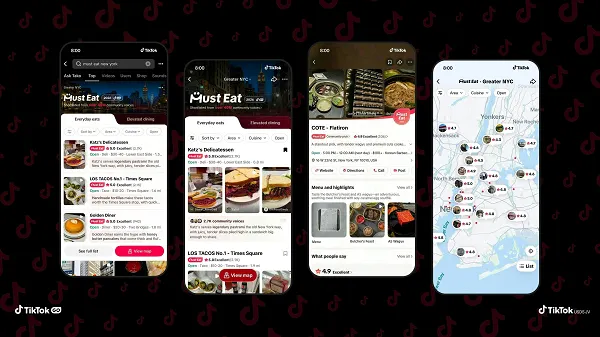
The Must Eat guide functions as a robust, localized search engine embedded directly within the TikTok application. Users can browse dining options by specific cities, filtering selections according to cuisine type, price point, user ratings, and precise geographic locations.
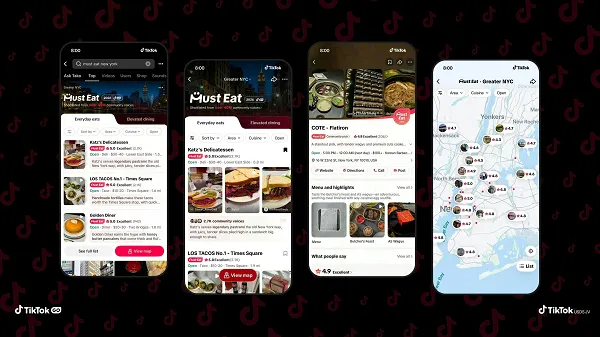
When a user selects a particular restaurant, they are directed to a comprehensive dedicated page. These pages provide essential neighborhood details, price ranges, and—crucially—the viral TikTok video content that originally brought the establishment to public attention. This integration ensures that the recommendation is backed by visual proof and authentic community endorsement rather than traditional, static advertising.
Furthermore, the platform has streamlined the user journey from discovery to reservation. Through an integrated partnership with OpenTable, select restaurants featured within the Must Eat guide allow users to book tables directly inside the TikTok application without needing to switch platforms. For those who want to curate their dining itineraries over time, TikTok has incorporated a bookmarking feature. Diners can save discovered restaurants straight to their existing TikTok collections, allowing them to build custom, personalized Must Eat lists as they scroll through their feeds.
The Evolution of Local Discovery on TikTok
The launch of the Must Eat guide does not happen in a vacuum; it represents the latest evolution in TikTok’s systemic push into local discovery and hyper-targeted geographic content.

In February, TikTok rolled out its dedicated “Local Feed” in the United States. This feature was designed to surface content posted within a user’s immediate geographic vicinity, heavily emphasizing travel, local events, retail shopping, and restaurants. While the Local Feed provides a broad stream of community happenings, the Must Eat guide refines this concept into a structured, searchable utility. It takes the organic, algorithmic magic of localized video content and organizes it into a functional directory that rivals established map and review applications.
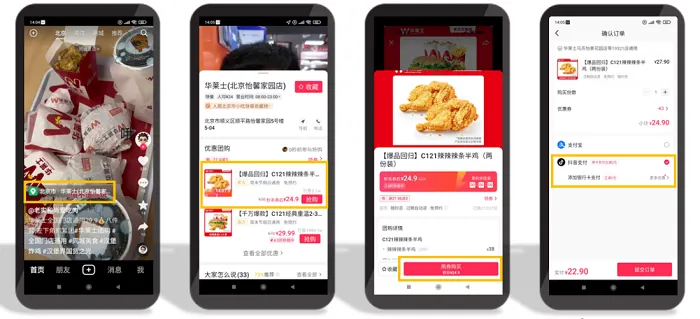
This domestic expansion mirrors the trajectory of Douyin, TikTok’s Chinese sister application, which is operated by ByteDance. In 2023, Douyin introduced a popular dining table list to challenge established local services giants in the Asian market. Since then, Douyin has successfully expanded its ecosystem to include native food ordering and direct in-app delivery services as part of a broader push into social commerce. Industry analysts view the U.S. release of Must Eat as a foundational step that could eventually enable TikTok to replicate these advanced local commerce and delivery frameworks globally.
Economic Impact and the Power of Social Influence
TikTok’s pivot toward localized food guides is firmly rooted in hard economic data regarding how consumers make purchasing decisions. According to recent internal estimates and economic impact studies published by the platform, TikTok has become a primary driver of foot traffic for small, independent businesses.
Last year alone, TikTok estimated that approximately 27 million Americans visited an independent restaurant, cafe, or retail shop for the very first time after discovering the establishment through content on the platform. The platform calculates that this digital-to-physical conversion generated an estimated $4.7 billion in localized spending across the United States.
These figures underscore a profound shift in consumer behavior. Traditional search engines and review sites are increasingly being bypassed by younger demographics in favor of video-first platforms. Users prefer the transparent, dynamic, and peer-to-peer nature of TikTok videos over text-heavy reviews that can be manipulated or feel impersonal. By formalizing this discovery loop into the Must Eat guide, TikTok is capturing the immense value of this organic foot traffic and retaining user engagement within its own walled garden.
Industry Implications and Future Outlook
The introduction of the Must Eat guide carries significant implications for the hospitality industry, local marketing agencies, and competing technology platforms. For restaurateurs—particularly independent and family-owned establishments that lack massive corporate marketing budgets—the feature offers an unprecedented, highly targeted avenue to reach local consumers. A single viral video can now be permanently indexed within a localized directory, driving sustained traffic long after the initial trend cycle fades.

For competitors such as Yelp, Google Maps, and TripAdvisor, the feature introduces a formidable challenger. While these legacy platforms rely primarily on text reviews and star ratings, TikTok merges visual storytelling, social connectivity, and direct booking into a single continuous experience. The integration of OpenTable booking capabilities further signals TikTok’s ambition to control the entire consumer funnel, from initial inspiration to the final transaction.
Looking ahead, experts anticipate that TikTok will continue to expand its suite of localized commerce tools. As the infrastructure of the Must Eat guide matures, the potential integration of native food delivery and promotional coupons—similar to the ecosystem established by Douyin in China—remains a logical next step. For now, the Must Eat guide stands as a testament to the platform’s evolution from a pure entertainment channel into an indispensable utility for everyday local life.