Bridging the Tech-Human Divide: How Priscilla Collado Ramirez is Transforming WordPress Education through Wellness and Mindfulness

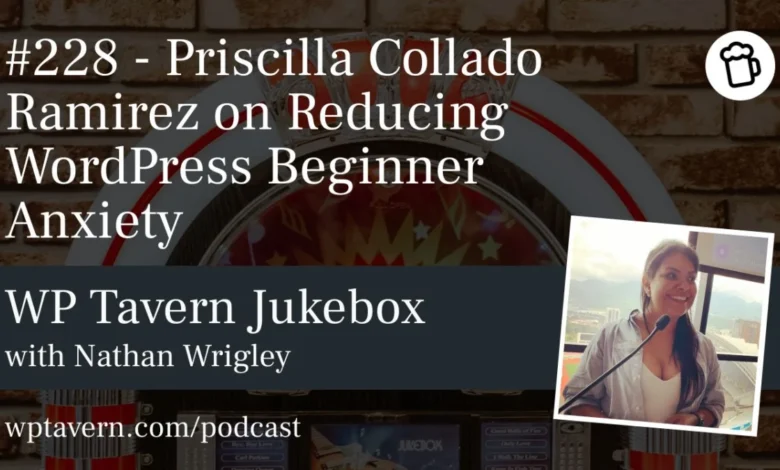
The landscape of web development, particularly within the open-source ecosystem of WordPress, has historically been defined by technical documentation, code repositories, and developer-centric forums. However, a growing movement within the community is shifting the focus from the machine to the human user. At this year’s WordCamp Europe, one speaker traveled over 14 hours from Costa Rica to challenge the industry’s status quo. Priscilla Collado Ramirez, a fashion designer, educator, and wellness coach, presented a compelling case for why WordPress education must evolve from a purely technical endeavor into a holistic, human-centered experience. Her insights highlight a critical shift: the most significant barrier to entry for new users is not the complexity of the software, but the psychological and emotional anxiety surrounding information overload and the fear of failure.
The Evolution of WordPress Accessibility and the Beginner’s Dilemma
WordPress, which powers over 43% of the world’s websites, has seen its user interface evolve significantly over the last two decades. From its origins as a simple blogging tool to its current iteration as a complex content management system (CMS) capable of powering enterprise-level applications, the software has grown in power but also in perceived complexity. For a beginner, a fresh installation of WordPress presents a blank canvas that can be paralyzing. The "it depends" culture—where seasoned developers often provide nuanced, multi-layered advice that can leave a novice confused—frequently leads to a phenomenon known as decision paralysis.
Collado Ramirez’s personal journey reflects this reality. Seventeen years ago, as a university student, she abandoned WordPress, citing an overwhelming sense of inadequacy brought on by a lack of guidance and a technical environment that felt unwelcoming to non-engineers. Her return to the platform was catalyzed not by a desire for technical mastery, but by the necessity of helping her own fashion students navigate the expensive and often opaque world of professional web design. This transition from student to educator provided her with a unique lens through which to view the WordPress ecosystem: the need for a "pedagogy of the beginner."
The Science of Learning: Linear vs. Spiral Paths
In her educational practice, Collado Ramirez identifies two primary learning modalities: linear and spiral. Linear learners thrive on a traditional, step-by-step approach—A leads to B, which leads to C. However, she argues that a significant portion of the creative and entrepreneurial demographic functions through a "spiral" learning process. These individuals may need to revisit topics, experiment, and integrate information in non-sequential ways. When educational materials fail to accommodate these different cognitive styles, learners often misidentify their struggle as a personal lack of intelligence, leading to high attrition rates.
Supporting data from recent educational studies in tech fields suggests that learners who are introduced to new software through "just-in-time" learning—where they learn only what is necessary for the immediate task—experience significantly lower stress levels than those who are provided with comprehensive, front-loaded documentation. By breaking down the WordPress experience into manageable components, such as installing a single plugin or creating one page, mentors can facilitate small, consistent "wins." These incremental successes are essential for building the confidence required to tackle more complex architectural challenges.
The Role of Holistic Wellness in Technical Education
Perhaps the most unconventional aspect of Collado Ramirez’s approach is the integration of pranayama (the art of breathing) and mindfulness into the technical classroom. While traditionally separated, the intersection of wellness and technology is gaining traction. Research in cognitive load theory has long established that high levels of stress—often experienced by those who fear they might "break" their website—significantly inhibit the prefrontal cortex’s ability to process new information.
By introducing breathing exercises to regulate the nervous system before technical instruction begins, educators can move students from a state of "fight-or-flight" anxiety to a state of "rest-and-digest" receptivity. This creates a psychological safety net, allowing users to view errors not as personal failures or catastrophic events, but as essential components of the experimental learning process. The implication for the WordPress community is clear: if mentors can normalize confusion and prioritize the student’s emotional state, they can significantly increase the retention of new users.
Chronology of Community Growth and Representation
The WordPress community, particularly in Latin America, has seen exponential growth in recent years. Costa Rica, as noted by local practitioners, has developed one of the most robust and active WordPress communities in the region. This growth is not merely numerical but cultural; it reflects a conscious effort to move away from a male-dominated, "square" technical culture toward one that embraces diverse perspectives, including those of designers, wellness practitioners, and educators.
The 2023 shift in speaker representation, with a marked increase in women and diverse professionals sharing their expertise on international stages like WordCamp Europe, marks a turning point. For many years, the "hacker" ethos dominated, which often prioritized efficiency over accessibility. Today, the dialogue has expanded to include the "mentorship of mentors"—an effort to train technical experts in the art of pedagogy. This shift acknowledges that being a subject matter expert is not synonymous with being an effective teacher.
Implications for the Future of Open Source
The broader impact of this human-centric approach is significant. As WordPress competes with proprietary "drag-and-drop" website builders that offer a highly controlled, albeit limited, experience, the WordPress community must leverage its greatest asset: the human connection. If the ecosystem can successfully implement a more empathetic, guided onboarding process, it could see a surge in adoption among non-technical entrepreneurs who are currently deterred by the initial barrier to entry.
Industry experts observe that the "it depends" advice, while technically accurate, is functionally detrimental to growth. A more structured, mentor-led path—one that acknowledges individual learning styles and provides emotional support—could standardize the "beginner journey." This does not require the software itself to change, but rather the community’s delivery of knowledge.
Looking ahead, there is potential for a new category of "wellness-integrated" educational plugins or tools that could guide users through setup while offering reminders to pause, breathe, and reflect. Such tools would embody the philosophy that the user’s well-being is as critical to the health of the project as the code itself.
Final Analysis: Moving Toward a Sustainable Ecosystem
The challenge remains in scaling this approach. While individual mentors like Collado Ramirez can achieve success on a classroom level, the WordPress community at large must decide if it is ready to embrace a more "hippie" or holistic ethos as a legitimate pedagogical tool. The resistance, often rooted in the traditional view that technical learning is purely logical and scientific, is gradually waning as more community leaders recognize that emotional intelligence is a force multiplier for technical proficiency.
By viewing the WordPress user not as a machine operator but as a creative, nervous, and potentially overwhelmed human being, the community can ensure its long-term viability. The message from this year’s WordCamp Europe is unambiguous: the future of WordPress is not just about the code, but about the people behind the keyboards. When we calm the mind, we clear the path for innovation. As the community continues to grow, it will be the integration of these "soft" skills—patience, empathy, and mindfulness—that will ultimately determine how accessible, and how successful, the open-source web will be for the next generation of creators.
Related posts: