Building Trust with Project Contracts for Reliable AI Development in the WordPress Ecosystem


The rapid integration of Artificial Intelligence (AI) into web development has fundamentally altered the workflow for engineers and hobbyists alike. As Large Language Models (LLMs) like Claude become more proficient at writing complex code, the industry faces a critical turning point: balancing the speed and democratization of AI-assisted coding with the necessity for security, accessibility, and architectural integrity. Chris Reynolds, a senior manager of developer relations at Pantheon, recently presented a framework for addressing these challenges at WordCamp US, focusing on the implementation of "project contracts" to ensure AI-generated output remains within strict professional boundaries.
The Rise of Non-Deterministic Development
For two decades, the ethos of web development has been rooted in deterministic processes—if a developer writes a specific function, the system executes that function in a predictable, repeatable manner. However, the emergence of generative AI has introduced non-deterministic elements into the software development lifecycle (SDLC). Unlike traditional code, where inputs lead to binary outcomes, AI models seek the most probable path to a solution, often bypassing established best practices in favor of speed.
This shift has created a dual reality for the development community. On one hand, barriers to entry have been dismantled; individuals without formal computer science backgrounds—often referred to as "vibe coders"—can now prototype complex applications in hours rather than weeks. On the other hand, this ease of use risks the introduction of "hidden chaos," including security vulnerabilities, inefficient code, and the accidental inclusion of sensitive credentials (secrets) within codebases.
Defining the Project Contract Framework
To mitigate the risks associated with AI-driven development, Reynolds proposes the adoption of a "project contract"—a set of structured, automated guardrails embedded directly into the developer workflow. This system treats the AI as an unconstrained participant that requires active supervision.
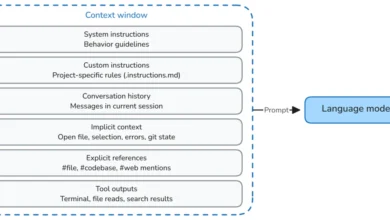
The core of the project contract resides in the repository’s documentation and configuration files, such as Claude.md and agents.md. These files serve as a definitive set of instructions for the AI model, outlining required coding standards, testing requirements, and design specifications. By codifying these rules, developers can ensure that the AI understands the project’s constraints before it begins writing code.
The framework further utilizes agent orchestration. In this setup, a primary agent generates code, while a secondary "reviewer agent" is automatically spawned to verify the work. This reviewer agent checks the output against a comprehensive, multi-point checklist that includes:
- Automated Testing: Ensuring that all code passes predefined unit and integration tests.
- Accessibility Compliance: Verifying that new components meet current web accessibility standards.
- Security Audits: Scanning for the accidental inclusion of API keys or sensitive environment variables.
- Design Consistency: Ensuring that any new UI components align with the project’s established design system, often verified through tools like Storybook.
The Role of Forcing Functions
A critical component of the project contract is the implementation of "forcing functions"—automated gates that prevent code from being committed to the repository unless it has been vetted. For instance, if an AI attempts to push code that has not been approved by the reviewer agent, a pre-commit hook will intercept the process and reject the commit.
This approach acknowledges the "unruly" nature of current AI models, which often prioritize the completion of a prompt over the quality of the implementation. By requiring the AI to write tests before it writes the functional code—an adaptation of Test-Driven Development (TDD)—the framework forces the model to define the success criteria of a feature before executing it. This practice reduces the likelihood of regressions and ensures that the final product adheres to the project’s structural requirements.
Chronology of AI Adoption in Web Development
The evolution of these tools has occurred at an unprecedented pace:
- 2021-2022: Early language models were primarily used for text generation, with limited and often inaccurate coding capabilities. The industry viewed these as experimental curiosities.
- Late 2023: Significant upgrades to models like Claude and GPT-4 demonstrated a marked improvement in logical reasoning and syntax generation, moving AI from a "text-only" tool to a functional coding assistant.
- 2024-2025: Increased adoption of AI agents in development environments led to the emergence of "agentic" workflows, where AI began to manage file systems and interact with local development tools directly.
- 2026 (Present): The focus has shifted from simple code generation to "governance and trust." Developers are now prioritizing the creation of guardrails and automated review systems to integrate AI safely into enterprise-level projects.
Industry Implications and the Senior Developer Gap
The transition to AI-assisted development raises significant questions regarding the future of the profession. One primary concern is the potential erosion of the "junior" experience. Traditionally, junior developers cut their teeth on mundane, repetitive tasks that provided the foundation for their future expertise. If AI handles these tasks entirely, the industry must re-evaluate how it develops the next generation of senior engineers.
"If we tell everyone that their job is to be a senior engineer reviewing the work of an AI, we must ask how senior engineers will actually be created," notes the industry consensus. This suggests that the role of the developer is shifting from a "writer" of code to an "architect and auditor" of AI-generated systems.
Furthermore, the environmental and economic cost of these advancements remains a subject of intense debate. While the industry continues to invest heavily in data centers and compute power, the long-term return on investment—and the actual necessity of such massive infrastructure for routine development—remains to be seen.
Broader Philosophical Ramifications
Beyond the technical implementation, the rise of AI in coding forces a re-examination of human cognitive load. As developers delegate more of their creative and analytical processes to machines, there is a risk of losing the deep, tacit knowledge required to understand how a system works from the ground up.
Despite these concerns, the immediate benefits of AI-assisted development—including increased productivity and the democratization of software creation—ensure that these tools are here to stay. The challenge for the next several years will be to establish a sustainable balance between utilizing these models for their speed and maintaining the rigorous standards of reliability, security, and human oversight that the web requires.
By shifting the conversation from "whether" to use AI to "how" to govern it, practitioners like Reynolds are attempting to chart a path forward. The project contract serves as a blueprint for this transition, offering a way for developers to maintain control over their work in an era where the underlying technology is increasingly non-deterministic and, at times, difficult to fully comprehend. Whether this framework will become the standard for all development remains to be seen, but it represents a necessary step in maturing the relationship between human engineers and the machines they now direct.