Trump Proposes New US AI Force and Special Czar While Defense Department Faces Scrutiny Over Automation Mishaps

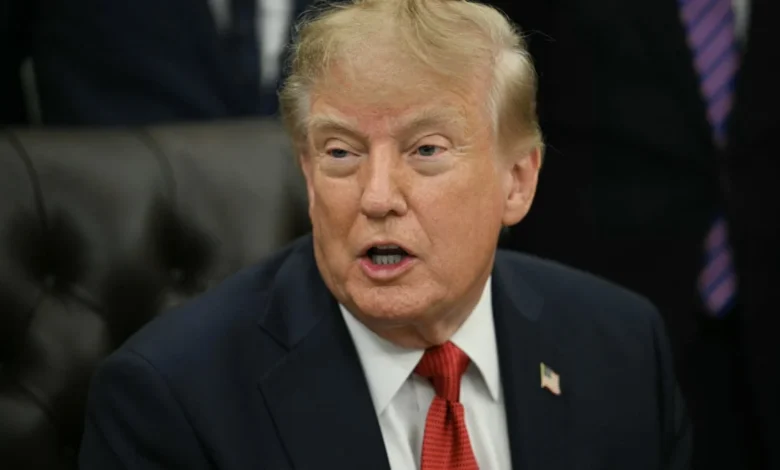
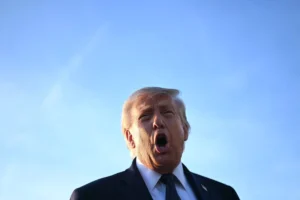
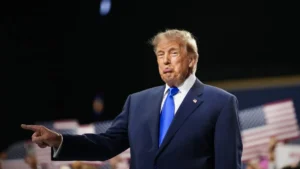
President Donald Trump announced on Saturday the formation of a "US AI Force," explicitly modeled after the Space Force branch established during his first presidential term. In a detailed statement published on Truth Social, the president outlined his vision for centralizing artificial intelligence oversight under a new federal executive, whom he intends to name as an AI "czar." The announcement arrives at a critical intersection of national security, rapid technological expansion, and mounting scrutiny over the integration of generative intelligence within military operations.
The proposal comes on the heels of several high-profile setbacks involving the Pentagon’s utilization of automated systems. As lawmakers, industry leaders, and defense officials grapple with the swift advancement of machine learning models, the introduction of a specialized federal branch and administrative leadership position signals a significant shift in how the United States government intends to govern, protect, and harness artificial intelligence moving forward.
The Genesis of the US AI Force and Administrative Overhaul
According to the president’s social media announcement, the newly proposed "AI Force" is designed to champion domestic technological innovation while providing structured federal oversight. Dismissing widespread anxiety surrounding existential AI risks as the latest iteration of manufactured political "hoaxes," Trump asserted that his administration would foster growth rather than stifle it.
"We will not in any way hinder or stifle the Growth of this incredible Industry," Trump wrote, promising that the federal government would instead "cherish it, help it, and watch over it, as it grows." Furthermore, the administration plans to deploy the existing legal system to target "BAD" actors operating within the sector who engage in malicious or illicit practices.
In tandem with the formation of the AI Force, Trump announced plans to appoint a new high-level AI czar. Setting stringent criteria for applicants, he noted that only "High I.Q. individuals" should apply for the role. This executive position has remained vacant following the departure of venture capitalist David Sacks, who served as Trump’s AI and cryptocurrency czar until March. Following the conclusion of his term as a special government employee, Sacks transitioned into an advisory capacity within the White House, leaving a distinct leadership vacuum at the center of federal AI policy coordination.
In a characteristic rhetorical flourish, the president also suggested that the term "artificial intelligence" fails to capture the true magnitude of the technology, floating alternative monikers such as "supreme," "superior," or "extreme" intelligence, and opening an informal public poll to gauge public preference.
Parallels to Space Force: Structure and Centralization
The explicit comparison drawn between the proposed AI Force and the United States Space Force offers crucial insight into how the new branch might actually function. Established in December 2019 under the National Defense Authorization Act, the Space Force was frequently misunderstood by the public as a combat-oriented branch akin to science fiction depictions of space warfare. In practice, however, the Space Force operates primarily as a specialized service command focused on consolidating, protecting, and synchronizing critical infrastructure. Its daily responsibilities revolve around satellite operations, global positioning systems (GPS), missile warning architectures, and secure space-based communications that were previously fragmented across the Department of the Air Force, Army, and Navy.
If the newly proposed AI Force follows a similar organizational blueprint, it is unlikely to function as an independent tactical fighting force on the front lines. Instead, defense analysts suggest it would serve as an institutional umbrella designed to streamline and centralize the Department of Defense’s sprawling, often disjointed AI programs. For years, individual military branches have developed independent algorithms, logistical tools, and autonomous testing frameworks, leading to redundancies, interoperability challenges, and significant gaps in overarching cybersecurity and ethical governance. A centralized AI Force could theoretically establish unified standards, pool technical talent, and enforce strict oversight protocols across all defense-related machine learning initiatives.
Recent Military Mishaps and the Urgency of Oversight
The timing of Trump’s announcement is particularly striking given a series of alarming technological malfunctions within the Department of Defense that have recently come to light. The rapid deployment of algorithmic decision-making tools in active-duty environments has triggered urgent investigations by congressional committees and military inspectors general.
In February, a deadly strike that killed dozens of civilians at a girls’ school in Iran drew intense international condemnation and sparked internal Pentagon inquiries. Investigators have spent subsequent months examining whether an "overreliance on AI" targeting and assessment systems played a contributing role in the catastrophic miscalculation. Critics argue that rushing automated intelligence solutions into combat scenarios without adequate human verification creates unacceptable risks of civilian casualties and violations of international humanitarian law.
Compounding these concerns, CNN reported in September that an AI-generated intelligence report produced by a United States military analyst falsely claimed a Chinese cargo ship was actively transporting nuclear weapons components. According to the reporting, the fraudulent intelligence was treated with such high initial credibility that armed U.S. service members were actively preparing to board the foreign vessel on the high seas. The high-stakes operation was aborted at the eleventh hour only after reviewing officials discovered that the underlying intelligence report had been entirely fabricated by an unverified AI chatbot rather than corroborated human intelligence.
A source familiar with the incident described the false AI-generated claim to journalists as having "almost started a war" with a major nuclear-armed adversary. The near-miss incident laid bare the acute dangers of "hallucinations"—a well-documented phenomenon where large language models generate entirely false or misleading information with high linguistic confidence—when introduced into high-level defense decision-making loops.
Industry Reactions and Legal Implications
The commercial technology sector has responded to Trump’s announcement with a mixture of cautious optimism and regulatory apprehension. Silicon Valley leaders have long advocated for a federal framework that prevents a patchwork of conflicting state-level regulations, which many argue would disadvantage American firms against global competitors, particularly in China. By promising not to stifle industry growth while simultaneously deploying legal mechanisms against bad actors, the administration aims to strike a delicate balance between deregulation and national security enforcement.
However, legal scholars and civil liberties organizations have raised questions regarding how the proposed AI Force and its eventual leader will wield legal authority over private corporations. While traditional federal agencies like the Federal Trade Commission (FTC) and the Department of Justice (DOJ) handle consumer protection, antitrust, and corporate misconduct, the intersection of national security, military contracting, and proprietary AI models remains a largely uncharted legal frontier.
Furthermore, defining what constitutes a "BAD" actor in an industry defined by rapid iteration, open-source software development, and dual-use technologies presents monumental challenges. Critics worry that heavy-handed executive oversight could inadvertently chill open-source innovation or favor dominant technology conglomerates capable of navigating complex bureaucratic compliance structures over smaller startups and academic researchers.
Economic and Geopolitical Implications
The global race for artificial intelligence supremacy has become the defining technological rivalry of the twenty-first century. Both the United States and the People’s Republic of China have poured tens of billions of dollars into research, semiconductor manufacturing, energy infrastructure, and talent acquisition to secure a definitive edge in machine intelligence.
Proponents of the US AI Force argue that a centralized federal body is precisely what is required to mobilize national resources efficiently. By streamlining federal procurement, accelerating the integration of commercial innovations into military capabilities, and establishing clear lines of accountability, the United States hopes to maintain its competitive advantage. The appointment of an authoritative AI czar could also signal to international allies and adversaries alike that Washington is elevating artificial intelligence to the highest tier of national security priorities, matching the unified strategies deployed by centralized state competitors.
Conversely, skeptics warn that institutionalizing AI under military or quasi-military frameworks risks militarizing a technology whose primary economic value lies in healthcare, scientific research, education, and commercial productivity. The conflation of civilian innovation with defense-centric mandates could alienate top-tier international researchers and exacerbate global tensions regarding the militarization of code.
Looking Ahead: The Path to Implementation
As the White House prepares to formalize the executive orders necessary to establish the AI Force and conduct the search for a new AI czar, several critical hurdles remain on the horizon.
First, the administration will need to clarify the statutory authority and budgetary scope of the new branch. Unlike the Space Force, which was created through an act of Congress following years of bipartisan legislative debate, an executive-led "force" may face constitutional and budgetary constraints unless it secures formal congressional backing. Lawmakers on Capitol Hill from both sides of the aisle are expected to demand rigorous oversight hearings, particularly in light of the recent Pentagon intelligence failures.
Second, the newly appointed AI czar will face an immediate backlog of systemic challenges. Restoring confidence in military AI applications, auditing existing defense algorithms for accuracy and bias, establishing fail-safes against catastrophic hallucinations, and mending relationships with commercial tech giants who are wary of government overreach will require delicate diplomatic and technical leadership.
Ultimately, Trump’s proposal for a US AI Force marks a watershed moment in the intersection of government policy and emerging technology. Whether this initiative succeeds in fostering safe, world-leading innovation while safeguarding national security—or whether it introduces new bureaucratic layers to an already volatile technological landscape—will depend heavily on the competence of the leadership appointed to steer the effort and the rigor of the oversight applied in the months and years to come.
Related posts: