Building a Fully Local Zero Cost Agentic AI Workflow with Hermes Agent and Ollama

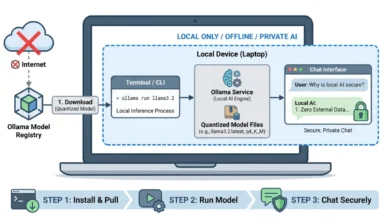
The rapid proliferation of generative artificial intelligence has brought significant advancements in productivity, yet it has simultaneously introduced a hidden financial and privacy tax for developers and power users. Engaging with sophisticated agentic workflows through mainstream cloud-based APIs often incurs substantial costs, with session expenses frequently climbing between $5 and $20 depending on the complexity of the task and the frequency of model interaction. Beyond the monetary expenditure, these workflows necessitate the transmission of sensitive data—including proprietary source code, personal documentation, and private conversations—to third-party servers. As of early 2026, the rise of open-source tools like Nous Research’s Hermes Agent and the model-serving platform Ollama has provided a viable, high-performance alternative that ensures all computational processes remain strictly on local hardware.
The Evolution of Local AI Infrastructure
The shift toward local-first AI is not merely a preference for privacy; it is a response to the inherent volatility of cloud computing costs and the latency issues associated with remote server requests. For years, the barrier to entry for running high-parameter models locally was prohibitively high, requiring specialized knowledge in Python environment management, complex Docker configurations, and manual model quantization.
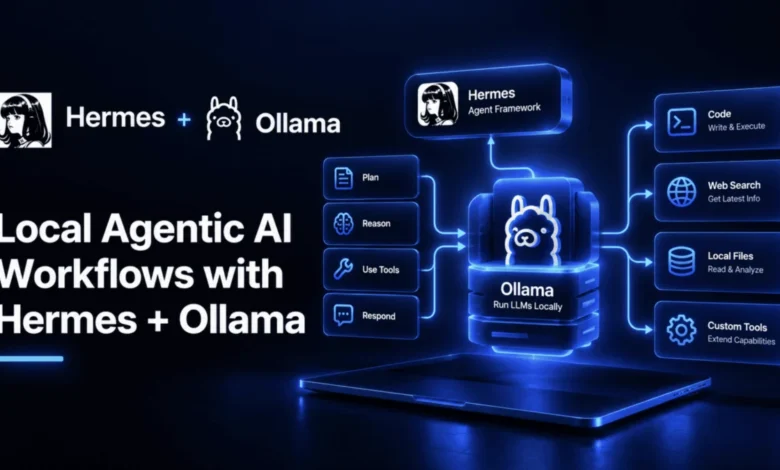
The landscape changed significantly with the maturation of Ollama, which simplified the process of pulling, running, and managing open-weight models. By exposing these models through an OpenAI-compatible API, Ollama bridged the gap between cutting-edge research models and standard development tools. This compatibility is the cornerstone of the modern local agentic workflow. When paired with Hermes Agent—an open-source framework designed to interact with the file system, execute shell commands, and navigate the web—developers can now deploy autonomous assistants that possess the same functional capabilities as cloud-based equivalents without the associated subscription fees or data exposure.
Technical Architecture and System Requirements
Constructing a robust, local agentic environment requires a careful balance between model size and available hardware resources. Unlike static chatbot interfaces, an agentic workflow demands constant reasoning, tool selection, and execution, which places a higher load on system memory and processing power.
The minimum hardware profile for an effective setup involves at least 8 GB of RAM and a 4-core processor, suitable for smaller 3B-parameter models. However, for a professional-grade experience that supports complex logic and accurate tool usage, 32 GB of RAM and an NVIDIA GPU with at least 8 GB of VRAM are recommended. The necessity of a dedicated GPU arises from the need for parallel processing of model layers, which significantly accelerates token generation. On a standard 8-core CPU, a 9B model typically yields 10 tokens per second; in contrast, a properly offloaded 31B model can maintain a fluid, interactive speed that feels instantaneous to the user.
The Role of Tool-Calling Capability
The critical distinction between a standard large language model (LLM) and an agentic AI lies in the "tool-calling" functionality. A model lacking this feature is restricted to conversational output, whereas a model with tool-calling capabilities can parse a user request, identify the necessary action, and interface with the host machine to execute that action.
In the context of the Hermes Agent workflow, the model acts as the brain, while the agent framework provides the hands. When a user requests a summary of a directory, the model evaluates the request, generates a ls or find command, and triggers the agent to execute it in the terminal. The output is then fed back into the model to formulate a natural language response. This iterative loop is what enables the assistant to perform tasks such as refactoring code, querying local databases, or automating system maintenance. As established by recent benchmarks, the 31B-parameter models in the Gemma series offer the most reliable performance for these agentic tasks, providing the reasoning depth required to avoid "hallucinated" commands or incorrect file operations.
Strategic Optimization for Local Performance
Efficiency in a local environment is achieved through three primary optimizations: context window management, memory persistence, and hardware acceleration.
Standard models often default to a context window of 2,048 tokens, which is insufficient for agentic tasks where the model must "read" large codebases or maintain a lengthy session history. By creating a custom "Modelfile" in Ollama, users can override this default, expanding the context window to 64,000 tokens or more. This allows the agent to retain a deeper understanding of the project structure without losing track of earlier instructions.
Furthermore, managing the "keep_alive" state of the model is vital for those who intend to use their AI as a persistent assistant. By default, Ollama unloads models from VRAM after a period of inactivity to save energy. For power users, configuring the model to remain loaded for 24 hours prevents the "cold start" penalty, ensuring that when the user queries the agent—perhaps via a remote interface like a Telegram bot—the response is immediate.
Expanding the Horizon: Remote Access and Hybrid Fallbacks
The versatility of this setup is further demonstrated by its ability to integrate with external communication platforms. By utilizing a messaging gateway, the local Hermes Agent can be connected to platforms such as Telegram, Slack, or Discord. This transforms the local assistant into a mobile-accessible tool, allowing users to execute scripts or query files from their smartphones while the actual computation occurs securely on their home or office workstations.
Despite the power of local hardware, there remain instances where a model may reach its reasoning limits. To address this, the current industry best practice involves a "hybrid fallback" configuration. In this setup, the system is configured to prioritize local resources for 90% of tasks, thereby maintaining zero costs and maximum privacy. Only when the local agent detects that it cannot satisfy a request—or when a specific, highly complex query requires the reasoning capacity of a significantly larger frontier model—does the system trigger a call to a cloud-based API provider like OpenRouter. This tiered approach ensures that the user only pays for AI when the task genuinely warrants it.
Broader Implications for AI Autonomy
The democratization of agentic AI through local workflows signals a shift in the relationship between human users and autonomous tools. By moving the "compute" and the "data" to the local machine, the reliance on centralized AI providers is diminished. This architectural shift not only empowers the individual developer but also provides a template for enterprise security, where data sovereignty is a primary requirement.
As the industry moves toward increasingly efficient, smaller-scale models (Small Language Models or SLMs), the capability of local agents is expected to grow. The ability to run a highly capable 31B-parameter model on a consumer-grade laptop today was considered a feat of engineering only a few years ago. Looking forward, the integration of these local agents into daily workflows is likely to redefine productivity, as users move away from web-based chat interfaces toward persistent, context-aware assistants that live and operate directly within their local file systems. This evolution marks a significant milestone in the trajectory of artificial intelligence, transitioning from a cloud-locked commodity to a localized, personal utility.