Import Export by RockStarLab Revolutionizes WordPress Content Management and Site Synchronization

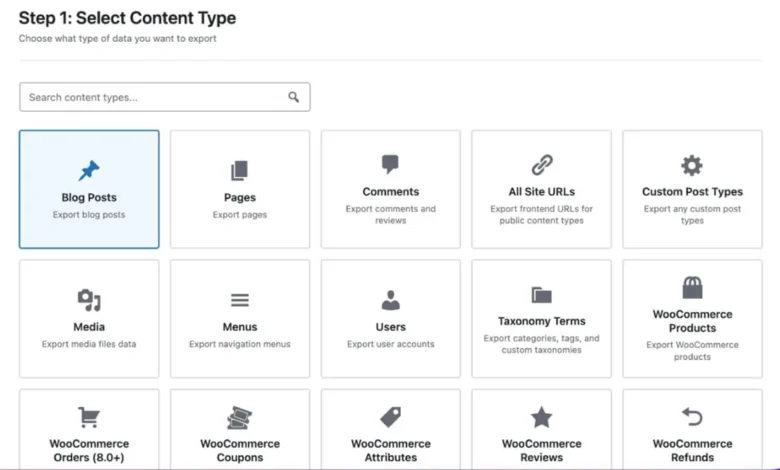
The management of complex WordPress environments often hits a significant technical bottleneck when developers and content managers attempt to bridge the gap between staging and production sites. Traditionally, the native WordPress export functionality has struggled to handle advanced data structures, such as Advanced Custom Fields (ACF) repeater fields or intricate WooCommerce order databases. To address these persistent challenges, the release of Import Export by RockStarLab offers a sophisticated synchronization layer designed to bridge disparate WordPress installations without the need for cumbersome full-database migrations.
The Evolution of Site Migration and Synchronization
For years, the WordPress ecosystem has relied on either rudimentary XML-based exports or "all-or-nothing" database migrations. The latter, while effective for site cloning, presents severe risks for live e-commerce operations. A standard database dump overwrites everything on the target destination, effectively erasing any new orders, user registrations, or inventory changes that occurred on the live site during the staging development phase.
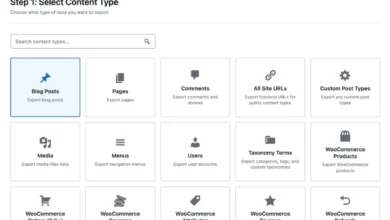
This "migration friction" has long been a source of anxiety for agency leads and site administrators. According to industry surveys, nearly 40% of WordPress agencies identify content synchronization—moving specific pieces of content from a staging environment to production without disrupting live transactional data—as a primary operational headache. Import Export by RockStarLab functions not as a replacement for full site migration tools, but as a surgical instrument for incremental data movement, allowing for the granular selection of content types, taxonomies, and meta-fields.

Technical Capabilities and Data Handling
The software supports a wide array of data formats, including CSV, XLSX, JSON, XML, and ODS. This versatility allows teams to manipulate content in external spreadsheet software or integrate it into automated scripting workflows. However, the core value proposition lies in its data mapping precision.
Many import tools fail when attempting to migrate complex relationships, such as ACF PRO fields or Elementor page builder data. Import Export by RockStarLab has been engineered to recognize these proprietary structures, ensuring that custom meta-data remains linked to the correct posts rather than being imported as orphaned or loose metadata. By supporting complex field types—specifically ACF repeaters and flexible content fields—the tool ensures that the visual structure of a site remains intact during the transition between environments.
The technical architecture bypasses the need for intermediary file generation by establishing a direct sync channel between installations. This direct-to-destination transfer minimizes the risk of file corruption and simplifies the workflow for developers who maintain multi-environment setups.
Chronology of Development and Feature Integration
The development of the plugin has followed a clear trajectory toward addressing the needs of high-volume WooCommerce stores and complex editorial sites.

- Initial Development Phase: Focused on foundational post, page, and user migration, alongside basic CSV import functionality.
- Intermediate Enhancement: Integration of the direct site-to-site sync feature, eliminating the manual upload/download cycle.
- Advanced Feature Rollout: Implementation of the AI-powered URL importer, allowing for the ingestion of existing web content into native WordPress fields.
- Recent Stability Updates: Enhanced compatibility with WooCommerce 8.0+ and rigorous testing of ACF mapping for complex layouts.
The introduction of the AI URL Importer marks a significant shift in utility. By utilizing an OpenAI API key, users can extract data from specific web pages and map that information directly into post titles, excerpts, featured images, or custom fields. This feature provides a scalable solution for content inventory projects or site migrations where source material must be repurposed from existing, non-WordPress platforms.
Broader Implications for Agency Workflows
For agencies and store owners, the implications of such a tool are significant. The ability to push content from staging to production while maintaining the integrity of live database tables—such as orders and customer records—allows for a "continuous delivery" model that was previously difficult to achieve in the WordPress space.
Developers can now pull a realistic, anonymized, or partial content set from a production environment down to a local machine for testing. This ensures that UI components are tested against genuine content rather than "lorem ipsum" placeholders, reducing the likelihood of layout breakage during live deployment. Furthermore, the inclusion of an automated scheduler for synchronization tasks allows for consistent updates across multi-site networks or high-traffic e-commerce storefronts.
Utility Beyond Migration
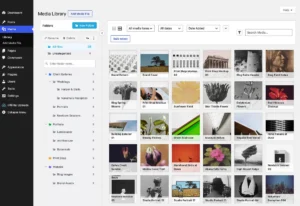
While categorized primarily as an import/export solution, the plugin offers several secondary tools that solve long-standing maintenance issues. The ability to register FTP or SFTP-uploaded folders into the WordPress media library is a significant time-saver for sites that handle large volumes of static assets. Additionally, the site-wide URL export feature provides a foundational dataset for SEO audits and redirect mapping—a critical step in any site redesign project.

Licensing, Accessibility, and Economic Analysis
The project employs a "freemium" model that is notably generous compared to industry standards. The free version available via the WordPress repository includes core migration features, the AI URL importer, and site-to-site sync.
The premium version introduces deeper functionality, including:
- Support for all WooCommerce data types, including order history and coupon management.
- Advanced data transformation tools for modifying content during the import process.
- Bulk editing capabilities for custom post types and user databases.
Pricing is structured by site count, with the developers opting for a competitive entry point to encourage adoption among smaller agencies. A key factor in the product’s market positioning is the "launch pricing" lock, which ensures that early adopters are protected against future price hikes as long as their subscription remains active. The inclusion of a 30-day trial period for all premium features without requiring credit card information indicates a high level of confidence in the product’s ability to handle complex mapping scenarios.
Future Outlook
As WordPress continues to evolve into a platform capable of handling enterprise-level complexity, the demand for specialized data movement tools will likely increase. Import Export by RockStarLab represents a pivot toward more sophisticated, API-driven synchronization that favors granular control over bulk migration.

For the average site owner, the tool provides a safety net for routine content updates. For the professional developer, it serves as a critical piece of infrastructure in the development lifecycle. By focusing on the specific pain points of ACF mapping and WooCommerce database integrity, RockStarLab has effectively carved out a niche that addresses the primary obstacles preventing WordPress from being fully integrated into modern, automated CI/CD (Continuous Integration/Continuous Deployment) pipelines. As with all migration-related software, users are encouraged to maintain thorough backups, though the plugin’s architectural focus on non-destructive syncing significantly mitigates the traditional risks associated with database management.