Threads Expands Podcast Toolkit to Position Itself as the Premier Hub for Audio Discussions

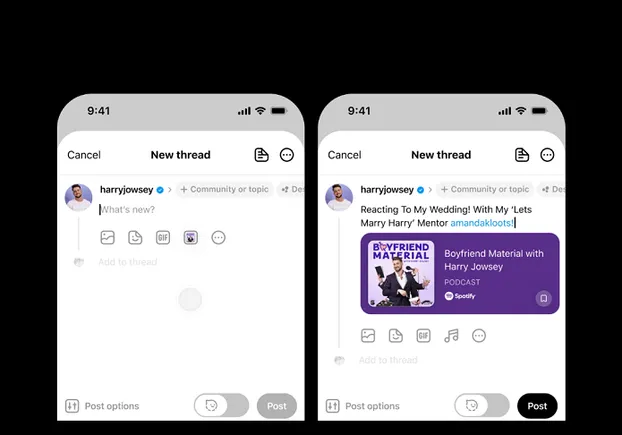
Meta-owned social media platform Threads is aggressively courting the audio entertainment industry with a comprehensive rollout of new features designed to integrate podcasting into the core user experience. Announced on Wednesday, the latest toolkit expansion builds upon previous iterations launched late last year, introducing advanced promotional capabilities, custom visual elements, and interactive options aimed squarely at podcast creators, producers, and avid listeners.
By cementing itself as the digital watercooler for the booming audio landscape, Threads is attempting to capture valuable community engagement that typically fragments across disparate platforms like X (formerly Twitter), Reddit, and specialized podcasting apps. As the medium commands an increasingly dominant share of global media consumption, the strategic timing of this feature integration underscores a broader industry race to capture audio-driven discourse.
Chronology of Integration: From Basic Sharing to Deep Ecosystem Integration
The journey toward making Threads a primary destination for podcast conversation has been methodical. For months, developers at Meta have worked behind the scenes to bridge the gap between long-form audio production and short-form, text-based social networking.
In November of the previous year, Threads introduced its foundational audio-centric features, allowing creators to display podcast details directly on their user profiles alongside custom podcast thumbnails. These early additions offered a rudimentary way for hosts to signal their audio credentials to visitors, yet they lacked the dynamic, interactive elements required to spark widespread viral conversation.
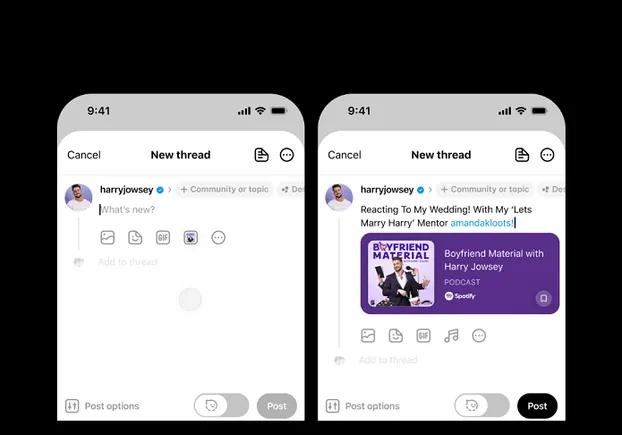
Recognizing that passive profile displays were insufficient to drive sustained app engagement, product teams returned to the drawing board. The Wednesday announcement marks the next major evolutionary phase, moving beyond static metadata to active, media-rich engagement tools. This progression highlights Meta’s iterative approach to platform development—testing foundational features, gathering creator feedback, and subsequently deploying sophisticated toolkits designed to habituate users into discussing episodes in real time as they drop.
The Broader Audio Landscape: Surging Listenership and Market Demands
The strategic pivot by Threads does not occur in a vacuum; it is a direct response to the explosive, sustained growth of the podcasting industry. According to landmark data released by Edison Research in its 2026 Podcast Consumer study, audio consumption has reached unprecedented heights, with a staggering 58% of all Americans tuning into podcasts on a regular basis.
This macro-trend reflects a fundamental shift in how modern audiences consume media. Unlike traditional broadcast formats, podcasts foster intimate, highly engaged communities around niche topics, interview subjects, and serialized storytelling. Listeners frequently develop parasocial relationships with hosts, leading to a profound desire to dissect plot points, debate guest arguments, and share favorite soundbites with peers.
Historically, however, this post-listen behavior was fractured. A fan might listen to an episode on Spotify or Apple Podcasts, migrate to X to post a quote, visit Reddit to discuss a specific theory, or comment directly on YouTube. Threads is aggressively targeting this fragmentation. By providing native, frictionless tools that streamline the transition from listening to discussing, the platform seeks to consolidate these dispersed conversations under its own algorithmic roof.
Analyzing the New Toolkit: Features Designed for Discovery and Retention
The newly unveiled suite of tools addresses both sides of the creator-listener dynamic, offering distinct utilities designed to maximize visibility and audience interaction.
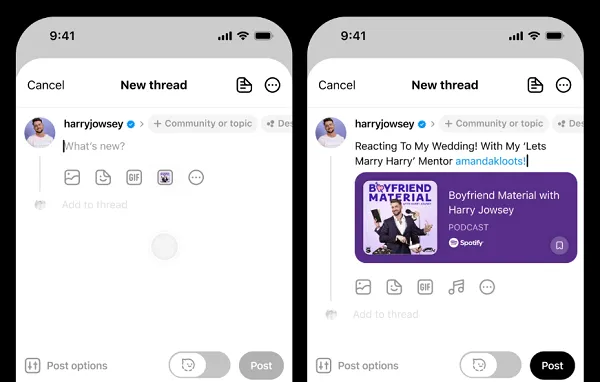
For creators, the challenge has always been discoverability outside of traditional directory feeds. The expanded toolkit introduces refined promotion mechanisms that allow hosts to leverage the algorithmic reach of Threads’ feed system. By utilizing enhanced sharing parameters, creators can bypass the limitations of text-only posts, embedding dynamic audio previews and visually striking custom imagery that catches the eye of scrollers.
For listeners, the features are engineered to reduce friction when reacting to content. Instead of manually linking to an episode and typing out a lengthy explanation, users can seamlessly anchor their thoughts to specific audio segments, visual markers, or episode metadata. This creates an interconnected web of discussion where a single timestamp or highlighted quote can spawn hundreds of replies, debates, and community-driven sub-threads.
Furthermore, these integrations solve a persistent dilemma in digital marketing: converting casual listeners into active community members. When fans can easily share their favorite moments using native tools, they effectively act as organic marketing agents for the creators, driving viral loops that benefit both the host and the platform hosting the conversation.
Official Reactions and Corporate Strategy
Executives at Meta have made no secret of their ambition to turn Threads into a premier destination for real-time culture and conversation. In an official statement accompanying the rollout, Threads emphasized the organic synergy already taking place on the network: "Threads is already a place where people are connecting around podcasts, and these updates make it even easier to join conversations about your favorite shows."
This official stance highlights a core philosophy of the platform: identifying emergent user behaviors and building dedicated infrastructure to support them. Rather than forcing a top-down feature onto an uninterested user base, Meta observed that community members were already utilizing the app to screenshot show notes, debate guest appearances, and recommend episodes. By formalizing and upgrading these behaviors into dedicated product features, Threads is capitalizing on pre-existing momentum.
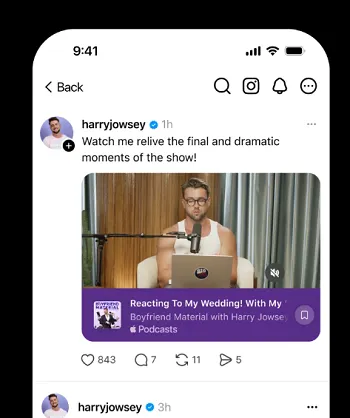
Industry analysts suggest this move aligns with Meta’s broader ecosystem strategy. By positioning Threads as the connective tissue for audio creators, the company strengthens its value proposition for public figures, journalists, and independent creators who rely on multi-platform distribution to build their brands. If a creator can manage their audience engagement and promotional output more effectively on Threads than on competing networks, retention naturally follows.
Implications for Competitors and the Future of Social Audio
The aggressive expansion of podcast-centric features on Threads sends a clear signal to rival platforms. For years, X served as the default public square for breaking down media events, including major podcast releases. However, ongoing platform shifts, moderation changes, and algorithmic pivots have left many creators searching for more stable, community-friendly environments.
Threads, benefiting from the massive infrastructural backbone and user acquisition engine of Instagram, presents a formidable alternative. By offering a cleaner, more tailored environment for interest-based discussions—spanning sports, true crime, technology, and culture—Threads is carving out a distinct identity that separates it from its microblogging competitors.
As podcast networks and independent creators evaluate their distribution and community-building strategies for the remainder of the year, the availability of native integration tools will likely play a deciding factor in platform prioritization. Creators who can successfully leverage Threads’ new promotional assets may find themselves unlocking entirely new demographics of listeners who discover shows through the app’s recommendation algorithms rather than traditional search directories.
Ultimately, the success of these new tools will depend on user adoption and the smoothness of the listening-to-discussing pipeline. If Threads can successfully bridge the gap between long-form audio and short-form social commentary, it will not only secure its status as a vital industry player but fundamentally reshape how digital communities consume and converse about the audio medium.
Related posts: