
The ecommerce landscape is currently undergoing a rapid transformation, driven by the integration of autonomous AI agents and real-time data analytics. This week’s product releases from major industry players—including Shopify, Adobe, Amazon, and Sprinklr—highlight a collective shift toward "agentic commerce," a framework where AI does not merely provide information but actively executes business tasks. This evolution marks a significant departure from the passive analytical tools of the early 2020s toward a proactive, automated ecosystem designed to minimize human friction in supply chain, marketing, and procurement workflows.
The Rise of Agentic Commerce and AI Integration
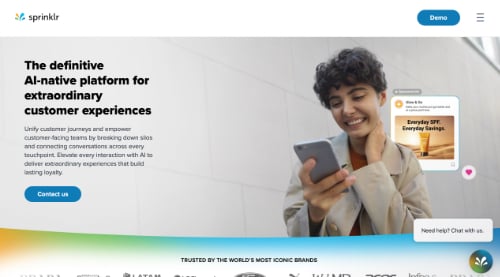
The most prominent trend this week is the proliferation of AI agents capable of autonomous decision-making. Sprinklr has launched the beta for its Marketing AI Agents, a comprehensive suite designed to handle everything from creative ideation to budget optimization. By automating repetitive campaign-building tasks, Sprinklr aims to help enterprise marketers bridge the gap between data insight and immediate action. This shift is critical as marketing departments face increasing pressure to scale content production across global, localized markets without linearly increasing headcount.

Simultaneously, Shopify’s "Exponential" Fall ’26 update underscores the platform’s pivot toward this agentic future. Through its new Shopify Connectors, the company is allowing merchants to link their store data directly to the AI agents of their choice, enabling these systems to manage inventory, process orders, and track performance in real-time. This interoperability is mirrored by Virid’s new marketAgility MCP (Model Context Protocol) connector. By allowing retailers to connect their store data to LLMs like Claude or ChatGPT, Virid removes the need for custom, high-maintenance integrations, allowing merchants to manage catalogs and promotions via simple natural language queries.
Streamlining B2B Payments and Procurement
While retail consumer tools dominate headlines, the B2B sector is seeing a parallel surge in efficiency-focused technology. Stripe has introduced Stripe Pay, a plugin designed to facilitate free, instant B2B transfers for eligible companies in the U.S. and U.K. This move addresses a perennial pain point in wholesale commerce: the latency and high fees associated with traditional business-to-business payment rails. By leveraging the Stripe Treasury infrastructure, the service allows businesses to bypass standard bank transfer delays, significantly improving liquidity for suppliers and wholesalers.
Amazon Business is addressing the other side of the B2B equation with its new Value Intelligence tool. Procurement leaders have long struggled to quantify the success of their buying strategies beyond simple cost savings. By grounding its metrics in independent, third-party benchmarks, Amazon is providing a standardized framework for organizations to measure operational efficiency and purchase compliance. This reflects a broader industry movement toward "value-based procurement," where organizations prioritize long-term sustainability and compliance alongside immediate financial returns.
Marketing Analytics and Real-Time ROI
Accurately attributing marketing spend remains one of the most complex challenges for modern retailers. Adobe’s newly launched Marketing Campaign Analytics application seeks to solve this by isolating the incremental impact of specific channels. The platform is designed to filter out "noise"—such as seasonal fluctuations or promotional spikes—to show how various marketing channels influence each other. This level of granularity is essential for budget optimization, as it allows marketers to shift capital toward high-performing segments with greater confidence.
In the social commerce sphere, AnyMind Group and Meta are bridging the gap between social discovery and transactional reality. By integrating Facebook and Instagram video ads with live commerce functionality, the partnership allows brands to convert viewers directly within their streaming environments. This reduces the conversion funnel to a single click, addressing the "drop-off" issue common in traditional social-to-site transitions. The rollout is scheduled for late 2026 on Facebook and early 2027 on Instagram, signaling a long-term strategic investment in the live-shopping format.
The Evolution of Discovery and Consumer Trust
Product discovery is also undergoing an AI-driven overhaul. Fast Simon has unveiled a "commerce-native" AI model that integrates shopper intent, merchant objectives, and real-time commerce conditions to personalize product rankings. Unlike generic recommendation engines, this model adapts to changing inventory levels and site conditions instantly. NielsenIQ is supporting this trend with the expansion of its Shopper Experience Platform, providing brands with the "ContentOne Framework." This tool evaluates whether product descriptions and imagery meet the stringent requirements of AI-powered shopping platforms, ensuring that products are not only visible but also accurately understood by AI search agents.

On the consumer feedback front, The Trust Search has launched a platform focused on verified reviews and business ratings. In an era where AI-generated content can easily flood review sections, the platform’s emphasis on cross-referencing customer data and validating purchase history provides a necessary layer of authenticity that brands can leverage to build long-term consumer trust.
Infrastructure and Global Expansion
The infrastructure supporting these changes is also scaling. Omnichat, a specialist in AI-driven customer experience, recently secured $10 million in Series A funding led by Openspace Capital. The company plans to use this capital to deepen its R&D into its "OmniClaw" AI business analyst and scale its agentic AI platform globally. Similarly, TopDawg is expanding its U.S. supplier distribution through a new integration with the Faire wholesale marketplace, providing a unified portal for brands to manage their multichannel distribution workflows.
Meanwhile, Amazon is refining its logistics in Europe by expanding its "Returnless Resolutions" program. By allowing merchants to set price thresholds for returnless refunds, Amazon is empowering sellers to reduce the logistical burden of reverse logistics. This is particularly relevant for low-margin items where the cost of shipping, inspecting, and restocking a return often exceeds the product’s value.

Strategic Implications for Merchants
The cumulative effect of these releases is a professionalization of the "automated store." Historically, ecommerce merchants have had to manually configure various touchpoints across their marketing, sales, and logistics channels. The emergence of connectors, APIs, and AI agents suggests that the next phase of ecommerce will be characterized by "orchestration" rather than "operation."
However, this shift also introduces new risks. As merchants rely more heavily on AI agents to manage inventory and promotions, the need for robust governance and oversight becomes paramount. Sprinklr’s inclusion of "Compliance" and "Governance" modules in its new beta indicates that software providers are acutely aware of these risks. Furthermore, the reliance on third-party AI frameworks requires merchants to maintain strict control over their proprietary data to prevent leakage or algorithmic bias.
Looking forward, the competitive advantage will likely shift to those who can best orchestrate these agents. The ability to integrate, monitor, and refine AI-driven processes will differentiate market leaders from those who merely implement the technology. As the 2026 holiday season approaches, the adoption of these tools will serve as a stress test for the efficacy of autonomous commerce in high-traffic, high-stakes environments. The industry is effectively moving toward a "plug-and-play" model of digital retail, where the focus shifts from building the engine of the business to steering the strategy.
Related posts: