Mastering the Modern Social Media Productivity Trap: A Comprehensive Blueprint for Strategic Automation in Enterprise Marketing


The modern digital landscape presents an unprecedented paradox for corporate marketing departments and social media managers. As brands scale their digital footprints across an increasingly fragmented ecosystem—spanning professional networks, microblogging platforms, short-form video repositories, and instant messaging channels—the operational burden on internal teams has grown exponentially. According to landmark industry findings highlighted in the comprehensive Social Media Productivity Report published by Sprout Social, an overwhelming 63 percent of social media professionals report being fundamentally unable to execute high-impact, strategic work. Instead, these skilled practitioners find themselves trapped in an unrelenting productivity cycle, bogged down by repetitive manual tasks such as cross-platform publishing, individual direct message management, and fragmented analytical tracking.
This structural inefficiency reveals a stark operational divide within the contemporary marketing industry. The data indicates that professionals equipped with dedicated, centralized social media management infrastructure are twice as likely to successfully navigate their workloads, meet strategic objectives, and maintain a healthy work-life balance. Consequently, organizational leaders are no longer viewing automation as a futuristic luxury or an optional supplement; rather, it has emerged as a fundamental operational imperative. To reconcile the demand for ubiquitous brand presence with finite human resources, marketing executives must adopt a calculated, structured approach to workflow automation that preserves brand authenticity while scaling execution.
The Evolution of Digital Engagement and the Productivity Crisis

To understand the current state of social media management, one must examine the rapid evolution of digital communications over the past decade. What began as a secondary public relations channel has matured into the primary frontline for customer service, brand discovery, and direct-to-consumer commerce. Organizations now maintain active profiles across four, five, or even six distinct networks, each requiring tailored content formats, unique audience engagement strategies, and round-the-clock monitoring.
Without a corresponding expansion in headcount, social media teams have naturally hit a performance ceiling. Manually logging into disparate native applications to schedule individual updates, tracking viral mentions across millions of daily conversations, and manually triaging incoming customer service inquiries consumes the vast majority of a standard workweek. This administrative saturation prevents marketing professionals from engaging in higher-order strategic thinking, campaign ideation, and personalized community building.
Industry analysts note that automation is frequently misunderstood as a mechanism designed to entirely replace human creativity. In practice, however, modern enterprise automation serves the exact opposite function. By delegating predictable, high-frequency, low-cognitive tasks to specialized software tools, organizations liberate human talent to focus on nuanced interpersonal communication, empathetic customer support, and sophisticated creative direction. Automation handles the routine so that humans can personalize the meaningful.
Phase One: Centralizing Publishing Operations and Strategic Scheduling
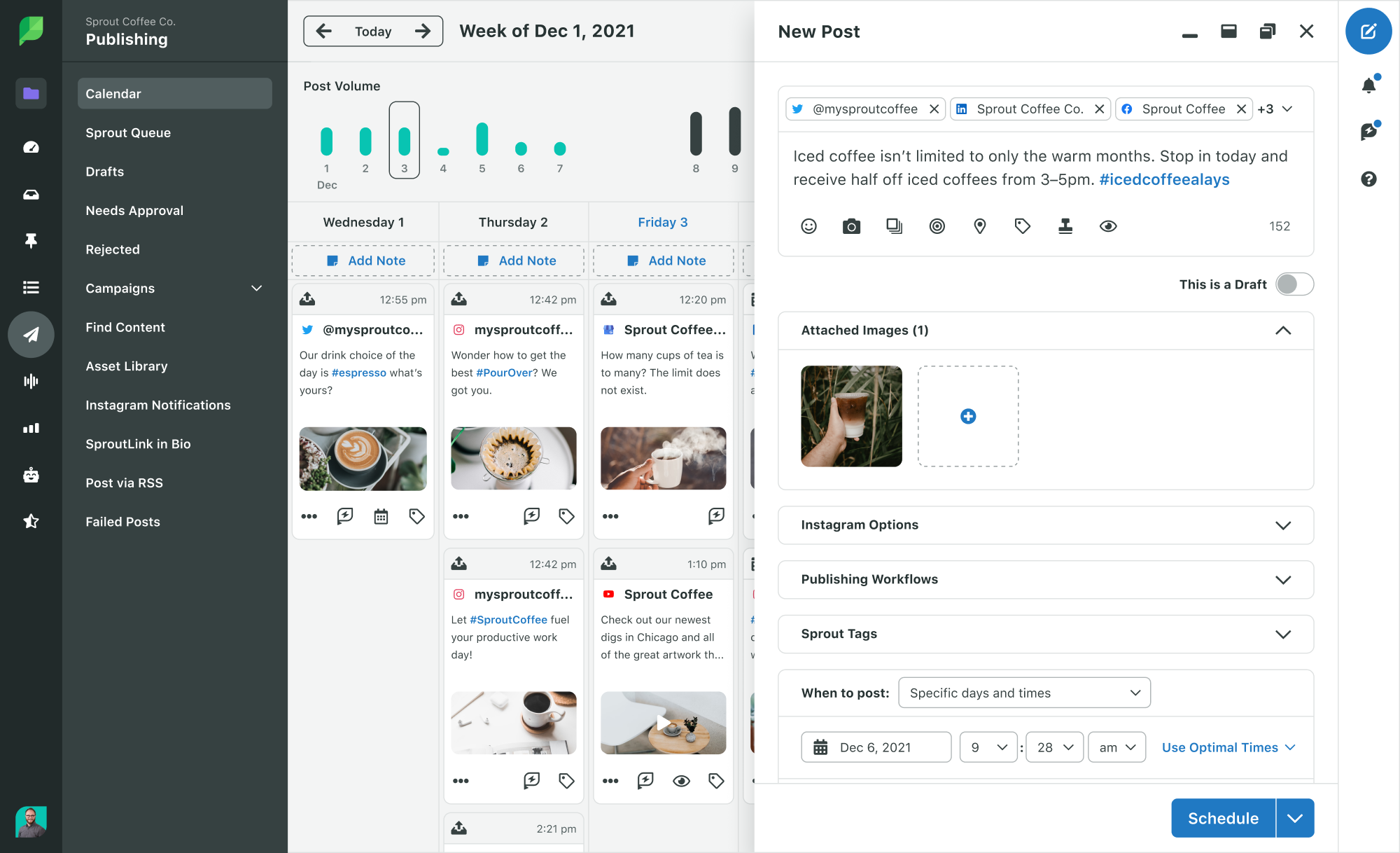
The first critical milestone in decoupling productivity from manual labor involves the consolidation of an organization’s publishing apparatus. Historically, social media managers maintained separate browser tabs for each network, manually copying and pasting text, adjusting image dimensions, and hitting publish at arbitrary times. This fragmented workflow not only wastes hundreds of hours annually but also introduces significant operational risk regarding brand consistency and scheduling accuracy.
Enterprise-grade solutions, such as Sprout Social’s centralized publishing dashboard, resolve this friction by allowing marketing teams to connect an unlimited array of social profiles to a single command center. When crafting a new campaign or daily update, practitioners compose the core message once, select the intended destination networks, and execute distribution seamlessly from one interface.
Complementing this centralized publishing hub is the implementation of a lightweight, highly visible content calendar. Strategic planning must invariably precede technical automation. By establishing an organized editorial calendar that maps out content pillars across weekly and monthly horizons, marketing teams eliminate the daily panic of ideation. Modern calendar modules allow teams to visualize cross-channel campaigns simultaneously, utilizing intuitive drag-and-drop mechanics to adjust publishing frequency, maintain consistent brand presence, and optimize content cadence.
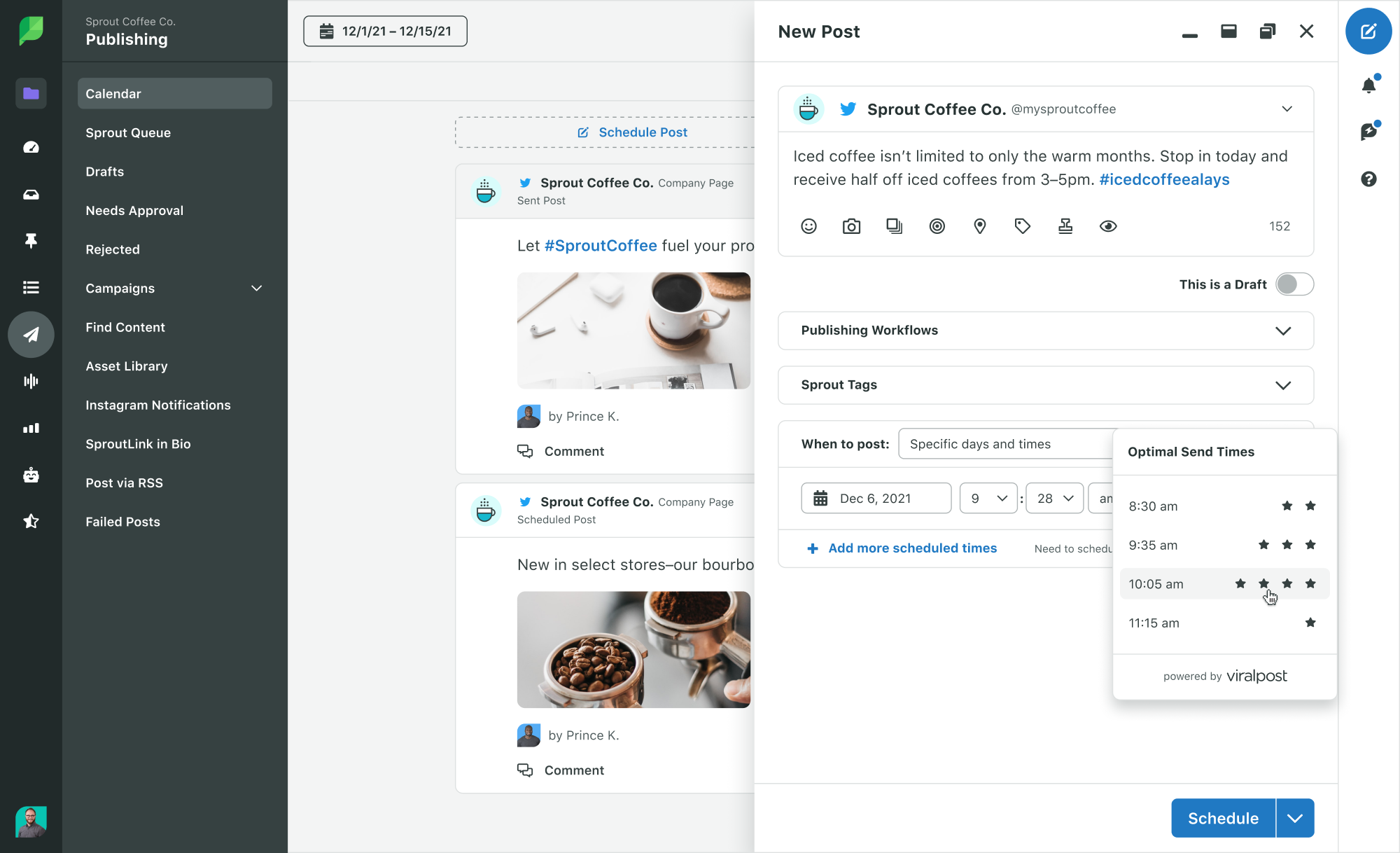
Crucially, modern publishing automation transcends simple volume; it is governed by temporal precision. Pushing content live when an audience is dormant yields negligible engagement, regardless of creative quality. To solve this, advanced platforms integrate algorithmic features such as Sprout Queue and ViralPost™. These tools analyze historical engagement patterns, audience activity spikes, and algorithmic behaviors specific to each connected network. By automating the delivery of bulk-scheduled content at statistically proven optimal send times, organizations ensure maximum visibility without requiring personnel to monitor the clock or set manual reminders.

Phase Two: Streamlining Audience Engagement and Hybrid Response Protocols
While automated publishing optimizes outbound messaging, inbound engagement represents an entirely separate operational hurdle. Social media managers frequently hesitate to automate engagement out of a well-founded fear of losing the human touch that modern consumers demand. However, industry research underscores a dangerous vulnerability in slow response times: according to the comprehensive 2025 Sprout Social Index, nearly three-quarters of modern consumers expect a definitive brand response within a 24-hour window. Even more alarming for executive leadership, 73 percent of surveyed consumers indicate a willingness to abandon a brand in favor of a competitor if their social inquiries go unanswered.
Manually fielding every inbound comment, direct message, and brand mention is unsustainable at scale, yet leaving messages unread damages brand equity. The solution lies in a hybrid engagement model that unifies disparate communication channels while deploying intelligent automation for routine inquiries.
A centralized smart inbox—such as Sprout’s Smart Inbox—serves as the aggregation point for all inbound communications across Facebook, X (formerly Twitter), LinkedIn, Instagram, and other connected profiles. Rather than navigating separate apps, community managers view all mentions, comments, and direct messages in a single chronological or filtered stream. Automated inbox rules further refine this process by programmatically measuring, tagging, and categorizing incoming messages based on sentiment, keyword triggers, or inquiry type. This allows teams to immediately prioritize high-value, urgent customer issues while temporarily deferring low-priority items.
For frequently asked questions—such as standard operating hours, product pricing tiers, and basic shipping policies—organizations are increasingly turning to conversational AI and sophisticated bot builders. Deploying automated response rules via tools like Sprout’s Bot Builder enables instantaneous resolution for routine inquiries on channels like X and Facebook Messenger. For example, a prospective customer inquiring about enterprise pricing schedules receives immediate documentation via chatbot within seconds, dramatically accelerating the conversion funnel without human intervention.
Crucially, enterprise-grade automation frameworks incorporate intelligent handoff protocols. When an inbound inquiry transcends the capabilities of a predefined chatbot script—such as a complex account modification or an emotionally charged customer complaint—the automated workflow seamlessly routes the conversation directly to a human agent within the centralized inbox. This ensures that the efficiencies of automation never compromise the empathy, nuance, and critical problem-solving skills required for complex human interactions.
Phase Three: Automating Social Listening, Data Intelligence, and Reporting
Beyond publishing and direct customer engagement, the modern enterprise must maintain constant vigilance over broader industry conversations, competitor movements, and brand sentiment. Manual social listening is a physical impossibility; millions of unstructured data points are generated across the global internet every hour. Attempting to scour this digital ocean manually would require exhaustive labor forces yielding incomplete, highly subjective results.

Automated social listening tools solve this challenge by continuously monitoring pre-defined brand names, industry keywords, and macroeconomic hashtags in real-time. By deploying advanced artificial intelligence agents—such as Sprout’s Trellis—marketing organizations can extract actionable intelligence from millions of public conversations within minutes. These AI-driven listening engines automatically detect emerging sentiment spikes, identify macro-trends, and synthesize qualitative consumer feedback into clear, quantitative reports. This data directly informs executive decision-making, guiding product development, crisis management, and creative strategy.
Equally vital to organizational accountability is the automation of performance reporting. Historically, social media teams spent days compiling native analytics screenshots from individual platforms into cumbersome manual spreadsheets for executive presentation. Modern social media automation tools eliminate this friction by generating recurring, customizable performance reports delivered directly to stakeholder inboxes on a scheduled cadence. These reports visualize key performance indicators—including reach, engagement rate, share of voice, and conversion metrics—providing leadership with transparent, objective evaluations of return on investment without diverting talent from creative execution.
Common Pitfalls and Strategic Safeguards in Social Media Automation
While the operational advantages of social media automation are undeniable, unchecked or naive implementation can produce severe reputational damage. Industry analysts point to several recurring pitfalls that organizations must actively avoid as they scale their automation initiatives.

The first major hazard involves an over-reliance on generative artificial intelligence for content creation. While 93 percent of practitioners surveyed in the 2025 Sprout Social Index recognize generative AI as a powerful antidote to creative fatigue, fully automated, unedited AI content frequently suffers from bland homogeneity, lack of authentic brand voice, and factual inaccuracies—commonly referred to as AI hallucinations. Enterprise best practices dictate that generative AI should be strictly confined to early-stage ideation, outlining, and drafting scripts. Final content creation, copyediting, and strict factual verification must remain firmly under human oversight.
The second operational danger is the peril of unchecked publishing queues—the classic "set it and forget it" mentality. Leaving scheduled content queues running indefinitely without periodic review exposes a brand to catastrophic tone-deafness. If a major macroeconomic crisis, natural disaster, or industry scandal occurs, an automatically published promotional or lighthearted post can instantly trigger severe public backlash. Marketing leadership must enforce protocols requiring regular audits of upcoming publishing queues, with immediate authority granted to pause all automated distribution during unforeseen crises.
Finally, organizations must guard against robotic, overly rigid bot interactions. Even when response times are optimized via automation, poorly scripted auto-replies that lack empathy can alienate consumers. Ensuring that automated responses remain conversational, transparent, and paired with effortless pathways to human representatives is essential for maintaining brand trust.
Conclusion: Charting the Future of Enterprise Marketing Efficiency

The evolution of social media management has reached an inflection point. As digital channels multiply and consumer expectations for instantaneous engagement continue to rise, maintaining manual oversight across every facet of social media operations is no longer a viable business model. The productivity trap—characterized by frantic manual labor, stagnant results, and widespread employee burnout—can only be dismantled through the strategic implementation of comprehensive automation infrastructure.
By centralizing publishing operations, deploying hybrid engagement workflows with intelligent chatbot handoffs, and automating real-time social listening and performance reporting, organizations can successfully reclaim thousands of hours of high-value working time. As demonstrated by industry leaders utilizing platforms like Sprout Social, automation does not diminish the human element of digital marketing; rather, it protects it. By delegating the mechanical to machines, modern marketing teams are finally empowered to focus on what matters most: creativity, strategy, and authentic human connection.
Related posts: