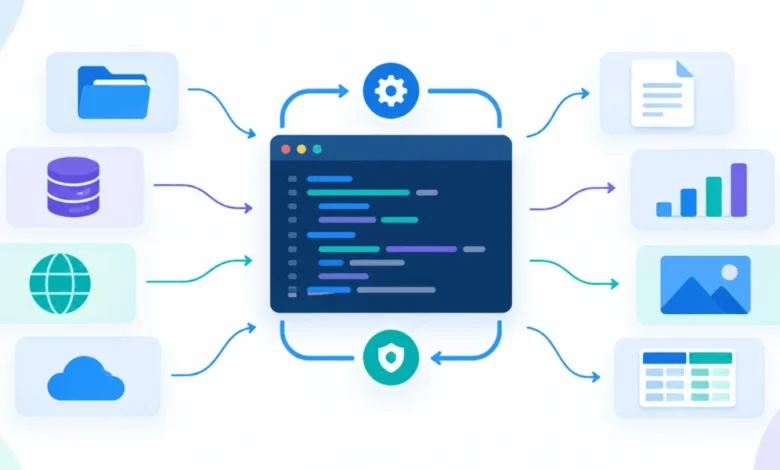
In modern software development, particularly within data science and machine learning engineering, the reliability of code often hinges on how effectively a program manages its resources. While most Python developers are introduced to the with statement through simple file operations—such as reading or writing to a text file—the underlying mechanism, known as the context manager, is a far more versatile architectural tool. By ensuring that cleanup operations occur regardless of whether a code block succeeds or triggers an exception, context managers represent the difference between robust, production-grade pipelines and fragile scripts that leave behind "digital debris."
The Anatomy of a Hidden Failure
To understand the necessity of robust resource management, one must consider a common scenario in machine learning evaluation. A typical evaluation script often requires a series of preparatory steps: creating temporary directories for extracted test datasets, setting environment variables to point to high-speed storage caches, silencing verbose library loggers, and initializing performance timers.
In traditional procedural scripts, these cleanup tasks—deleting the temporary directory, resetting environment variables, and restoring log levels—are often placed at the end of the file. This creates a "happy path" dependency. If a malformed data record causes the evaluation function to raise an exception halfway through, the execution flow is interrupted. The cleanup lines at the bottom of the script are never reached. Consequently, the machine is left with gigabytes of unneeded temporary files, a stale environment variable that may interfere with subsequent jobs, and a logger that remains permanently muted. This is not merely an inconvenience; in automated cloud environments, these orphaned resources lead to storage costs, skewed performance metrics, and debugging nightmares for the next developer who inherits the environment.
The Mechanism of the With Statement
The Python with statement functions as a formal boundary. It acts as a contract between the developer and the runtime. When Python encounters a with statement, it invokes the __enter__() method of the context manager. The result of this method is optionally bound to a variable using the as keyword. The code block then executes. Regardless of how the block concludes—whether through natural completion, an explicit return statement, or an unhandled exception—the __exit__() method is guaranteed to run.
This guarantee is the cornerstone of safe resource management. Developers often struggle with the return values of these methods. Specifically, the __exit__() method accepts three arguments representing the exception type, the exception value, and the traceback. If the method returns a truthy value, it suppresses the exception, which can be dangerous if the developer intends for the error to be handled by higher-level logic. For most production applications, the best practice is to ensure __exit__() returns False or simply allows the exception to propagate naturally, ensuring that the cleanup occurs while still alerting the developer to the underlying issue.
Implementing a Resilient Timer
Instrumentation is a frequent requirement in performance-critical code, yet many developers implement timers in ways that are sensitive to runtime crashes. By creating a custom Timer class that implements the context management protocol, one can ensure that the time taken for a specific operation is recorded even if the operation itself fails.
Consider a class defined with __enter__ to record the start time via time.perf_counter() and __exit__ to calculate the delta. By printing the elapsed time and a status tag—"ok" or "failed"—the developer gains immediate visibility into whether a specific stage of a pipeline was performing as expected or if it crashed. This approach removes the risk of "forgotten" stop-time calls and ensures that logs are consistent across every run. This is essential for long-running workflows where identifying the exact point of failure is vital for post-mortem analysis.
Simplifying Cleanup with @contextmanager
For scenarios where creating a full class feels like unnecessary boilerplate, Python provides the contextlib.contextmanager decorator. This utility allows a generator function to serve as a context manager. Code placed before the yield statement acts as the __enter__ logic, while code in a finally block after the yield serves as the __exit__ logic.
This is particularly effective for managing state changes, such as temporary log level adjustments. By wrapping the change in a quiet() context manager, the developer ensures that the logger level is reverted to its original state even if the evaluation function raises an error. This pattern is far cleaner than manual try...finally blocks, as it encapsulates the "setup-use-teardown" cycle into a reusable, declarative block of code.
Automating Lifecycle Management with TemporaryDirectory
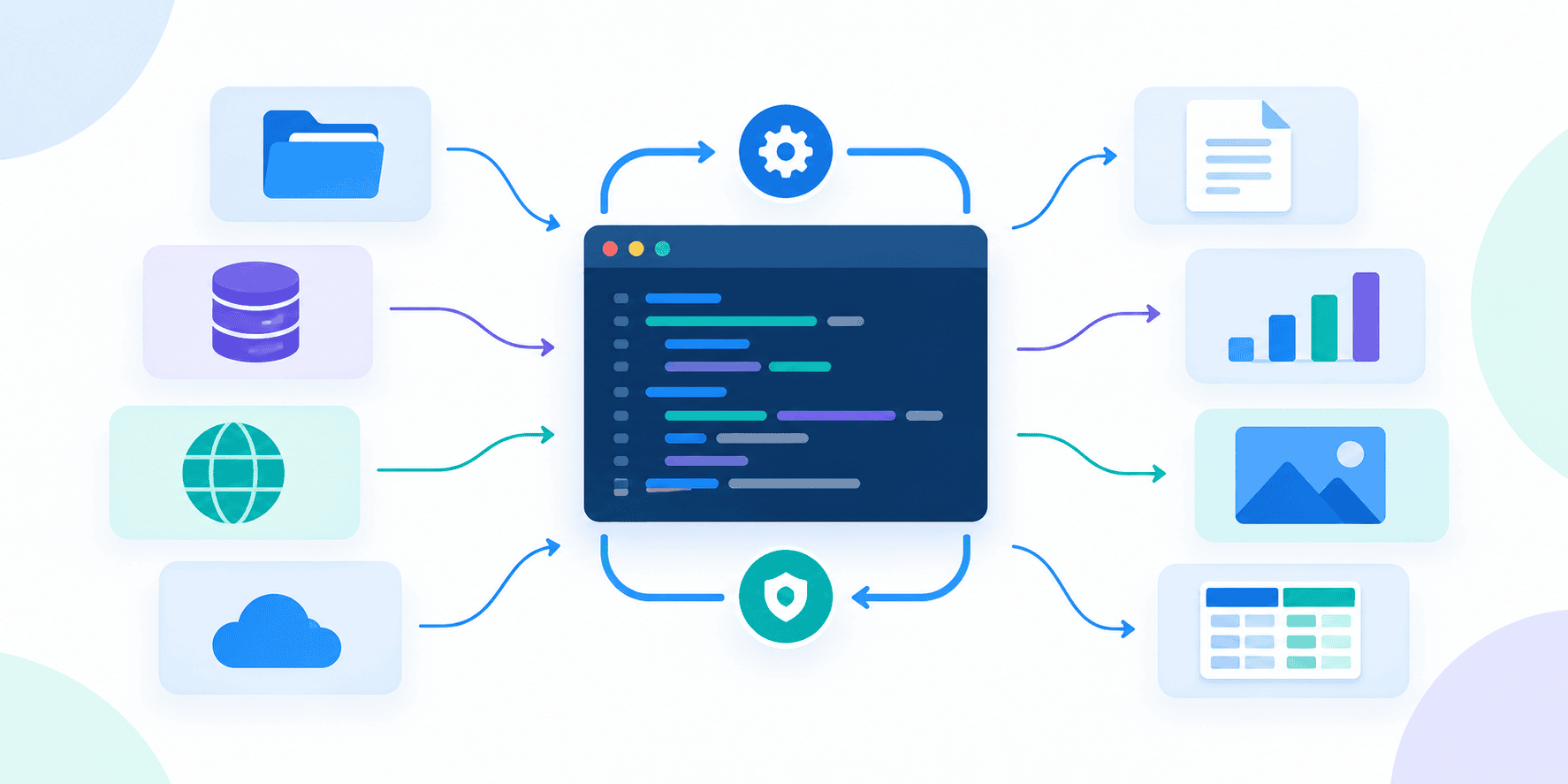
The standard library provides powerful tools that render manual directory management obsolete. The tempfile.TemporaryDirectory() manager is the gold standard for handling scratch spaces. By leveraging this tool, the developer offloads the responsibility of filesystem cleanup to the Python runtime. When the block exits, the directory and its contents are automatically removed.
Data from the past few years suggests that improper handling of temporary storage is a leading cause of disk-full errors in CI/CD pipelines. By using TemporaryDirectory, developers ensure that each execution run is isolated. This prevents "state pollution," where files from one run inadvertently influence the outcome of the next. Furthermore, for debugging purposes, newer versions of Python allow for granular control over this process, such as keeping the directory if a specific flag is set, providing a safe bridge between automated cleanup and the need for manual inspection.
Dynamic Resource Handling with ExitStack
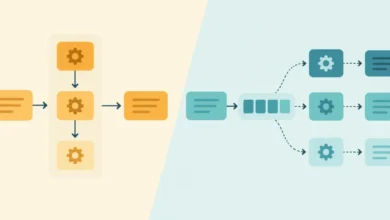
One of the most complex challenges in software engineering is managing a variable number of resources—such as opening an arbitrary number of shards for a dataset merge. Nesting dozens of with statements is unreadable and error-prone. The contextlib.ExitStack is designed specifically for this purpose.
ExitStack allows developers to register context managers and cleanup callbacks programmatically. As the stack is built, the runtime keeps track of all registered cleanup actions. When the block exits, the stack unwinds in the reverse order of registration. This is the programmatic equivalent of a nested with structure but with the flexibility to handle runtime inputs. It is the preferred method for complex data engineering tasks where the number of open file handles or network connections is not known until the code is already executing.
Reversible State Changes
In many production environments, configuration is handled via environment variables or global dictionaries. Changing these settings globally is risky. Using unittest.mock.patch.dict—even outside of a testing context—is an elegant way to handle temporary overrides. It ensures that changes to a dictionary or the os.environ mapping are strictly scoped to the duration of the block. Once the block finishes, the original state is restored.
This is a critical pattern for machine learning engineers who might need to toggle parameters like TOKENIZERS_PARALLELISM or model cache paths for a specific function call. It avoids the "global state drift" that occurs when one function sets a variable and neglects to restore it, leading to subtle, hard-to-reproduce bugs in unrelated parts of the system.
Conclusion: The Architecture of Reliability
The transition from simple file handling to broad resource management marks a significant milestone in a developer’s proficiency. By treating every setup task—whether it involves filesystem interaction, timing, logging, or state modification—as a lifecycle-bound entity, developers can build systems that are inherently more stable.
The choice of pattern is straightforward:
- Use a class when the manager needs to maintain state that the caller must access later.
- Use @contextmanager for linear, straightforward setup and teardown.
- Use built-in managers (like
tempfileorpatch.dict) whenever the standard library provides them. - Use ExitStack for complex, runtime-determined resource collections.
The primary implication of this approach is a reduction in technical debt. When cleanup logic is tightly coupled with the resource’s usage, the code becomes self-documenting. A developer reviewing the code can see exactly what is being managed and when it is released. In an era where AI-driven pipelines are becoming increasingly complex, these small, structural improvements are the foundation upon which robust, production-ready software is built. By ensuring that the "error path" is just as clean as the "happy path," engineers can sleep soundly, knowing that their systems will handle failure gracefully, regardless of when it occurs.
Related posts: