The web development landscape stands on the precipice of a more unified future as a coalition of industry giants formally announced the launch of Interop 2026. Published on February 12, 2026, this collaborative initiative brings together major browser engine contributors—including Apple, Google, Igalia, Microsoft, and Mozilla—to resolve long-standing inconsistencies and fragmentation across web platforms. By targeting high-priority features demanded by developers and end-users alike, Interop 2026 aims to eliminate cross-browser discrepancies that have historically hindered efficient web application development.
The initiative relies on continuous automated testing infrastructure, evaluating selected test suites against real-world browser implementations. Progress and pass rates for these tests are publicly tracked and displayed in real time on the official Interop 2026 dashboard hosted on wpt.fyi, maintaining transparency and accountability for all participating browser vendors.
Background Context and Evolution of the Interop Initiative
To understand the significance of Interop 2026, one must examine the historical friction points of the multi-browser ecosystem. For decades, web developers faced the arduous task of writing browser-specific code, commonly referred to as polyfills and vendor prefixes, to ensure that websites functioned uniformly across Internet Explorer, Firefox, Safari, and Chrome. The lack of platform consistency stifled innovation, inflated development costs, and degraded user experiences.
The modern "Interop" series of collaborative efforts was born out of a collective desire among browser vendors and standards bodies to address these systemic pain points systematically. Moving away from siloed roadmaps, the major browser engines established a unified framework to prioritize features based on quantitative developer feedback. Surveys such as the State of HTML and State of CSS, combined with community-driven repositories like the developer-signals GitHub project, provide empirical data on what developers struggle with most. Initiatives like webstatus.dev further aggregate these metrics, ensuring that the features chosen for inclusion in each annual Interop cohort directly reflect genuine industry bottlenecks.
Core Focus Areas for Interop 2026
The Interop 2026 feature set addresses a broad spectrum of advanced layout mechanisms, interactive components, performance optimizations, and underlying APIs.
Anchor Positioning and Layout Enhancements
Carried over as a high-priority focus area from Interop 2025, anchor positioning allows developers to dynamically place an element relative to the position of another, fundamentally streamlining use cases like tooltips, popovers, and menus without complex JavaScript calculations. Alongside this, container style queries receive dedicated attention. Utilizing the @container at-rule combined with style() functions, container style queries empower developers to apply styles based on the computed values of a container’s custom properties, expanding the scope of responsive design beyond simple viewport dimensions.
In the realm of advanced CSS architecture, Interop 2026 targets the attr() function, which permits the retrieval of an HTML element’s attribute value, complete with support for specific types and units. Furthermore, the newly introduced shape() CSS function allows for the creation of complex geometric shapes using explicit commands such as lines, moves, and curves, directly applicable to properties like clip-path and shape-outside.
Interactive UI Components and Media State Management
User interface elements such as dialogs and popovers remain a primary focus, refining behavior around elements like <dialog> and the Popover API. Concurrently, the inclusion of media pseudo-classes (:playing, :paused, :seeking, :buffering, :stalled, :muted, and :volume-locked) offers native styling hooks for <audio> and <video> elements based on their internal playback states, reducing the reliance on custom JavaScript event listeners.
Animation and Navigation Evolution
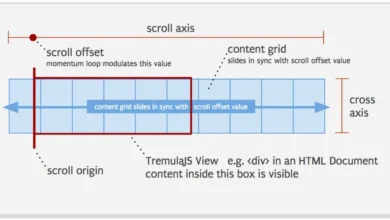
Scroll-driven animations—encompassing the animation-timeline, scroll-timeline, and view-timeline properties—continue to bridge the gap between user interaction and visual feedback by tying animations directly to scroll progression rather than time. Building upon the integration of same-document view transitions in previous cycles, Interop 2026 advances cross-document view transitions, facilitating seamless visual continuity when navigating between separate web pages.
Additionally, the Navigation API receives continued refinement, focusing heavily on interoperability and introducing advanced features such as the precommitHandler option for navigateEvent.intercept(), which defers commit actions until asynchronous handlers successfully resolve.
Data Handling, Performance, and Advanced APIs
Under-the-hood capabilities are heavily represented in Interop 2026. The fetch() method receives critical updates to support ReadableStream within request bodies for efficient data streaming, alongside robust handling of FormData, media types, and the HTTP Range header. Database operations are optimized via IndexedDB through the targeting of the getAllRecords() methods on IDBObjectStore and IDBIndex, drastically accelerating read operations on massive datasets.
WebAssembly (Wasm) performance is bolstered by the integration of JavaScript Promise Integration (JSPI), enabling synchronous-expecting Wasm applications to operate smoothly within asynchronous web environments. The WebTransport API, leveraging the high-performance HTTP/3 protocol, is also prioritized to ensure low-latency client-server communication. Other technical focus areas include scoped custom element registries, CSS scroll snap behavior, the contrast-color() function for guaranteed foreground-background accessibility, custom highlights for styling arbitrary text ranges without DOM inflation, and ongoing enhancements to WebRTC, web compatibility bug fixes, and the legacy-supporting zoom CSS property.
Industry Implications and Future Outlook
The launch of Interop 2026 signals a mature, cooperative era in web engineering. By institutionalizing cross-vendor collaboration, Apple, Google, Igalia, Microsoft, and Mozilla have established a predictable cadence for platform convergence. For enterprise organizations, independent developers, and digital agencies, this predictable alignment translates to tangible economic and operational benefits. Reduced cross-browser testing overhead, fewer implementation anomalies, and the abandonment of brittle workaround code allow development teams to focus on delivering rich, high-performance user experiences.
As automated test suites run continuously against baseline implementations through the remainder of the year, the broader web community can monitor progress via the wpt.fyi dashboard. The rigorous evaluation model of Interop 2026 not only accelerates the adoption of modern web standards but also reinforces the fundamental promise of the open web: build once, run everywhere.