Castillia Heritage Gala 2026 Convenes Global Leaders in Vienna to Bridge Historic Preservation and Modern Innovation

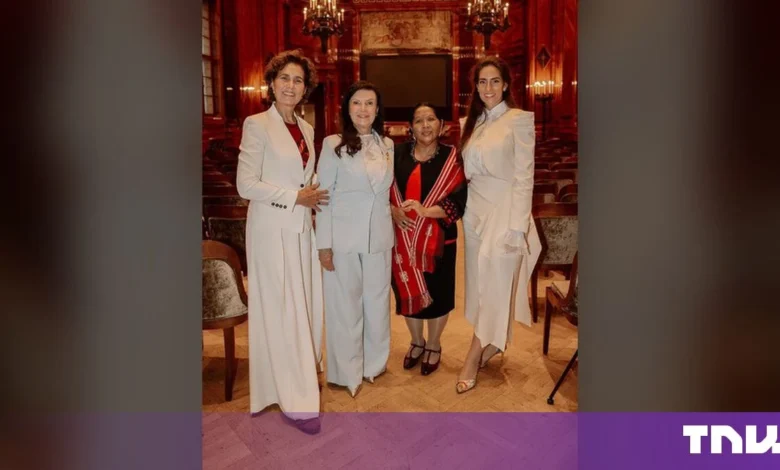
Vienna served as the grand backdrop for a convergence of tradition and modernity from October 30 to November 1, 2026, as HH Princess Sophia Wolkonsky, founder and CEO of Castillia, hosted the inaugural Heritage Gala. The invitation-only event transformed several of the Austrian capital’s most historic venues into a hub for discourse, connecting members of international royal houses with high-level technology executives, financial leaders, and pioneers in the rapidly expanding esports industry.
The three-day summit was designed to move beyond traditional networking, aiming instead to foster a cross-generational and cross-industry dialogue regarding the stewardship of cultural heritage in an era of rapid technological acceleration. Under the theme "The Enchanted Forest," the event explored how the preservation of historic properties and cultural narratives can be integrated with contemporary entrepreneurial ventures.
A Chronology of Engagement
The event’s program was meticulously curated to balance formal protocol with substantive intellectual exchange. The proceedings commenced on October 30 at the Wiener Rennverein, housed within the storied Palais Esterházy. This opening evening served as the platform for the formal launch of AVOR, a nonprofit cultural initiative intended to function as a "Global Cultural Atlas." The project, which seeks to engage younger generations in the documentation of local heritage, represents a significant shift toward digital archival practices, ensuring that historical narratives are accessible to global audiences.
On October 31, the focus shifted to the Heritage Salon held at the Park Hyatt Vienna. Here, the discourse turned to the technical and philosophical challenges of preserving cultural sites in the 21st century. Industry experts and stakeholders engaged in panel discussions concerning the digitisation of film archives and the economic sustainability of historic estates. The evening culminated in a formal gala dinner held at the Palais Pallavicini, an architectural gem of the late 18th century that provided an immersive experience of European aristocratic history. The summit concluded on November 1 with a farewell brunch, allowing for final deliberations among the attendees.
The Interdisciplinary Nexus: Royalty, Finance, and Esports
A notable feature of the Castillia 2026 gathering was the diversity of its guest list. While royal attendance is a hallmark of such elite gatherings, the inclusion of key figures from the technology and esports sectors signaled a deliberate attempt to broaden the scope of traditional diplomacy.
Among the prominent attendees were HRH Prince Omar bin Faisal of Jordan, President of the Jordan Esports Federation, and HRH Prince Gabriel of Nassau, representing the Grand Ducal family of Luxembourg. Their presence, alongside that of Johann Strobl, former CEO of Raiffeisen Bank International, and Alexandru Stan, CEO of The Next Web (TNW), created a unique environment where the capital requirements of heritage preservation met the scalability of the digital economy.
The inclusion of the esports sector—represented by figures such as Vlad Marinescu, President of the International Esports Federation, and Filip Šoć, President of the Alliance of Electronic Sports of Montenegro—highlighted a growing recognition of competitive gaming as a legitimate pillar of international culture. By integrating these leaders into a forum traditionally reserved for heritage and statecraft, Princess Sophia Wolkonsky’s initiative underscored the idea that cultural influence in the modern age is no longer confined to physical monuments but is increasingly shaped by digital participation and global connectivity.
The Rise of the Global Cultural Atlas: The AVOR Initiative
The central milestone of the 2026 Gala was the formal inauguration of the AVOR foundation. The initiative addresses a critical gap in cultural preservation: the vulnerability of intangible heritage and localized stories. According to official mission statements from the gala, the Global Cultural Atlas seeks to empower youth to act as curators of their own regional histories.
Data from the European Commission and other international bodies have long indicated that millions of hours of cultural history—in the form of film, audio, and written archives—remain locked away in non-digital formats, effectively invisible to the modern researcher. AVOR’s stated objective is to leverage contemporary technology to bridge this divide. By creating a decentralized, accessible atlas, the organization intends to provide a framework for digital documentation that transcends borders. The reaction from the gala’s attendees, including various royal patrons such as Maharani Sahiba Nivritti Kumari Mewar of Udaipur and Duke Michael zu Mecklenburg, suggests a growing consensus among international stakeholders that private-sector and philanthropic leadership is essential to filling the funding and logistics gaps left by traditional state-run preservation efforts.
Analysis: Bridging the Past and Future
The implications of the Castillia 2026 event are significant for both the luxury sector and the digital economy. Historically, "heritage" has been viewed as a static asset, often requiring state protection or the maintenance of static museums. However, the dialogue in Vienna suggests a pivot toward a more dynamic model. By aligning heritage assets with the interests of tech-forward venture capitalists and esports leaders, Castillia is effectively proposing a new economic model for cultural properties.
Industry analysis suggests that the sustainability of heritage sites now depends on their ability to integrate with digital ecosystems. Whether through virtual reality experiences of historical sites, the use of blockchain for the provenance of cultural artifacts, or the hosting of global digital events within historical venues, the "Enchanted Forest" concept serves as a metaphor for a future where history is not merely protected but actively performed and consumed.
The involvement of figures like Johann Strobl highlights the financial sector’s interest in this evolution. As ESG (Environmental, Social, and Governance) criteria become increasingly central to international investment strategies, the preservation of cultural heritage and the promotion of social, youth-led initiatives like AVOR offer attractive avenues for institutional and private capital. The convergence of these interests at the gala demonstrates that "legacy" is becoming a marketable asset class that appeals to both traditional dynastic families and the new guard of technology-driven entrepreneurs.
Patronage and Institutional Support
The success of the Castillia 2026 event was underpinned by a robust list of patrons whose involvement provided both institutional legitimacy and cross-continental reach. Beyond those already mentioned, the presence of Princess Ratsimamanga Ralandison Fenosoa and Prince Constantin Sturdza reflects the broad international appeal of the Castillia vision.
The patronage model employed by Princess Sophia Wolkonsky suggests a move away from isolated, domestic-focused heritage work toward a collaborative, international network. By providing a forum where a Prince from Jordan can discuss the development of competitive gaming with a European banking executive, the gala effectively dismantled the silos that often characterize these disparate industries.
Future Projections for Cultural Preservation
As the international community looks toward the latter half of the 2020s, the model presented by the Castillia Heritage Gala may serve as a template for future summits. The shift toward digital preservation, as championed by the AVOR foundation, addresses the urgent need to protect collective memory from the degradations of time and political volatility.
The success of the Vienna gathering suggests that the next phase of cultural management will be defined by "hybridity"—the blending of the physical with the digital, the royal with the entrepreneurial, and the local with the global. With the infrastructure of the Global Cultural Atlas now in development, the project faces the challenge of scaling its operations to include diverse, often disenfranchised, cultural voices.
In conclusion, the Castillia Heritage Gala 2026 was more than a ceremonial meeting; it was a strategic alignment of influence. By placing the preservation of the past at the heart of the future’s most innovative industries, the organizers have initiated a conversation that is likely to resonate across both the corridors of power and the digital landscapes of the coming decade. As the attendees return to their respective sectors, the impact of their shared commitments in Vienna will be measured by the success of the AVOR initiative and the broader adoption of the principles of integrated cultural stewardship.
Disclosure: TNW CEO Alexandru Stan attended Castillia 2026 as a guest. TNW received no payment for this article, and Castillia did not cover travel or accommodation for our attendance.