The Origins of the ROM Hacking Movement
The practice of "ROM hacking"—the modification of a video game’s data to alter its graphics, music, or level design—dates back to the late 1990s, shortly after the release of emulators like Snes9x and ZSNES. While initial efforts were rudimentary, the establishment of platforms like SMW Central provided a centralized hub for creators to share patches, tools, and documentation. This infrastructure transformed a fractured set of hobbyists into a cohesive development community.
The genre exploded in popularity with the emergence of "Kaizo" style hacks—named after the infamous Kaizo Mario World series—which focus on extreme difficulty, precision platforming, and the subversion of standard game logic. Titles such as Grand Poo World 1 and 2, Invictus, and Dram World elevated this subgenre, turning these fan-made projects into marquee events within the speedrunning and streaming communities on platforms like Twitch and YouTube.

Chronology of the Grand Poo World Series
The Grand Poo World series, developed by the prominent creator "PangeaPanga," serves as a benchmark for the current state of SMW hacking. The series’ evolution reflects the increasing technical complexity of fan-made content:
- 2017: The original Grand Poo World is released, setting a new standard for difficulty and creative level design. It gains massive traction on streaming platforms, introducing thousands of new players to the world of ROM hacking.
- 2019: Grand Poo World 2 launches, featuring significantly improved aesthetics, custom music, and "QOL" (quality of life) improvements such as sophisticated retry systems and custom menus.
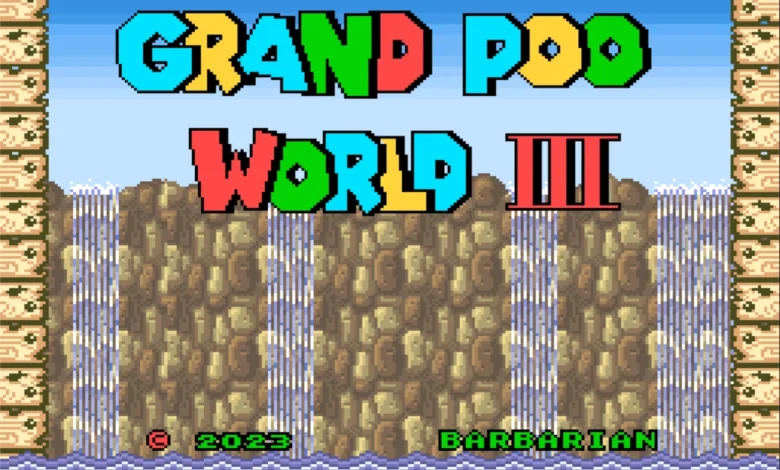
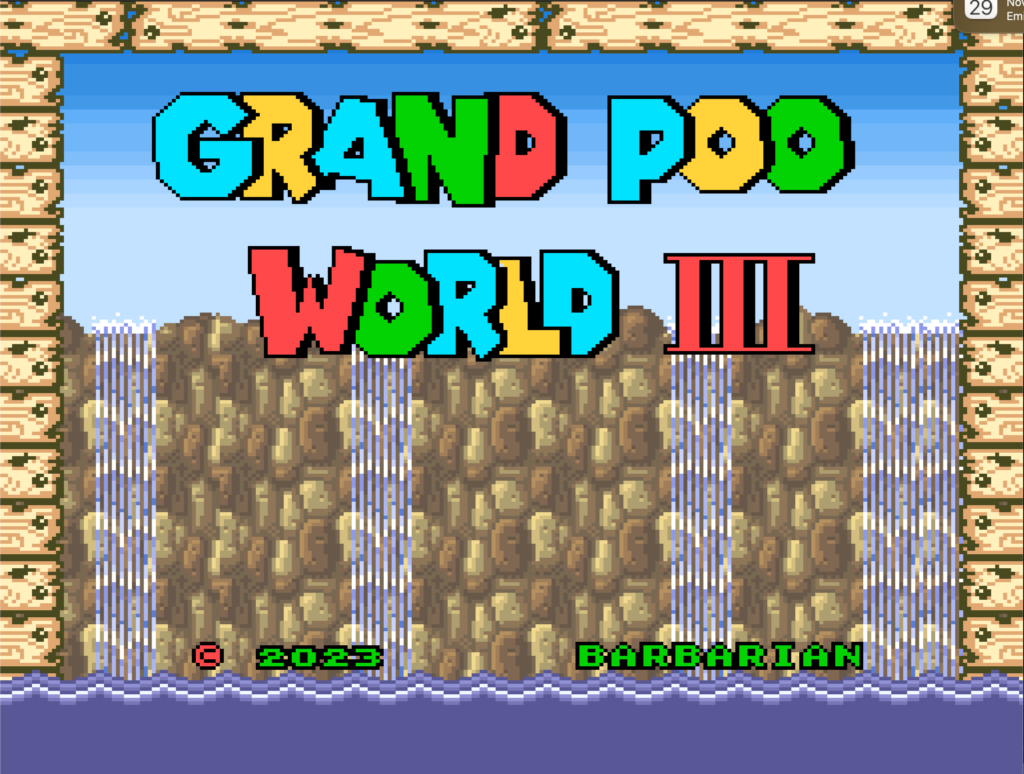
- 2023: Grand Poo World 3 is released. It represents the pinnacle of the series, utilizing advanced "Lunar Magic" level editing techniques and custom code injections that push the SNES hardware to its absolute functional limits.
Technical Requirements and the Patching Process
Unlike commercial software updates, ROM hacks are distributed as "IPS" or "BPS" patch files. This is a deliberate design choice driven by legal constraints. Because distributing a copyrighted ROM file—a bit-for-bit copy of the original Super Mario World game—is a violation of intellectual property law, the community developed a "patching" model.
To play Grand Poo World 3, a user must possess a legally acquired, clean, and unedited copy of the original 1990 Super Mario World ROM. The user then employs a patching utility, such as Floating IPS (Flips) or Beat, to merge the patch file with the original game data. This process creates a modified version of the game while ensuring that the distribution of the patch itself does not technically redistribute Nintendo’s copyrighted assets.
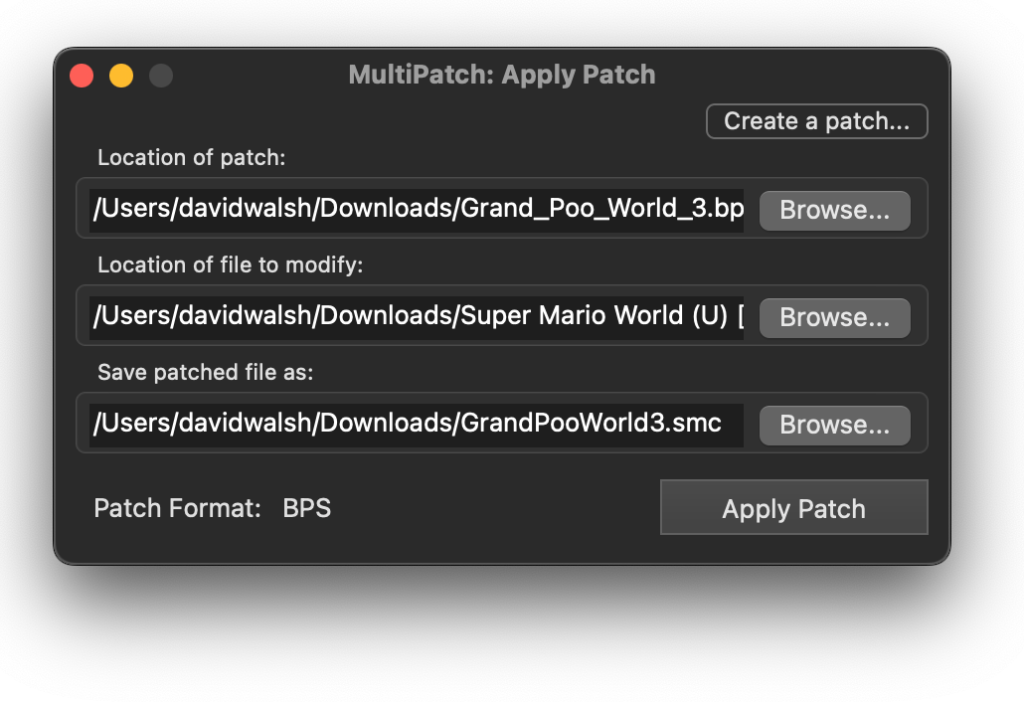
This workflow is supported by essential utility tools:
- Lunar Magic: The industry-standard level editor for SMW, which allows for the manipulation of every map tile, object, and sprite in the game.
- JSRomClean: A crucial diagnostic tool used to verify that the base ROM file is in the correct format (usually Headerless, LoROM) before patching, preventing potential crashes or graphical glitches.
- Emulator Software: Platforms like BSNES or Mesen-S are typically recommended for their high-level accuracy in simulating the SNES environment, ensuring the hack behaves exactly as the designer intended.
The Impact of Open Source Philosophy
The ROM hacking community operates similarly to the open-source software movement. By sharing "Asar" patches—small snippets of code that can be injected into the game’s assembly language—creators allow others to implement features like custom boss battles, mid-level checkpoints, and complex physics modifications.
This collaborative environment has effectively turned Super Mario World into an open-ended game engine. While Nintendo’s own Super Mario Maker series provided an accessible, official route for level creation, it remains constrained by the company’s walled-garden approach. In contrast, the SMW hacking scene offers unrestricted freedom. Creators can modify the game’s core memory, rewrite movement mechanics, and design experiences that would be impossible within the limitations of the Mario Maker toolset.
Industry Implications and Legal Landscape
The continued popularity of ROM hacking occupies a complex space in the gaming industry. While companies like Nintendo have historically taken a firm stance on intellectual property, the ROM hacking community has largely avoided direct legal confrontation by adhering to the "patching" model, which relies on the end-user providing the original, licensed game.
From an industry analysis perspective, these hacks serve as a form of "community-led preservation." By keeping the 1990 codebase relevant through constant innovation, these creators ensure that the original game is never truly obsolete. Some analysts suggest that this creates a "long tail" effect, keeping the brand awareness of classic titles high long after their initial release. However, the legal reality remains precarious; should a distribution platform facilitate the sharing of original ROMs alongside these patches, the risk of litigation increases significantly.
Challenges and Future Directions
The main hurdle for the future of SMW hacking is the "barrier to entry." For a casual player, the process of locating a specific ROM, verifying its checksum, and applying a patch is technically daunting compared to the "plug-and-play" nature of modern gaming. Despite this, the community has invested heavily in creating detailed documentation and video tutorials to streamline the onboarding process for newcomers.

Furthermore, as the hardware constraints of the SNES are pushed further, the community faces the challenge of "ROM bloat." Advanced hacks now frequently hit the maximum storage capacity of the original game cartridge architecture. To circumvent this, developers are increasingly utilizing "SA-1" chips—a digital acceleration chip that was originally included in some late-era SNES games to increase processing power—to allow for more complex levels and faster gameplay.
Conclusion: A Legacy of Innovation
The release of Grand Poo World 3 is not merely the arrival of a new game; it is a testament to the endurance of community-driven design. By leveraging the base mechanics of a three-decade-old title and applying the principles of modern software development and open-source collaboration, the SMW community has crafted a unique digital ecosystem.
As long as the original Super Mario World continues to serve as a versatile foundation, creators will likely continue to push the boundaries of what is possible on 16-bit hardware. For the players who embrace the "pain" and precision required to conquer these levels, the experience represents a unique intersection of nostalgia, technical mastery, and creative expression. The ROM hacking scene remains a vibrant, albeit complex, facet of the global gaming landscape, proving that with enough passion and technical ingenuity, even the oldest games can feel entirely brand new.
Related posts: