Jio Platforms Makes Historic Market Debut: Mukesh Ambani’s Telecom Giant Surges 21% Following India’s Largest-Ever IPO

Jio Platforms, the digital services and telecommunications titan spearheaded by billionaire industrialist Mukesh Ambani and backed by Silicon Valley heavyweights Meta and Google, experienced a remarkable 21% surge during its stock market debut on Wednesday. The triumphant market entry followed a groundbreaking $3.2 billion initial public offering (IPO), which stands as India’s largest and most heavily subscribed public offering to date. The unprecedented market event drew staggering investor bids exceeding $77 billion, underscoring profound domestic and international confidence in the trajectory of India’s premier digital infrastructure provider.
Trading on the local bourses commenced with shares opening at ₹1,358 (approximately $14) apiece, marking a substantial premium over the established IPO price of ₹1,119 (around $12). This robust initial valuation placed Jio’s market capitalization at approximately ₹12.5 trillion ($131.9 billion). Consequently, Jio instantly secured its position as India’s second-most valuable publicly listed enterprise, trailing only its corporate parent, Reliance Industries, which commands a valuation of roughly ₹16 trillion ($168.6 billion). The valuation trajectory highlights an extraordinary ascent; when Meta and Google acquired strategic stakes in 2020, Jio was valued at a comparatively modest ₹4.91 trillion (about $65 billion at the time).
Record-Breaking Investor Demand and Subscription Metrics
The primary share offering, conducted over a two-day window from October 21 to October 22, galvanized the Indian capital markets by drawing bids for 22.19 times the total number of shares on offer, according to official stock exchange data. Participation reached historic scales, with more than 13.8 million individual and institutional investors submitting applications.
This overwhelming response cemented the offering as India’s most subscribed stock market debut on record. Financial analysts attribute the frenzy to intense institutional and retail appetite for exposure to the nation’s undisputed telecom leader, which has systematically transformed the digital consumption habits of over a billion people. The entire offering consisted solely of newly issued primary shares, meaning that existing early-stage backers—including tech giants and private equity firms—chose to retain their equity rather than cash out during the listing.
Evolution of a Market Disruptor: From 2016 Disruption to Ecosystem Expansion
The roots of Jio’s market dominance trace back to 2016, a watershed moment when the company entered an intensely crowded and legacy-dominated Indian telecommunications sector. By introducing unprecedented pricing structures that featured free cellular data and ultra-low-cost voice services, Jio radically compressed market margins and rapidly compelled legacy operators to adapt.
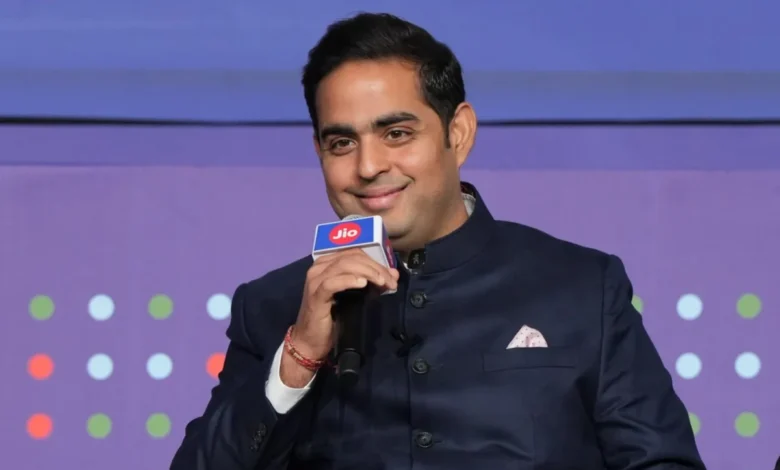
The strategy systematically displaced established incumbents, including Bharti Airtel, Vodafone Idea, and state-backed BSNL, allowing Jio to capture the largest subscriber market share in the country. Speaking at Wednesday’s landmark listing ceremony, Akash Ambani, managing director of Jio Platforms and eldest son of Mukesh Ambani, revealed that the company’s vast digital ecosystem now serves a staggering customer base exceeding 540 million subscribers.
While Jio’s initial market penetration was built on aggressive pricing, its current tariff structures are broadly aligned with those of its industry competitors. Over the intervening years, the company has successfully transitioned from a pure-play mobile carrier into a diversified technology conglomerate. Its business operations now span high-speed fixed-line broadband (JioAirFiber), enterprise and consumer cloud services, and cutting-edge artificial intelligence infrastructure.
Leadership Transition and Global Ambitions
The IPO and subsequent public trading debut also symbolize a critical generational handover within Reliance Industries. As Mukesh Ambani gradually delegates operational control to the next generation of leadership, Akash Ambani has stepped into a primary executive role, steering Jio’s strategic direction.
During his address at the listing ceremony, the younger Ambani articulated grand ambitions that extend far beyond domestic supremacy, signaling an intent to position Jio as a formidable global technology leader.
"My dream is that one day, when the world counts its great technology companies, one of them will be from India, and that company will be called Jio Platforms Limited," Akash Ambani stated to an assembly of investors, analysts, and corporate leaders.
Financial Health, Profitability, and Capital Allocation
Underpinning the market enthusiasm are robust financial fundamentals. For the fiscal year ending March 2026, Jio Platforms posted a net profit of ₹300.5 billion (approximately $3.2 billion) on operating revenues of ₹1.47 trillion (around $15.5 billion). Both key financial metrics registered an impressive year-on-year growth rate of approximately 15%. This financial momentum persisted into the subsequent quarter, with June-quarter revenues expanding by nearly 12% and net profit rising 9% compared to the same period in the previous fiscal year.
The capital raised through the $3.2 billion IPO will be deployed strategically to optimize the company’s balance sheet. According to regulatory filings, Jio intends to utilize up to ₹275 billion ($2.9 billion) of the IPO proceeds to prepay and service outstanding debt held by its primary telecom subsidiary, Reliance Jio Infocomm. The remainder of the capital will be allocated toward general corporate purposes and ongoing infrastructure expansion. As of June 30, Jio Platforms carried total borrowings amounting to ₹613.7 billion (around $6.5 billion), a manageable leverage ratio relative to its surging cash flows and top-line expansion.
The Silicon Valley Alliance: Meta, Google, and Global Private Equity
Jio’s meteoric rise to public markets was significantly catalyzed during the height of the COVID-19 pandemic in 2020, when the enterprise successfully secured billions of dollars in foreign direct investment from premier American technology giants and institutional investors.
In April 2020, Meta (then operating under the name Facebook) announced a landmark $5.7 billion investment to acquire a substantial minority stake in Jio Platforms, aiming to integrate WhatsApp’s messaging infrastructure with JioMart to empower small merchants across India. This was closely followed in November 2020 by a $4.5 billion capital injection from Google, accompanied by a strategic partnership to develop low-cost 4G and 5G smartphones tailored to the Indian demographic.
In addition to the Silicon Valley titans, a consortium of elite global private equity firms—including General Atlantic, Silver Lake, and Vista Equity Partners—poured billions into the enterprise, validating its business model and preparing its infrastructure for public capital markets. Notably, none of these foundational institutional investors divested their holdings during the IPO, reflecting a shared long-term conviction in Jio’s capacity to scale its digital and AI services globally.
Broader Economic Implications and Future Outlook
The historic debut of Jio Platforms is widely viewed by macroeconomic analysts as a watershed moment for the Indian capital markets and the broader technology sector. By absorbing over $77 billion in bids, the IPO demonstrates the immense depth and liquidity of domestic retail and institutional capital in India, reducing the historical reliance of major homegrown corporations on foreign listings.
Furthermore, the integration of Reliance and Jio with global AI leaders—highlighted by recent infrastructure agreements with Meta for domestic AI data centers—positions the firm at the vanguard of the artificial intelligence revolution in the Global South. As Jio channels its newly acquired capital into advanced telecommunications, cloud computing, and AI integration, the company enters its public era with both the financial muscle and the strategic partnerships required to challenge established Western and East Asian technology conglomerates on the world stage.