Tesla Begins Volume Production of the Semi at Gigafactory Nevada Marking a New Era for Electric Freight

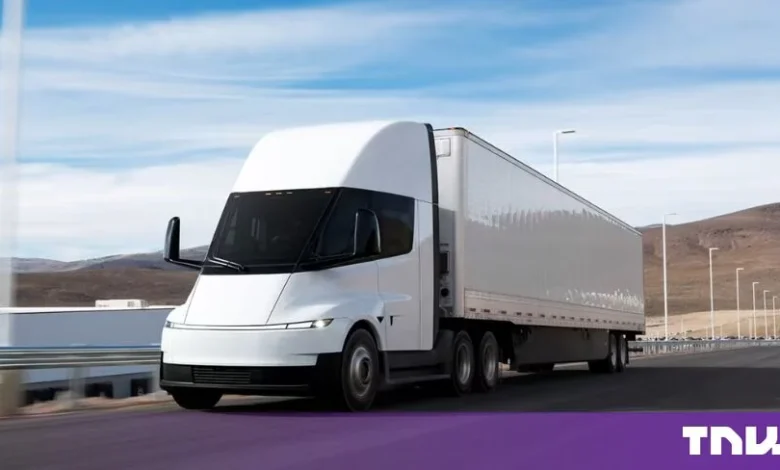
The automotive and logistics industries have reached a significant inflection point as Tesla officially commences volume production of its Class 8 Semi at Gigafactory Nevada. This development follows a protracted nine-year gestation period since the vehicle was first unveiled in 2017. As the first units roll off the assembly line and reach customers this week, the industry is closely monitoring whether the electric heavy-duty truck can successfully disrupt the long-haul freight sector, which has been historically dominated by diesel-powered internal combustion engines.
A Long Road to Production
The journey of the Tesla Semi has been marked by ambition and significant technical hurdles. When CEO Elon Musk first introduced the concept in November 2017, the promised specifications—including a 500-mile range and rapid charging capabilities—were met with both skepticism and intrigue. The timeline for delivery shifted multiple times as Tesla prioritized the ramp-up of its high-volume passenger vehicles, the Model 3 and Model Y.
By the time the first pilot deliveries began in late 2022, the trucking industry had undergone a shift in sentiment regarding electrification. With global fuel prices remaining volatile and regulatory pressures mounting, the business case for a battery-electric heavy hauler has strengthened significantly. The move to full-scale volume production at Gigafactory Nevada signals that Tesla has finally navigated the complex supply chain constraints that previously hampered its ability to produce the Semi at scale.
Performance Metrics and Technical Realities
The Tesla Semi is engineered to address the specific demands of heavy-duty logistics, utilizing a three-motor powertrain that provides up to 800 kW of power. However, Tesla has been transparent about the conditions required to achieve its headline performance figures. The Long Range variant, rated for 500 miles, and the Standard Range variant, rated for 325 miles, are measured under strictly controlled conditions: a gross vehicle weight of 82,000 pounds, a cruising speed of 55 miles per hour, an ambient temperature of 20 degrees Celsius, and flat-ground topography.
Data filed with the California Air Resources Board (CARB) has provided deeper insight into the vehicle’s energy storage, revealing usable battery capacities of approximately 822 kWh for the Long Range model and 548 kWh for the Standard Range model. These batteries rely on Tesla’s proprietary 4680 cylindrical cells produced at Gigafactory Texas. While the 4680 architecture is central to Tesla’s vertical integration strategy, industry analysts note that these cells have faced performance and yield challenges when compared to the high-nickel, NCM-based cells utilized by competitors in the passenger vehicle segment.
Central to the Semi’s utility is the Megacharger, which operates at 1.2 megawatts. Tesla claims this system can recover 60% of the vehicle’s range in just 30 minutes, a crucial metric for fleet operators who prioritize uptime. Both the vehicle and the charging hardware utilize the Megawatt Charging System (MCS) 3.2 connector, an industry standard designed to facilitate high-power delivery without damaging battery longevity.
The European Strategy and Infrastructure Gap
While production is currently centered in the United States, Tesla is laying the groundwork for a future European rollout, currently slated for 2027. The company has already installed over 100 megawatt-capable stalls across 21 strategic sites spanning Germany, France, the United Kingdom, Sweden, and the Benelux region.
This preemptive investment highlights a strategic divergence from current European regulatory requirements. The International Council on Clean Transportation (ICCT) has observed that European law mandates charging points of at least 350 kW every 60 kilometers along the core European transport network. By building out a 1.2-megawatt network well in advance of the vehicle’s local release, Tesla is positioning itself as the premium provider of high-speed charging infrastructure, effectively creating an ecosystem before the trucks themselves hit the roads.
Economic Drivers and Industry Adoption
The surge in interest for the Tesla Semi is inextricably linked to the economic realities of the global freight market. With diesel prices in the United States averaging over $6.50 per gallon—a figure influenced by ongoing geopolitical instability in Ukraine and the Middle East—fleet operators are under immense pressure to reduce operating expenses.
The economic incentive is driving large-scale procurement. Recently, a consortium of shipping companies placed orders for 2,500 Semis, an order volume that would effectively double the size of the current American electric truck fleet. Furthermore, Swedish logistics firm Einride recently ordered 500 units, representing the largest announced deployment of the vehicle to date. These trucks are expected to serve routes across California, Texas, New Jersey, Illinois, and Georgia. Notably, Amazon maintains a significant interest in Einride, holding warrants over approximately 12% of the company, which underscores the high-level corporate backing behind the transition to electric heavy-duty transit.
Analyzing the Impact on Logistics
The transition to electric heavy-duty vehicles carries profound implications for the logistics sector. The "total cost of ownership" (TCO) model is the primary lens through which fleet managers evaluate the Semi. While the upfront capital expenditure of an electric truck remains higher than that of a diesel equivalent, the operational savings—derived from lower fuel costs and reduced maintenance requirements—are intended to offset the initial premium over the vehicle’s lifespan.
However, the industry faces challenges regarding grid capacity and load management. Charging a fleet of 822 kWh vehicles simultaneously requires significant localized grid upgrades, a factor that could limit deployment to major logistics hubs in the short term. Tesla’s ability to scale production to 50,000 units annually, as stated in its long-term manufacturing goals, will ultimately depend on its success in overcoming these infrastructure and battery production bottlenecks.
The Competitive Landscape
Tesla is not the only player in the electric trucking arena. Established manufacturers such as Daimler (Freightliner), Volvo, and PACCAR (Peterbilt and Kenworth) are also scaling their own electric offerings. While these legacy manufacturers often leverage existing manufacturing chassis and supply chains, Tesla’s "ground-up" approach—which includes integrated software, proprietary cell production, and a dedicated high-speed charging network—differentiates its business model.
The coming three years will be a critical testing period. If Tesla can maintain the production cadence at Gigafactory Nevada and if the real-world performance of the 4680-cell packs proves durable under the extreme duty cycles of long-haul freight, the Semi could significantly accelerate the electrification of the heavy transport industry. Conversely, if technical issues persist or charging infrastructure rollout lags, the company may find itself struggling to maintain its lead against incumbents who possess deeper experience in fleet servicing and maintenance support.
Conclusion
The arrival of the Tesla Semi into volume production is a milestone that transcends simple vehicle manufacturing. It represents the intersection of energy storage technology, advanced power electronics, and industrial logistics. As the first units begin their operations on American highways, the data gathered from these deployments will provide the first real-world proof of whether electric heavy-duty vehicles can provide the reliability and economic return necessary to displace the diesel engine on a global scale. With the backing of major logistics players and a deliberate expansion strategy, Tesla is now set to prove that the promise of the 2017 unveiling can be sustained in the demanding environment of modern commercial freight.