Discovery of an Atmosphere on Rocky Exoplanet LHS 1140 b Marks a Major Milestone in the Search for Life Beyond Earth

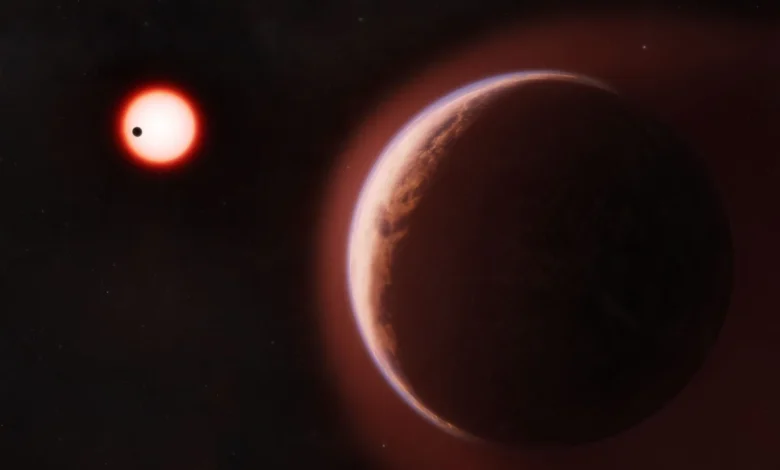
Astronomers have achieved a historic milestone in the field of exoplanetary science by confirming, for the first time, the existence of a rocky planet that possesses both a stable atmosphere and a location within its star’s habitable zone. The planet, designated LHS 1140 b, is situated approximately 48 light-years from Earth in the constellation Cetus. This discovery, led by researchers at the Harvard-Smithsonian Center for Astrophysics, represents the most significant step forward in decades toward identifying a world that could potentially support life as we know it. Unlike previous candidates that lacked one or more essential criteria, LHS 1140 b appears to meet the triple requirement of being a terrestrial body, orbiting at a distance that allows for liquid water, and retaining a protective gaseous envelope.
The confirmation of an atmosphere on a rocky planet in the "Goldilocks zone"—the region around a star where temperatures are neither too hot nor too cold for liquid water to exist—has long been the "holy grail" of modern astronomy. While thousands of exoplanets have been discovered since the mid-1990s, the vast majority are either gas giants like Jupiter or rocky worlds that have had their atmospheres stripped away by intense stellar radiation. LHS 1140 b stands out as a rare exception, offering a glimpse into a planetary system that may mirror the evolutionary path of our own solar system.
The Physical Profile of LHS 1140 b
LHS 1140 b was first identified in 2017, but it has taken nearly a decade of refined observations to characterize its environment. It is classified as a "Super-Earth," a category of planets with a mass larger than Earth’s but substantially smaller than that of ice giants like Neptune. Specifically, the planet is roughly 1.7 times the radius of Earth and possesses more than five times its mass. This high density confirms a rocky composition, likely consisting of a localized iron core and a silicate mantle, similar to the terrestrial planets in our inner solar system.
The planet orbits a cool red dwarf star, LHS 1140, which is significantly smaller and dimmer than our Sun. Because red dwarfs emit less heat, their habitable zones are much closer to the star than the Sun’s habitable zone. LHS 1140 b completes a full orbit in just 25 days. Despite this proximity, the low luminosity of the host star ensures that the planet receives an amount of stellar energy comparable to what Earth receives from the Sun, placing it firmly within the bounds of habitability.
Detection of the Helium Signature
The breakthrough in the recent study, published in the journal Science, involves the detection of helium in the planet’s upper atmosphere. Using high-resolution spectroscopy, the research team identified the spectral "fingerprints" of helium gas as it filtered through the light of the host star during a transit—the moment the planet passes in front of the star from Earth’s perspective.
The detection of helium is significant not because the gas itself is a sign of life, but because of what it reveals about the planet’s history and structural integrity. Helium is a light gas that easily escapes into space if a planet’s gravity is too weak or if the stellar wind is too violent. By observing "helium leaks" emanating from the planet, researchers were able to use physical models to reconstruct the atmosphere’s density and longevity. The data suggests that LHS 1140 b has successfully retained its atmosphere for at least 3 billion years, a duration long enough for complex chemical processes—and potentially biological ones—to occur.
While the upper atmosphere shows a prevalence of helium, the researchers hypothesize that the lower layers may contain heavier molecules. On Earth, the atmosphere is dominated by nitrogen and oxygen; on LHS 1140 b, the lower atmosphere could potentially house nitrogen, carbon dioxide, or even water vapor. The presence of these heavier gases would be essential for creating the surface pressure required to keep water in a liquid state.
A Chronology of Discovery and Observation
The journey to characterizing LHS 1140 b has been a multi-year endeavor involving some of the world’s most sophisticated astronomical tools.
- 2017: The planet was first discovered by the MEarth project, a ground-based robotic observatory designed to find Earth-sized planets orbiting red dwarfs. Initial data suggested a rocky composition and a position in the habitable zone.
- 2019–2020: Follow-up studies using the High Accuracy Radial velocity Planet Searcher (HARPS) in Chile and the Transiting Exoplanet Survey Satellite (TESS) refined the planet’s mass and radius, confirming it as a high-density Super-Earth.
- 2023: Preliminary observations with the James Webb Space Telescope (JWST) began to hint at the presence of an atmosphere, though the data remained inconclusive until the integration of newer spectral models.
- 2024–2025: The Harvard-Smithsonian team utilized the latest observational data to confirm the helium leaks. This period marked the definitive transition from "potential candidate" to "confirmed atmospheric rocky planet."
The Importance of the Atmosphere for Habitability
For a planet to be truly habitable, a rocky surface and the right temperature are insufficient on their own. The atmosphere serves several critical functions that make life possible. First, it acts as a thermal regulator. Without an atmosphere, a planet experiences extreme temperature swings between its day and night sides. An atmosphere circulates heat, creating a more stable global climate.
Second, atmospheric pressure is what prevents liquid water from boiling away into space or freezing permanently. On Earth, the weight of the air allows oceans to persist. Third, an atmosphere provides a shield against harmful cosmic radiation and stellar flares. Red dwarf stars are known for their volatility, often emitting high-energy X-rays and ultraviolet radiation that can sterilize a planet’s surface. The fact that LHS 1140 b has maintained an atmosphere for billions of years suggests that its host star is unusually quiet or that the planet’s magnetic field is strong enough to protect its gaseous shell.
Expert Analysis and Official Responses
The scientific community has reacted with cautious optimism to these findings. Robin Wordsworth, a professor at Harvard and a co-author of the study, emphasized the historical context of the discovery. "Twenty years ago we wondered whether other terrestrial-type planets even existed," Wordsworth stated in a press release. "Then we learned they’re common, and found some in the habitable zone. The next question was whether any of them had managed to keep an atmosphere. Now, we know at least one has."
Other researchers in the field of astrobiology note that LHS 1140 b may be a better candidate for life than the famous TRAPPIST-1 system. While TRAPPIST-1 has seven Earth-sized planets, its star is highly active and prone to frequent, violent flares that may have stripped those planets of their atmospheres. LHS 1140, being a more "mature" and stable red dwarf, provides a more hospitable environment for long-term atmospheric retention.
However, scientists warn against assuming that the atmosphere is "Earth-like" in its composition. The helium detected is likely a remnant of a much larger primordial envelope. The current challenge is to determine if the planet has undergone "outgassing"—a process where volcanic activity releases gases from the interior to create a secondary atmosphere, similar to how Earth’s atmosphere formed.
Broader Implications and Future Missions
The confirmation of an atmosphere on LHS 1140 b shifts the focus of exoplanet research from "discovery" to "characterization." Now that astronomers know the atmosphere exists, the next step is to perform a detailed chemical analysis to look for biosignatures—gases like oxygen, methane, or ozone that are often produced by biological activity.
This discovery validates the techniques used to detect thin atmospheres on distant, small worlds. The success of the helium-leak detection method will now be applied to other candidate planets. In the coming years, LHS 1140 b will be a primary target for the James Webb Space Telescope’s NIRSpec instrument, which can peer deeper into the atmospheric layers. Additionally, the upcoming Extremely Large Telescope (ELT), currently under construction in Chile, will have the resolution required to potentially image the planet’s atmosphere directly and search for evidence of surface oceans.
If LHS 1140 b is found to have a nitrogen-rich atmosphere and liquid water, it would confirm that the conditions for life are not unique to our solar system but are a natural consequence of planetary evolution under the right conditions. While 48 light-years is a vast distance—far beyond the reach of current human spacecraft—it is close enough for our most powerful telescopes to study in exquisite detail.
The search for "Earth 2.0" has found its most promising lead yet. While LHS 1140 b may not be a perfect twin of our home planet, it is undeniably a close relative, providing a vital laboratory for understanding the limits of habitability in the universe. The study of this distant world is no longer just about finding a rock in space; it is about understanding the protective blankets of gas that allow life to take hold and persist across the eons.