The direct-to-consumer (DTC) luggage market has undergone a significant transformation over the last decade, transitioning from a luxury-dominated sector to one increasingly defined by high-performance, accessible alternatives. For years, brands like Away set the industry standard, popularizing the minimalist polycarbonate hard-shell design and integrating modern features such as 360-degree silent-run wheels and built-in compression systems. However, the emergence of value-oriented retailers like Quince has introduced a competitive tension in the market, forcing consumers to re-evaluate the premium paid for brand equity versus functional utility.
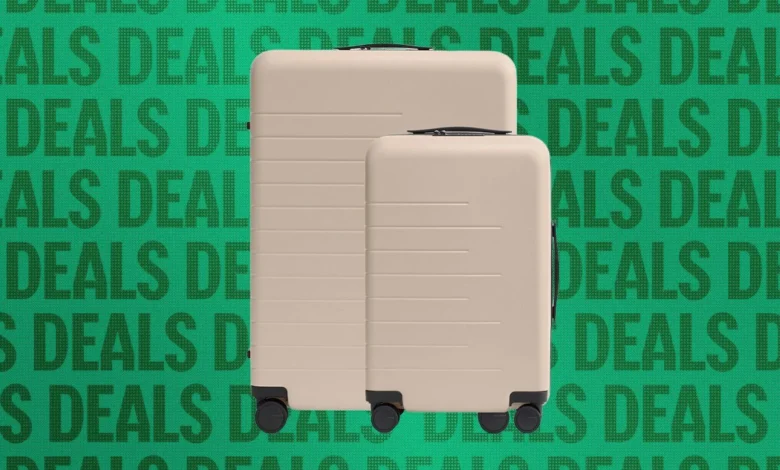
A primary driver of this shift is the evolution of manufacturing standards. Modern luggage production, particularly regarding high-grade polycarbonate, has become more democratized, allowing new entrants to offer high-durability products at a fraction of the cost associated with established legacy brands. The Quince Expandable Small Carry-On and Large Check-In Suitcase Set, priced at $270, represents a strategic challenge to the pricing models long maintained by industry leaders.
The Anatomy of the Value Proposition
To understand the current market dynamics, one must compare the technical specifications of premium luggage against these emerging lower-cost alternatives. The Quince bundle, which includes both a carry-on and a large check-in piece, utilizes materials that mirror the industry standard for lightweight durability: polycarbonate shells. Both the Quince set and the comparable "Flex" series from competitors offer identical structural features, including expansion zippers, integrated TSA-approved combination locks, and multi-stage telescopic handles.
Data suggests that the weight-to-volume ratio—a critical metric for frequent travelers navigating airline baggage weight limits—is now essentially uniform across these price points. Independent testing and user reports indicate that the weight of the Quince carry-on is often slightly lower than its more expensive counterparts, a factor attributed to advancements in lightweight chassis engineering. Furthermore, the inclusion of interior organizational components, such as compression panels and laundry bags, indicates that Quince is not merely providing a budget shell, but a comprehensive travel system designed to compete on usability rather than just aesthetics.
A Chronology of Direct-to-Consumer Luggage
The rise of the DTC luggage model began in the mid-2010s, with companies leveraging social media marketing and a "factory-to-consumer" narrative to cut out traditional retail markups. By bypassing wholesale distribution channels, these companies could offer premium-feeling products for $300 to $500, a significant discount compared to heritage brands like Tumi or Rimowa, which often retailed for over $800.
Between 2016 and 2020, the market saw an explosion of brands attempting to capture the "millennial traveler" demographic. This period was marked by rapid innovation, including the short-lived trend of integrating lithium-ion battery packs into carry-ons. Following regulatory changes by the FAA and international aviation authorities, the industry pivoted back to design-focused, high-utility cases.
Quince entered the travel goods sector more recently, utilizing a "manufacturer-direct" model that emphasizes transparency in the supply chain. By partnering directly with the same factories that produce for higher-end labels, Quince has been able to undercut established DTC competitors by 30 to 50 percent. This business model has disrupted the perceived value of high-end luggage, as consumers begin to question why a polycarbonate shell, regardless of branding, should command a premium exceeding $400.
Competitive Benchmarking: Price and Policy
The competitive landscape is defined not only by product quality but also by the rigidity of corporate return policies and warranty coverage. Traditional luggage brands have historically relied on limited lifetime warranties that often exclude damage caused by airline handling. In contrast, newer entrants like Quince are attempting to gain market share by offering more flexible return windows, such as the 365-day trial period, which significantly exceeds the industry average of 30 to 100 days.
When comparing the costs, the discrepancy is stark:
- Quince Expandable Carry-On: $140
- Quince Large Check-In: $220
- Combined Bundle Price: $270 (a $90 savings)
Conversely, similar configurations from premium DTC brands often total between $600 and $750. When adjusted for the "utility per dollar" metric, the Quince set offers a return on investment that appeals to budget-conscious travelers who prioritize the functional aspects of the gear—durability, weight, and maneuverability—over the prestige associated with a specific logo.
The Role of Minimalist Design in Modern Travel
Minimalist design has become the aesthetic benchmark for the modern suitcase. The absence of heavy branding and the utilization of neutral, muted color palettes have become synonymous with "sophisticated" travel. While these designs are visually appealing, they present a practical challenge: identification. On a busy baggage carousel, a minimalist suitcase can easily be mistaken for dozens of others.
Both Away and Quince offer color variety to mitigate this issue, yet the industry trend remains anchored in the sleek, logo-free look. From a design perspective, this creates a "commodity" effect. If the external dimensions, the internal capacity, and the exterior finish of two suitcases are functionally indistinguishable, the consumer decision-making process shifts entirely to price and brand loyalty. The rise of Quince suggests that brand loyalty in the luggage space is becoming increasingly fragile as consumers prioritize economic efficiency.
Broader Industry Implications
The emergence of high-quality, low-cost luggage has broader implications for the travel goods industry. Legacy manufacturers are now faced with a "middle-market squeeze." To remain competitive, they must either lower their prices—risking brand dilution—or invest heavily in features that differentiate them from the low-cost competitors, such as integrated GPS tracking, sustainable material sourcing, or enhanced material resilience (e.g., aerospace-grade aluminum).
Furthermore, the focus on "lifestyle" accessories—such as compression packing cubes, neoprene toiletry kits, and modular travel pouches—demonstrates that companies like Quince are moving to capture the entire travel ecosystem. By providing a low-entry-cost for the luggage itself, these brands create a "gateway" for customers to purchase high-margin accessories.
Expert Analysis and Consumer Sentiment
Industry analysts note that the durability of modern polycarbonate suitcases is largely standardized due to the global nature of manufacturing. Most luggage brands utilize a select few manufacturing hubs in Asia, meaning the difference in quality between a $150 case and a $350 case is often found in the marketing budget, the warranty support staff, and the physical retail presence, rather than the raw materials themselves.
For the average traveler, the "stress test" of modern travel—frequent loading and unloading, exposure to environmental extremes, and the rigors of transit—no longer requires the high-cost investment of the past. As consumer behavior shifts toward value-based purchasing, the onus is on established brands to prove that their price premium offers a tangible benefit beyond the name printed on the luggage tag.
The Future of the Travel Goods Market
As we look toward the future, the integration of smart-tech and sustainable materials will likely be the next frontier for competition. However, in the immediate term, the success of the Quince model highlights a significant trend: consumers are becoming increasingly skeptical of premium pricing in categories where performance is objectively measurable.
The widespread adoption of these bundles suggests that the market is reaching a point of saturation for premium-priced goods, and that the next phase of growth will be driven by companies that can successfully bridge the gap between "accessible" and "high-performance." For travelers, the takeaway is clear: the era of paying for the brand name in luggage is being challenged by a data-driven, cost-conscious reality that favors utility above all else. Whether the established players can adapt to this new environment remains one of the most compelling narratives in the retail industry today.